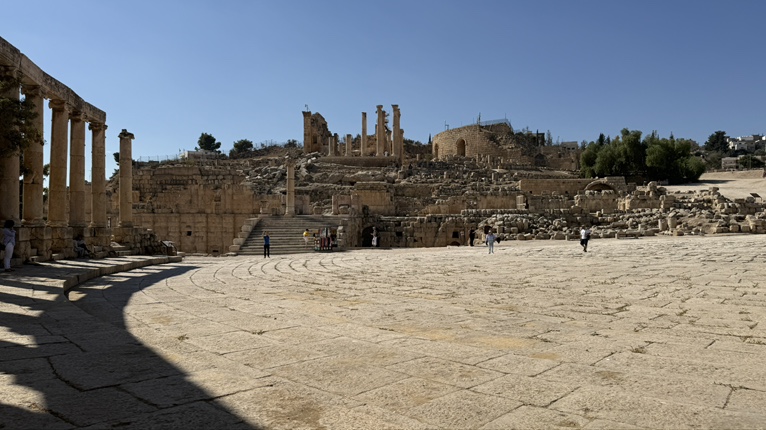
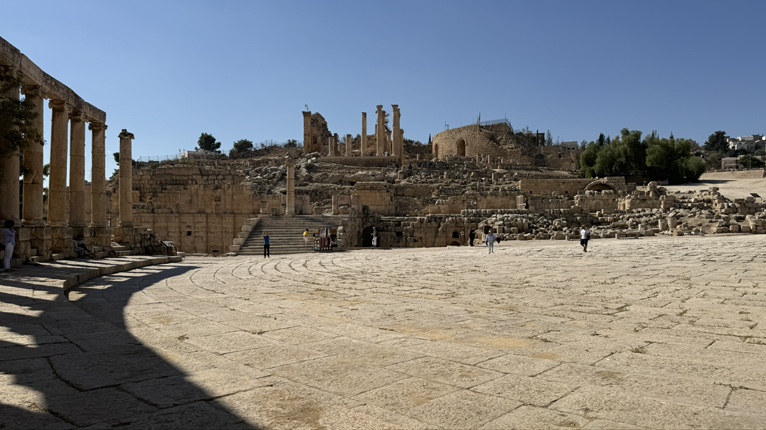
Before setting out for Jerash, I had been reading about the Decapolis, the cities of the Roman-era eastern Mediterranean mentioned in the New Testament. The region also brought to mind the much older biblical stories of Abraham and Lot and the peoples of Moab and Ammon. Those traditions are part of why a journey through Jordan felt to us like more than a tour of ruins. In Genesis, Lot is Abraham’s nephew; the story identifies Lot’s descendants with Moab and Ammon. Ancient Ammon is associated with the area of modern Amman, while Jerash adds a remarkably visible Roman layer to that long story.
After breakfast we drove north to Jerash. Passing through its monumental gateway, we reached a great oval plaza lined with columns. The morning light warmed the stone. Along the colonnaded street, old wheel ruts were still visible underfoot, and the Temple of Artemis rose beyond. A street vendor near the steps showed us small old-fashioned instruments, including a folding brass telescope and a device for telling time by the sun. His conversation brought a little everyday life into the vast archaeological setting.
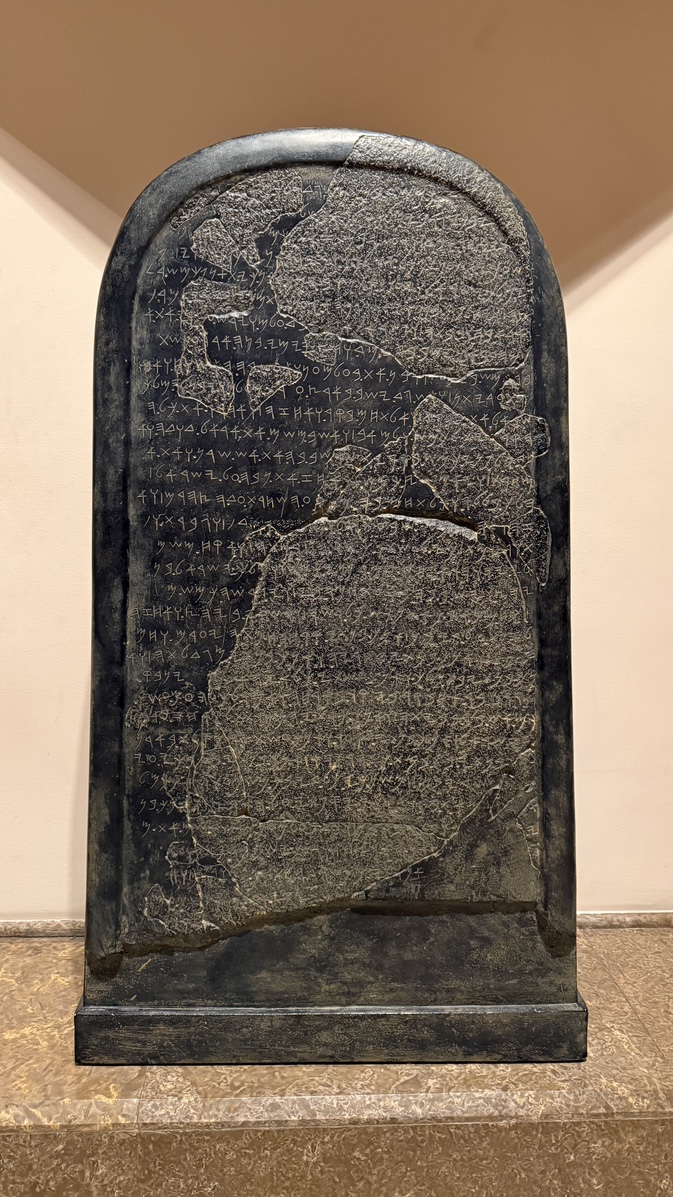
Back in Amman we ate mansaf: tender lamb with rice, flatbread and a tangy fermented yogurt sauce. Then we visited the Jordan Museum. Two exhibits stayed with me in particular: an exhibit about the Mesha Stele, which records a Moabite king’s account of conflict with Israel, and fragments of the Dead Sea Scrolls. Reading about ancient faith is one thing; standing before writing preserved on stone and parchment is another.
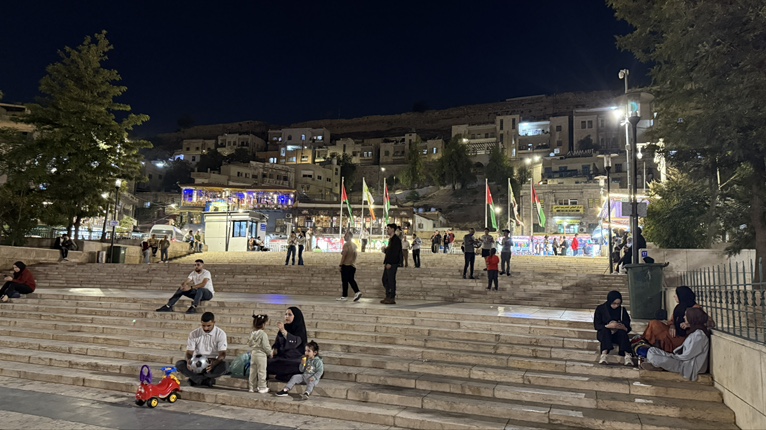
That evening the Roman Theater was lit up while children played football in the square. It felt like a public place that had never stopped belonging to the city.
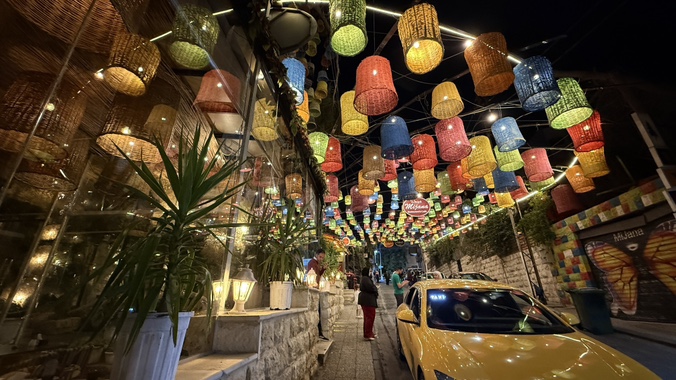
We walked on to Rainbow Street, past cafés and craft stalls and the smell of coffee and grilled food.
One artist layered colored sand inside glass bottles to make pictures of Jordan’s hills, camels and dunes; he even worked our names into a bottle. He told us he was a nurse by day and practiced this family craft in the evening. That small encounter was as memorable as many of the monuments.
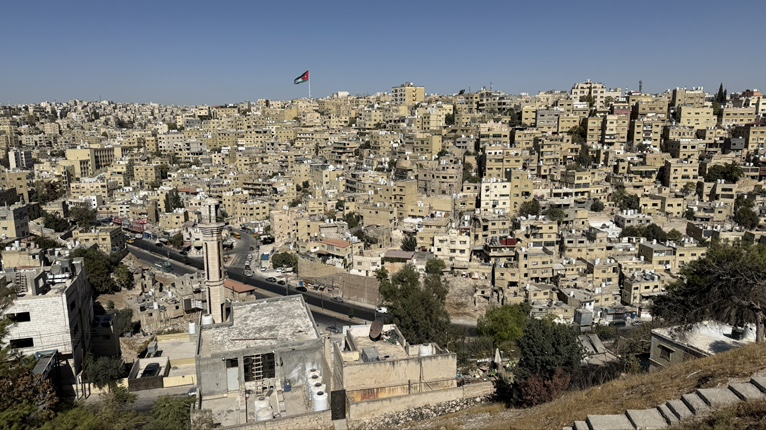
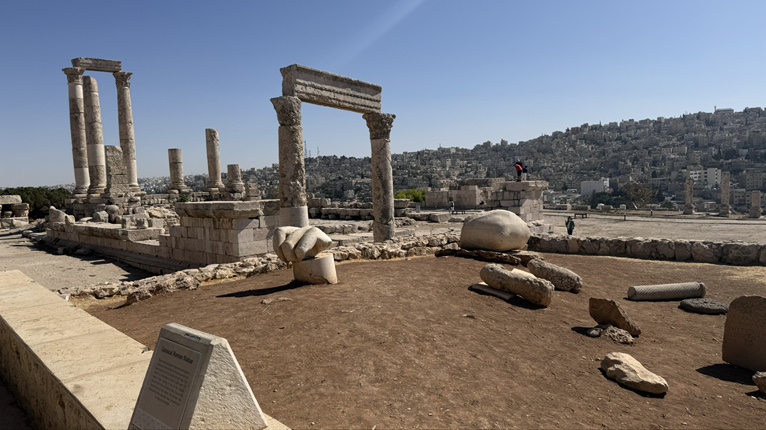
The next morning we climbed to Amman’s Citadel. From above, pale buildings spread across hill after hill. At our feet were the remains of the Temple of Hercules, a Byzantine church and the Umayyad complex. Each had occupied the same commanding ground in a different age.
As sunlight reached the columns, I thought again about the layers of belief that had drawn us here: biblical narratives, Roman buildings, Byzantine Christianity and Islamic architecture. Amman did not reduce them to a single story. It let us see how many lives had passed through the same place.
Reader Discussion · 0
No comments yet. Be the first to share your experience.