Cairo was the first stop on our three-week trip through Egypt, Jordan, and Turkey. Looking back, two of my favorite points redemptions from the entire journey happened right at the beginning. We flew from San Francisco to Cairo on business-class award tickets booked with 88,000 United MileagePlus miles per person, then spent two nights at the Marriott Mena House for 40,000 Marriott Bonvoy points per night. Those bookings capture what I like about points: they become valuable when they replace a meaningful cash expense and make an experience we genuinely want more accessible.
88,000 United miles from San Francisco to Cairo
I found the flights on United’s website. The itinerary ran from San Francisco to Calgary, then Frankfurt, and finally Cairo. San Francisco to Calgary was in United First; the long Calgary–Frankfurt leg was in Discover Airlines business class; and Frankfurt to Cairo was in Lufthansa business class. At 88,000 United miles each, the two tickets cost us 176,000 miles in total.
It was hardly the most direct way to reach Egypt. Flying north to Calgary before crossing the Atlantic looks odd on a map. But I wasn’t trying to minimize the number of miles flown. I was looking for a reasonable award price with a business-class seat on the long transatlantic leg, and this itinerary delivered that.
One useful thing to remember about MileagePlus is that United miles aren’t limited to flights operated by United. United’s partner network lets you book itineraries involving other airlines through its own site. On this ticket, the longest flight was operated by Discover Airlines and the final segment by Lufthansa, yet I booked the entire award with United miles.
To decide whether an award like this makes sense, I start with a rough cash benchmark rather than declaring 88,000 miles either cheap or expensive in isolation. At a commonly used 2025 estimate of about 1.2 cents per United mile, 88,000 miles represent roughly $1,056 in value. If a comparable business-class fare costs substantially more and the award taxes and fees are modest, the redemption deserves a closer look. I don’t claim to have “saved” the full retail price of a ticket I might never have bought with cash. What mattered to us was that miles we already had made the long journey considerably more comfortable.
Searching flexibly helped. If I had looked only for the most obvious San Francisco–Cairo routing and stopped when the first results showed no attractive business-class seats, I would have missed this option. An indirect connection such as Calgary can be worthwhile when the total travel time is acceptable, the long flight has real business-class availability, and the mileage cost still works for you. For me, award travel is a balance of time, comfort, and miles—not a contest to find the shortest line on a map.
Two nights at the Mena House for 40,000 Marriott points a night
We stayed at the Marriott Mena House from October 21 to 23. The award rate was 40,000 Marriott Bonvoy points per night, or 80,000 points for both nights. I compared the cash rate before booking. The hotel’s location, beside the Giza pyramids, was a major part of its appeal: we could see the pyramids over breakfast and from our room’s balcony. With only about two days in Cairo, being that close to the site made a real difference.
The same comparison I make for flights works for hotels: what cash expense are the points replacing? In 2025, a common estimate for Marriott points was around 0.7 to 0.8 cents apiece. At 0.8 cents, 40,000 points are worth about $320. If a room costs well above $320 in cash, redeeming 40,000 points starts to look attractive. At a $400 cash rate, the redemption returns about 1 cent per point; at a higher rate, it looks better still.
I’ve since seen public examples of Mena House nights booked for fewer than 30,000 points when the cash rate exceeded $400. That doesn’t mean my 40,000-point night was a mistake. Marriott uses dynamic award pricing, and rates vary substantially by date. The lesson is to compare both prices whenever you’re considering this hotel. I did that for our dates, and I was happy with the result.
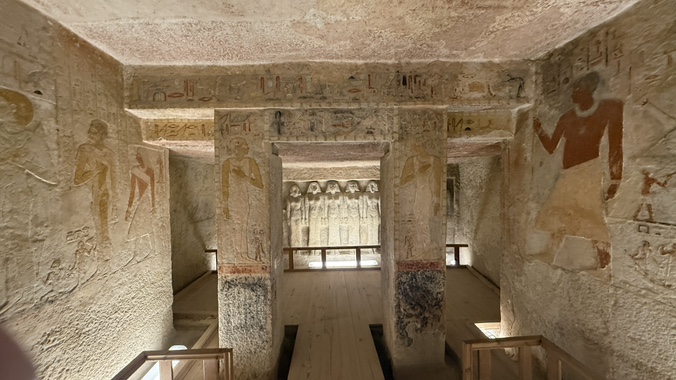
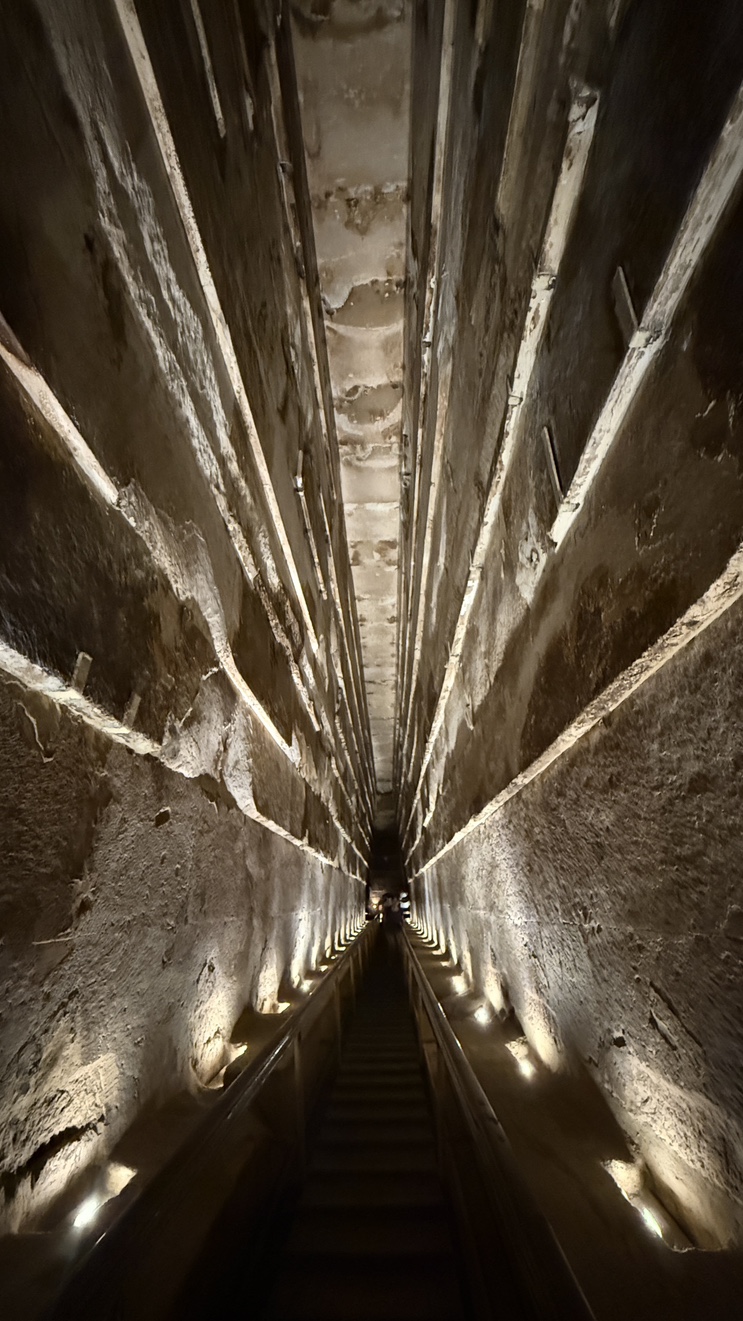
Mena House also has a private entrance to the pyramid complex that guests can reserve. We visited the pyramids and the Sphinx with a guide on our first day, then returned on our own the next day. This time we went inside the Great Pyramid of Khufu. Some visitors say the cramped, hot interior isn’t worth it; for me, seeing the scale and construction of those enormous stones from within was memorable. Staying so close to Giza made it easy to devote a second day to the site.
Why I don’t spend points just to spend them
The rest of our three-week trip shows how I approach points in practice. Beyond the Mena House, we stayed at Aswan’s Anakob House Boat, the Sonesta St. George in Luxor, the Four Seasons in Amman, Petra Marriott, SunCity Camp in Wadi Rum, Dead Sea Marriott, and Istanbul’s Amiral Palace Hotel. Some stays were paid in U.S. dollars. Others were booked through Booking.com or Ctrip in Chinese yuan, and some rates included breakfast or even dinner.
I don’t automatically redeem points because a hotel belongs to Marriott or Hilton. I compare the cash rate, the award rate, a reasonable estimate of what the points are worth, and any benefits that come with the booking. A $220 room that costs 40,000 Marriott points yields only 0.55 cents per point; I’d probably pay cash and save the points. If that same room costs $450 or $500 while the award rate remains 40,000 points, the decision looks very different.
That repeated calculation is why I later wanted a Cash or Points Calculator on this site. The arithmetic isn’t difficult. What takes effort is remembering a sensible benchmark for each program and then comparing it with the value of a particular booking. Entering the cash price and points price makes that decision quicker.
What we did with two days in Cairo
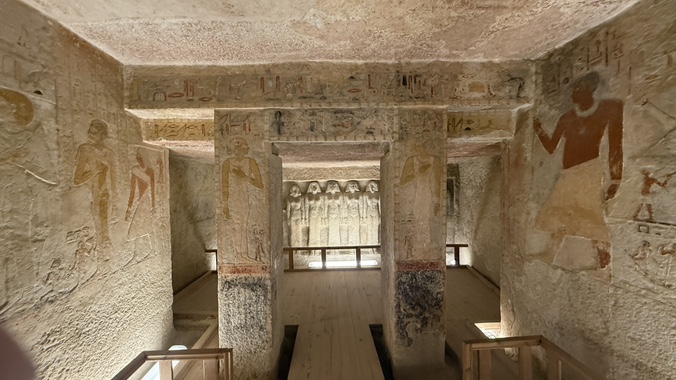
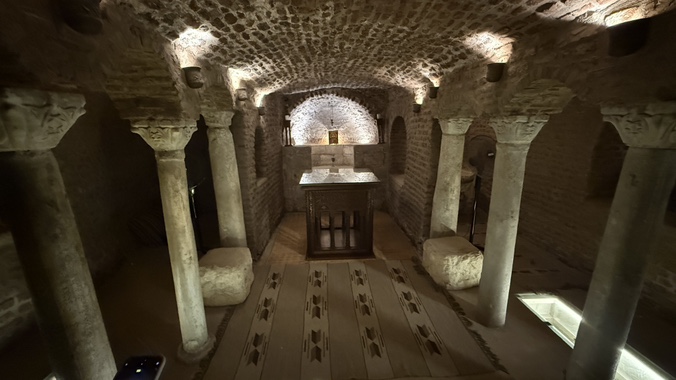
This article is mainly about the bookings, so I’ll keep the sightseeing brief. We arrived a little after 3 a.m., had breakfast at the Mena House, and were able to check in early—a welcome relief after an overnight flight. On our first day, a local guide took us to the Giza pyramids, the Sphinx, and the museum. We returned to Giza independently on day two, then visited the Citadel of Saladin, the Mosque of Muhammad Ali, and, in Old Cairo, the Church of Saints Sergius and Bacchus and the Hanging Church.
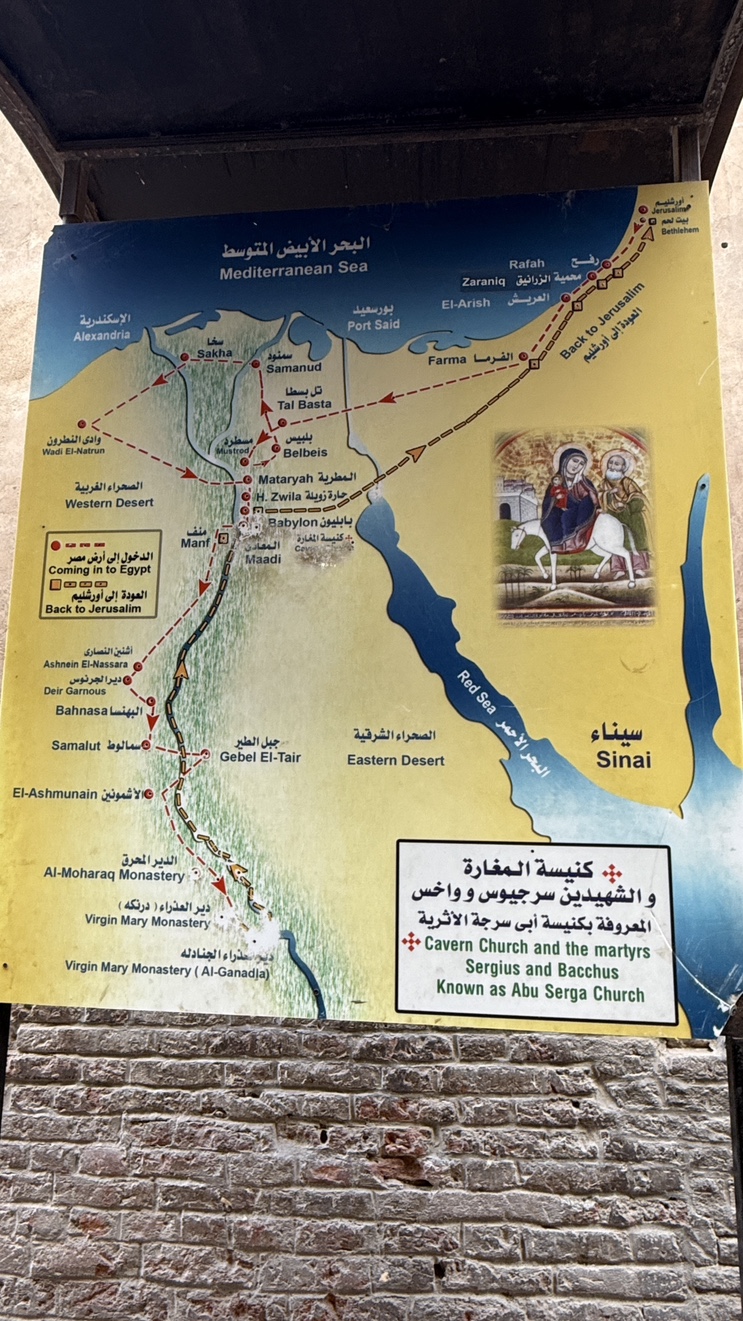
For a first visit to Egypt, I would still spend at least half a day at the pyramids with a guide who really knows Egyptian history. Without context, it is easy to see only ancient structures; a good explanation gives the people, dates, and stories behind them. We also used local drivers and guides later in Aswan, Abu Simbel, and Luxor, and felt the prices and experiences were good. I’ve put their details, our routes, and what we paid in a separate piece on the local drivers and guides we used in Egypt.
The pyramids are what I remember most vividly about Cairo. From a points perspective, though, it was the combination that made the opening of the trip work so well: 88,000 United miles per person got us to Egypt in greater comfort, and 40,000 Marriott points per night put us next to the pyramids. The point wasn’t to chase a spectacular cents-per-point headline. It was to use miles and points we already held for a trip that would have cost more in cash and felt less comfortable without them.
Reader Discussion · 0
No comments yet. Be the first to share your experience.