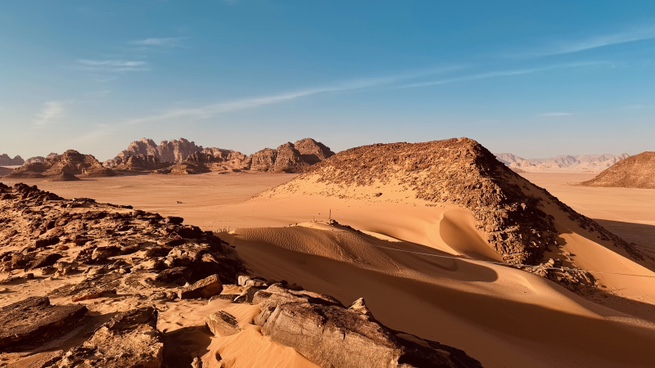
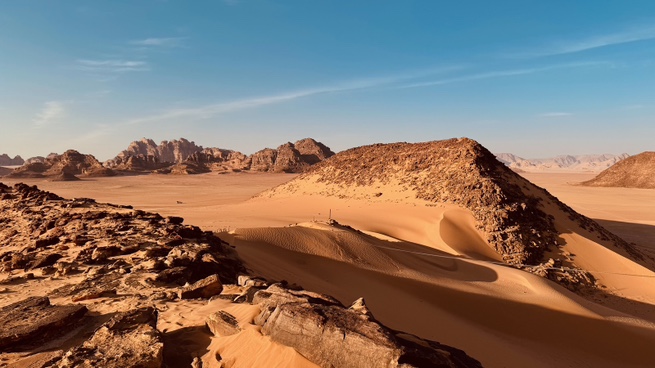
I have loved science fiction since childhood and have always wanted to see what lies beyond the familiar world. When Elon Musk began talking about volunteers for a future Mars settlement, I once asked my wife, only half joking, whether we should sign up. She knew I wasn’t about to leave Earth, but she understood the curiosity behind the question. When we arrived in Jordan’s Wadi Rum and stood before its red sand and towering cliffs, she smiled and said, “Look, your Mars dream has finally come true.” It was a small joke, and a lovely welcome to the place.
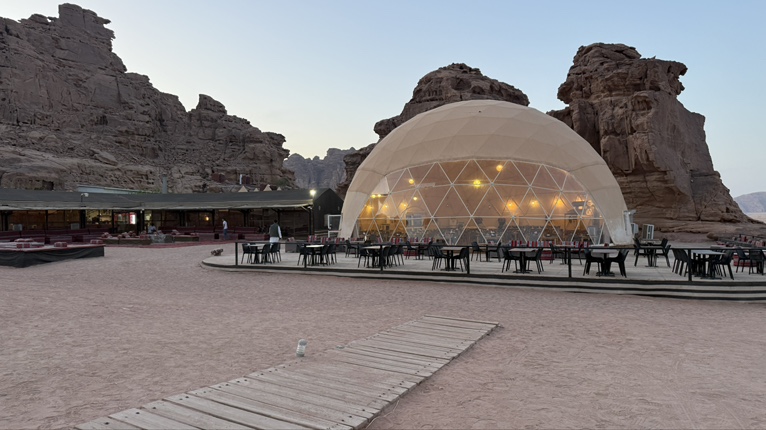
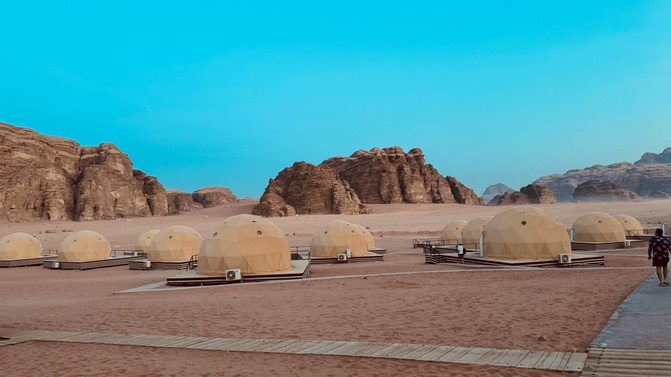
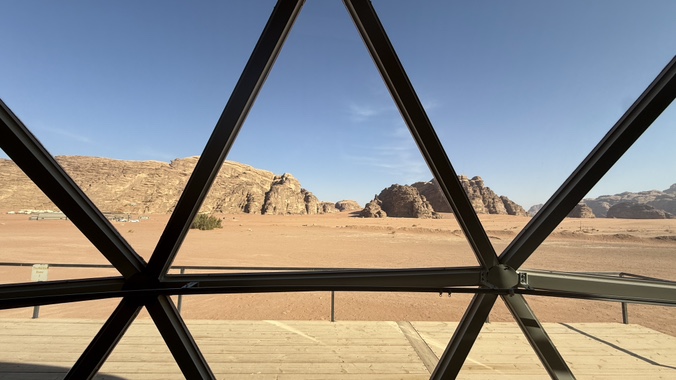
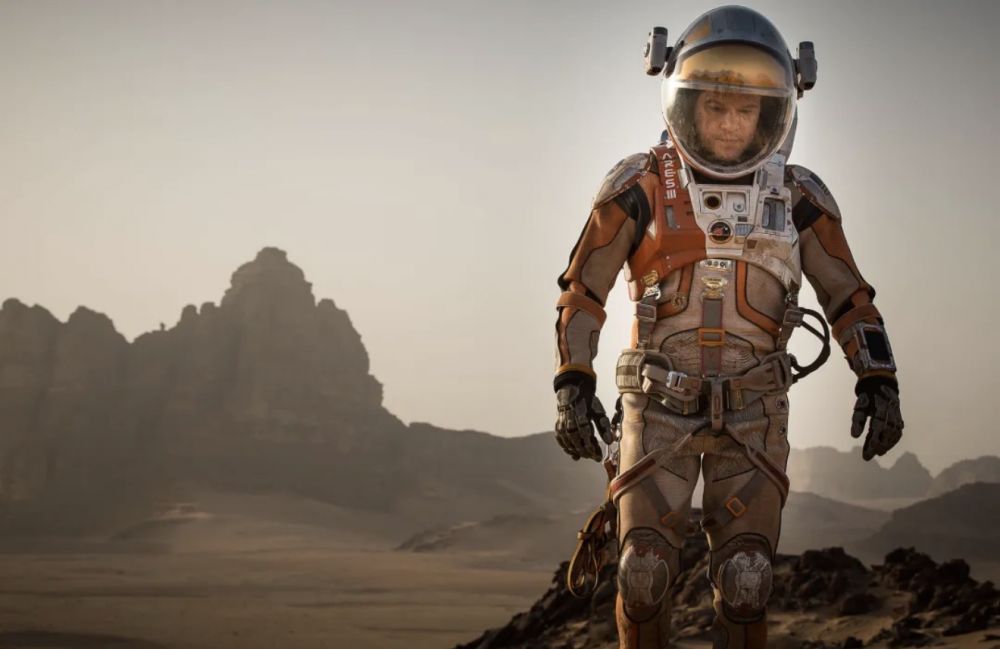
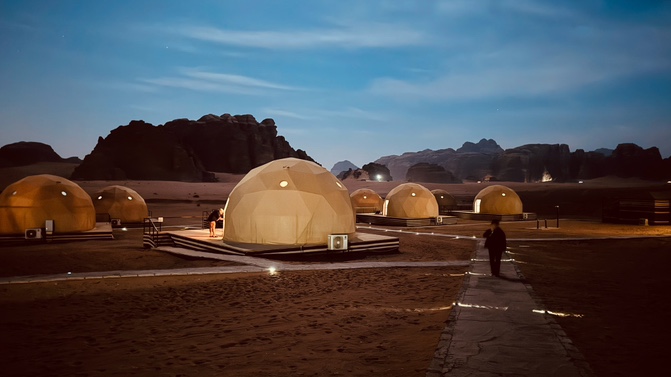
At Sun City Camp, we slept in one of the white domes the camp calls its Mars tents. With its curved shell, broad viewing window and warm light after dark, ours could have passed for a habitat in The Martian. The staff upgraded us to dome number three in the front row. From the window we could see no other tents, no road and no one walking past—just dunes stretching toward enormous rock walls. There was nothing to do but sit and look for a while, which turned out to be enough. The farther the desert opened before us, the more distant the usual noise of daily life seemed.
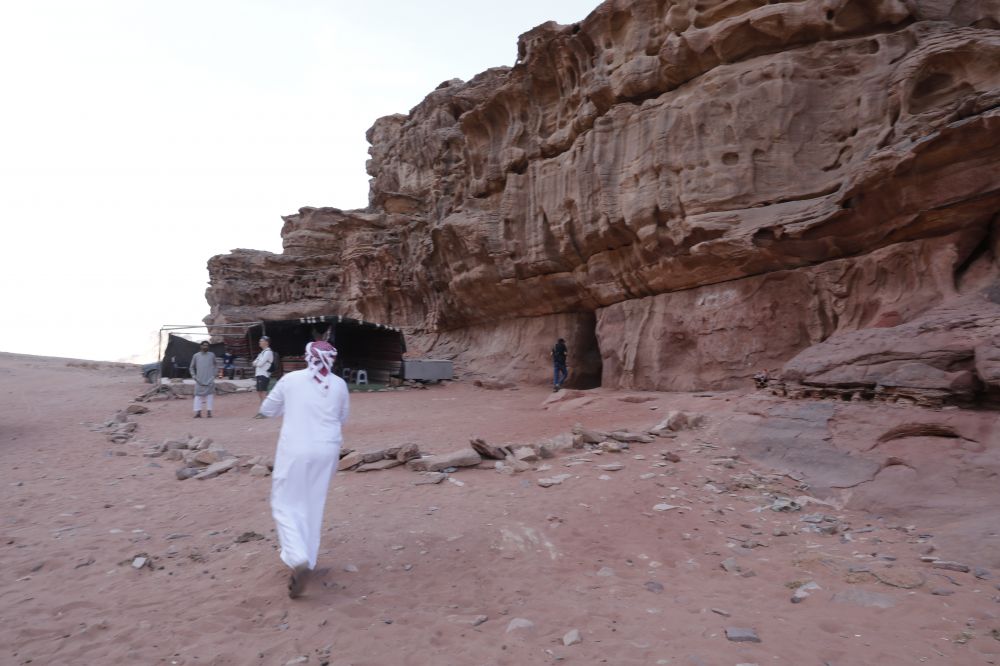
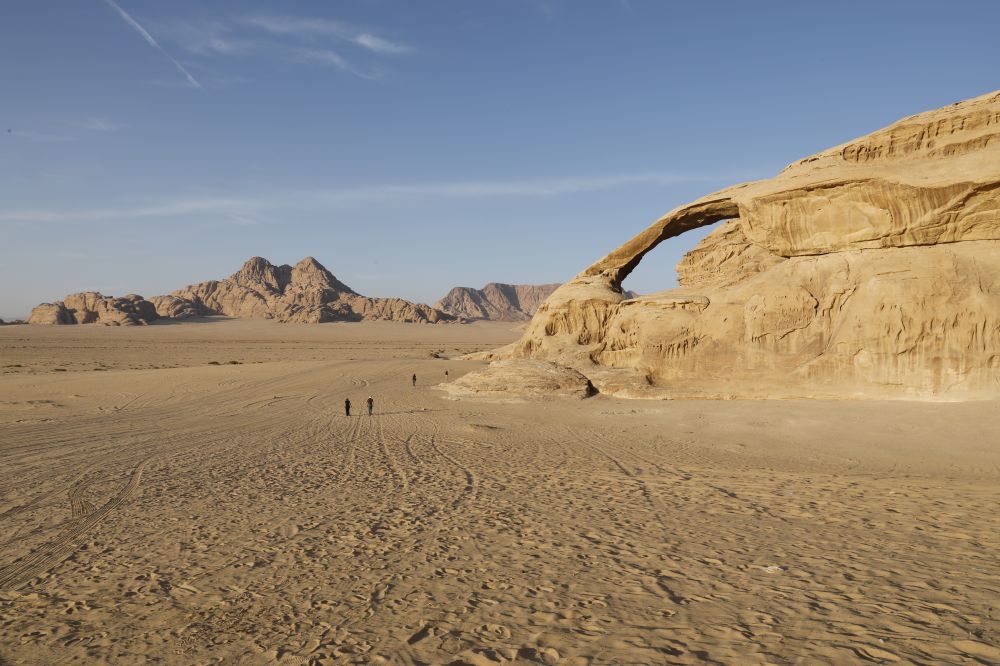
That afternoon, we set off into the desert in a four-wheel-drive vehicle. As we came down the dunes, red dust rose behind us, and the view shifted from broad valleys to steep rock faces. Our guide showed us locations used in Star Wars, Dune and The Martian, along with a natural stone bridge and a cave associated with Lawrence of Arabia. He held up film stills against the landscape so we could match the scenes to the rocks and valleys in front of us. Seeing the real places gave the images a scale no screen could convey; the slow, jolting approach to those immense formations was part of the experience. Somewhere along the ride, I reached for my wife’s hand, and she held mine.
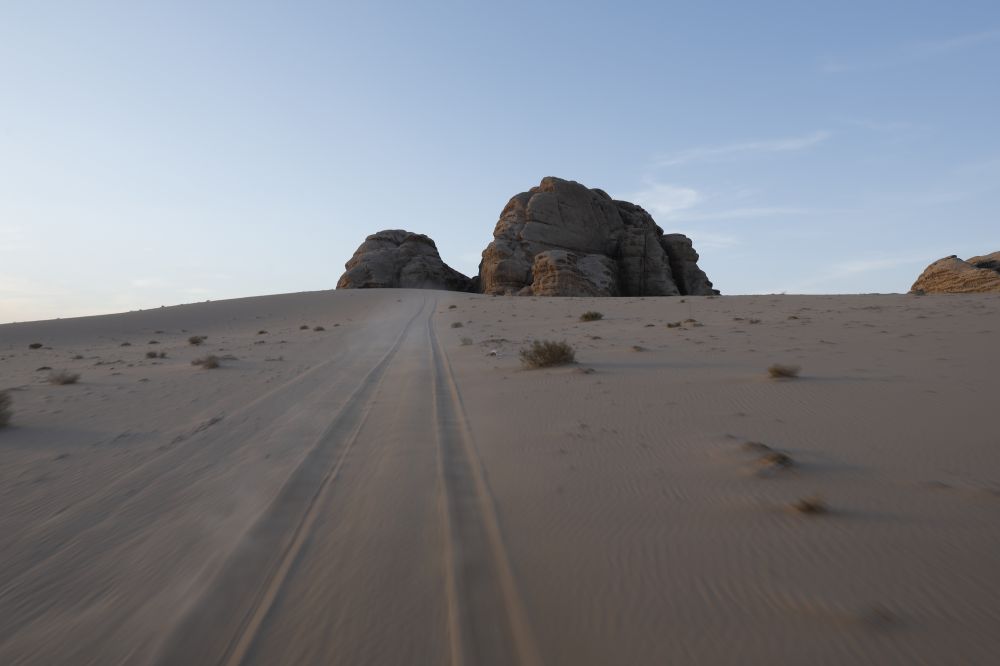
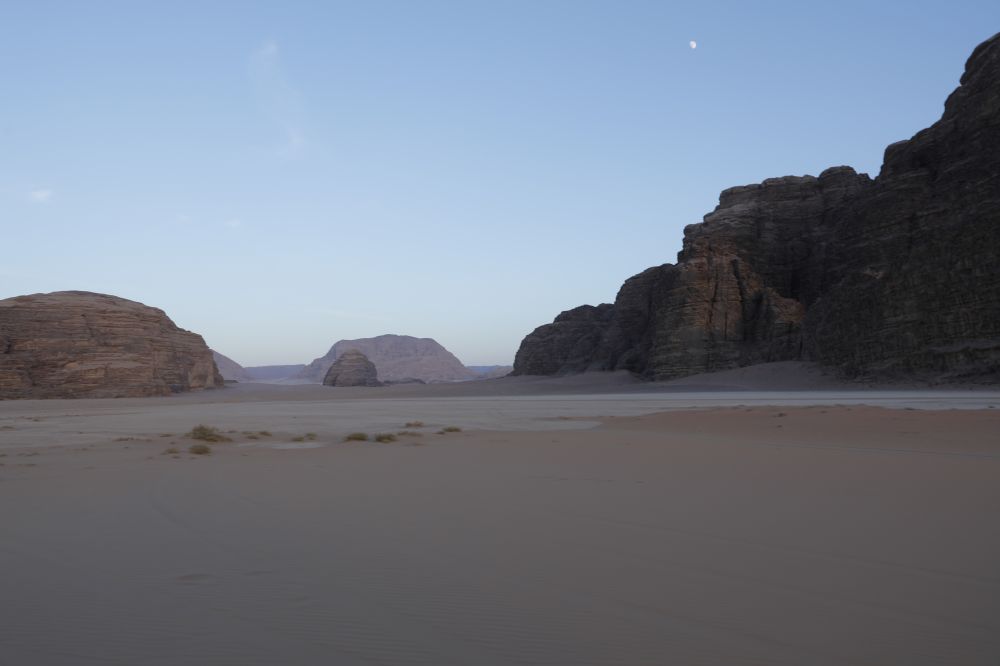
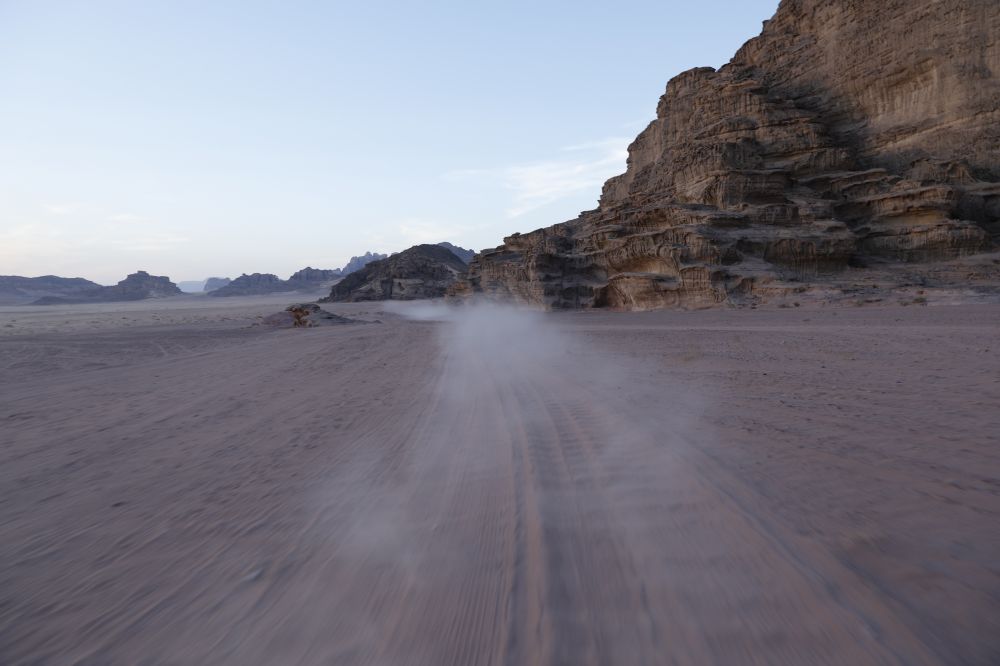
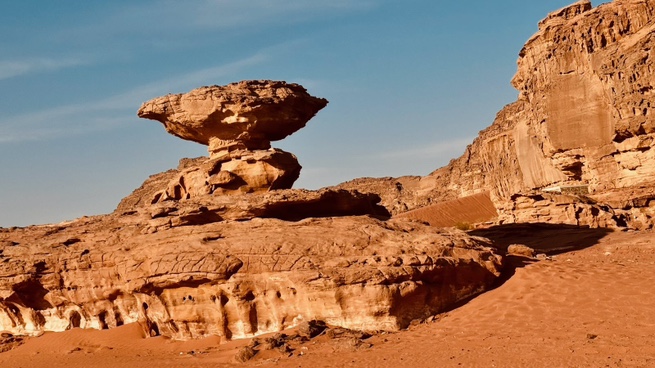
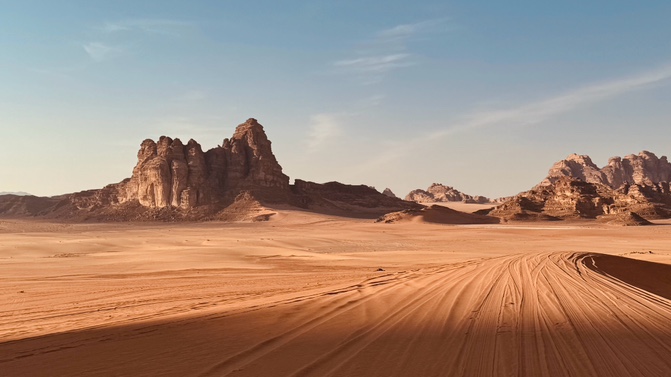
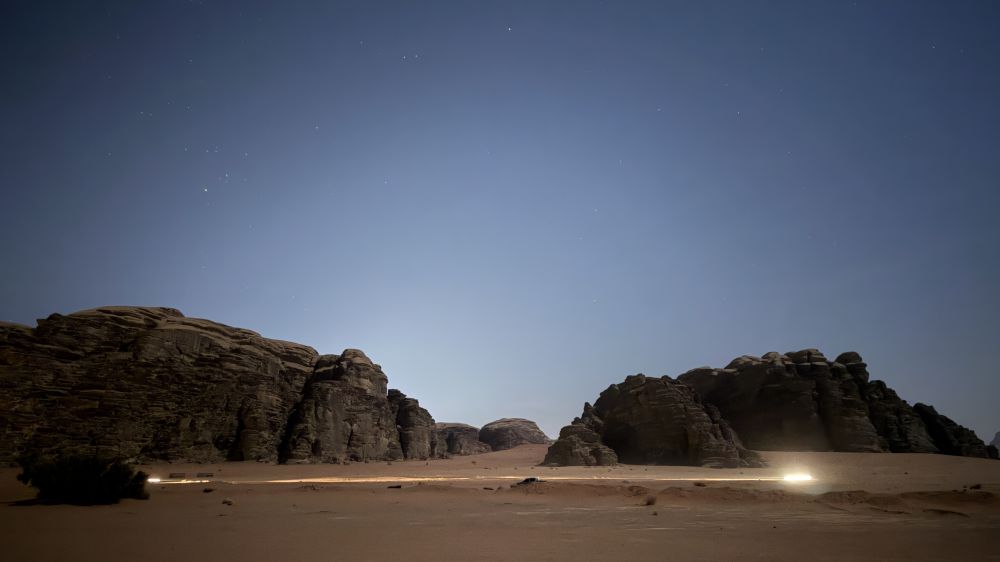
We left the curtains open that night. When I woke after midnight, the desert outside still had a faint red cast, so I took a few photos and sent them to our sons. Our older son, who was working on his doctorate, replied, “It really does look like Mars.” I watched the view for a little longer before going back to sleep. In a place like this, even the hours between the day’s excursions become part of the trip.
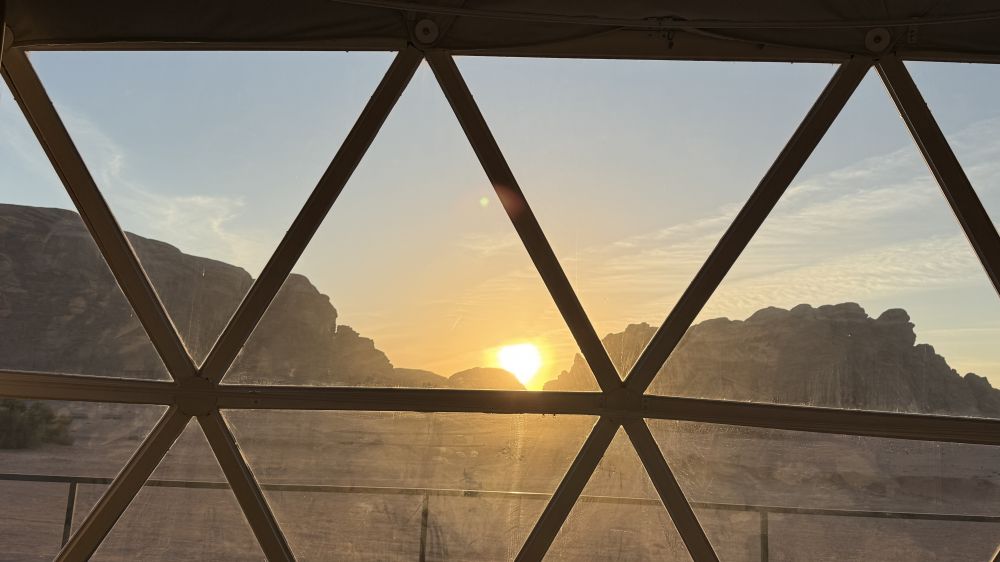
We woke early and sat close together at the east-facing window, waiting for sunrise. The desert was silent, with only a thin light along the horizon. Mornings like that have a way of bringing old memories to the surface: our first time holding hands, our first trip together, and the many ordinary days whose dates I have forgotten but whose feeling has stayed with me. More than twenty years have passed since we met. Life no longer arrives in a rush of firsts, yet beside her that morning I felt as certain as ever that she was the person with whom I most wanted to see the world. Outside, the sand changed from deep red to pale pink and then to gold. Still, no sun appeared at the horizon, and for a moment we wondered whether we had been looking in the wrong direction.
Just as we were ready to give up, light spread from behind the clouds. The sun was already higher than we had expected; it had simply been hidden from view. I turned toward my wife as the light reached her face and put my arms around her. We stayed there quietly for a while. What I remember most about that sunrise is not how much the desert resembled a movie’s vision of Mars, but that after so many years and so many journeys, we were still happy to wait for it together.
Breakfast was far more generous than I had expected in such a remote setting, almost like a hotel buffet in the middle of the desert. The camp manager came over to greet us and told us to think of the place as home and to return whenever we wished. After we ate, the car carried us away while the dunes slipped slowly behind us. I took my wife’s hand and said, “We really did spend a day on Mars.” She smiled, and I knew we would remember that day often.
Reader Discussion · 0
No comments yet. Be the first to share your experience.