After a week in Palm Cove, it was time to fly to Sydney the next day. We’d snorkeled the Great Barrier Reef, searched the rainforest for koalas, ridden a century-old railway through the mountains, and glided above the canopy by cable car. For our final full day, we wanted to see what lay inland from Cairns—and, if luck cooperated, spot a wild platypus.
From the Tropical Coast to Open Country
We left Palm Cove at 7 a.m. and followed the winding road uphill. The familiar coast—dense rainforest, enormous palms and damp tropical air—gradually gave way to rolling green hills and broad pastures. Cows grazed in the distance; farmhouses and small towns appeared along the road. For a moment, it felt a little like the American Midwest or the California countryside, with a few more tropical plants around the edges.
This is the Atherton Tablelands, a highland region southwest of Cairns along the Great Dividing Range. Ancient volcanic activity left behind fertile soil, and the area now grows coffee, tea, bananas, avocados and all kinds of tropical fruit, alongside cattle farms. It looked nothing like the coast we’d spent the week exploring, yet it was still very much part of the same corner of Australia.
If we’d stayed by the beach, we might have thought Cairns was all reef and rainforest. Australia is so enormous that even one regional trip can feel like several different countries stitched together. We hadn’t found a platypus yet, and the drive was already worth it.
Where Is the Platypus?
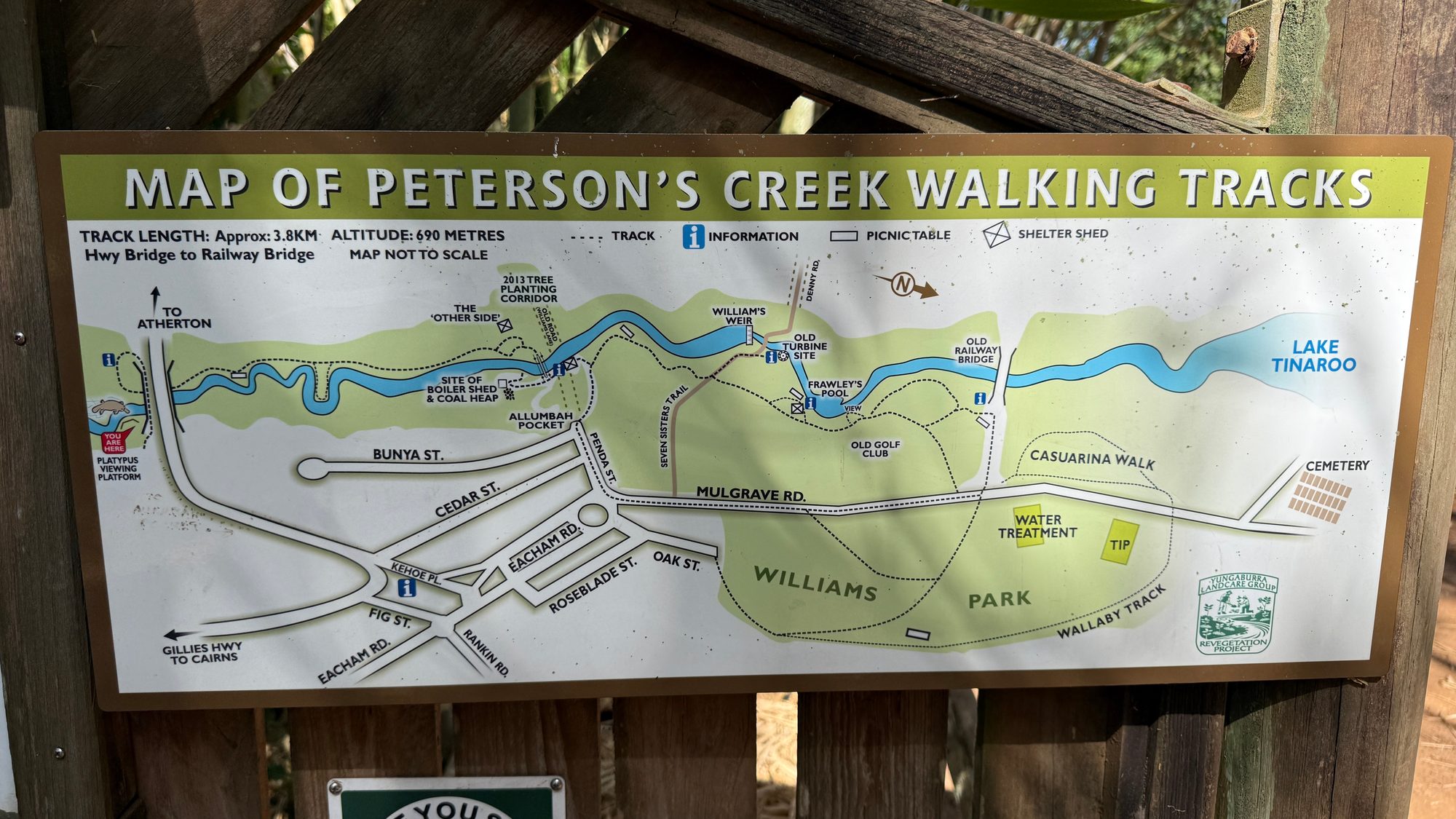
Around 8:30 a.m., we arrived at the platypus viewing area beside Peterson Creek, near the small town of Yungaburra.
The platypus is one of Australia’s strangest animals: a duck-like bill, a beaver-like tail, webbed feet and the fur of a mammal. Somehow this mammal also lays eggs, making it one of the very few living monotremes. And male platypuses have a venomous spur on their hind legs. Nature seems to have rummaged through several animal designs, tossed the parts together, and—against all odds—made it work.
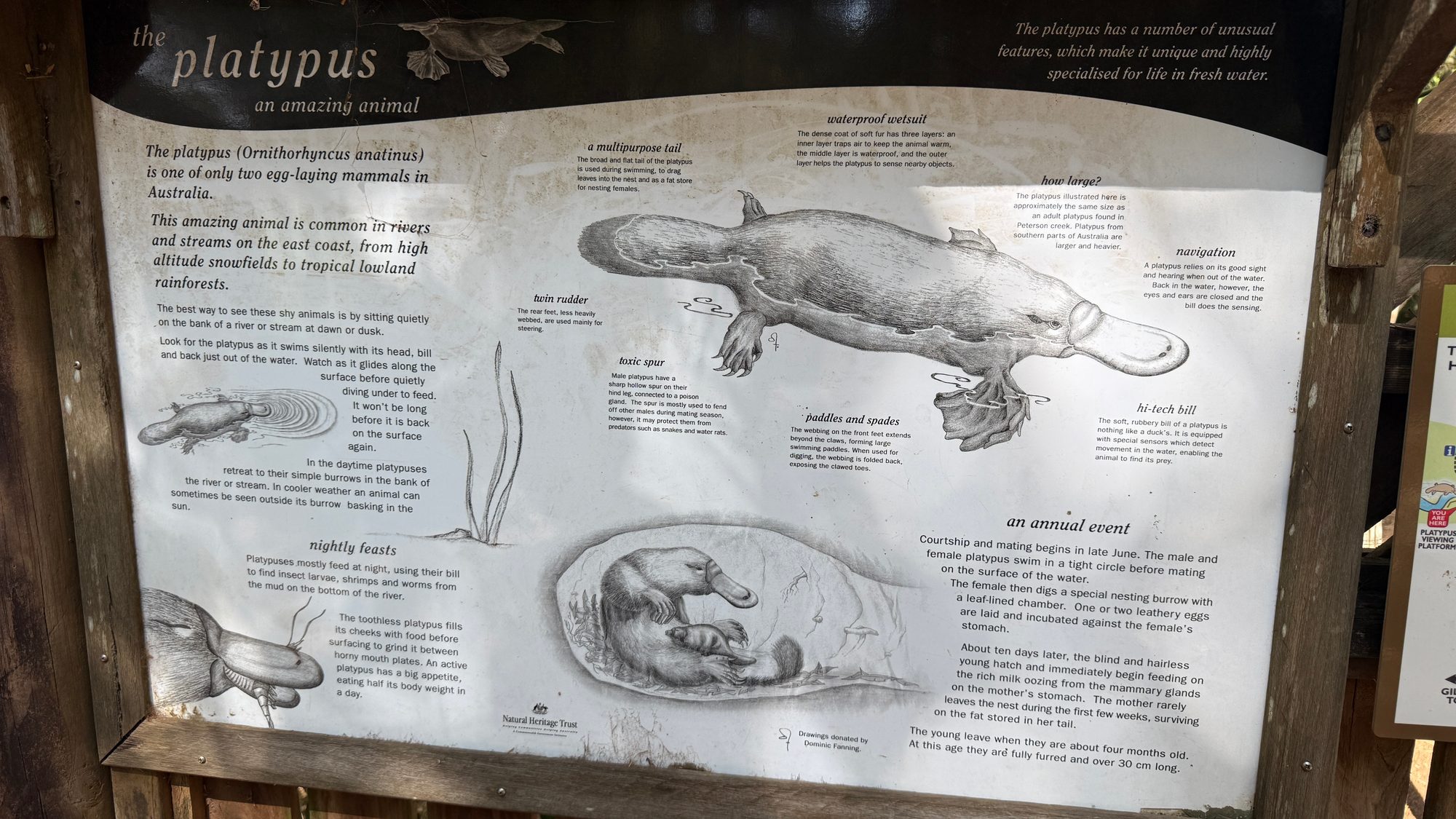
Platypuses live in freshwater rivers and creeks. They’re most active around dawn and dusk, and often rest in burrows during the day. We’d come early, hoping to catch one before it clocked out. GPS brought us close, but there was nowhere to park along the road. We crossed over and found a spot near a medical clinic, then walked back across the road.
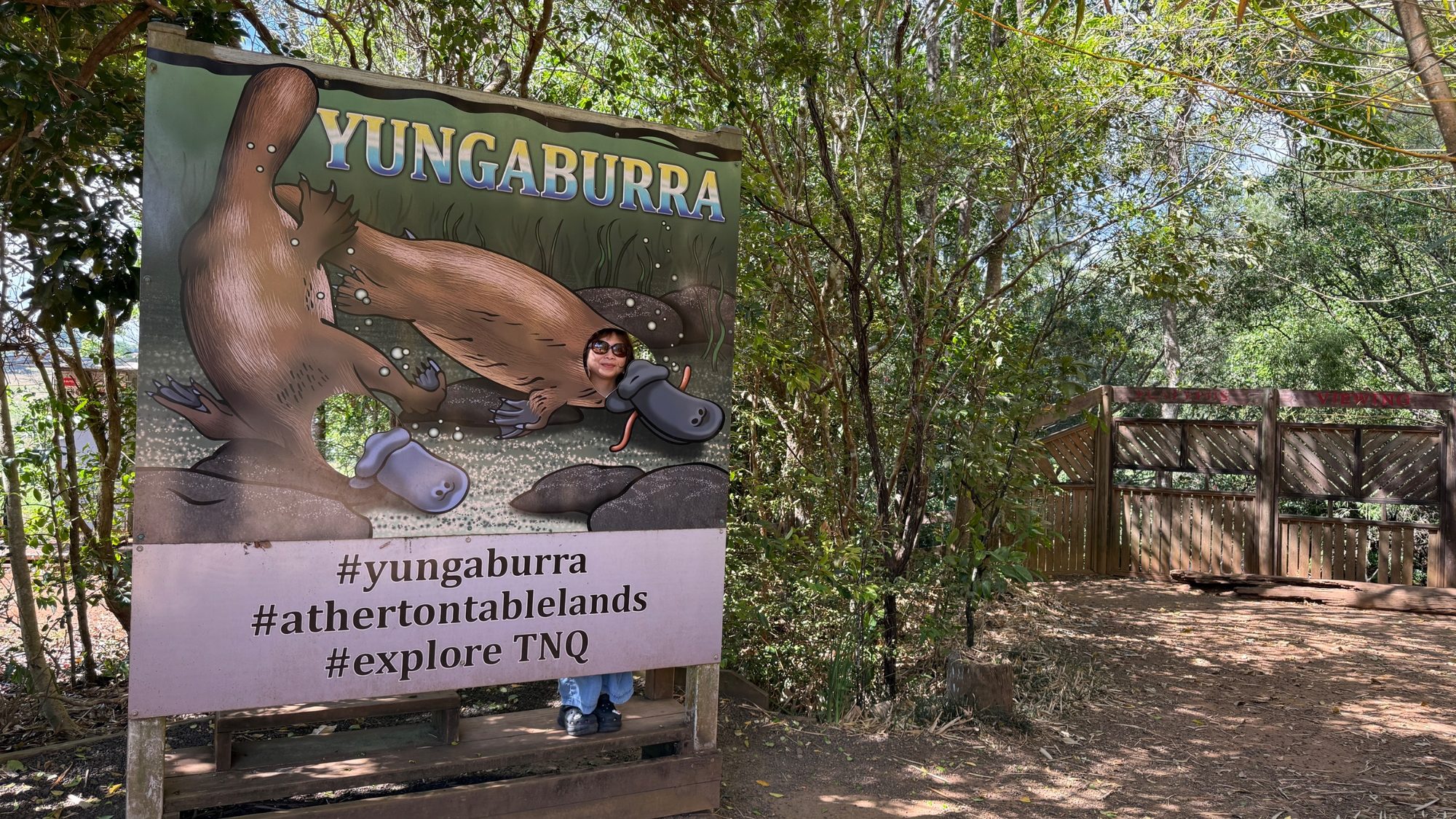
The viewing area was thoughtfully set up, with an information board and a row of wooden seats facing the creek. Someone had clearly planned for people to sit quietly and wait. The platypus even had a little audience section.
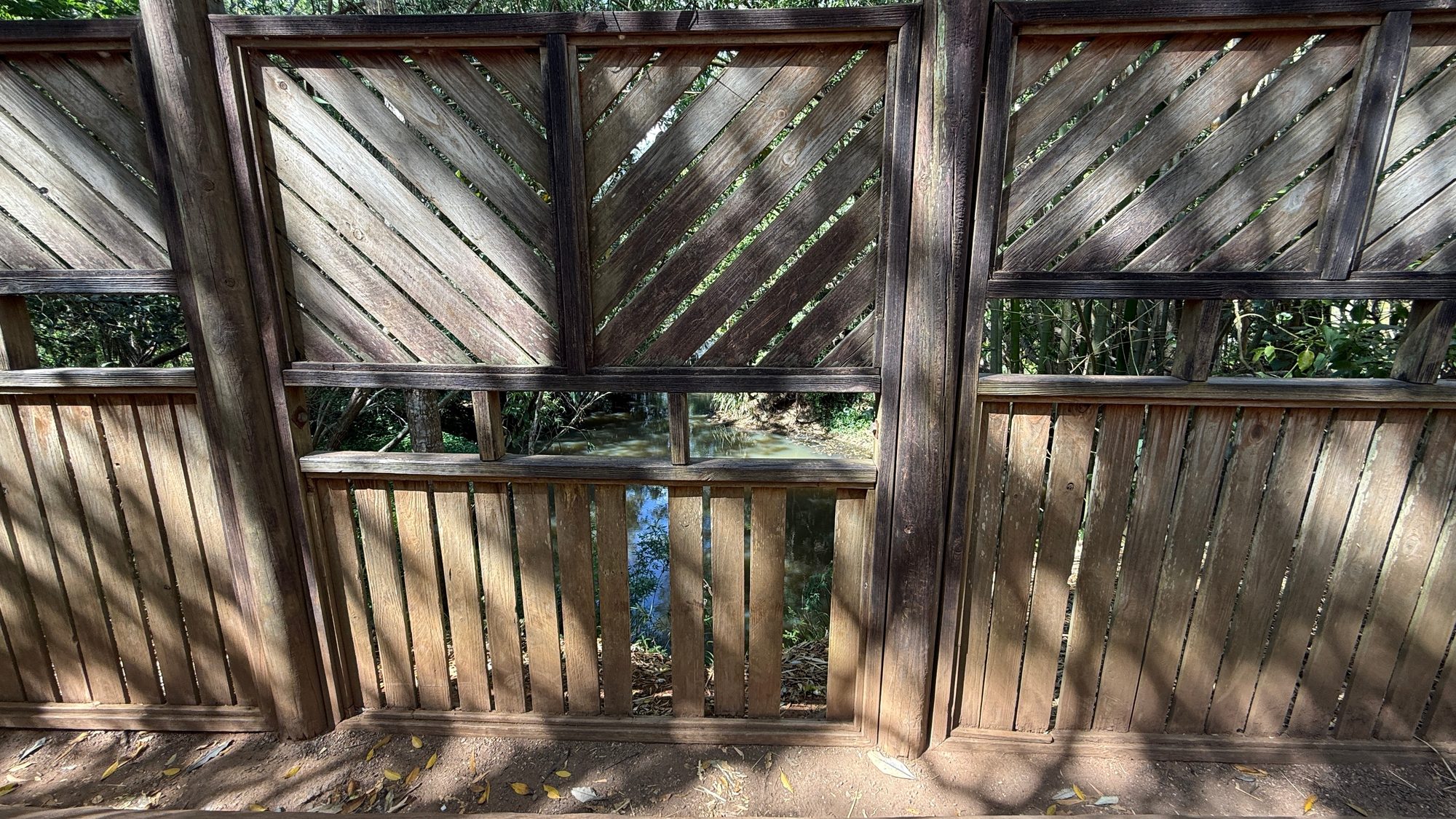
We sat and watched the water for about ten minutes. The creek flowed peacefully, leaves crowded the banks, and every ripple made us wonder if this was it. Nothing. We walked over to a nearby bridge to try another angle. Cars kept passing on the road, and I started to wonder whether the platypus would come out in such a busy spot.
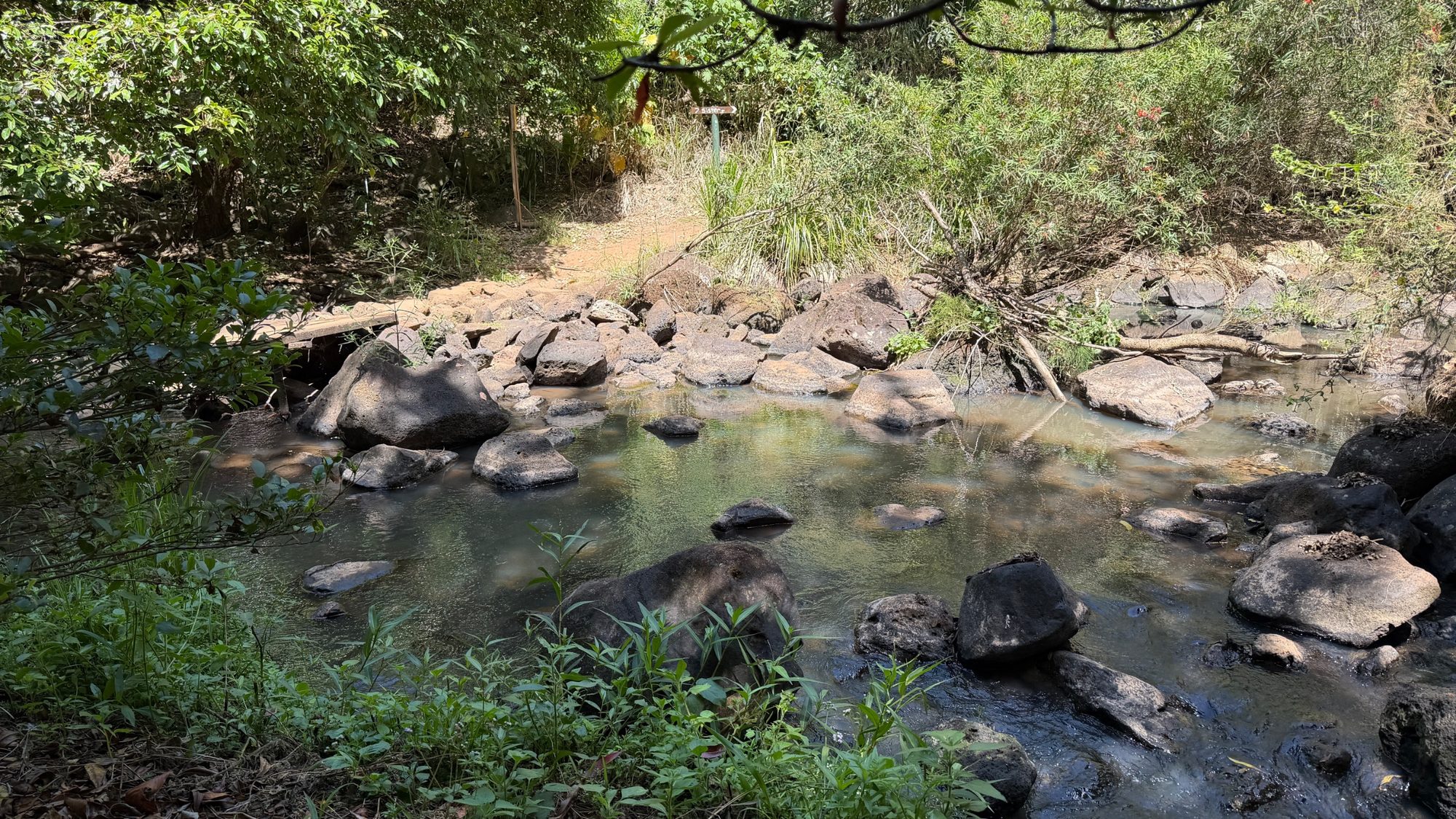
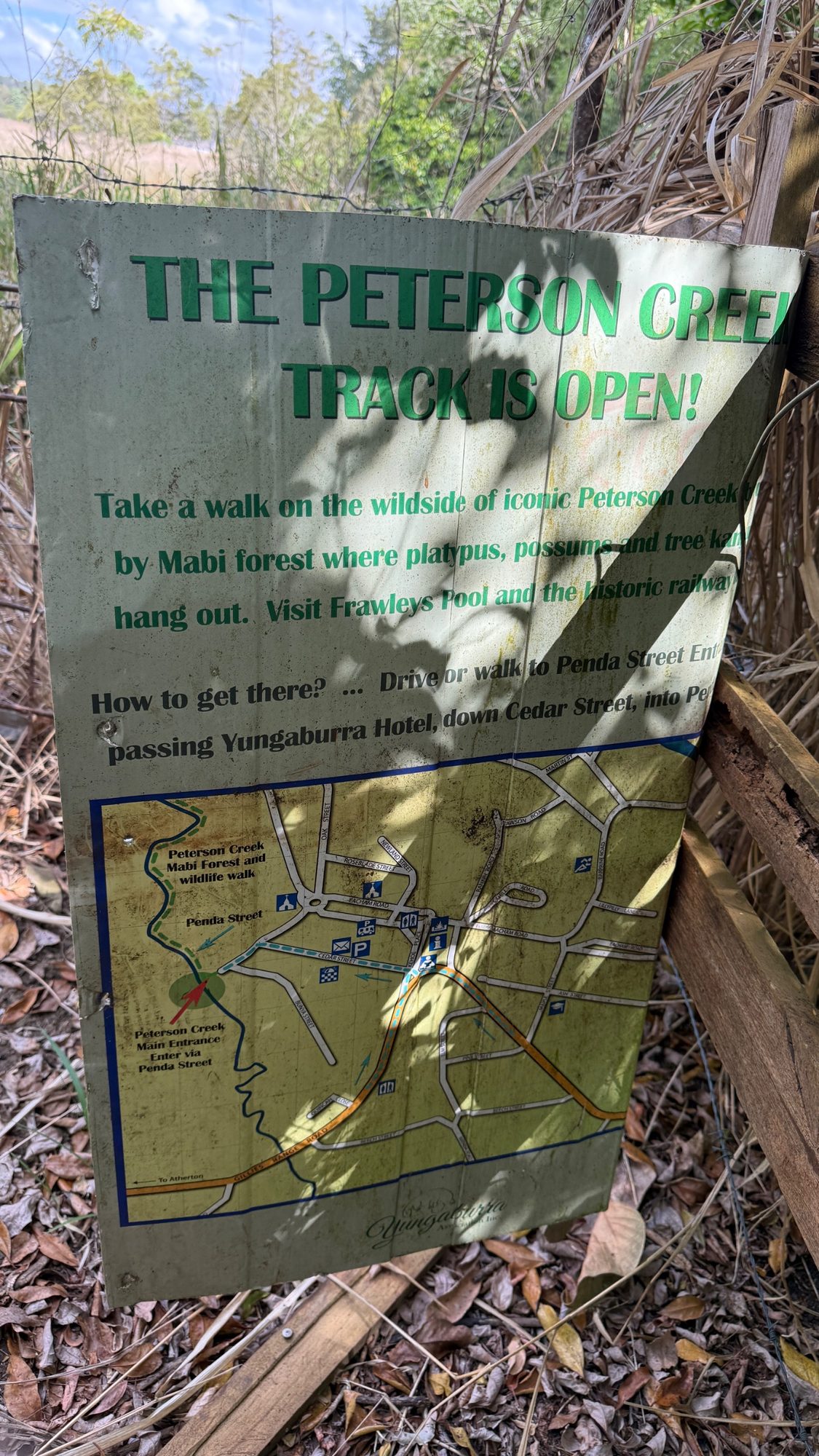
We’d planned to keep walking along the creek, but part of the trail was closed. A sign pointed visitors to another entrance farther along the water. If the platypus wasn’t taking appointments here, we’d try the next office.
At the other trailhead, several cars were already parked. Some people were getting ready to hike; others were scanning the creek.
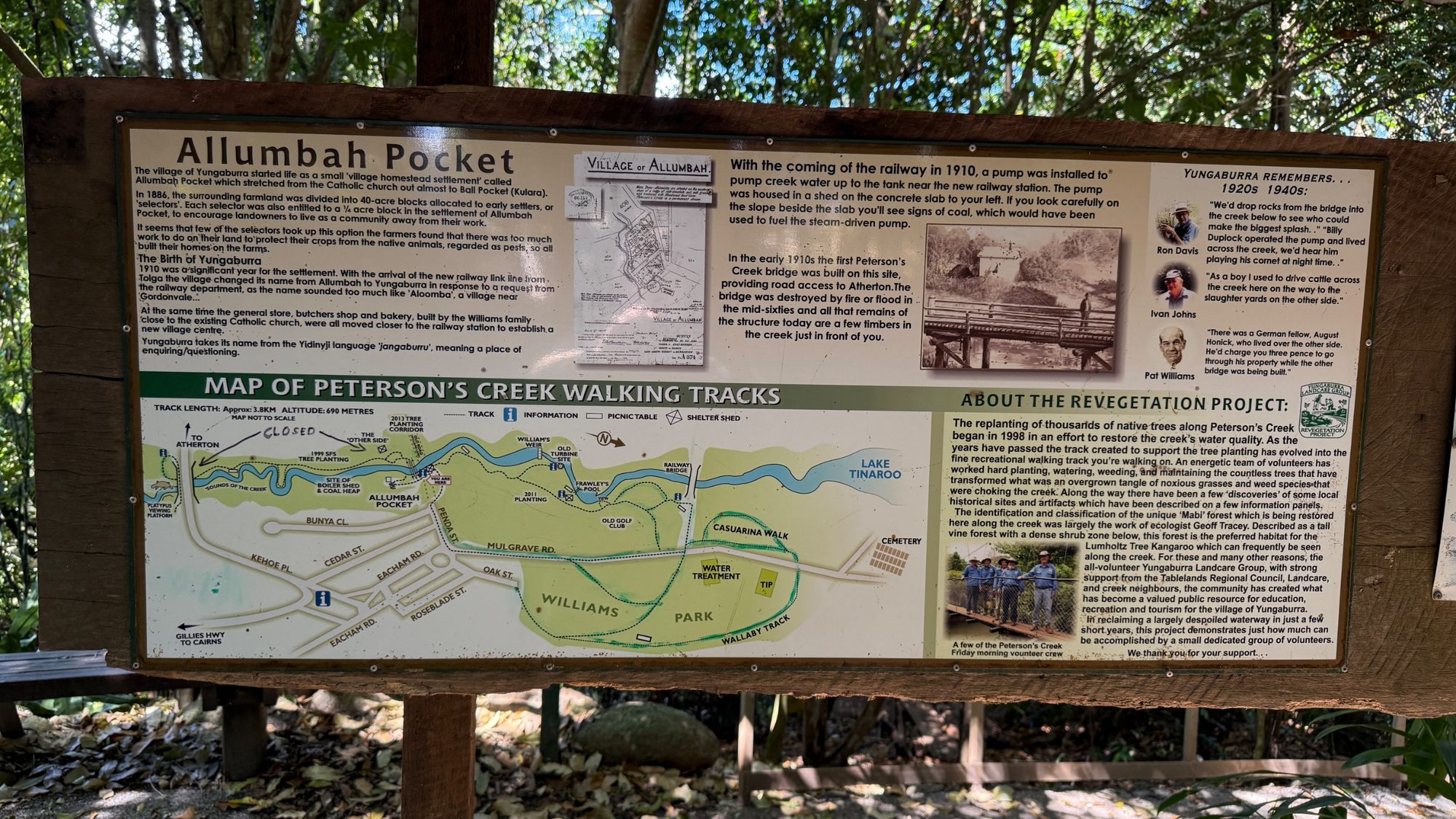
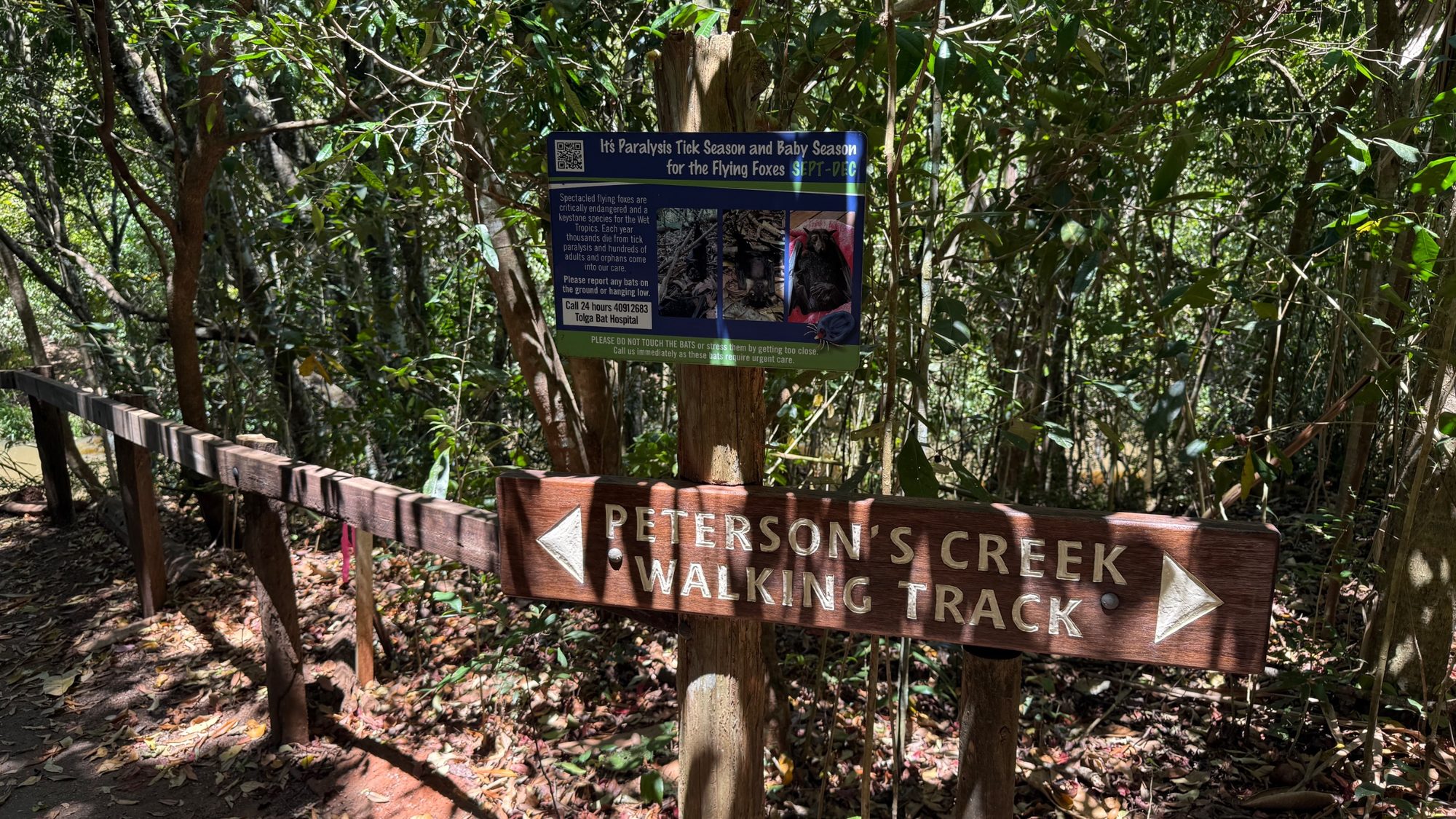
We followed a narrow path deeper into the forest. The trees knitted together overhead, leaving only a few thin seams for sunlight. Most of the trail was cool and shaded.
Even in the Australian summer, it felt comfortable under the canopy—not the least bit like standing in full sun and negotiating with your sunscreen.
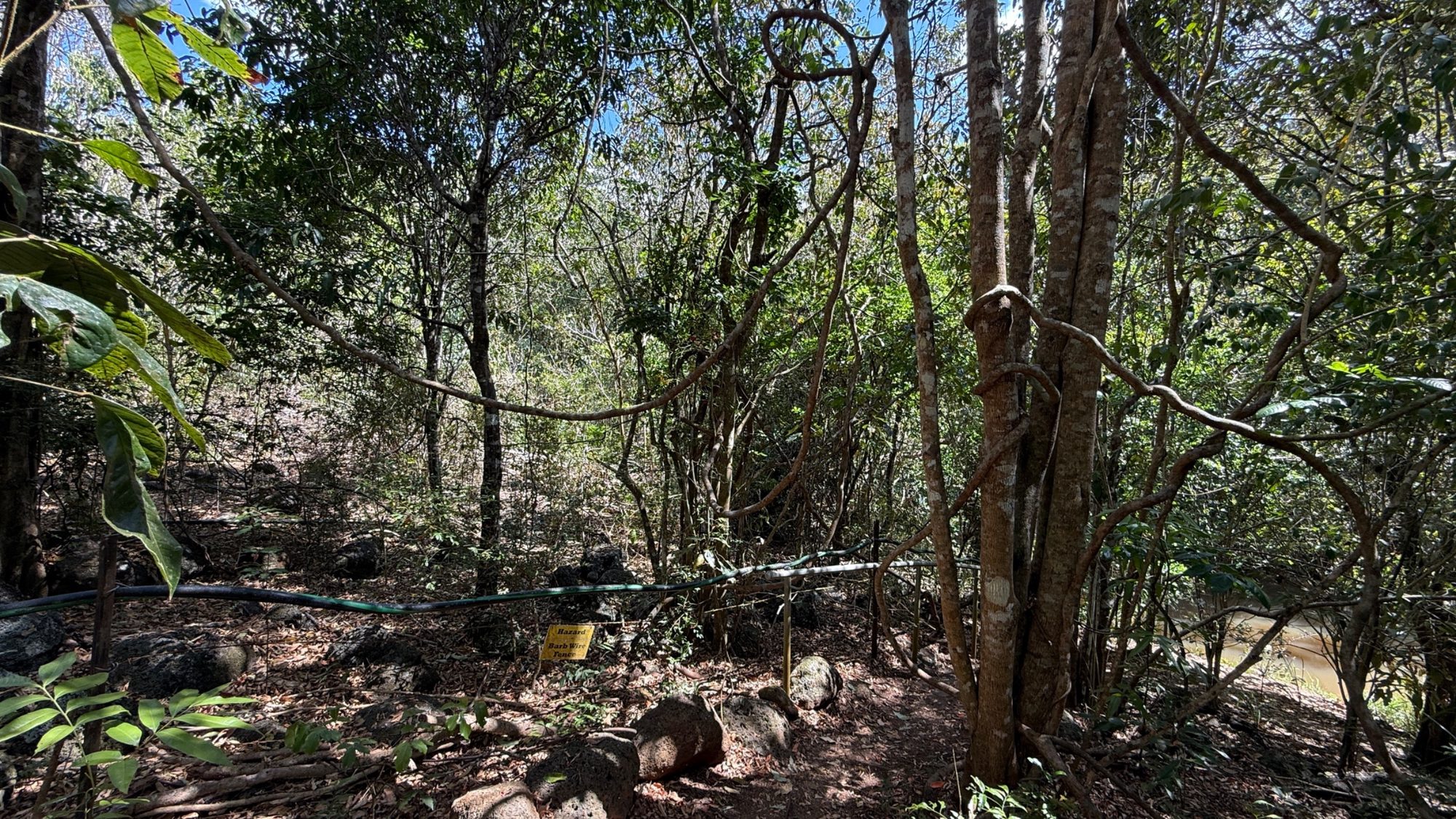
We stopped at every flicker on the water, determined not to miss our moment. The platypus never appeared. A turtle and a lizard did, which felt like a small consolation prize for our patience. After somewhere between half an hour and an hour of searching, we admitted defeat: the platypus had won the day. Still, we didn’t regret the walk. The rainforest along the creek was peaceful and unexpectedly lovely, another side of the Tablelands beyond its open farmland and quiet towns.
A Country-Town Lunch
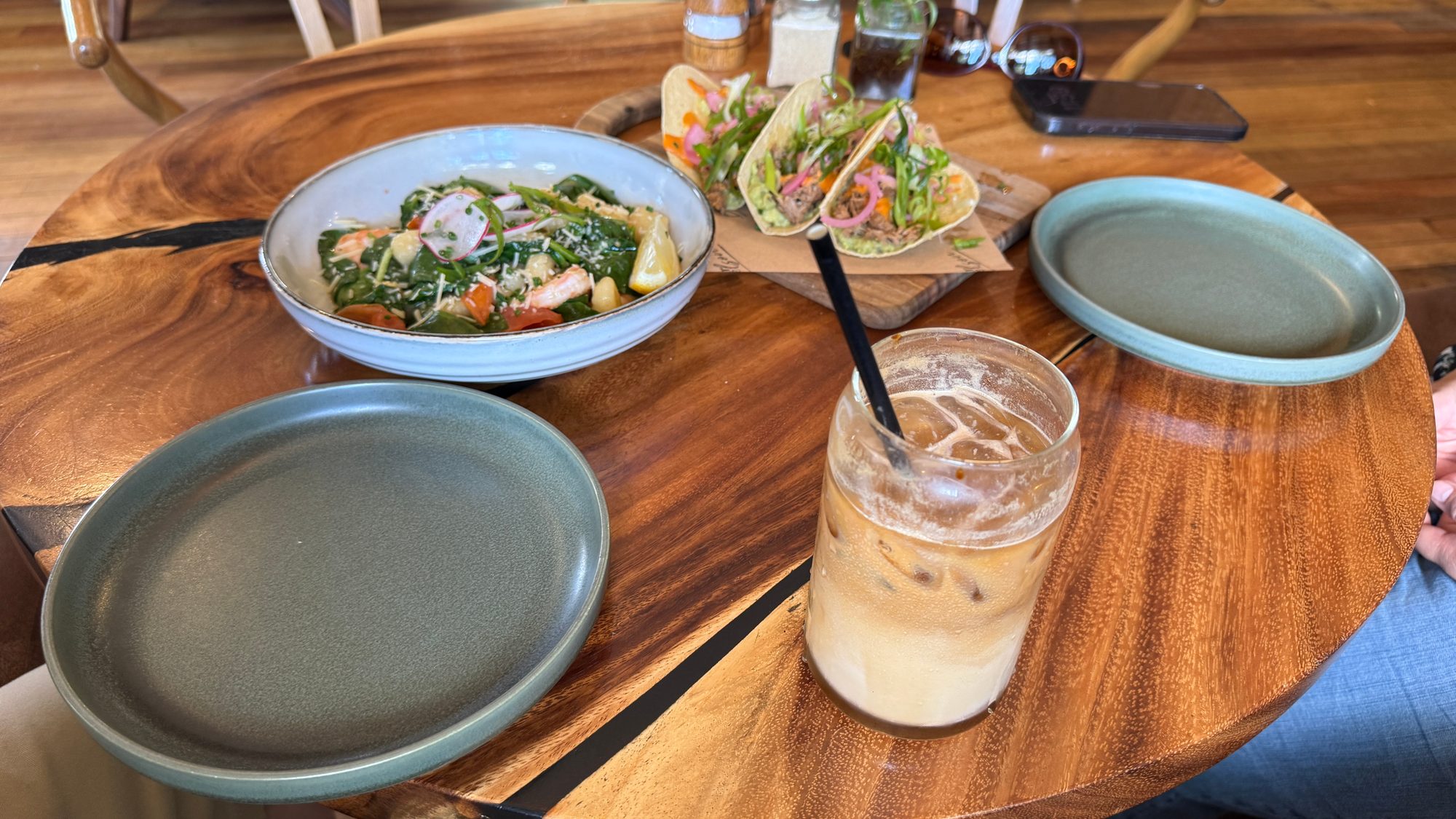
After Peterson Creek, we stopped for lunch in Yungaburra, a charming old town with traditional Queensland timber buildings and an easygoing country feel. We chose Mr. Belson’s, a farm-to-plate restaurant using local ingredients. We ordered a taco filled with meat, avocado, pickled onion and fresh vegetables, plus prawns with gnocchi, greens, tomatoes and lemon. Both were delicious. A Dirty Chai Latte—spiced chai with a shot of espresso—rounded things out. It was a very satisfying lunch in a very small town.
A Tiny Visitor Center, a Big Surprise
After lunch, we stopped at the Malanda Falls Visitor Centre, expecting to take a quick look at the waterfall. The small visitor centre ended up being the surprise.
Malanda Falls formed where water flows over an old volcanic lava bed of hard basalt, spilling over a broad, low rock ledge. There are walking paths and a swimming area beside the falls. It isn’t the kind of waterfall that plunges dramatically from a great height; its charm is more down-to-earth. You can drive to the edge of town and go for a swim beside a waterfall, which is a pretty excellent local amenity.
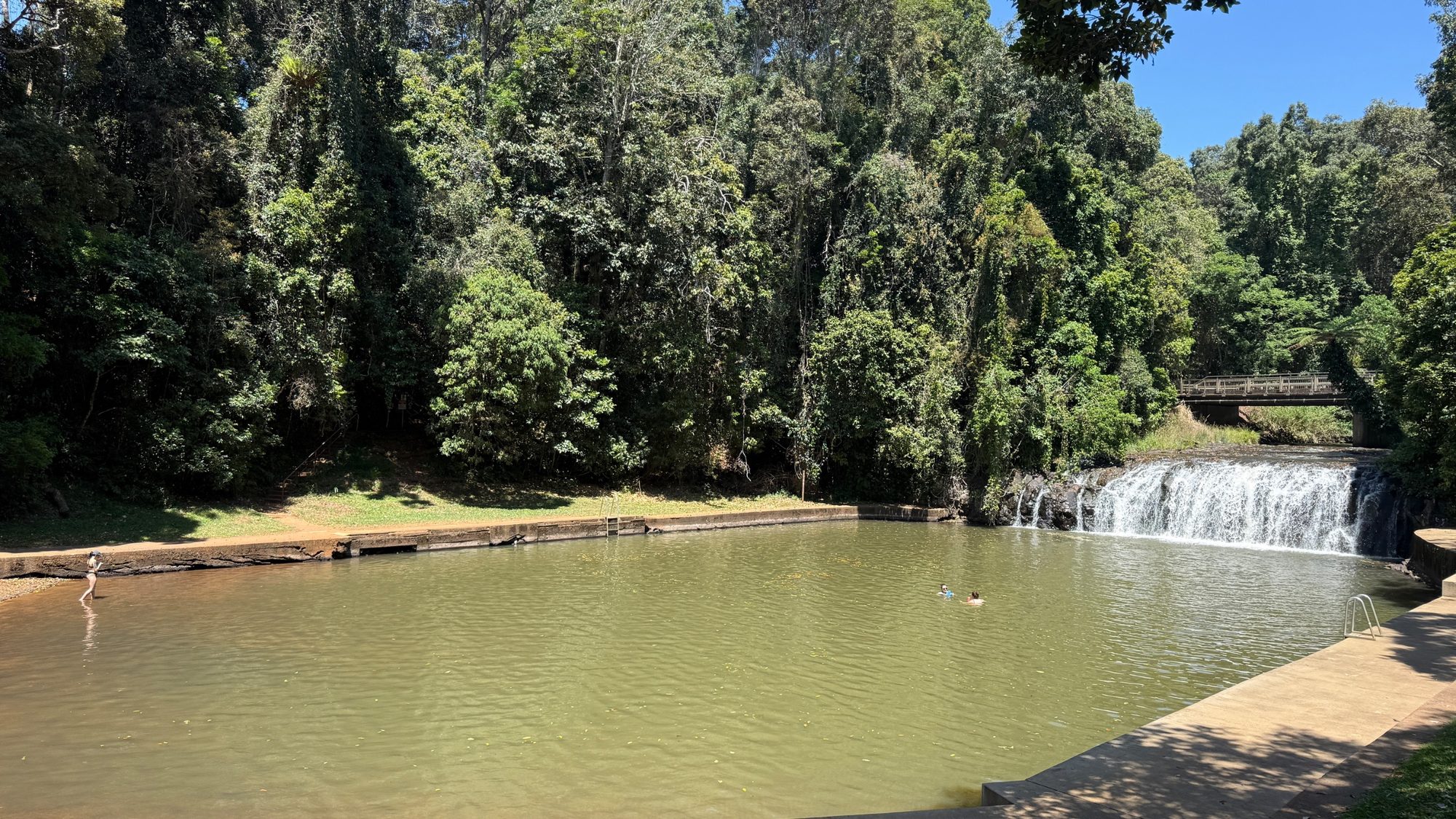
We heard that the visitor centre had once been damaged by fire and was later rebuilt, with local volunteers contributing much of the work and care. It wasn’t large, but the exhibits on rainforest ecology and local wildlife were lively and thoughtfully put together.
The insect displays were especially impressive: enormous stick insects, moths with wings that looked almost bird-sized, and all kinds of creatures with improbable shapes and colors. We’ve visited plenty of natural history museums, but this was our first time seeing stick insects and moths quite this large.
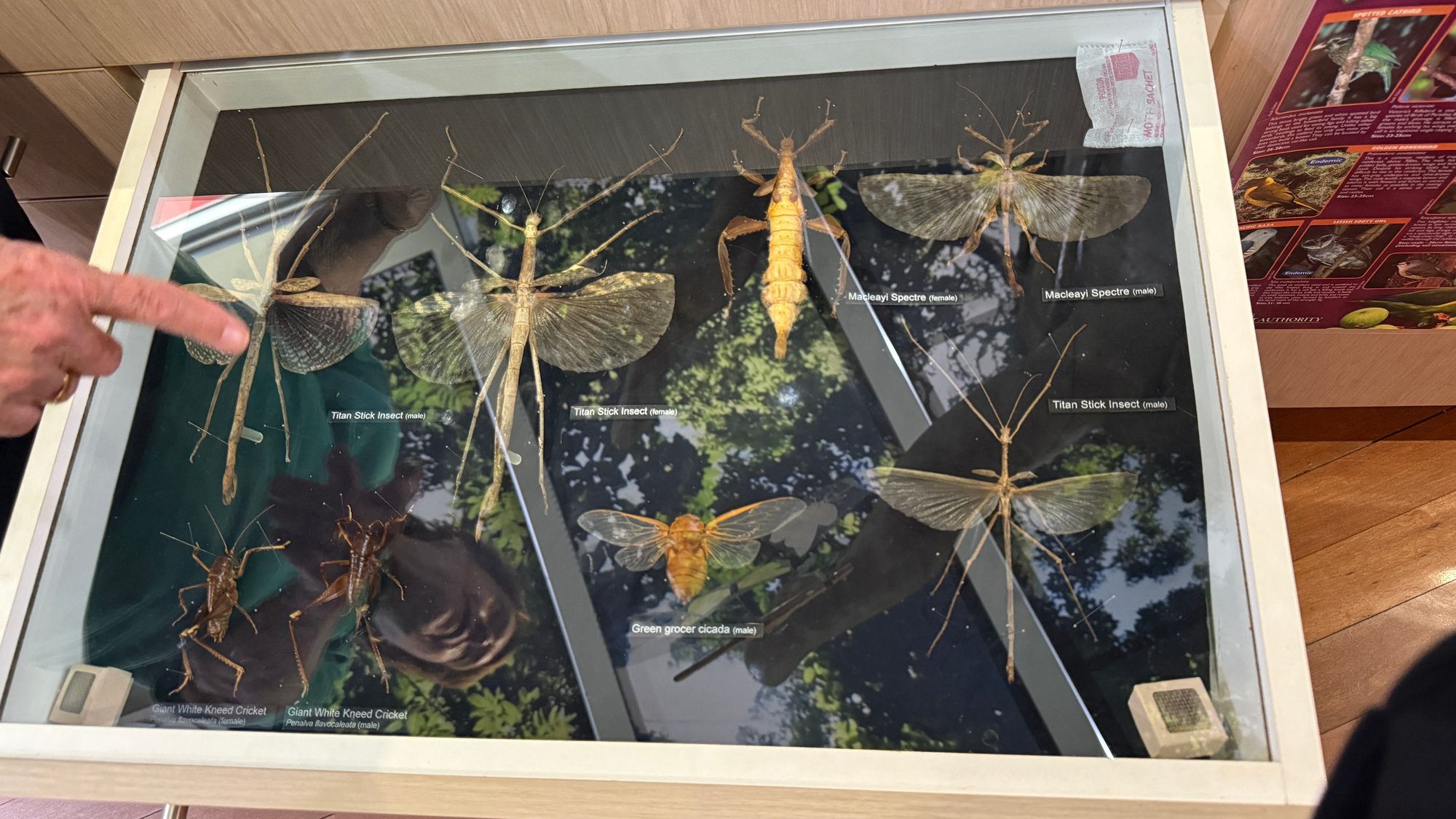
Some of the stick insects were long and spindly, with legs stretched out until they looked almost indistinguishable from branches. Others had broad wings that made them look surprisingly grand. Their camouflage was remarkable. Leave one still on a rainforest tree and we might walk past it ten times without noticing. Australia’s wildlife has already given us the platypus; apparently the insects weren’t about to let it have all the attention.
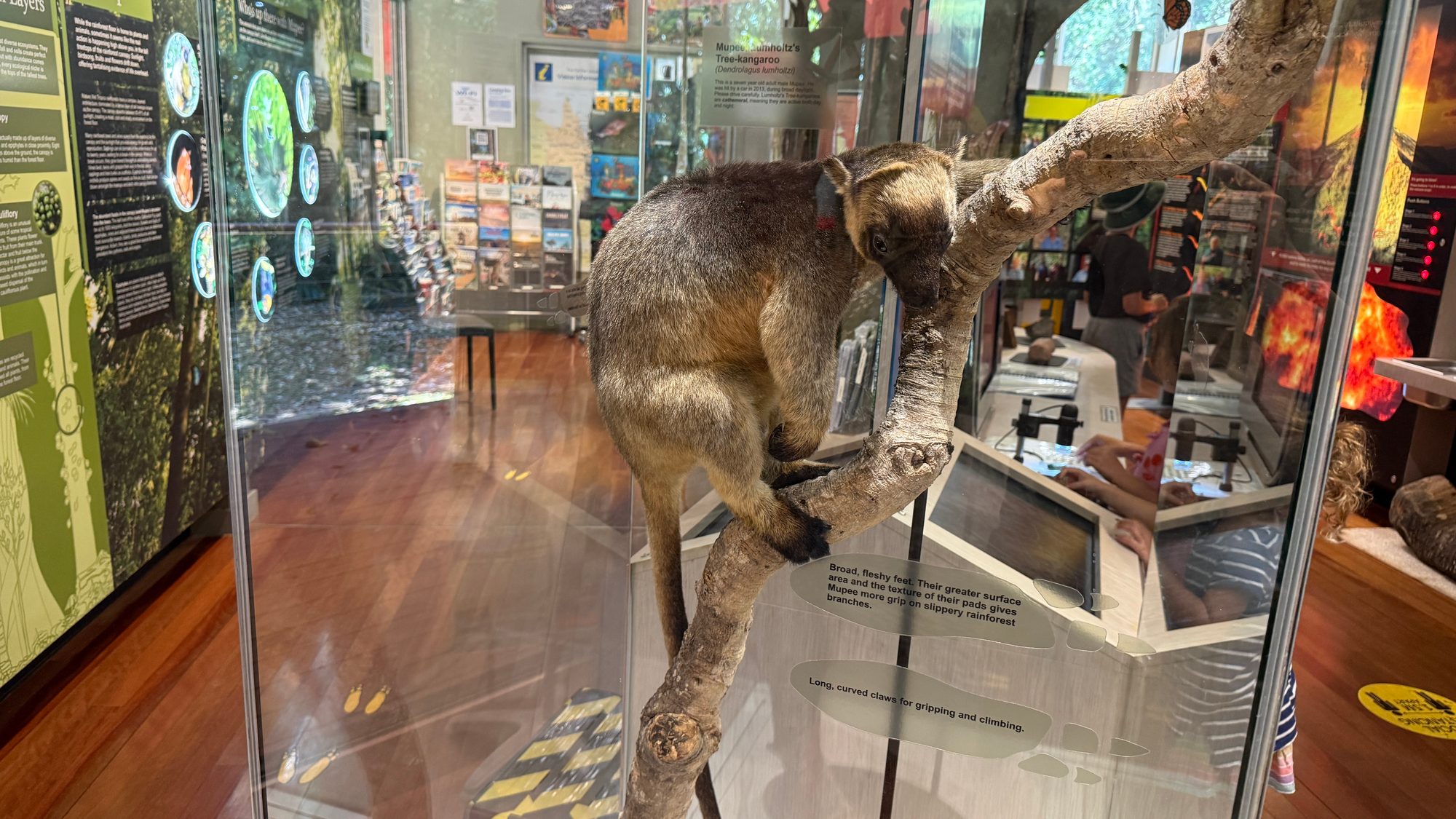
We also saw a tree kangaroo specimen. We’d seen ordinary kangaroos and koalas in trees, but tree kangaroos are something else. They’re part of the kangaroo family, adapted for life in the branches, with strong limbs, curved claws and broad feet for gripping slippery trunks.
One of the older women at the centre was wonderfully generous with her time, telling us about the exhibits and nearby places to visit. She clearly knew and loved this region. We hadn’t planned to linger, but her enthusiasm made the little centre more memorable than many bigger attractions. Some of the best travel discoveries aren’t on the itinerary; they happen when you meet someone who loves where they live. On her recommendation, we decided to visit a couple of volcanic lakes and an old rainforest.
Two Crater Lakes and Two Thousand-Year-Old Trees
We drove on to Lake Eacham and Lake Barrine, both part of Crater Lakes National Park. They were formed by ancient volcanic activity: after the eruptions ended, the craters gradually filled with water and became lakes surrounded by rainforest. Compared with the Great Barrier Reef, the scenery here was wonderfully quiet. The forest was thick, the water still, and there was little hint that the ground beneath us had once been volcanic.
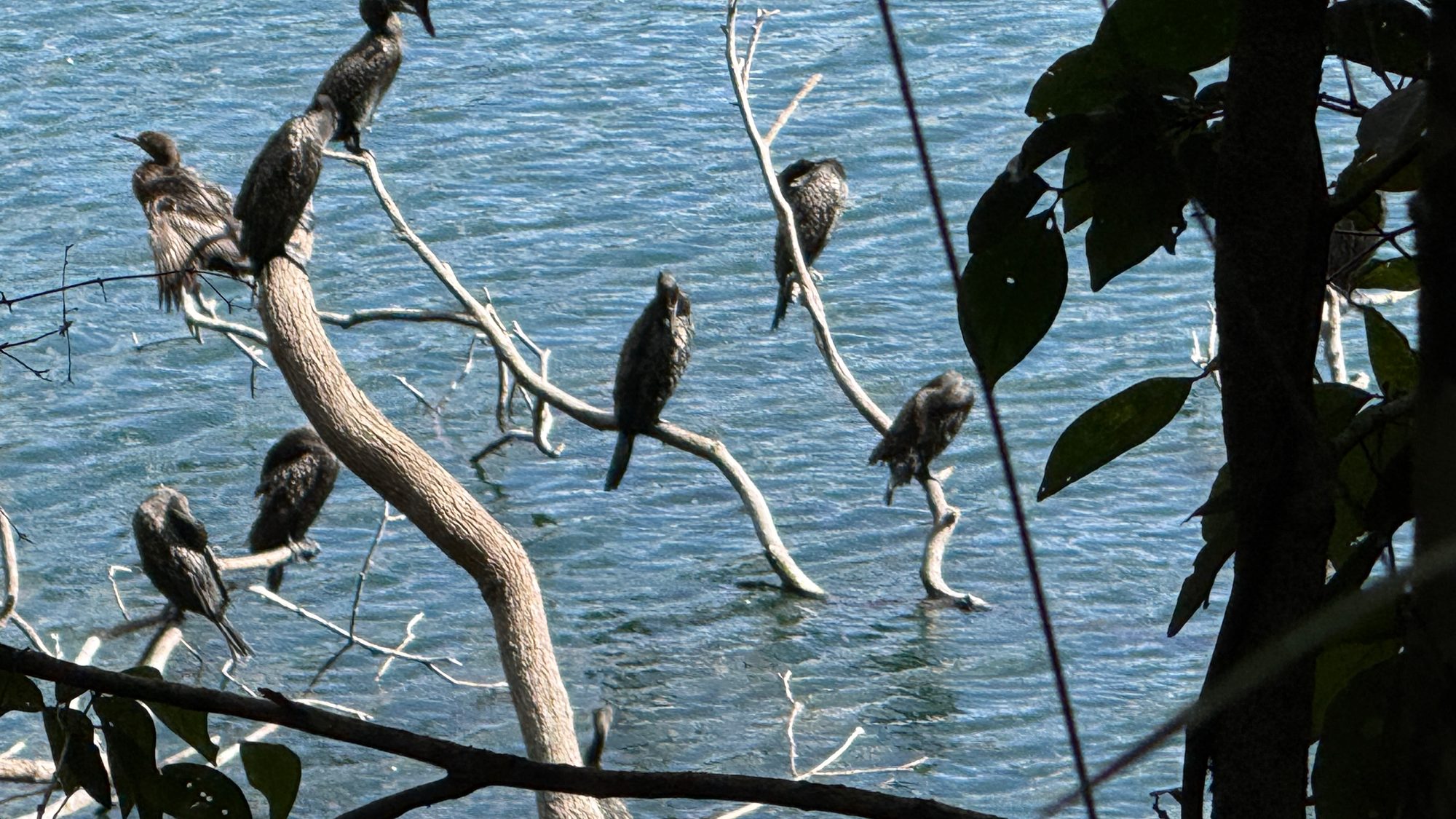
Lake Eacham is ringed by trees, and people were swimming and boating in the water. We admired the view from the shore and continued to Lake Barrine. There, a group of cormorants rested on bare branches above the lake. Some had their wings spread out to dry; others sat quietly, as if this were a very relaxed bird convention.
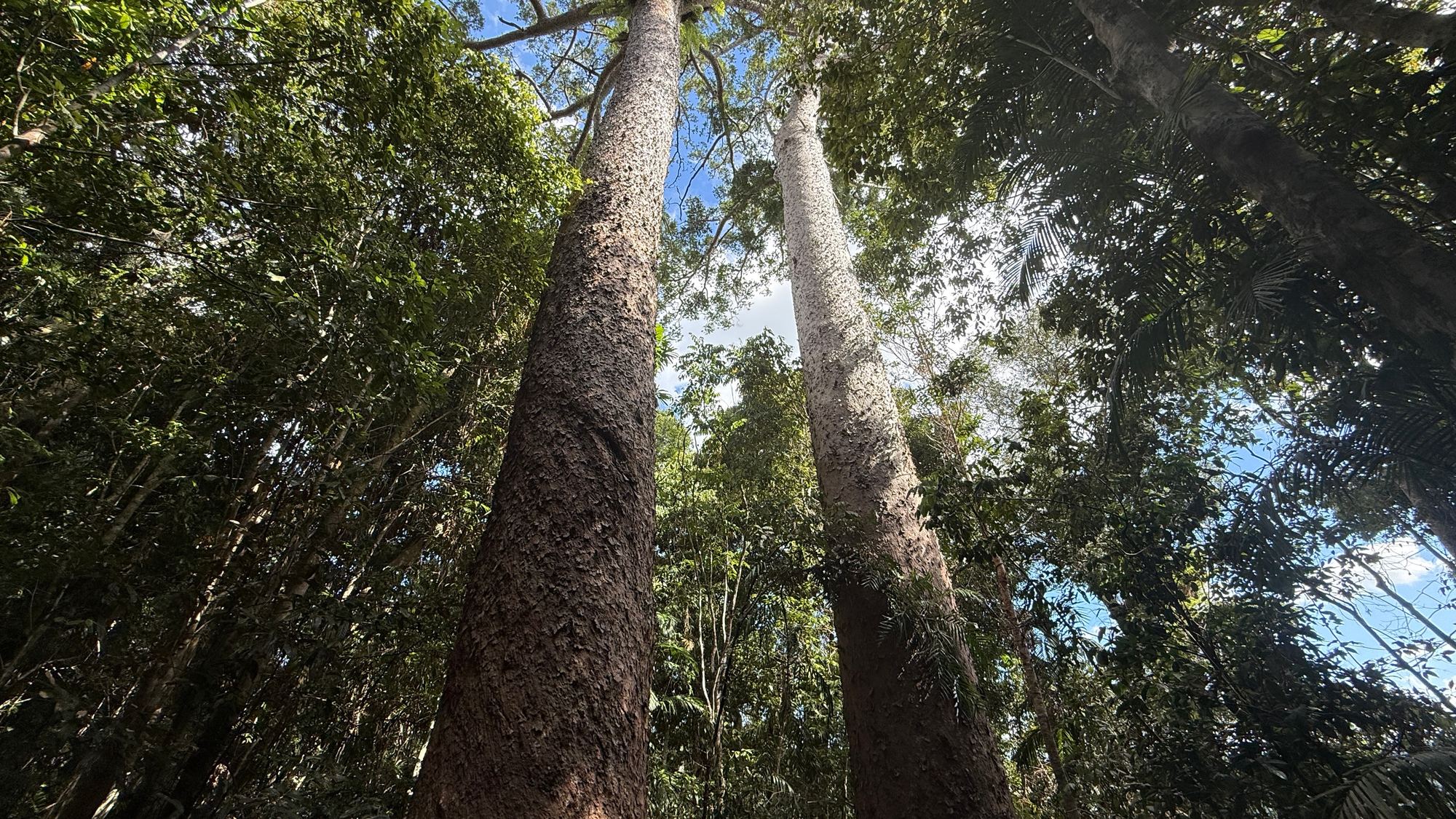
Our biggest reason for stopping at Lake Barrine, though, was to see two ancient Bull Kauri trees tucked into the rainforest. A short trail from the parking lot led us to them. The trunks were enormous and straight, rising so high that the canopy swallowed their tops. Queensland Parks estimates the trees at about 45 meters tall, with trunks more than six meters around, and over a thousand years old. When they were saplings, China was around the beginning of the Song dynasty. They’ve stood here through centuries of everything else changing around them.
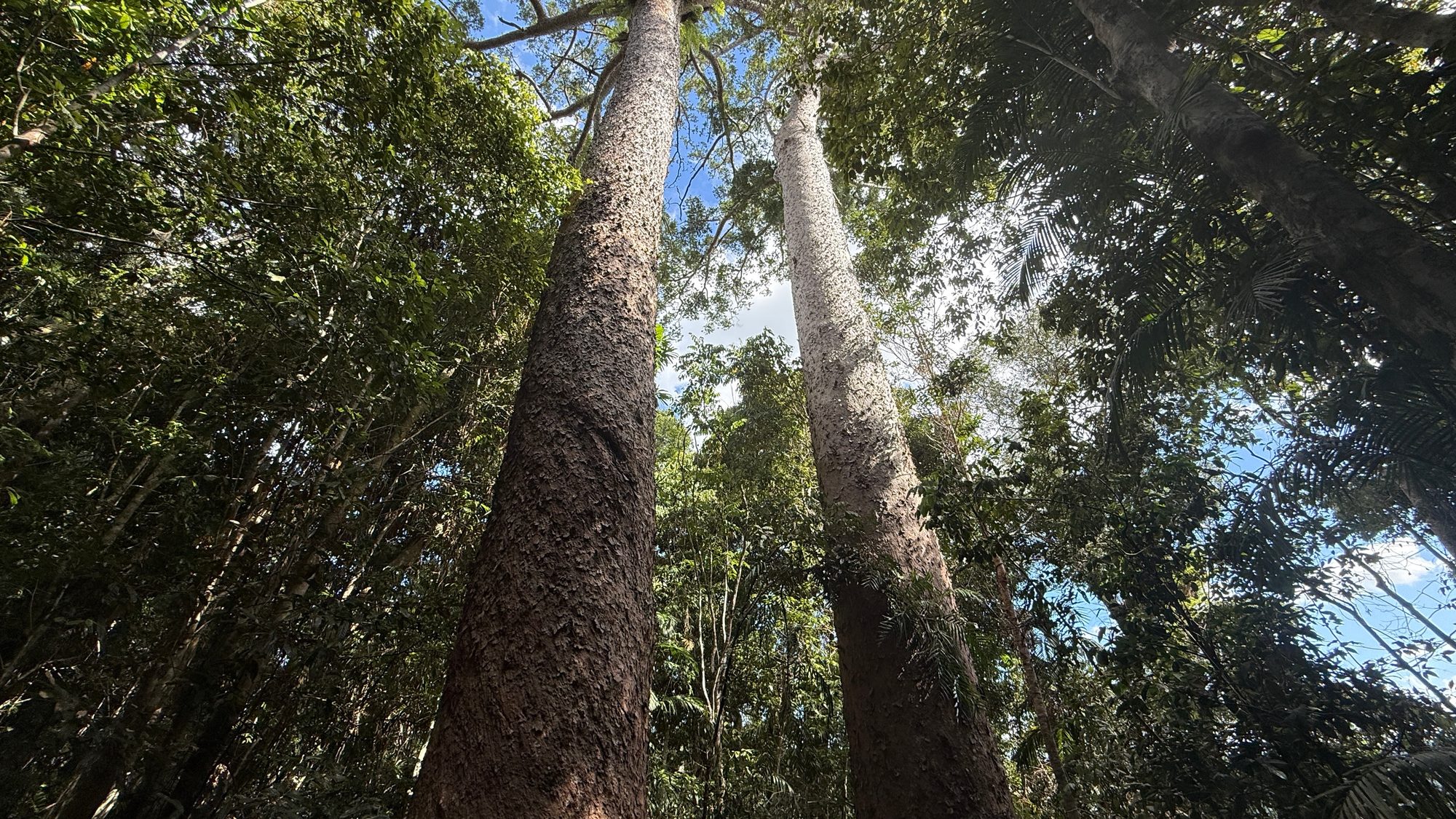
Their age is only part of the story. The plant family they belong to goes back to the time of the dinosaurs, and modern Bull Kauris share many features with ancient fossil records. When Australia drifted away from Gondwana, its long isolation helped preserve plant lineages that had vanished elsewhere. Standing under these trees, human history felt very recent indeed.
Huge bird’s-nest ferns grew high on the trunks, their leaves fanning out like oversized potted plants someone had left in the canopy. They aren’t parasites stealing food from the trees; they’re epiphytes, using the branches as a place to live and gathering water and organic matter from the rain.
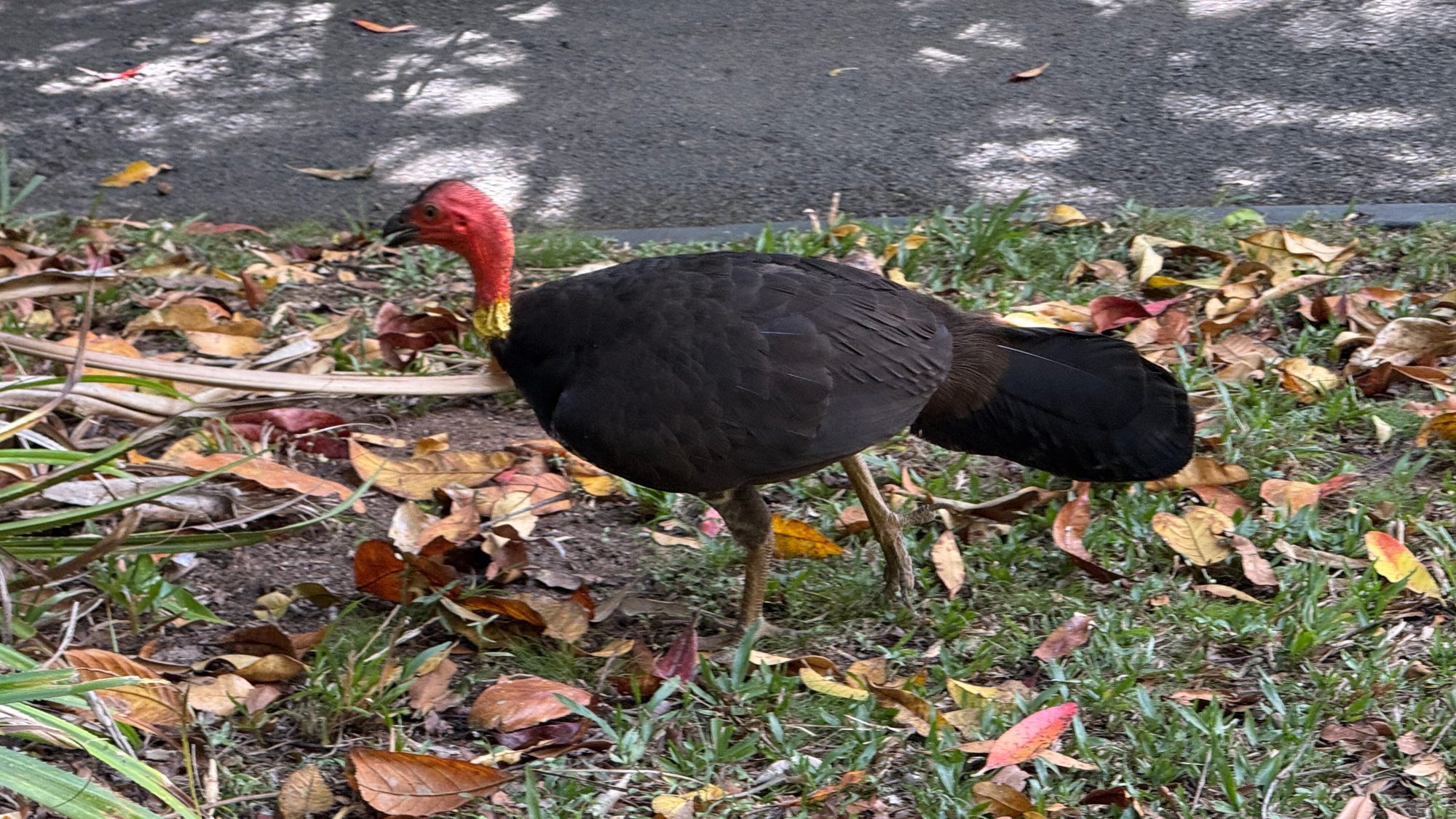
We also saw plenty of Australian brush-turkeys around the Tablelands. They have black bodies, bright red heads and a yellow wattle under the neck. Somehow they look like they forgot to put on a tie before heading out. They weren’t especially shy, wandering around the grass and leaf litter in search of food.
Back to Cairns for Australian Rock Lobster
After seeing the Bull Kauris, we started back down the winding road toward Cairns. In the morning we’d left the coastal rainforest; during the day we’d crossed farmland, small towns, creeks and crater lakes; by evening we were back in the tropics. It felt like we’d visited several versions of Australia in a single day.
For our last dinner, we wanted something special: Australian rock lobster. We’d tried kangaroo, crocodile pie and plenty of local food, but hadn’t yet had the lobster we’d been looking forward to. Many seafood restaurants we looked at served it cooked and chilled. We prefer the Chinese-style approach—fresh lobster, cooked to order and brought to the table hot. So we went to Golden Boat Seafood Restaurant in central Cairns.
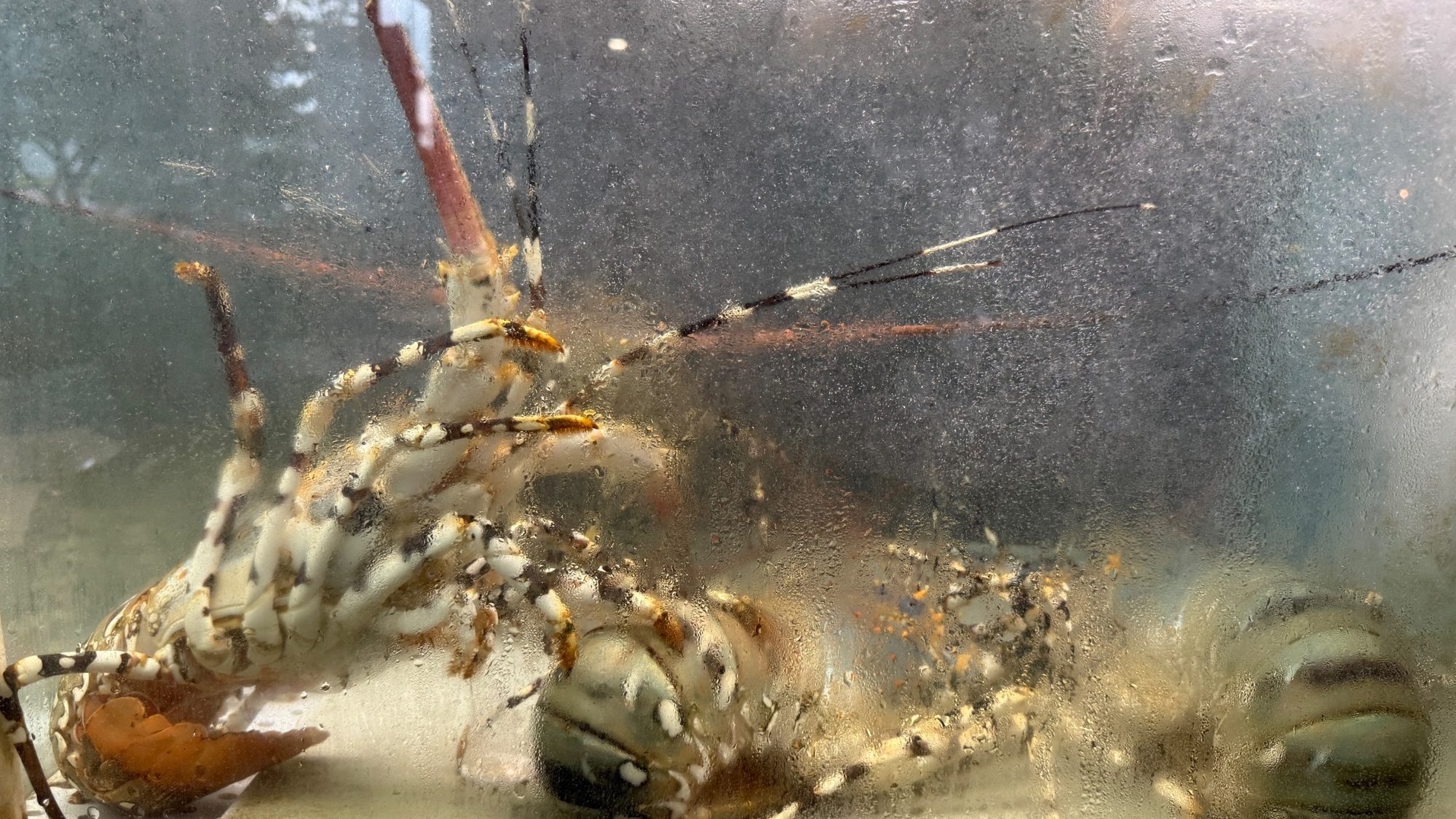
The first thing we noticed was a large tank by the entrance. Inside were a few live lobsters, their long antennae and patterned shells moving around in the water. The restaurant said they were wild-caught Australian rock lobsters. Since we were in Australia, on our last night, and already standing next to the tank, hesitation seemed pointless.
We picked a 1.3-kilogram lobster and added lobster pasta. We thought two people could manage it. Then the food arrived, and we realized we had been wildly optimistic about our abilities. The lobster was substantial, with thick, meaty flesh; we couldn’t finish it all. The bill came to about US$150, which felt reasonable by Australian restaurant standards, especially for something that had been swimming moments earlier.
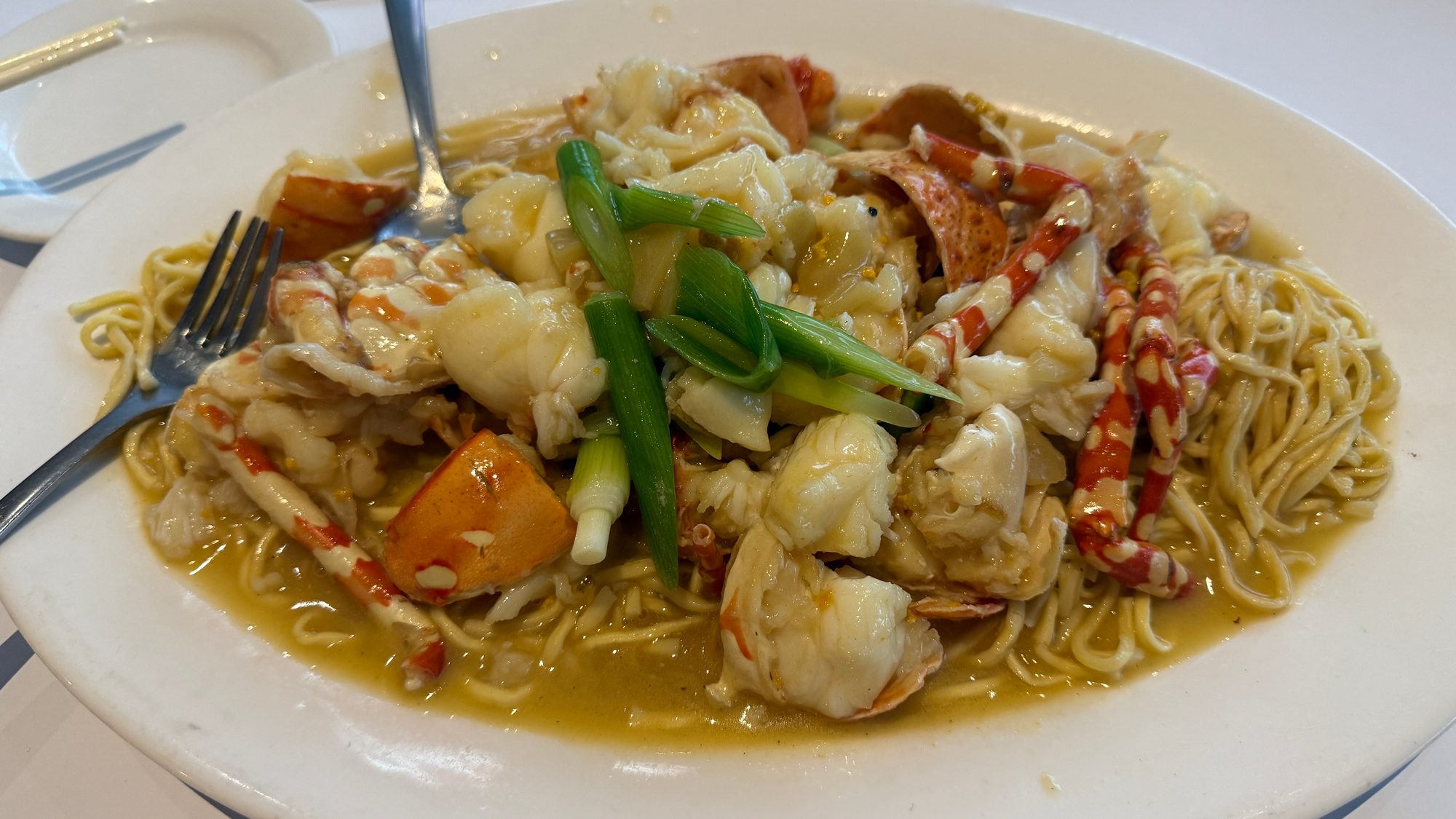
Australian rock lobster and the American lobster often called Maine or Boston lobster are different animals. The American kind is famous for its big claws, with tender, sweet meat inside. Australian rock lobster doesn’t have those huge claws; it has long antennae and a thick tail, which is where most of the meat is. The tail meat is firmer and springier, and there’s plenty of it. Best of all, no claw excavation required.
Kmart and Target—Wait, We’re Still in Australia?
After dinner, we stopped at Cairns Central Shopping Centre. With most of the sightseeing done, wandering around a local mall felt like a nice way to see a little of ordinary life.
Then we spotted a Kmart. The name took us straight back to our early years in the U.S., when Kmart was a familiar discount department store. It lost ground to Walmart and Target and nearly disappeared from American life. In Australia, though, Kmart looked very much alive and well. The Australian business opened its first store in 1969, originally as a partnership between Coles and the American retailer’s predecessor, S.S. Kresge. Australian ownership gradually took over, and today Kmart Australia is an independent business within Wesfarmers, with hundreds of stores in Australia and New Zealand. Same name, completely different story.

And then there was Target. Same name, red-and-white color scheme, bullseye logo and a storefront that looked strikingly like the American chain. I initially thought the U.S. Target had expanded to Australia. It hadn’t: Australian Target began as a fabric shop in 1926 and is also part of Wesfarmers, making it a sibling of Australian Kmart. The identical-looking branding makes more sense once you remember that trademarks are territorial.
We finished at JB Hi-Fi, a well-known Australian electronics retailer, and picked up a few small gadgets. Wandering through those stores wasn’t as dramatic as a rainforest hike, but it gave us a glimpse of everyday Australian life. A country’s character isn’t only in its national parks and famous sights; some of it is hiding in the mall, between the shelves and the shopping habits of ordinary people.
Reader Discussion · 0
No comments yet. Be the first to share your experience.