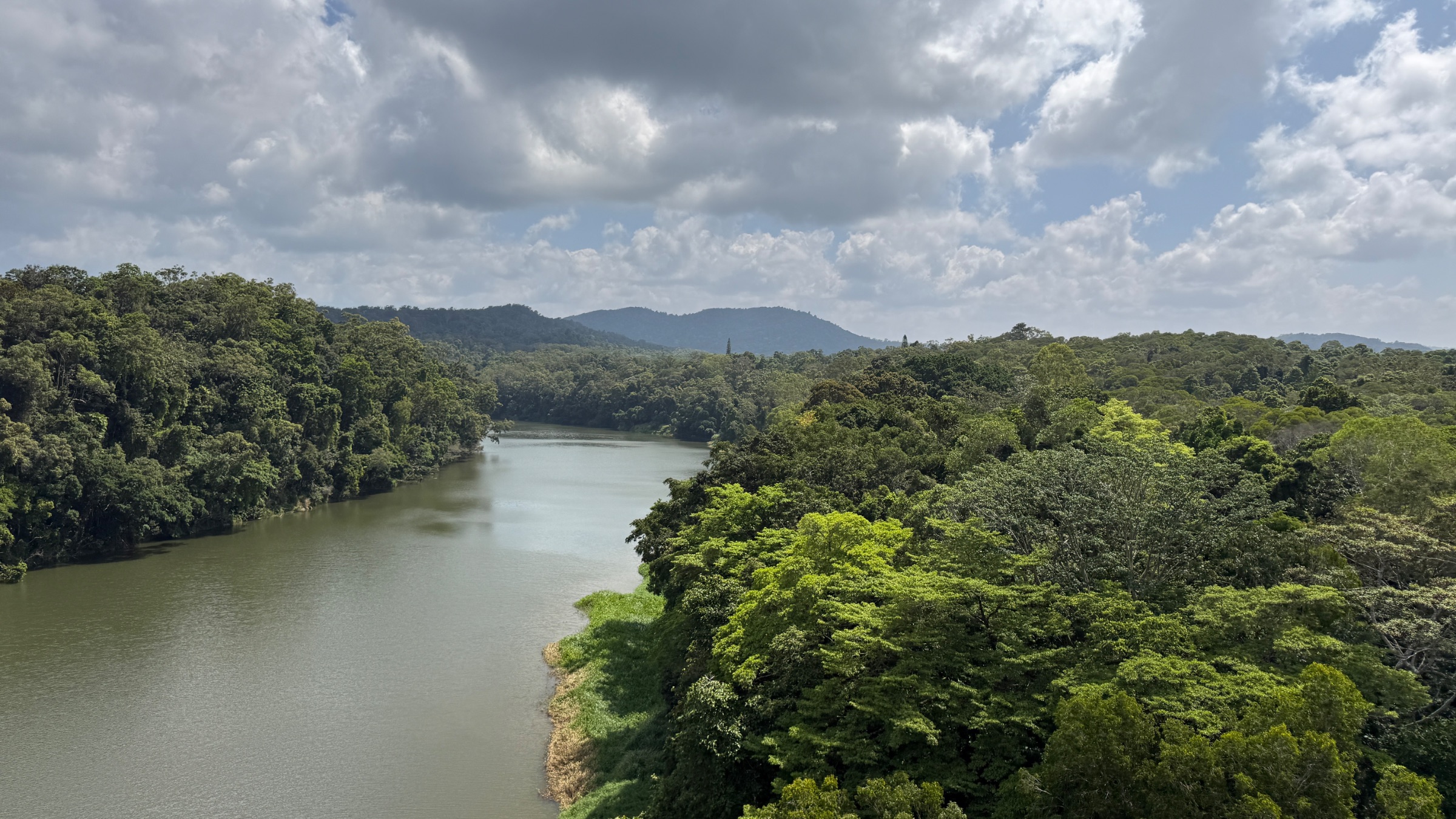
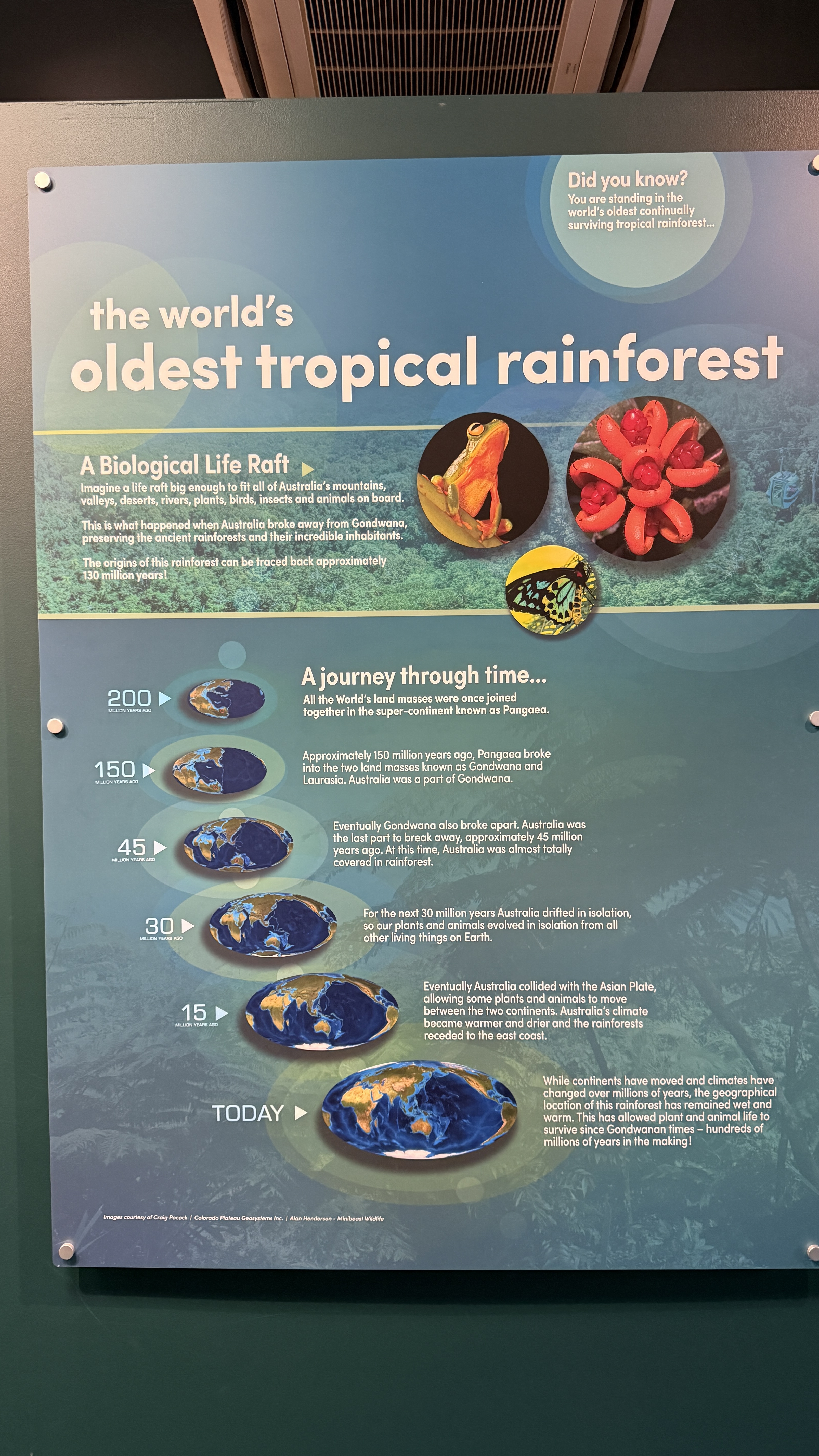
Over the past few days in Australia, we had seen kangaroos, held a koala, watched cassowaries up close, and taken a boat out to the Great Barrier Reef. The earlier days had been full of memorable wildlife encounters. Today was a high point for scenery and deep time: we explored Queensland’s Wet Tropics, one of the world’s oldest tropical rainforest regions, with evolutionary roots reaching back roughly 130 million years. Dinosaurs still ruled the earth then, and Australia was part of the ancient supercontinent Gondwana. As the continents slowly broke apart, Australia drifted on its own. Climate shifts wiped out many ancient plants and animals elsewhere, while some survived in the wet mountains of northeastern Queensland. The continent became a kind of biological life raft, carrying these old lineages through millions of years of geological change.
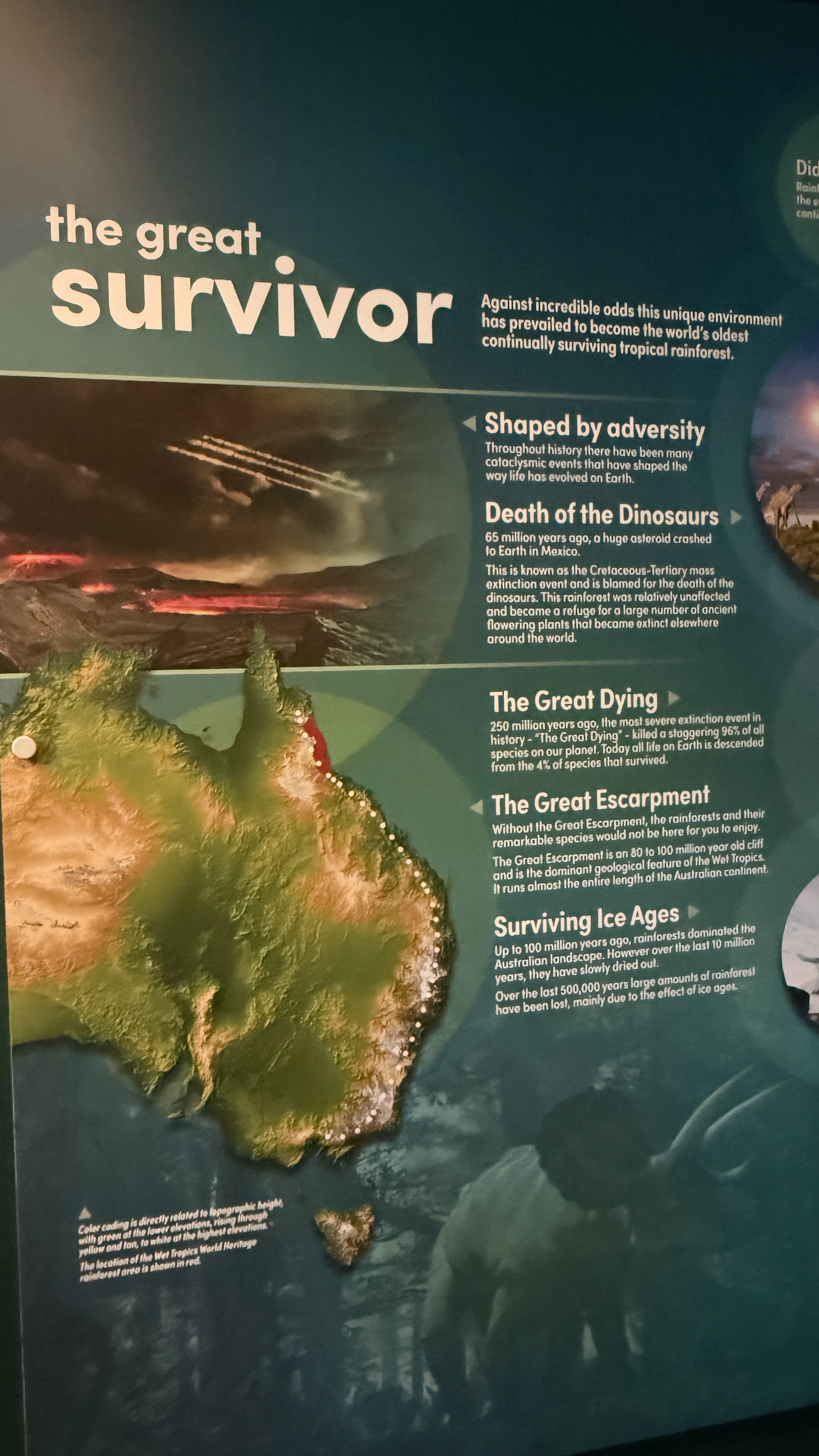
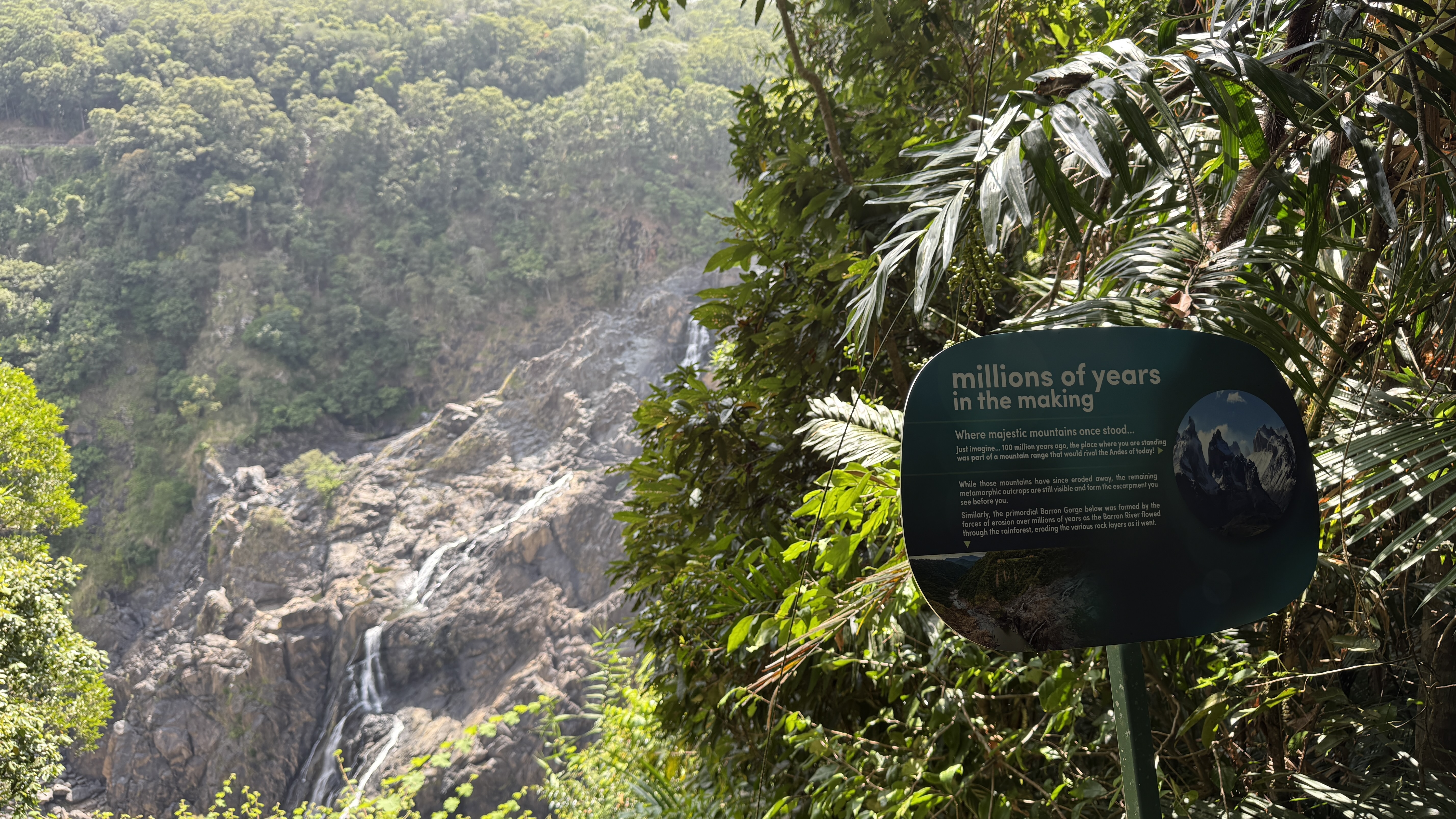
The rainforest owes its survival in part to the region’s unusual terrain. About 100 million years ago, mountains here were once as high as today’s Andes. Over time, erosion wore them down and rivers cut through the rock, carving the dramatic Barron Gorge we see today. The Great Escarpment along eastern Australia also catches moist air from the ocean, bringing the heavy rainfall that made this area a refuge for ancient species. Earth has gone through several mass extinctions, including the end-Permian event about 252 million years ago, which wiped out most marine species, and the asteroid impact around 66 million years ago that killed the non-avian dinosaurs. Many ancient lineages survived the long environmental changes in this rainforest. The exhibition calls it “The Great Survivor,” a fitting name.
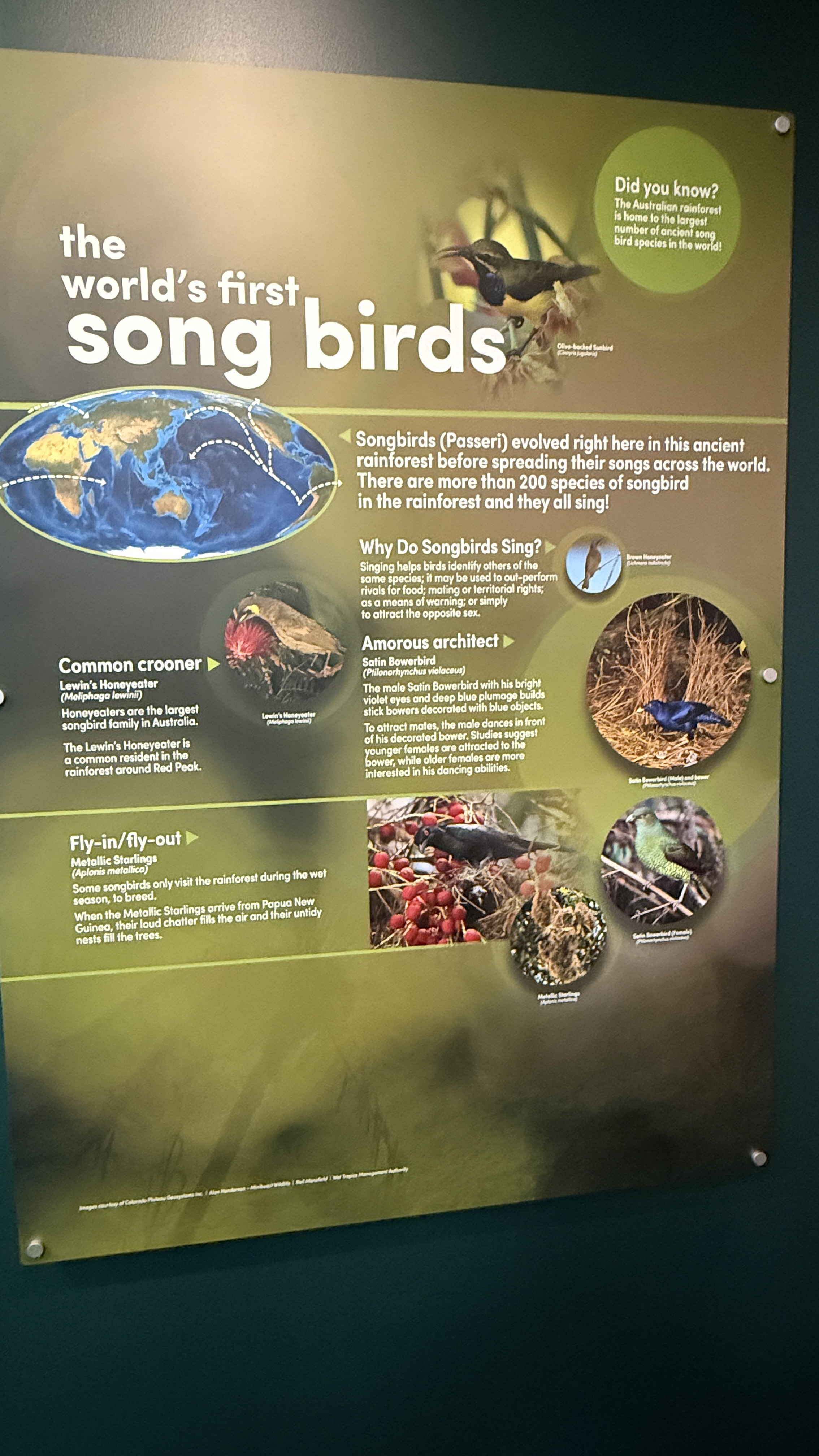
This place has preserved not only ancient plants but also animals that are hard to find elsewhere. There is the musky rat-kangaroo and the tree-dwelling Lumholtz’s tree-kangaroo, as well as an ancient plant called ribbonwood. Its large seeds contain toxins that can be dangerous to livestock, yet the musky rat-kangaroo can eat them. The early evolution of modern songbirds can also be traced to Australia, including these ancient rainforests. It is amazing to think that the distant ancestors of the birds singing around the world today may once have lived on this continent. What we were visiting felt less like an ordinary tropical forest and more like a living natural history museum.
A shuttle, an old train, and a gondola ride
The day’s route made a neat triangle. We drove from Palm Cove to the Skyrail station in Smithfield and left our car there. A shuttle took us to Freshwater Station, where we boarded the Kuranda Scenic Railway to climb into the mountains. From Kuranda, we took the Skyrail gondola back down and returned straight to Smithfield for the car. We had our own vehicle, but chose this combination because it let us experience the century-old railway and see the rainforest from above without backtracking.
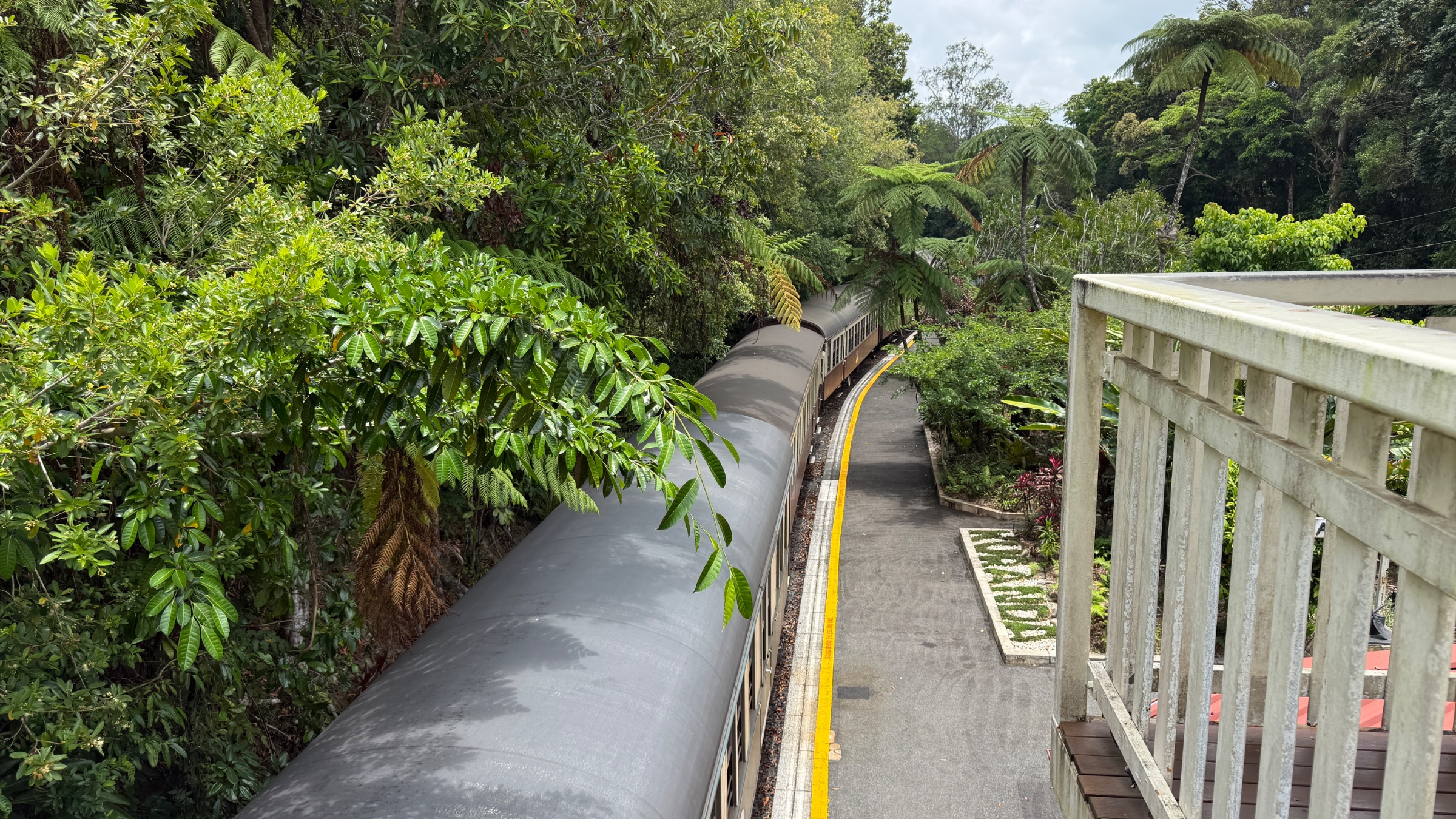
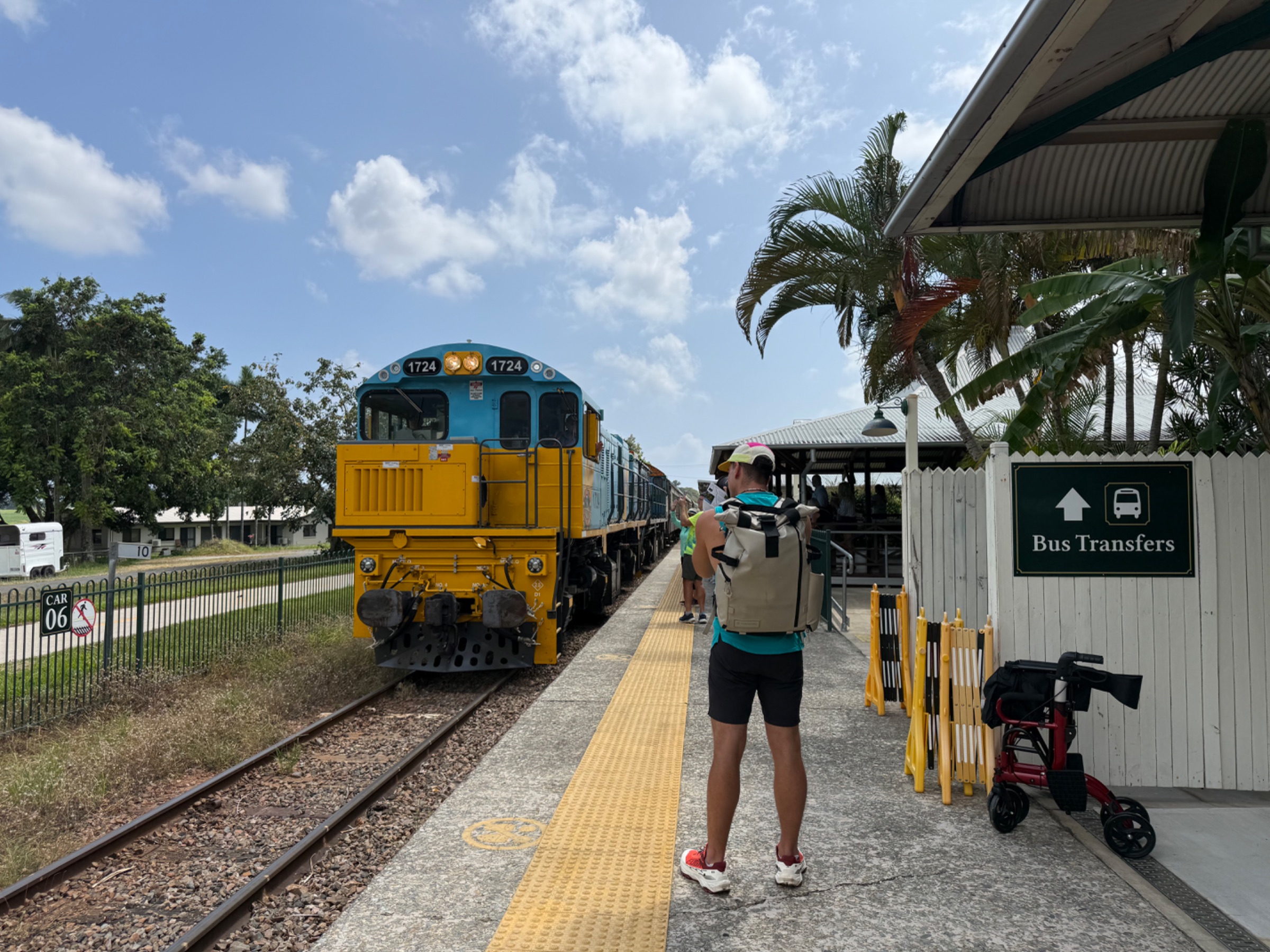
We arrived at Smithfield before 8:45 a.m. to check in, then spent a little time in the visitor centre and gift shop. The space was nicely laid out, with Australian souvenirs and information about the rainforest and gondola. Around 9:00, we boarded the shuttle and reached Freshwater Station about ten minutes later. It is not far, but the shuttle is convenient for visitors like us who leave a car at the Skyrail’s lower terminal; after the ride down, we could simply drive home.
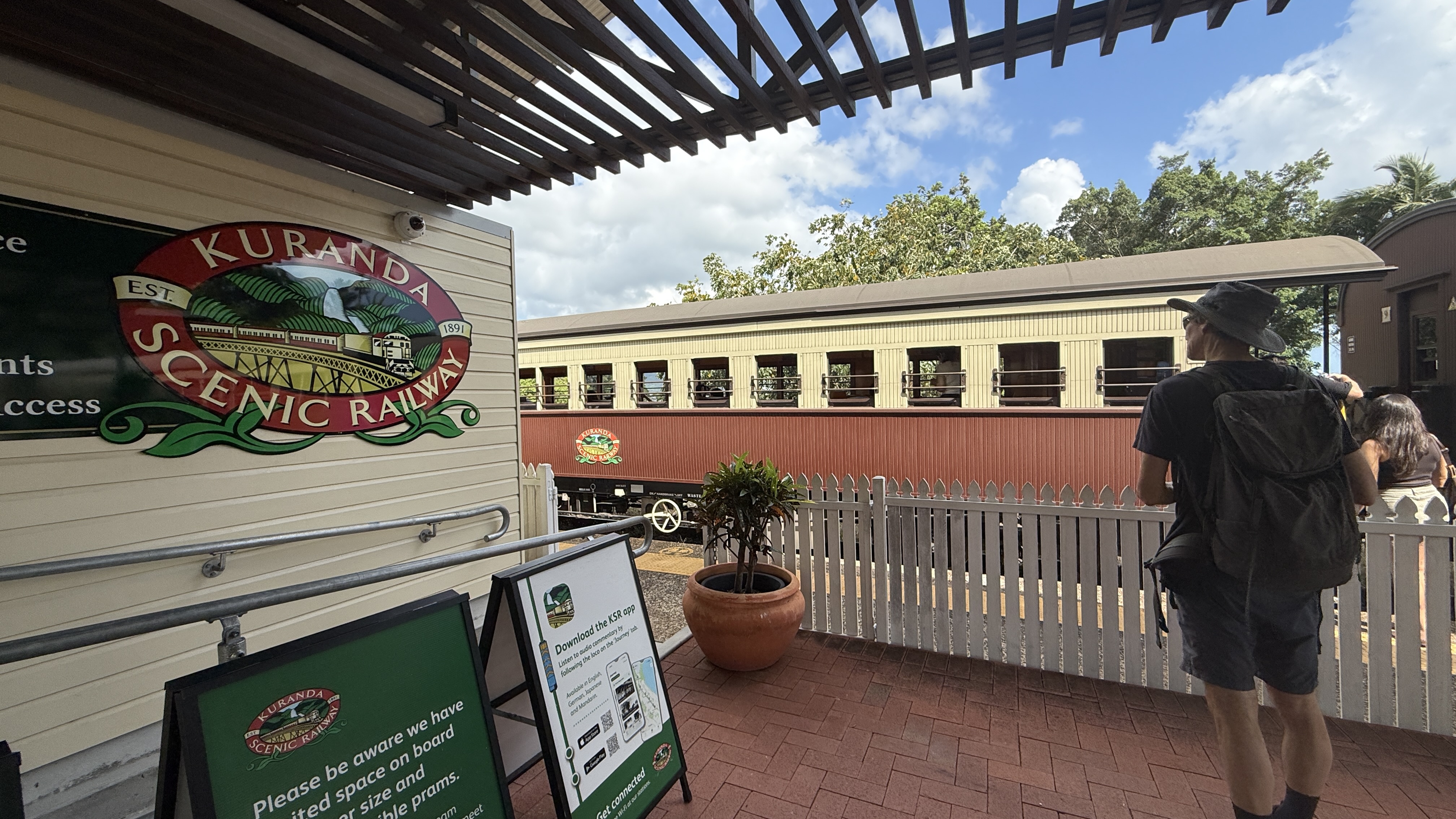
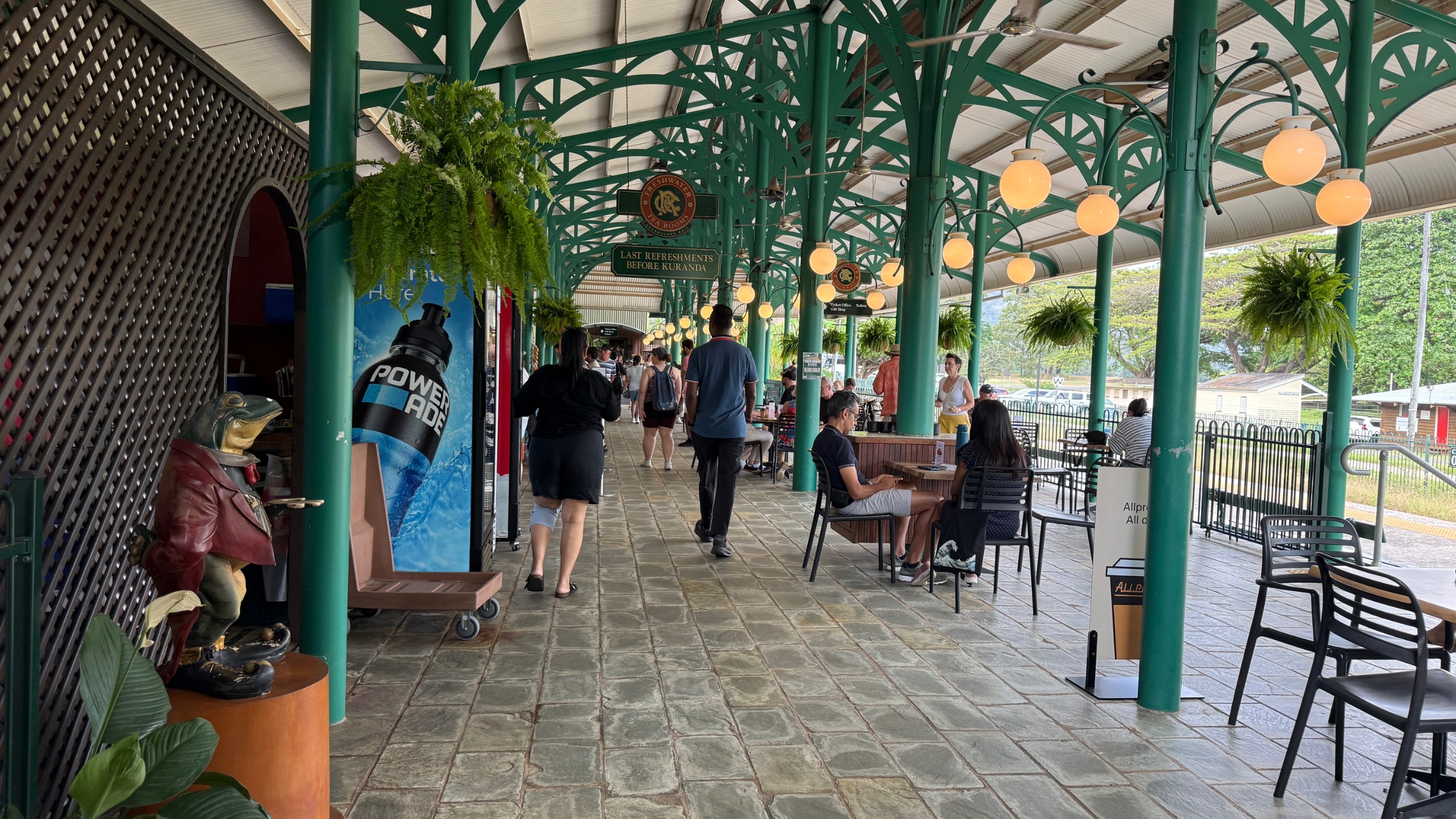
Our train was due to leave in about half an hour, so we had time to look around Freshwater Station. The old-fashioned railway buildings give it a lot of character. There is a café, a gift shop, and an exhibition on the railway’s history. Some old train carriages have been turned into dining areas, which made it feel as if we had stepped back a century. We read the historical displays and discovered that this railway, now dedicated to sightseeing, had a surprisingly complicated past.
The Kuranda Scenic Railway was not built for tourists. It was designed to carry ore and supplies. In the late nineteenth century, rich tin deposits were discovered in Queensland’s interior, drawing miners to the region. They soon faced a practical problem: how could they move ore to the coast and bring supplies up into the mountains? At the time, goods travelled by wagon along rough mountain tracks. The road toward Port Douglas became especially muddy in the wet season. One old photograph in the exhibition showed a wagon nearly swallowed by mud; we could tell at a glance how difficult transport must have been.
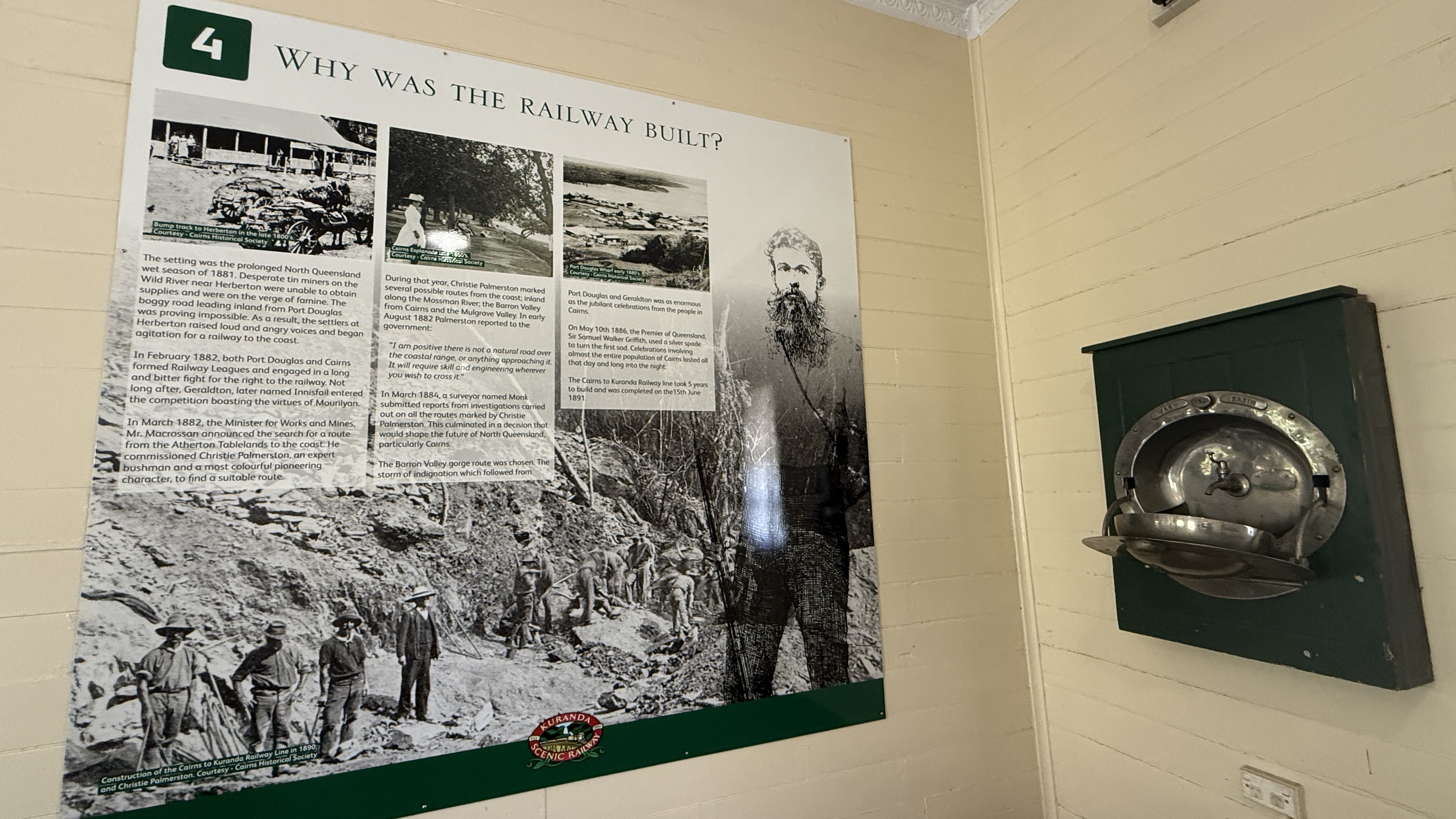
People began discussing a railway, but choosing which port it would serve sparked fierce competition. Cairns and Port Douglas both wanted the line, since the town that won it could become the leading trade centre in North Queensland. In 1882, each organized a railway-promotion group and lobbied the government to route the line their way. After surveys and debate, the government chose a route from Cairns through Barron Gorge. Construction began in 1886, and the railway reached Kuranda in 1891. It took five years. With no modern heavy machinery, workers had to cut tunnels and build bridges along steep cliffs, through rainforest and gorges, relying on explosives, simple tools, and sheer physical effort. It must have been grueling work.
The exhibition also had photographs of the railway workers. They reminded me of the transcontinental railroad in California. Nineteenth-century railway projects depended on immigrant labour: Chinese workers helped build railways in the American West, while the development of rail and mining in northern Australia also bears the marks of migrants from many backgrounds. We were now riding in comfort, watching waterfalls and gorges pass by. The workers who built the line to haul ore could hardly have imagined that, more than a century later, it would become a world-famous sightseeing railway.
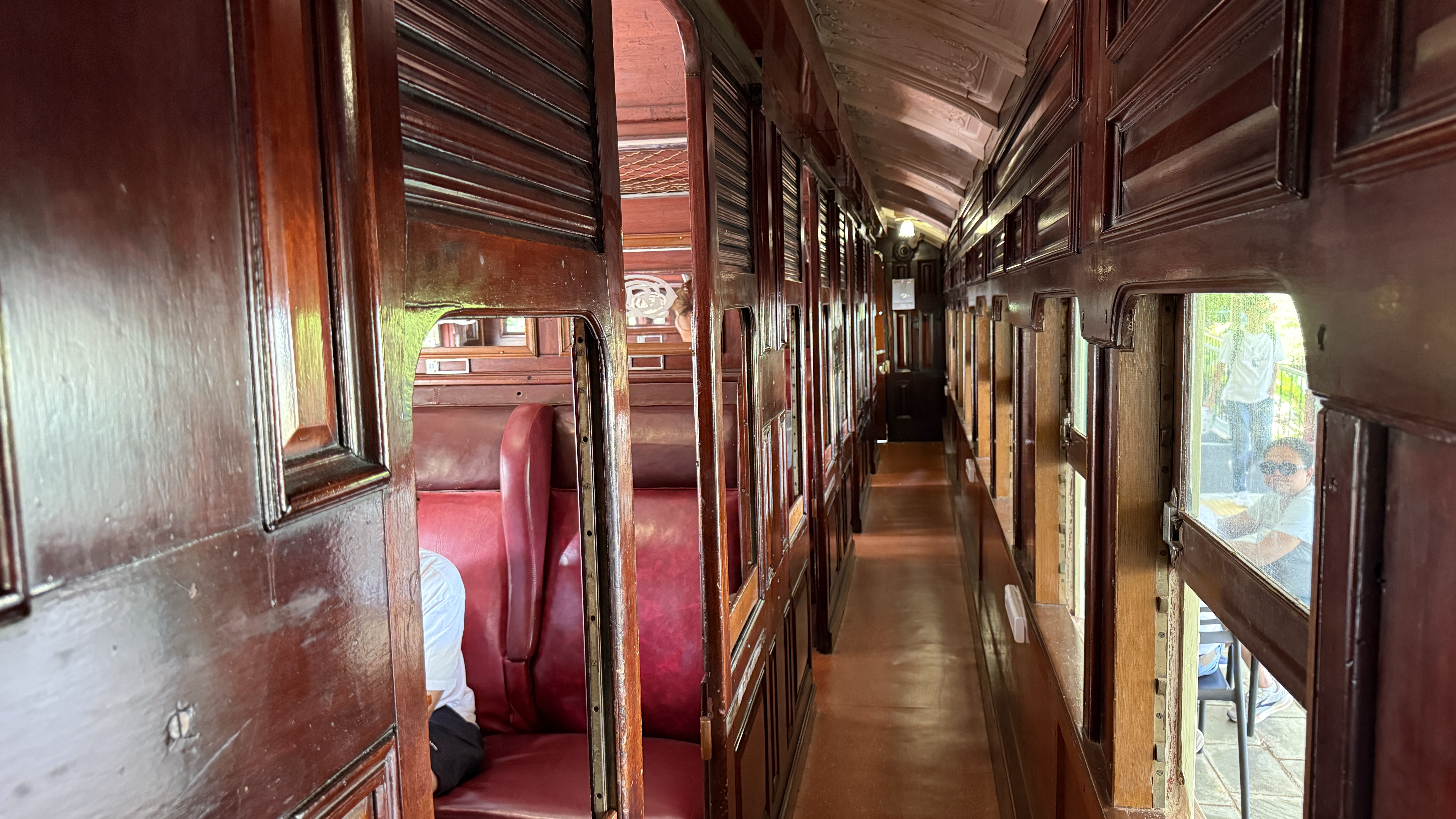
At last, it was time to board. The Kuranda Scenic Railway offers regular cars and Gold Class. Gold Class is a bit like first class, with more comfortable seating and some food and drink service. It had already sold out when we booked several days ahead, and there are only a limited number of seats, so we went with the regular car. It turned out to be charming in its own right, with wood trim, roomy interiors, and an unusually high ceiling that made it feel more spacious than many modern trains.
The seating arrangement was a little unusual. Two rows of seats faced each other. My wife and I sat side by side, one by the window and one closer to the aisle, but across from us were strangers. Sitting face to face with other passengers for more than an hour felt a little awkward. If we came again, I might ask in advance whether we could sit opposite each other, so at least we would be facing one another. The carriage was not full, though, and many four-seat groups had only two or three people, so it still felt roomy. We also had good seats by the window, with a clear view of the scenery.
The train moved slowly and swayed along the way. That is part of the appeal of an old railway like this: settle in and enjoy the view. One moment we were passing dense rainforest, the next a steep cliff. The train went through tunnels and rounded curves cut into the mountainside. The wide bends were especially striking; sometimes we could see a long line of carriages curling around the mountainside above a deep gorge. Knowing the railway was built more than a hundred years ago made me admire the courage of the engineers and workers. We passed many waterfalls, too. Some poured down from high rock walls so close that they seemed almost within reach.
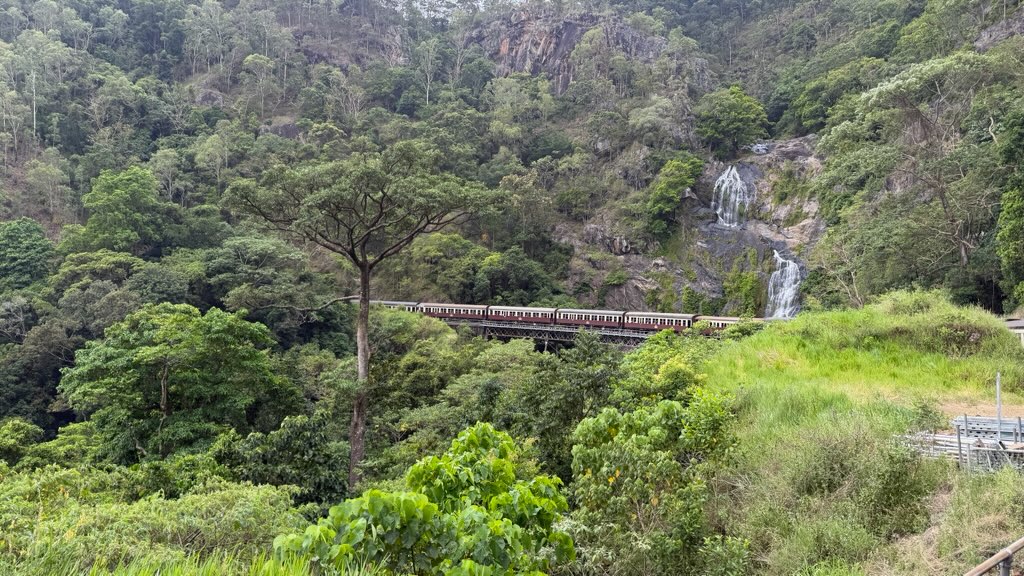
The main stop along the way was Barron Falls. The train paused so everyone could walk to a lookout. The falls are one of the region’s best-known natural sights, spilling down a high rock face in several streams into a gorge surrounded by rainforest. It was November, before the heaviest part of the wet season, so the water was not especially high. We could clearly see the massive rock formations behind it, and the lower flow made the shape of the gorge easier to appreciate. In the wet season, the whole cliff is said to turn into a torrent, which must be spectacular. We took plenty of photos from the lookout, then returned to the train for the final stretch to Kuranda.
Kuranda: a rainforest village and a crocodile lunch
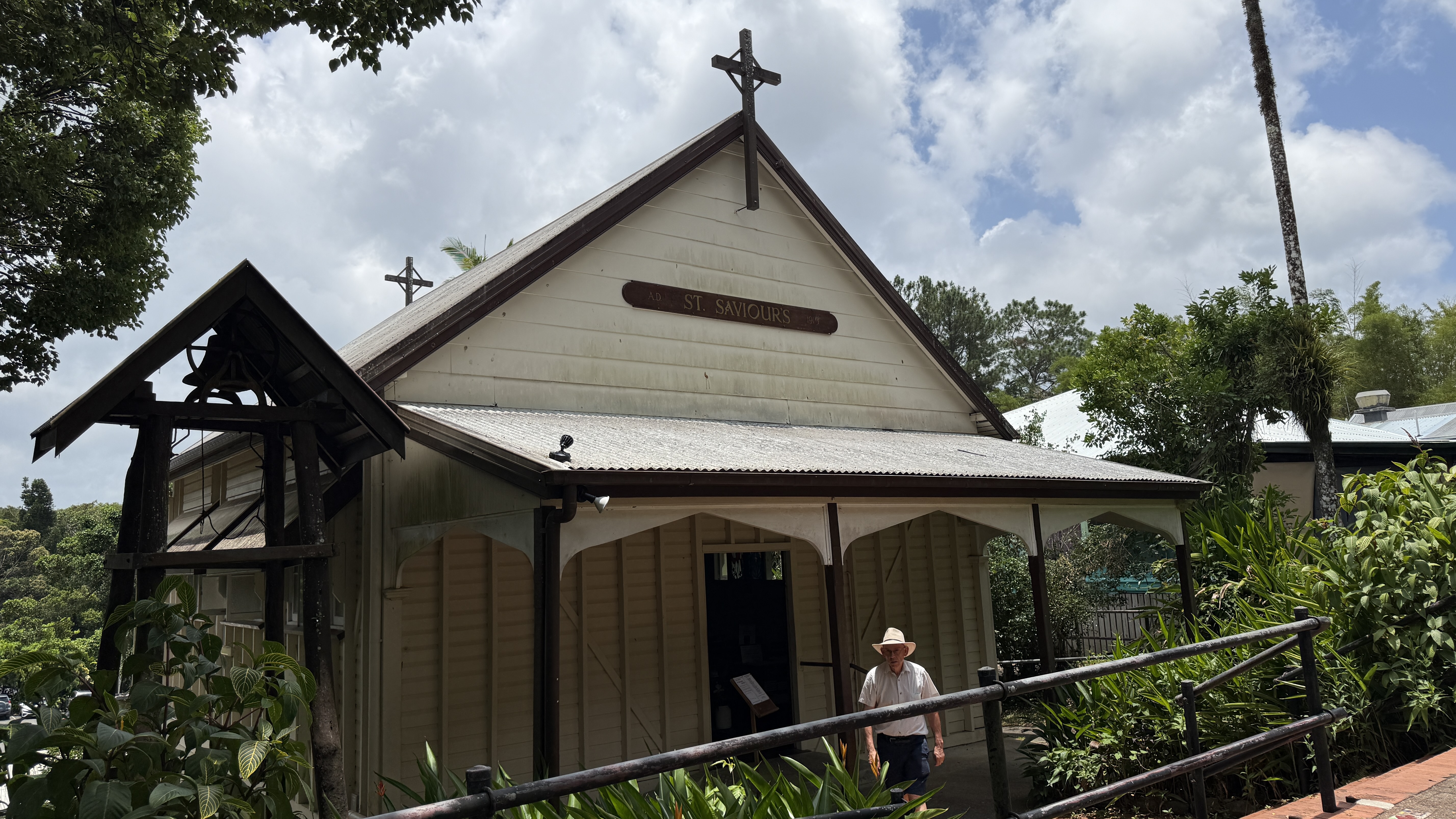
We arrived in Kuranda a little after 11:00 a.m. The small town sits on the eastern edge of the Atherton Tablelands, surrounded by rainforest, and has a relaxed, tourist-friendly feel. The station itself is lovely, with tropical plants all around. A short path leads from the platform into the town centre, where small shops, cafés, and markets sell crafts, Australian souvenirs, gemstones, honey, and sweets. We did not need to catch the gondola down until around 2:00 p.m., so we had more than two hours to explore at an easy pace.
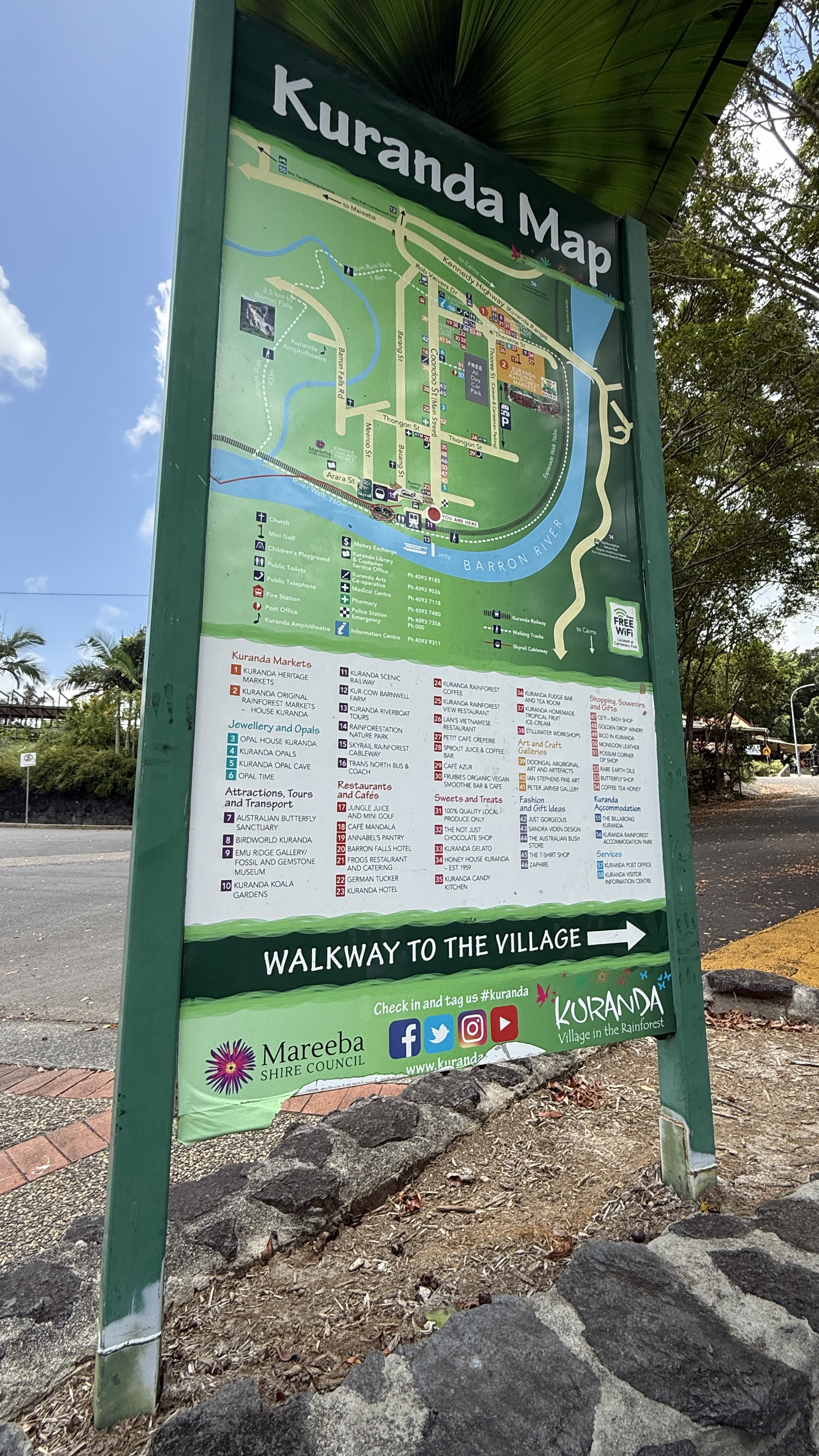
Kuranda is known for its markets, including the Heritage Markets and Original Rainforest Markets. We wandered along the streets and found lots of distinctive little shops. The town was lively but relaxed; even with plenty of visitors, it did not feel crowded like a big city.
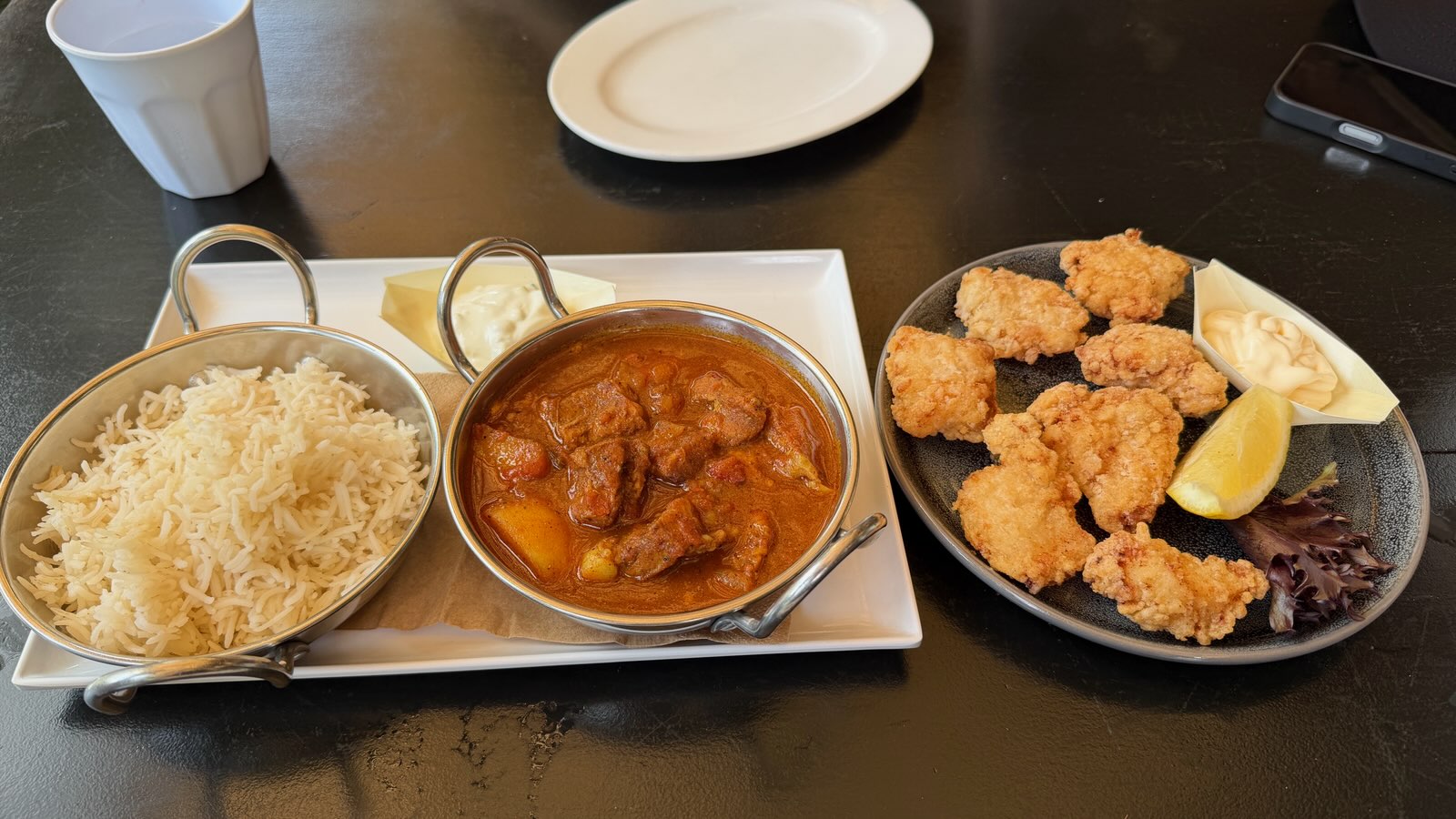
After browsing for a while, we decided to find somewhere for lunch. We chose Frogs Restaurant, near the markets, and ordered two crocodile dishes: Japanese-style fried crocodile and a Crocodile & Green Apple Curry made with Australian saltwater crocodile, green apple, Sri Lankan spices, and basmati rice. The two dishes came to exactly A$40, which seemed reasonable. The fried crocodile had a thin, crisp, golden coating and firm meat; it was quite good with a little sauce. The curry had richer spices, and the green apple added a sweet-tart note that worked surprisingly well with the crocodile. I preferred the fried version because its simpler seasoning let the meat’s flavour come through. If I had to describe it, crocodile tastes somewhere between chicken and fish: fairly firm, but mild.
After lunch, we visited a few more shops. One honey shop especially caught my attention. A glass display hive let us watch bees bustling around inside, like a live window into a tiny society. The shop had honeys from different flowers and offered samples. When I buy honey, I usually just check that it is pure; I rarely think about which flowers the bees visited. That day I learned how much the aroma and flavour can vary by source. We tried several and bought a jar of lychee honey, made by bees collecting nectar from lychee blossoms.
Skyrail: the real highlight was flying above the rainforest canopy
In the afternoon, we went to the Skyrail station in Kuranda to ride the gondola down. This was the part of the day I had been looking forward to most. One of the biggest differences between tropical rainforest and ordinary forest is its complex vertical structure.
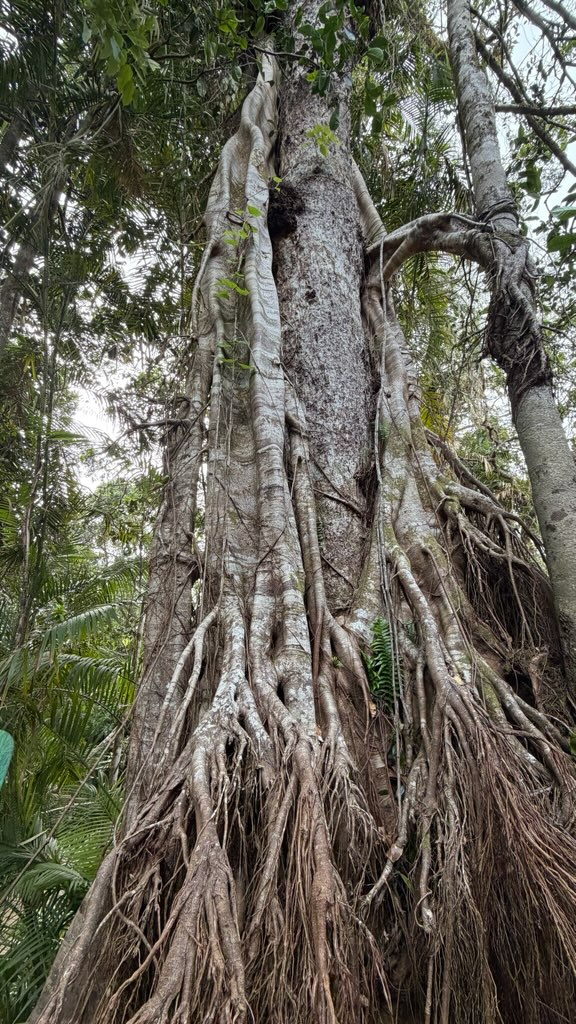
At the bottom is the dark, damp forest floor, above it the shrubs and smaller trees, and higher still the canopy formed by tall trees. At the very top, some especially tall trees rise above the canopy into what is called the emergent layer. Much of the rainforest’s life is concentrated around the canopy, but from the ground it can be hard to see that world.
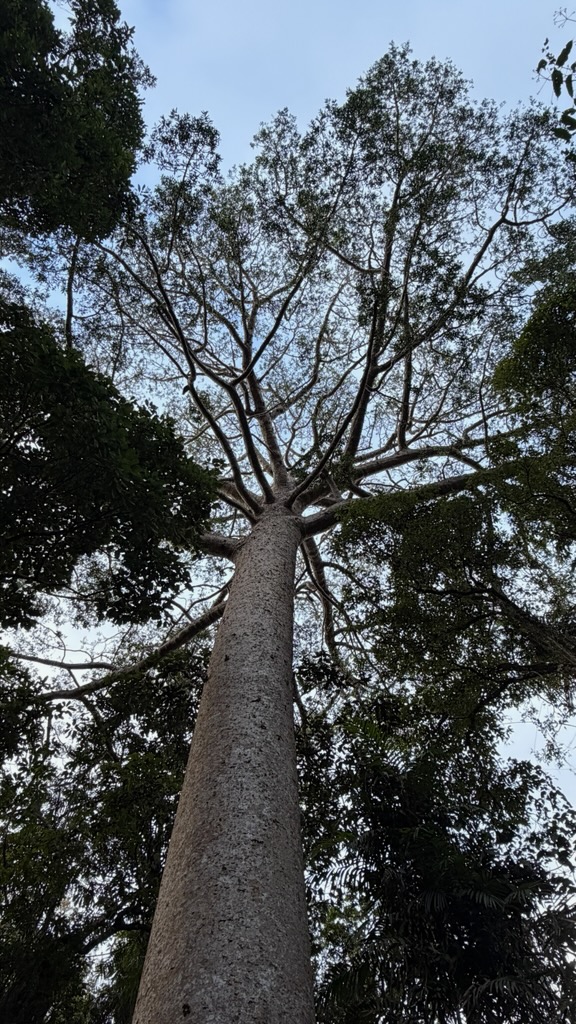
When we visited the Peruvian Amazon, we once climbed a simple observation tower that rose above the tree canopy. It was roughly built, and the high wooden walkway swayed a little underfoot, which made the climb nerve-racking. But once we reached the top, the view was stunning. Looking up from the forest floor and looking down from above the canopy felt like seeing two entirely different worlds. Skyrail took that experience to another level: instead of climbing a wobbly tower, we sat in a gondola and glided for kilometres above the rainforest along the mountain range.
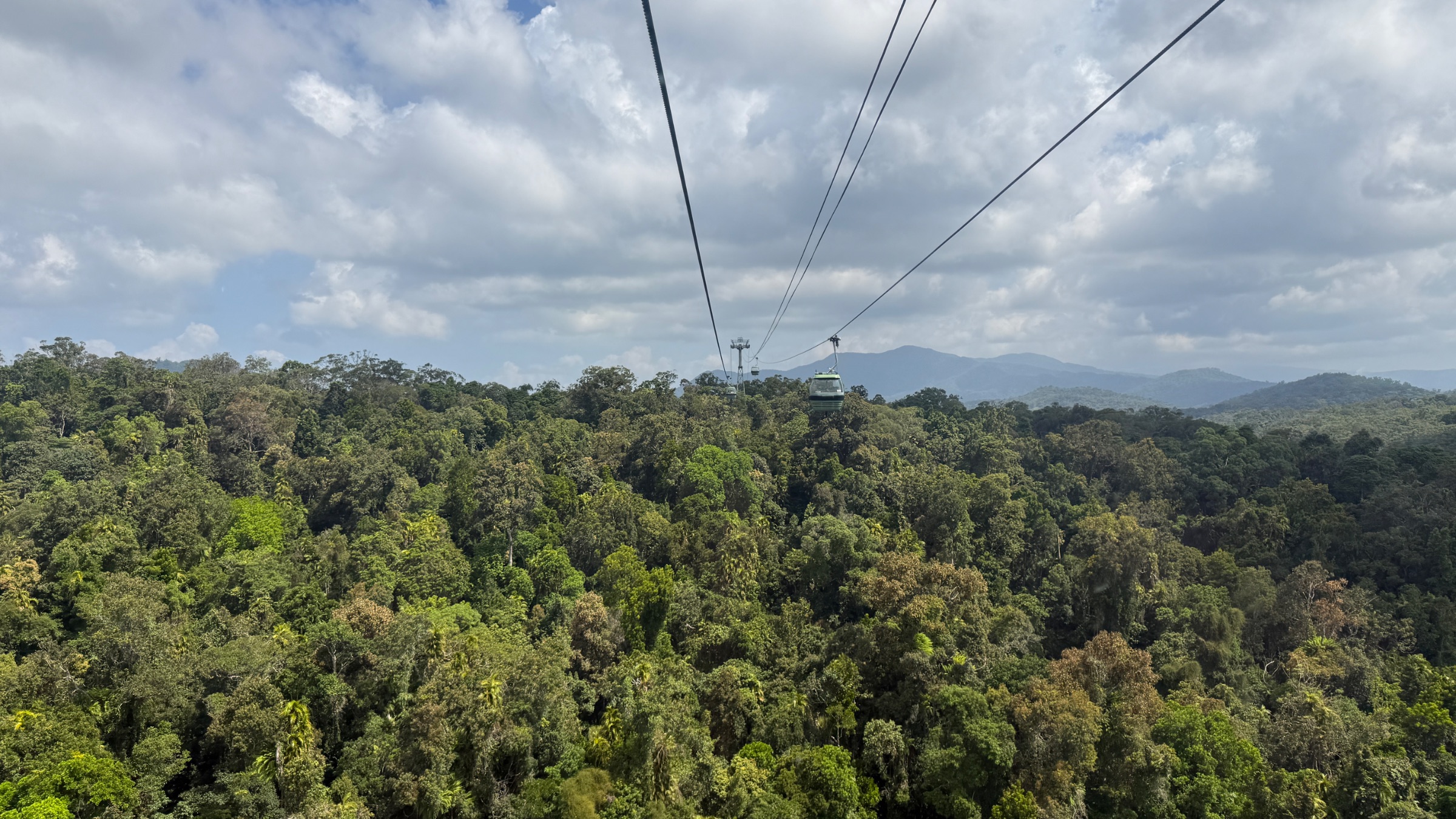
After leaving Kuranda station, the gondola quickly carried us out over a sea of green. Tall tropical trees stretched beneath us, their crowns joined together like an enormous green carpet. Some trees rose almost to the gondola, close enough for us to make out their branches and leaves. Elsewhere, the cable car climbed high above the forest, revealing rainforest that spread toward distant peaks. The gondola had glass on every side, giving us a wonderfully open view. It was completely different from the train in the morning: the train hugged one side of the gorge, while the gondola crossed above the valley, with mountain ridges, deep gorges, and endless rainforest all around us.
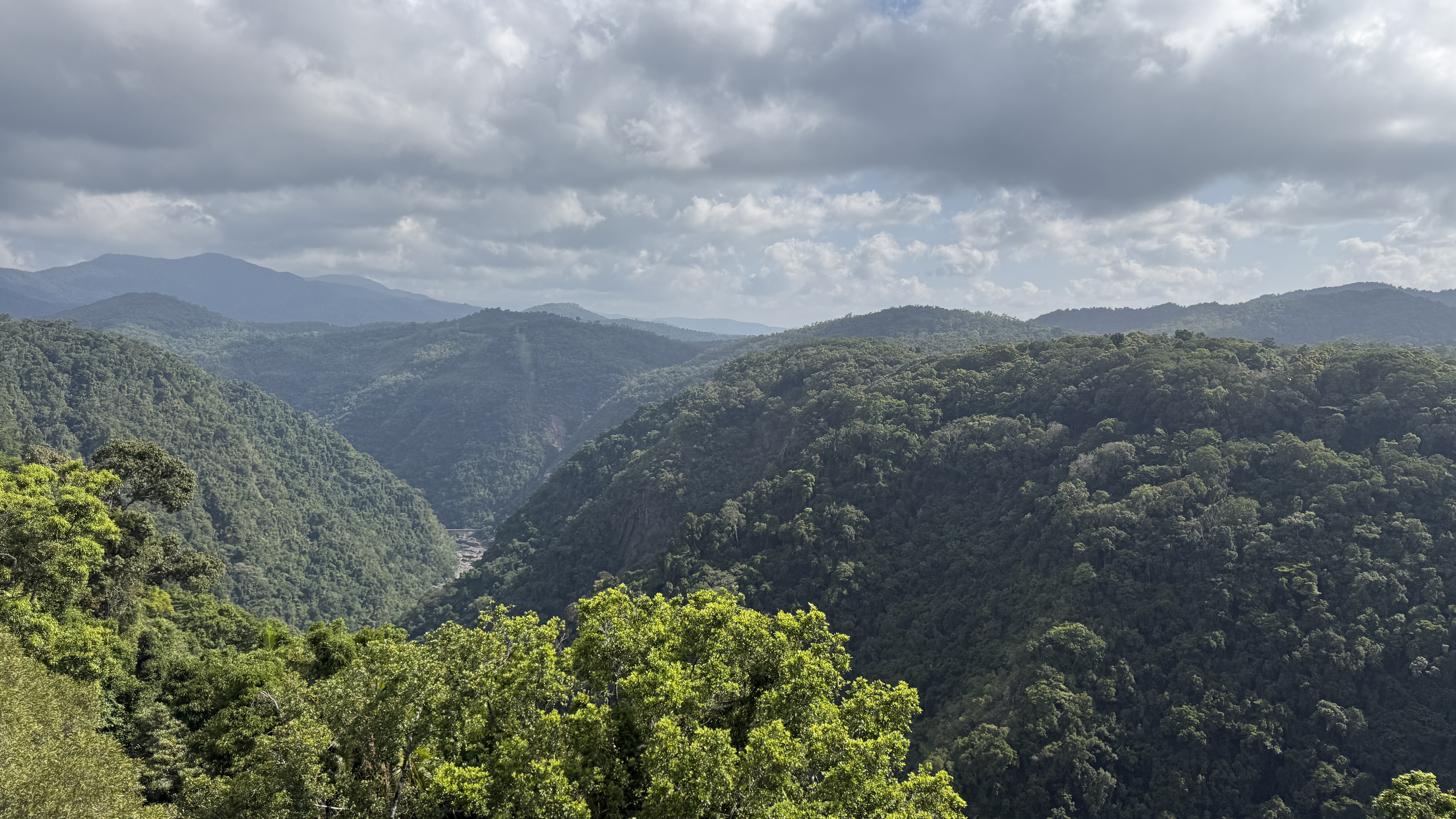
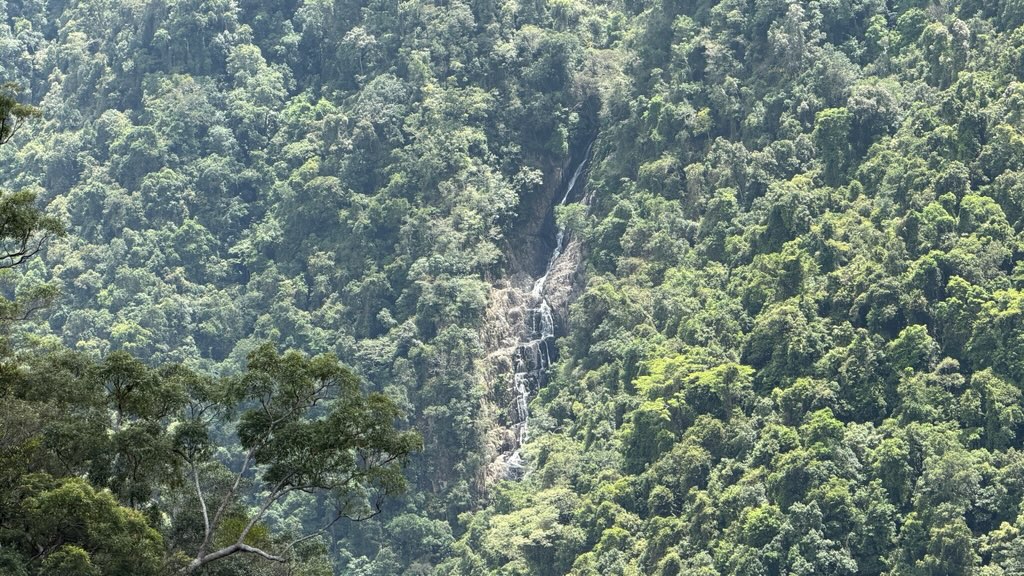
Skyrail has two intermediate stations: Barron Falls and Red Peak. We got off at Barron Falls and found a dedicated walking track with several viewpoints over the falls and gorge. We had already stopped here on the train in the morning, but that lookout was on the railway side; from the gondola side, the view was entirely different. The waterfall was not especially full, but the surrounding landscape was impressive: enormous rock walls, a deep gorge, and rainforest covering the slopes.
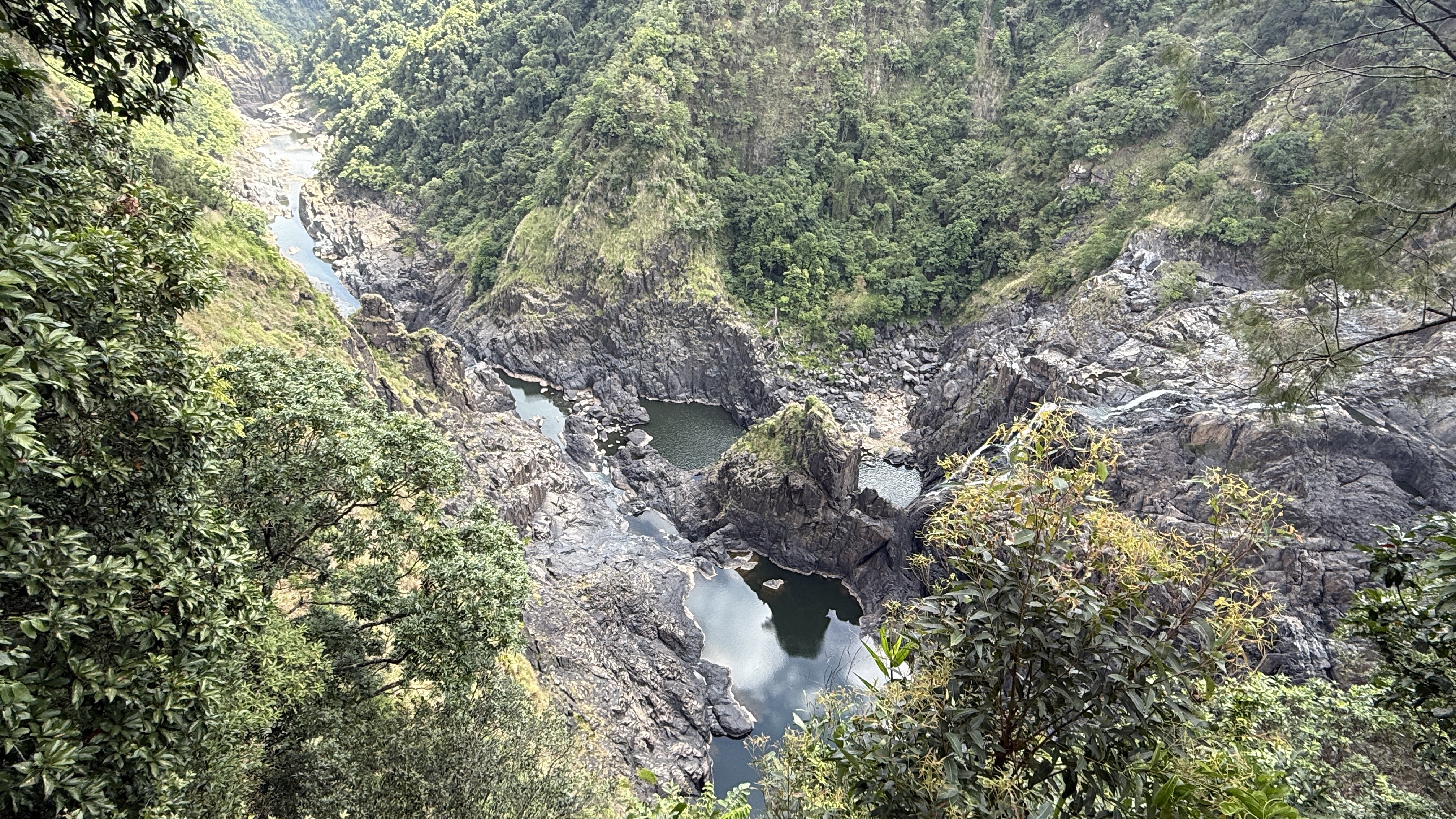
The Barron Falls exhibition had plenty of information about the rainforest’s geological history and evolution, including the Gondwana, biological-life-raft, and ancient-species stories I mentioned earlier. One display explained that high mountains once stood here about 100 million years ago, and that tens of millions of years of erosion shaped today’s Barron Gorge. Standing at the lookout and thinking about the geological changes recorded in the rocks and peaks gave the view a different dimension. It was more than just a pretty waterfall.
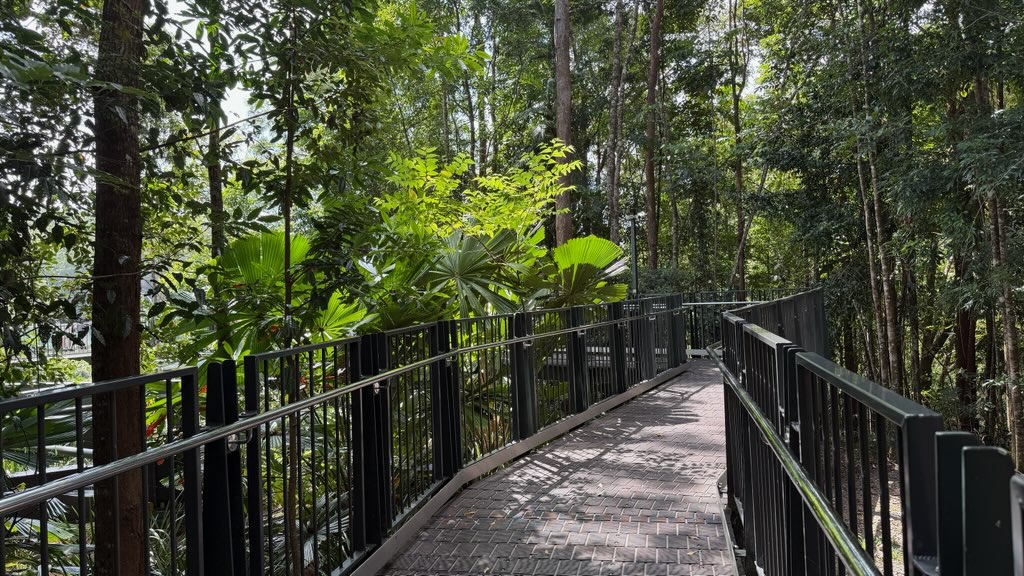
We got back on the gondola and continued downhill. The second stop, Red Peak, felt more like an outdoor rainforest classroom. A boardwalk wound through the forest, bringing us close to tall tropical trees, enormous buttress roots, and all kinds of plants.
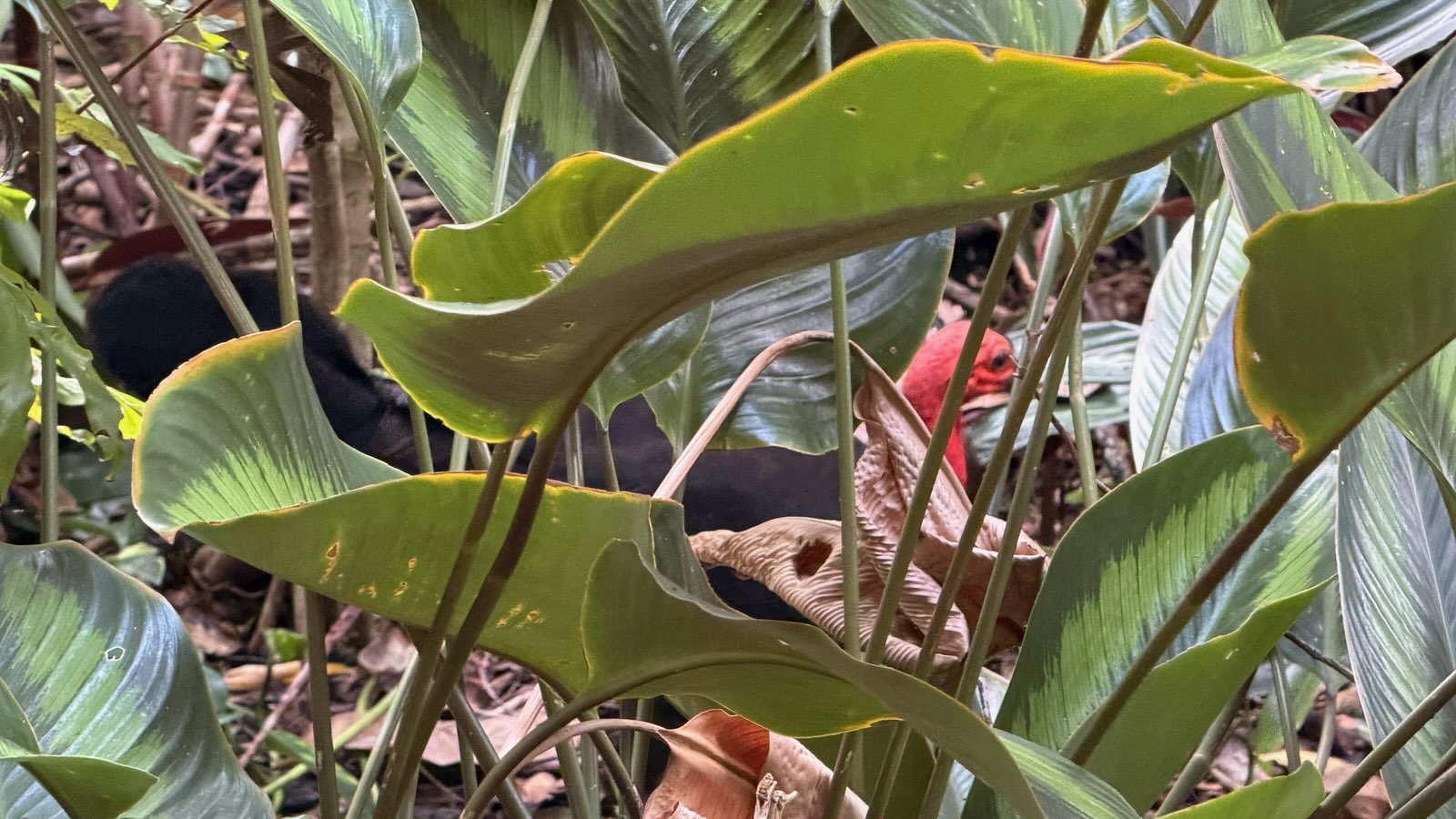
There were also displays about local wildlife and First Nations knowledge, with several fascinating details. For one, there are no wild monkeys in Australia. There are tree-climbing kangaroos, though: Lumholtz’s tree-kangaroo, which we had read about earlier, lives high in the canopy. We had also seen brush turkeys several times over the past few days. They look a little like turkeys, but their way of incubating eggs is unusual: the male piles up leaves and soil, then uses the heat from decaying vegetation to incubate the eggs. The display said he checks the temperature by putting his head into the mound, adding or removing leaves to regulate the heat. Even more remarkably, incubation temperature affects the chicks’ sex: temperatures below 34°C are more likely to produce males, while higher temperatures favour females. These rather awkward-looking birds build a natural incubator that regulates its own temperature, without electricity. We had just spotted one in the bushes while walking, too!
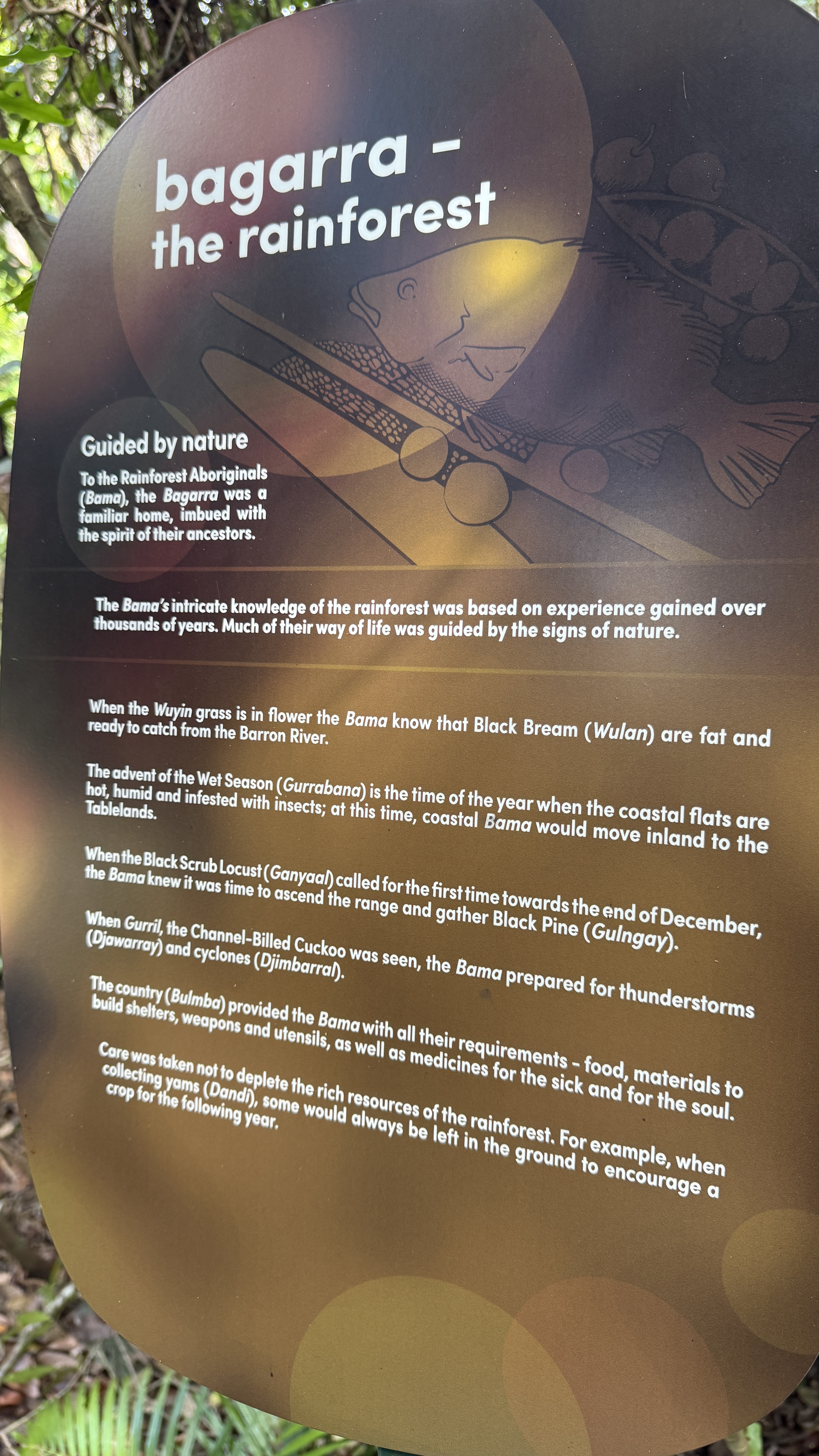
Another display described the long relationship between First Nations people and the rainforest. People here have accumulated deep ecological knowledge over many generations. For example, when a grass called Wuyin flowers, local people know the Wulan fish in the Barron River are fat and ready to catch. Passed down over time, knowledge like this forms a distinctive ecological calendar.
After Red Peak, we continued down by gondola. As we lost elevation, the view opened up to reveal more of the forest, valleys, and coastal plain. The full trip, including both stops, took a little over an hour, but it never felt long. In fact, it was the part of the day most worth lingering over. Seeing the rainforest from a gondola is completely different from walking a trail on the ground. When we crossed deep valleys, the trees below looked like a green ocean, with a few exceptionally tall trees rising above the canopy and layers of mountains in the distance. It really felt as if we were flying over the rainforest.
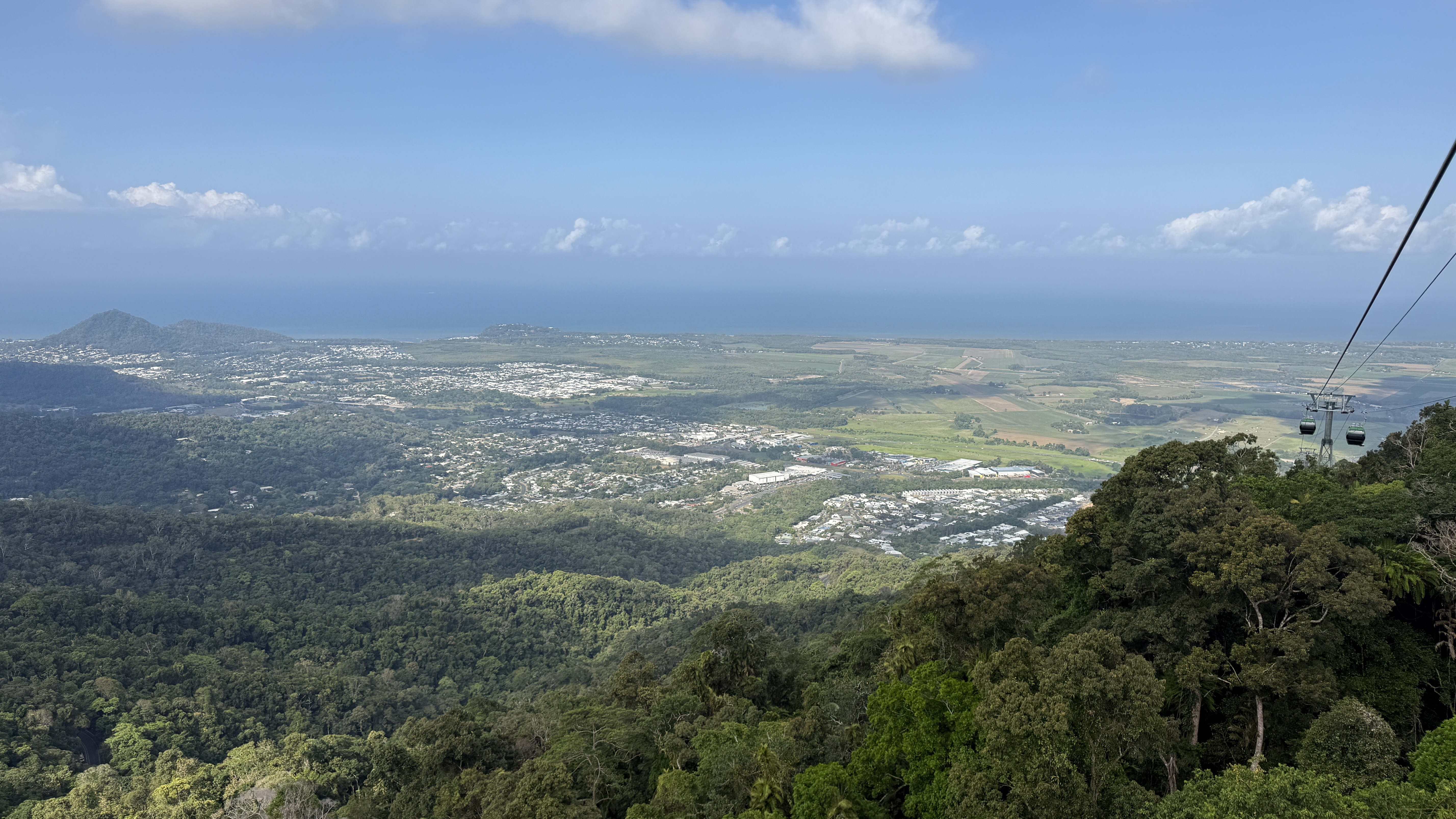
At last, the gondola eased into the Smithfield terminal. Looking back on the day, we had experienced both the hard work behind a century-old human engineering project and the spectacular landscape shaped by nature over millions of years.
Reader Discussion · 0
No comments yet. Be the first to share your experience.