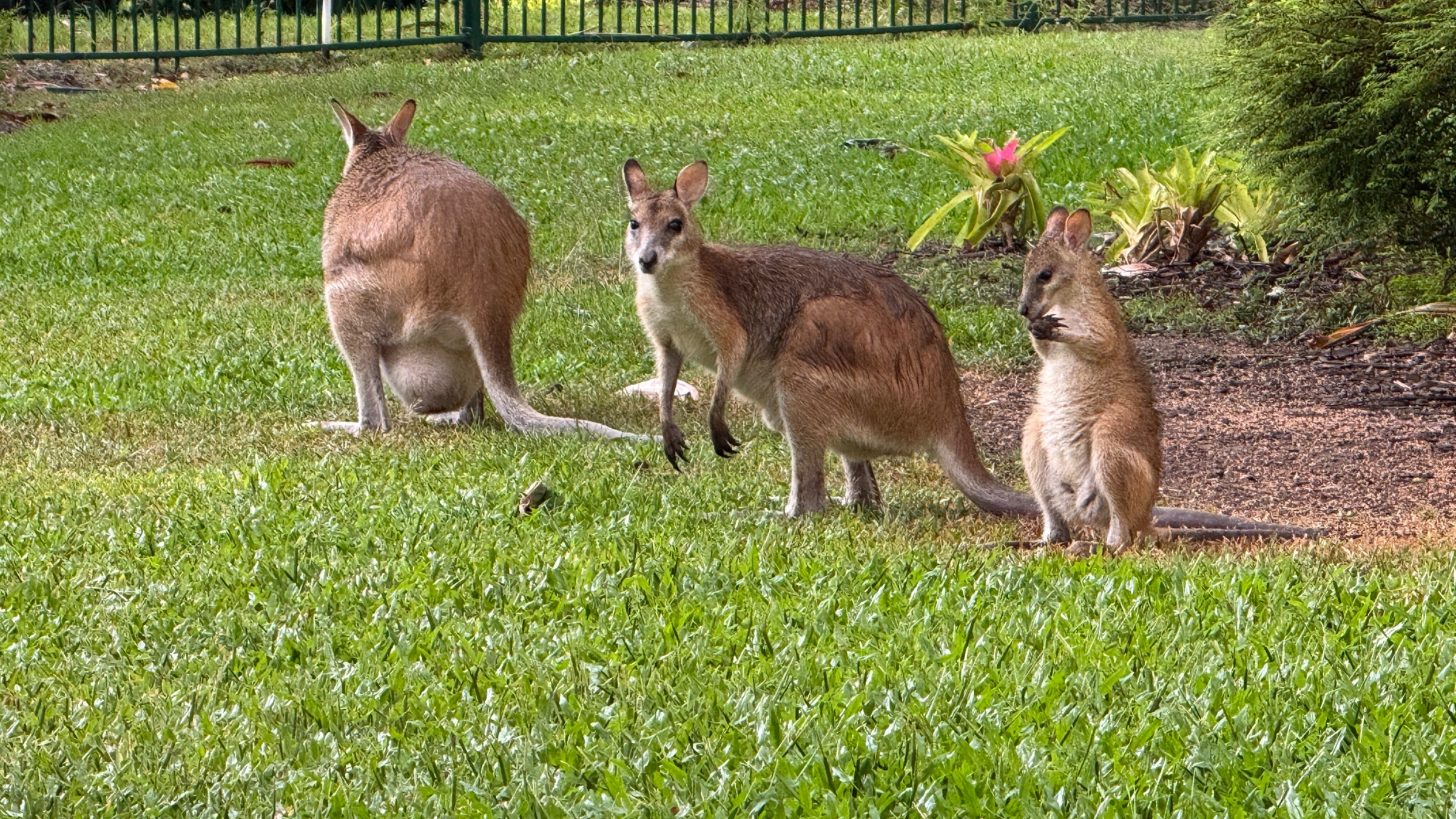
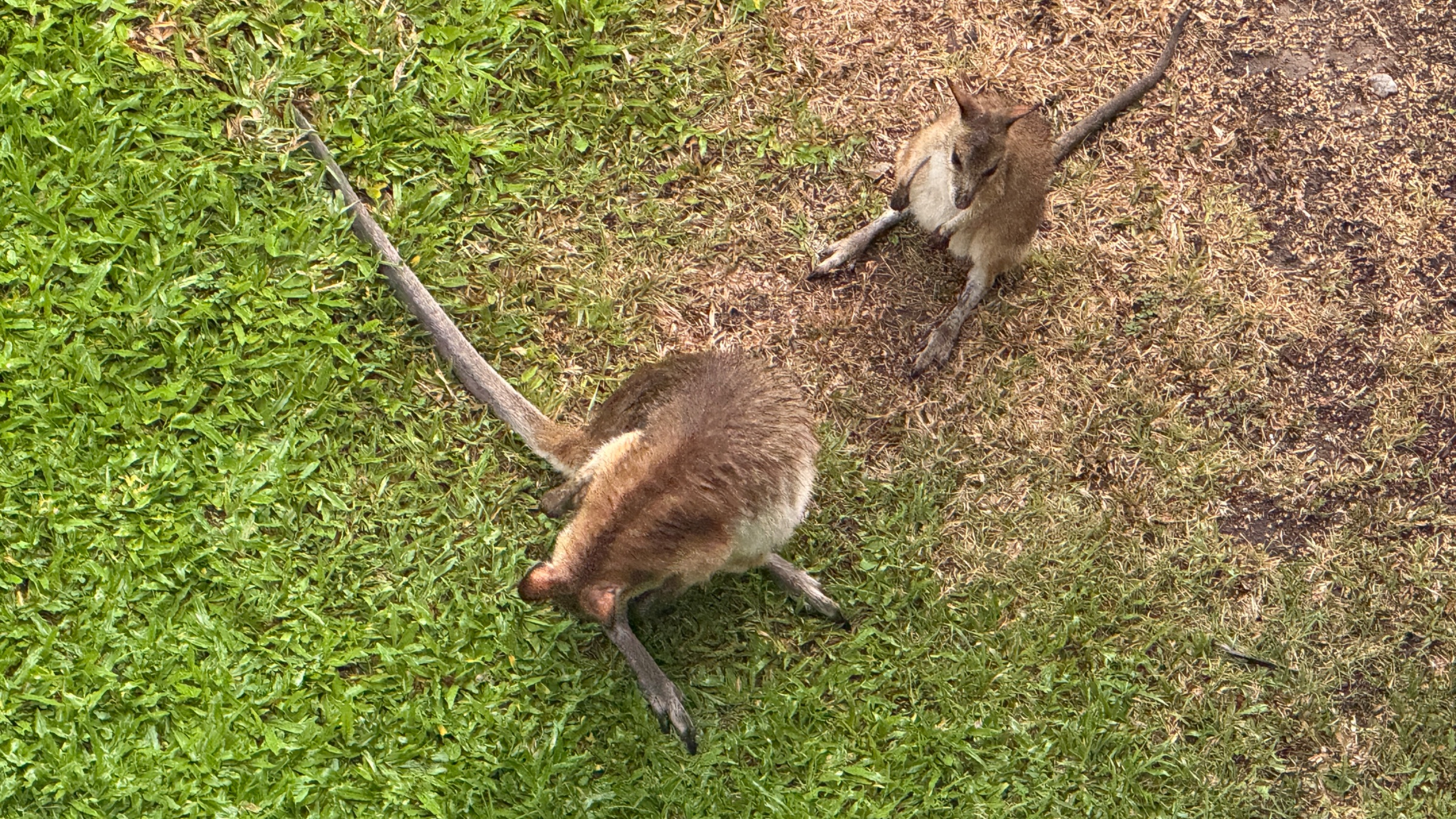
We have been in Australia only a few days, but the lawn behind our resort has already become part of our morning routine. When I looked down from our fourth-floor balcony today, there they were again: several kangaroos grazing peacefully on the grass. We grabbed our cameras. We had watched them from a distance on earlier mornings, but today we decided to head downstairs and get a closer look.
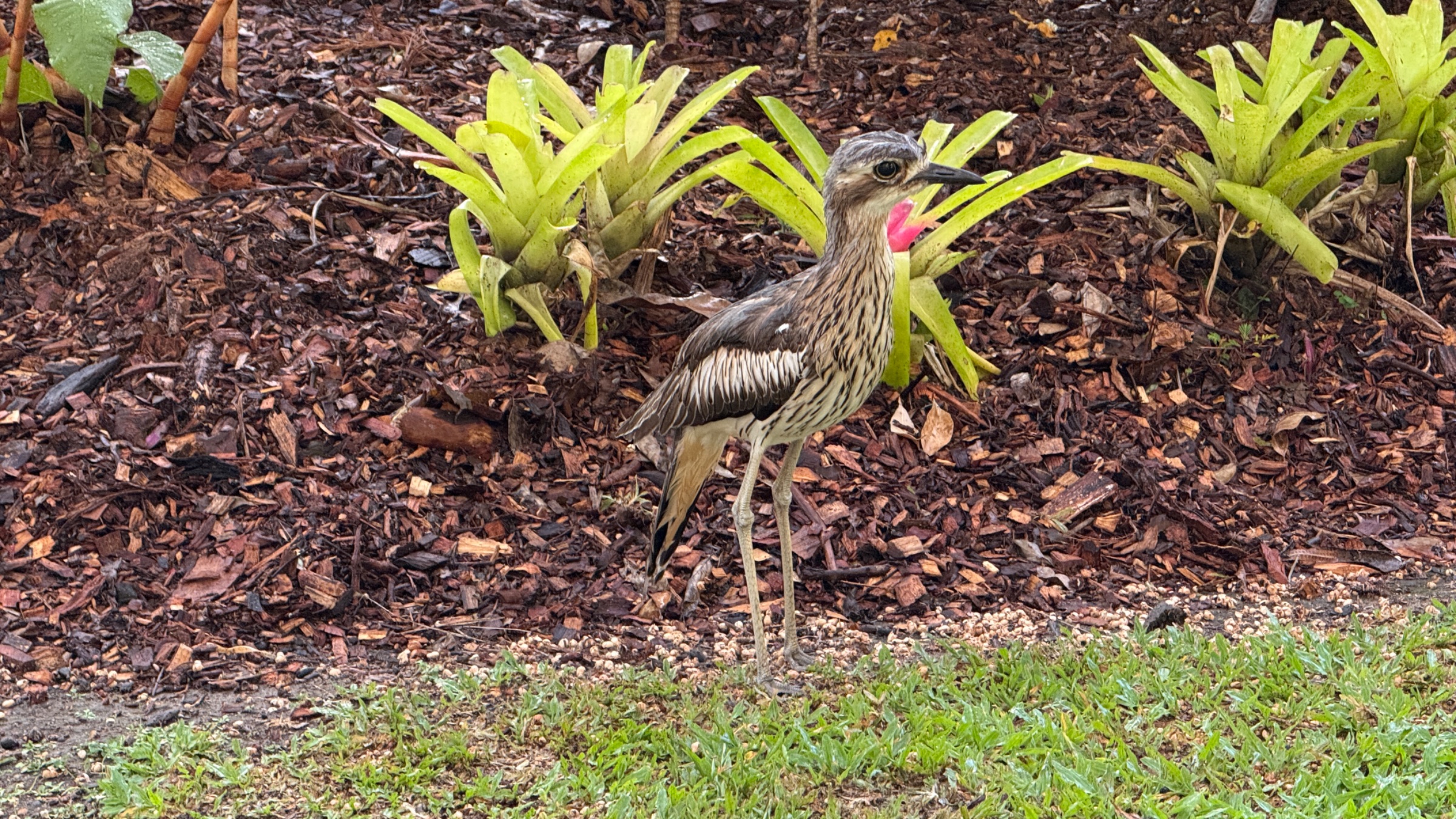
Three very unusual-looking birds were on the lawn, too. They had long legs and large, bulging eyes, and strode around as if they owned the place. They had wings but did not seem very interested in flying, spending most of their time walking across the grass like tiny security guards on patrol.
Once we were downstairs, we realized that although kangaroos often visit the resort, they are still wild animals. They are not used to people the way zoo kangaroos are. Whenever we got a little closer, they backed away a few steps and stared at us as if to say, “You can take pictures, but please don’t come any closer.”
Then a young kangaroo came bounding over from farther away. It moved so quickly that in a moment it was beside a larger kangaroo, presumably its mother. We have no idea what the little one had done, but Mom seemed to give it a talking-to. The youngster immediately turned around and hopped off at full speed.
We laughed. It was just like a scene that plays out in human families all the time: a child rushes over to Mom, gets scolded for some reason, and slinks away. The funniest part was that the youngster came back a little later, apparently having forgotten the whole thing.
We counted three kangaroos and wondered where the four we had seen earlier in the week had gone. Just then, a particularly large one wandered into the scene. It was a lot bigger than the others—apparently the muscular dad of the family.
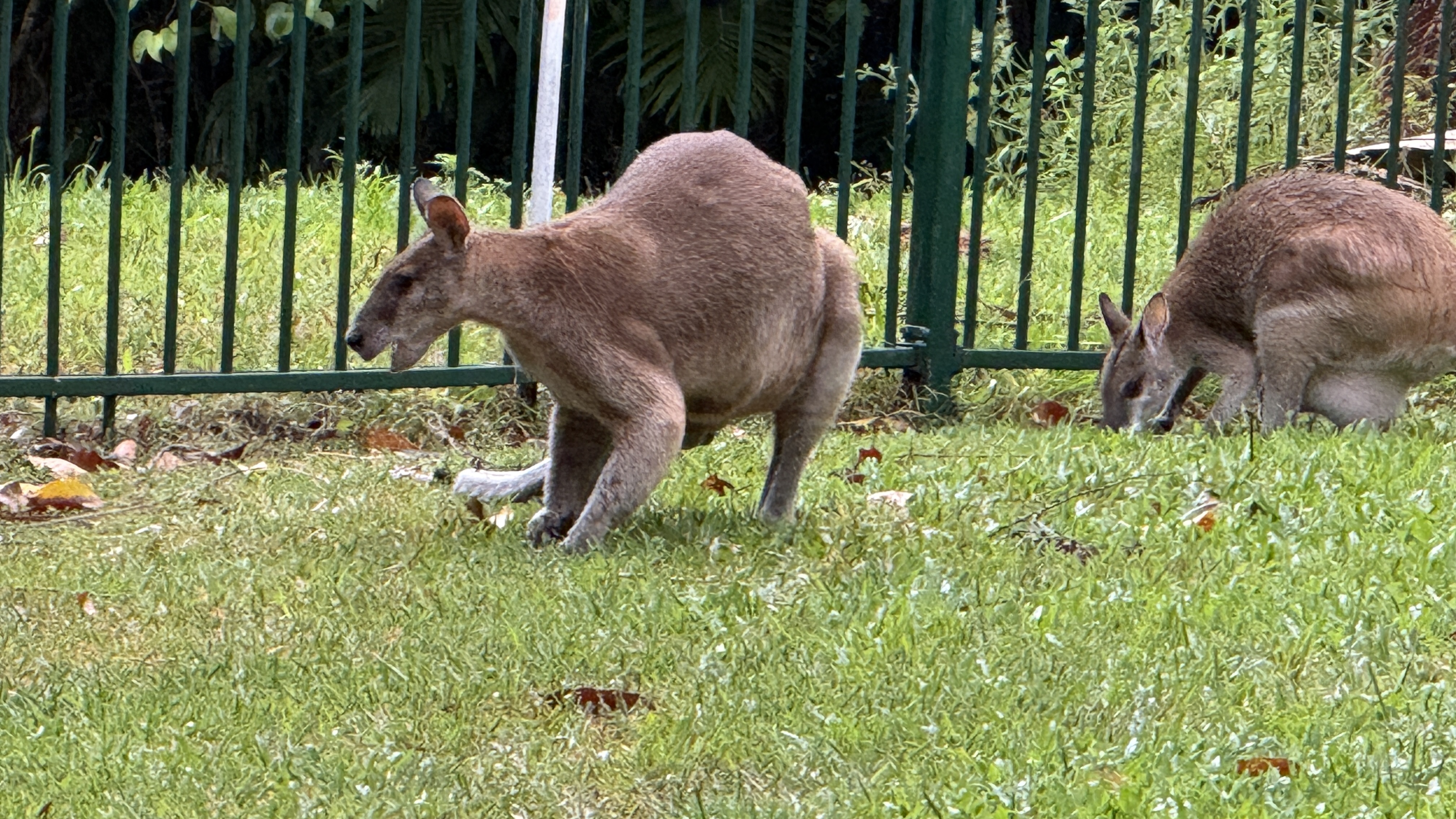
Looking more closely, we noticed a tiny joey tucked into one mother’s pouch. It was big enough to poke its head out. When its mother lowered her head to graze, the joey leaned out and took a few bites, as if it had its own breakfast seat right there in the pouch.
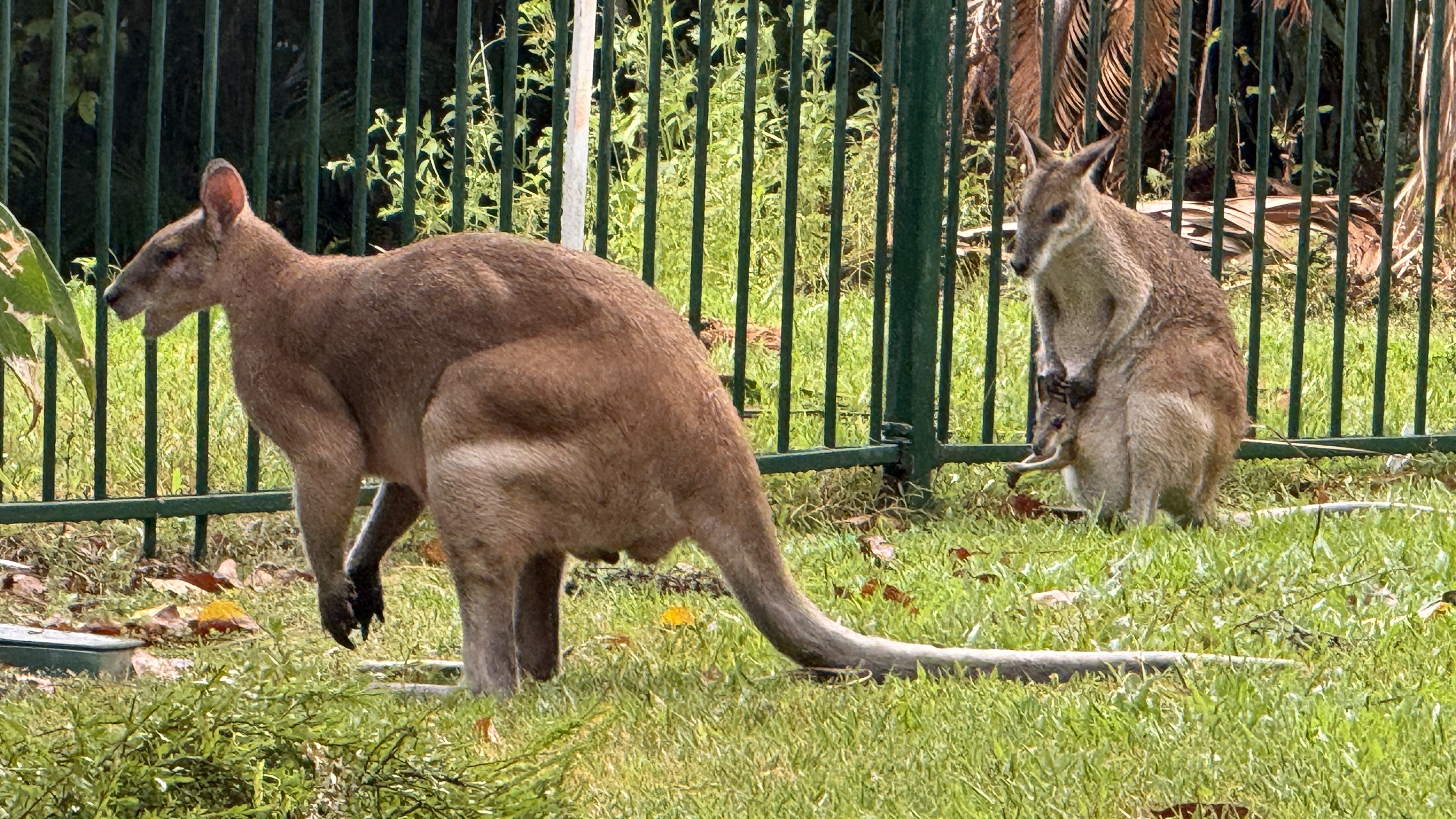
We had only meant to go downstairs for a few photos, but ended up watching a wonderfully entertaining little family drama. The wild kangaroos were even more interesting than the ones we had fed at the wildlife park a few days earlier. We took our photos reluctantly and went back upstairs to get ready for the day.
Our destination was Mossman Gorge, on the southern edge of the famous Daintree Rainforest. We drove north from Palm Cove along the coast, passed through Port Douglas, and continued for about an hour to the visitor center.
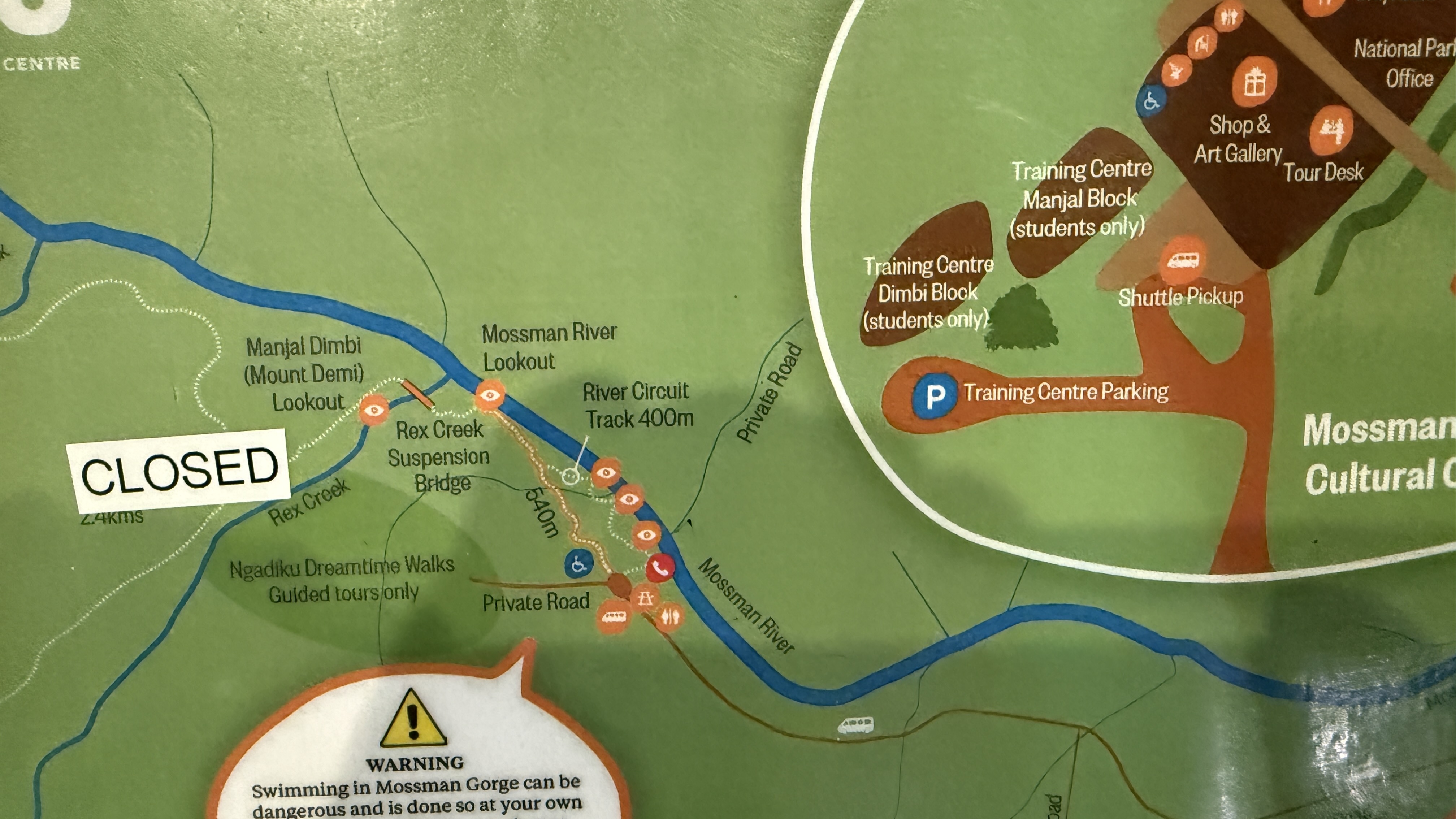
The visitor center was nicely designed, with ticketing, a shuttle area, a café, and a gift shop. The Aboriginal art caught our attention most. This is the traditional home of the local Kuku Yalanji people, and the shop displayed work by local artists, including paintings, crafts, and souvenirs with traditional designs.
We bought shuttle tickets and took a small bus up the winding road into the rainforest. The ride was only about five minutes. There were quite a few visitors at the trailhead: a few tour groups who seemed to be from Europe and plenty of people who had driven themselves. We saw very few Chinese visitors. Once we got off the bus, everyone set out along the trails into the forest.
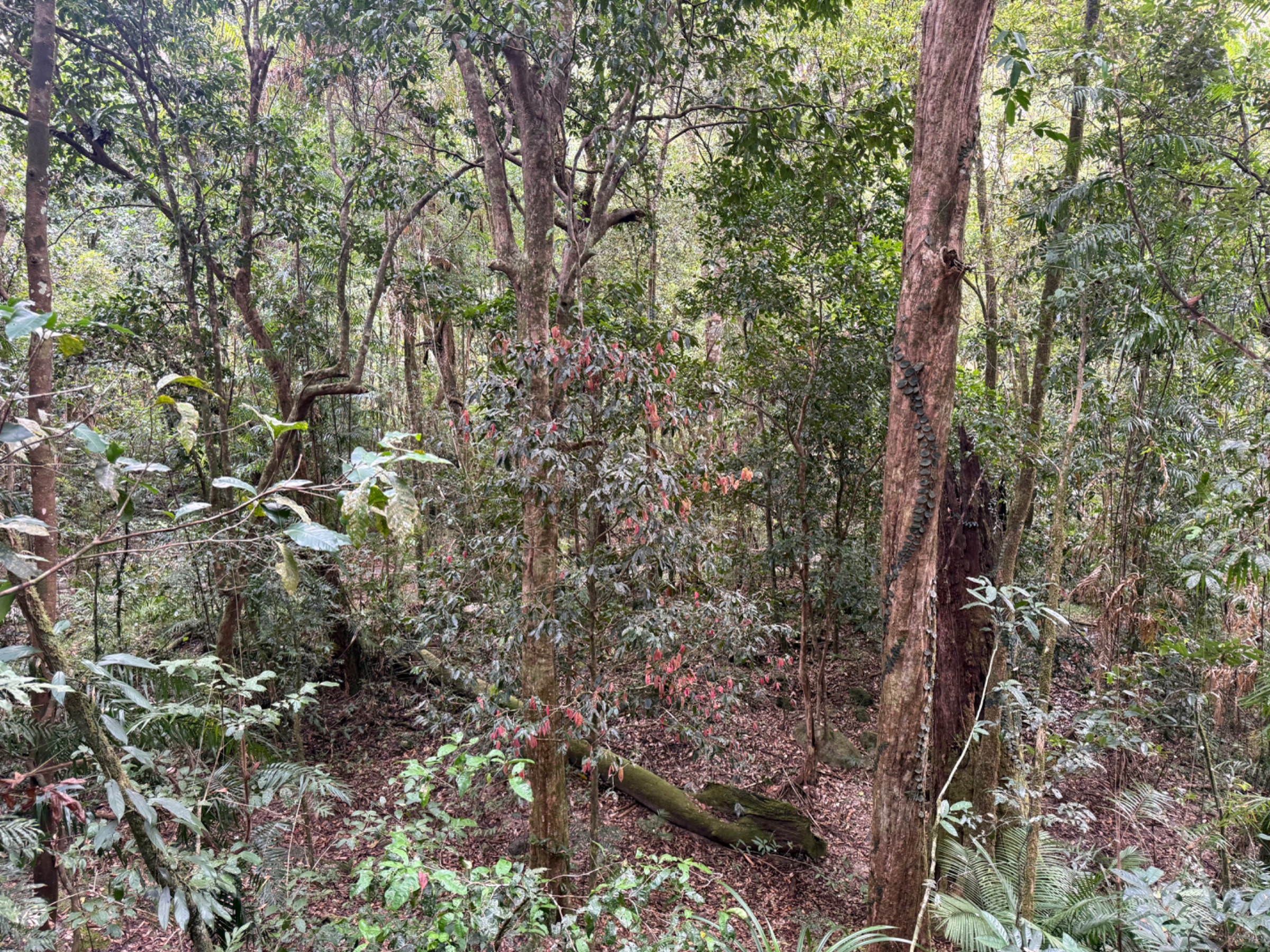
The Daintree Rainforest around Mossman Gorge is part of the Wet Tropics of Queensland World Heritage Area. What makes this forest special is not only its beauty but its age. Tall trees formed a canopy overhead, blocking much of the sunlight. Vines climbed their trunks, and some trees had broad buttress roots spreading out like walls. The air was humid, and shades of green surrounded us—nothing like the forests we see at home in California.
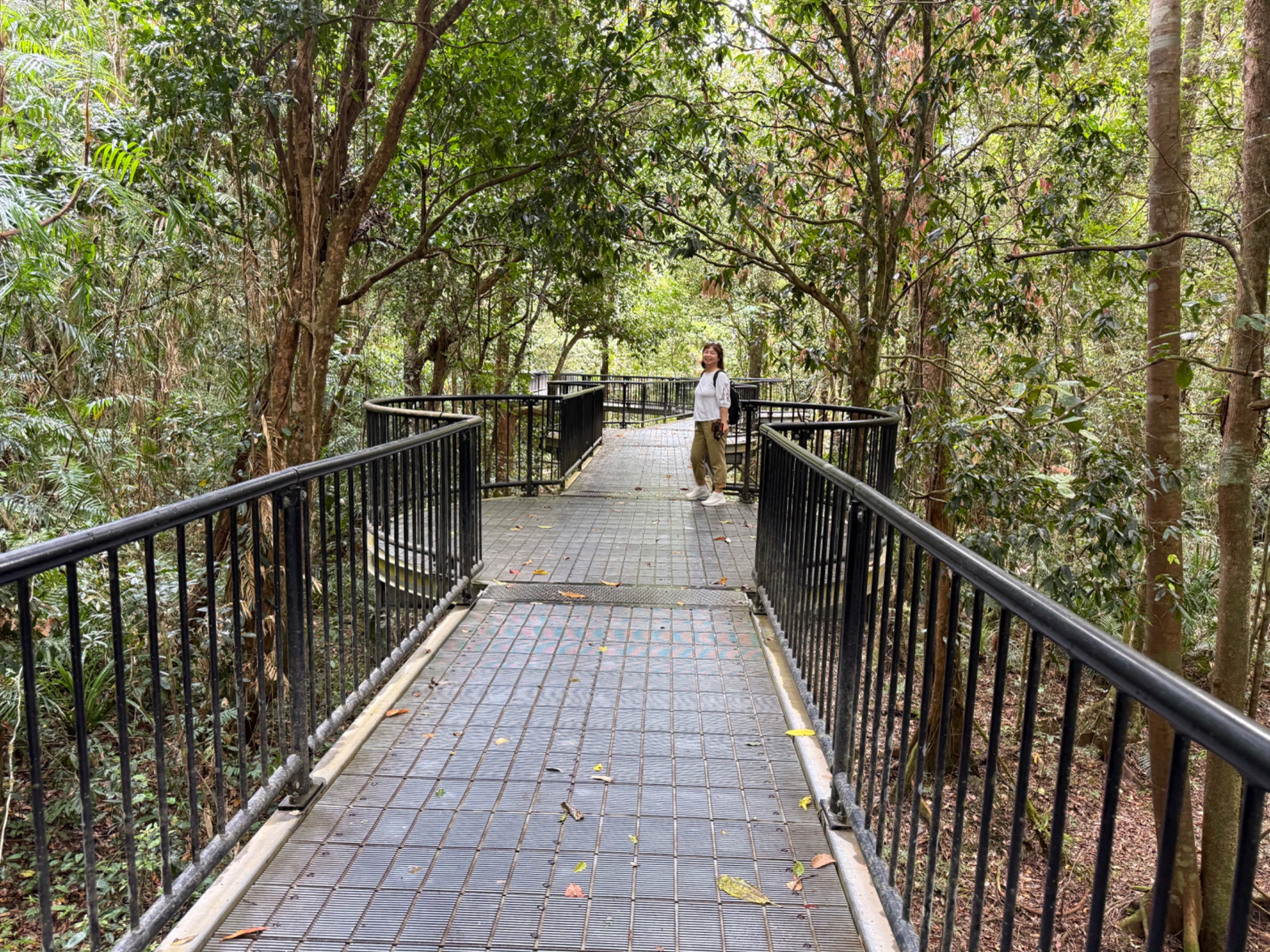
The trails were exceptionally well built. Some sections were elevated boardwalks, and parts of the path were surfaced with nonslip metal mesh. It was comfortable to walk on, convenient for visitors, and helped protect the soil and roots below. Signs along the way explained the area’s geology, plants, and ecology.
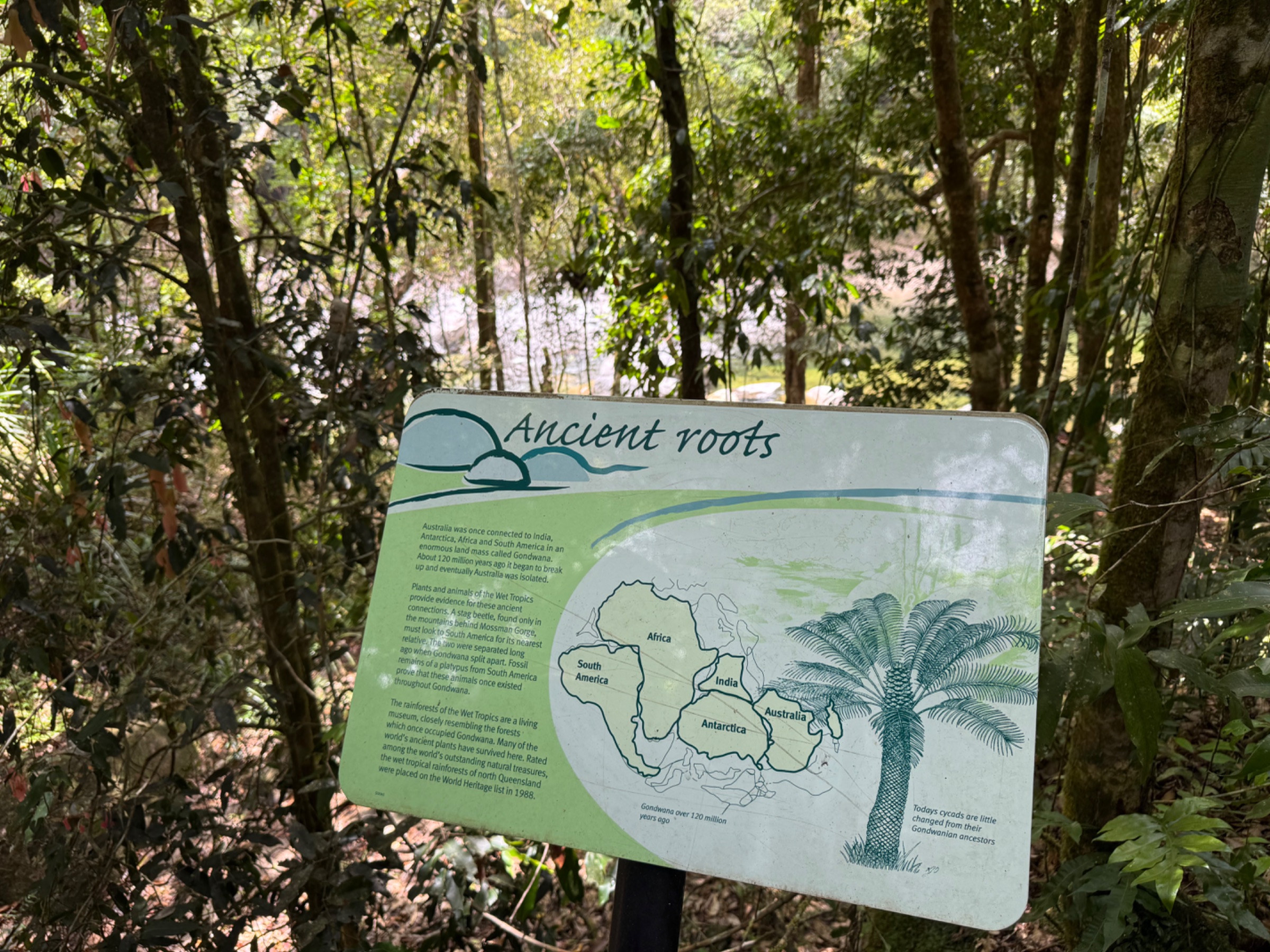
One sign in particular stayed with me. A very long time ago, what is now Australia was part of a supercontinent called Gondwana. Australia, Antarctica, South America, Africa, India, and other landmasses were once connected. Over time, the tectonic plates moved and the huge continent broke apart, with its pieces drifting to their present locations.
This happened over hundreds of millions of years. Australia gradually moved north and its climate changed dramatically. Much of the continent became drier, and many ancient wet forests disappeared. But in northeast Queensland, coastal mountains continued to receive moisture from ocean winds. The combination of rain, terrain, and local climate allowed some ancient rainforest plants to survive. The Daintree still has very old plant lineages, including ancient ferns, cycads, and descendants of early flowering plants. Some of their relatives are now known only from fossils. That does not mean the trees in front of us have been alive for hundreds of millions of years; it means their plant lineages can be traced back that far.
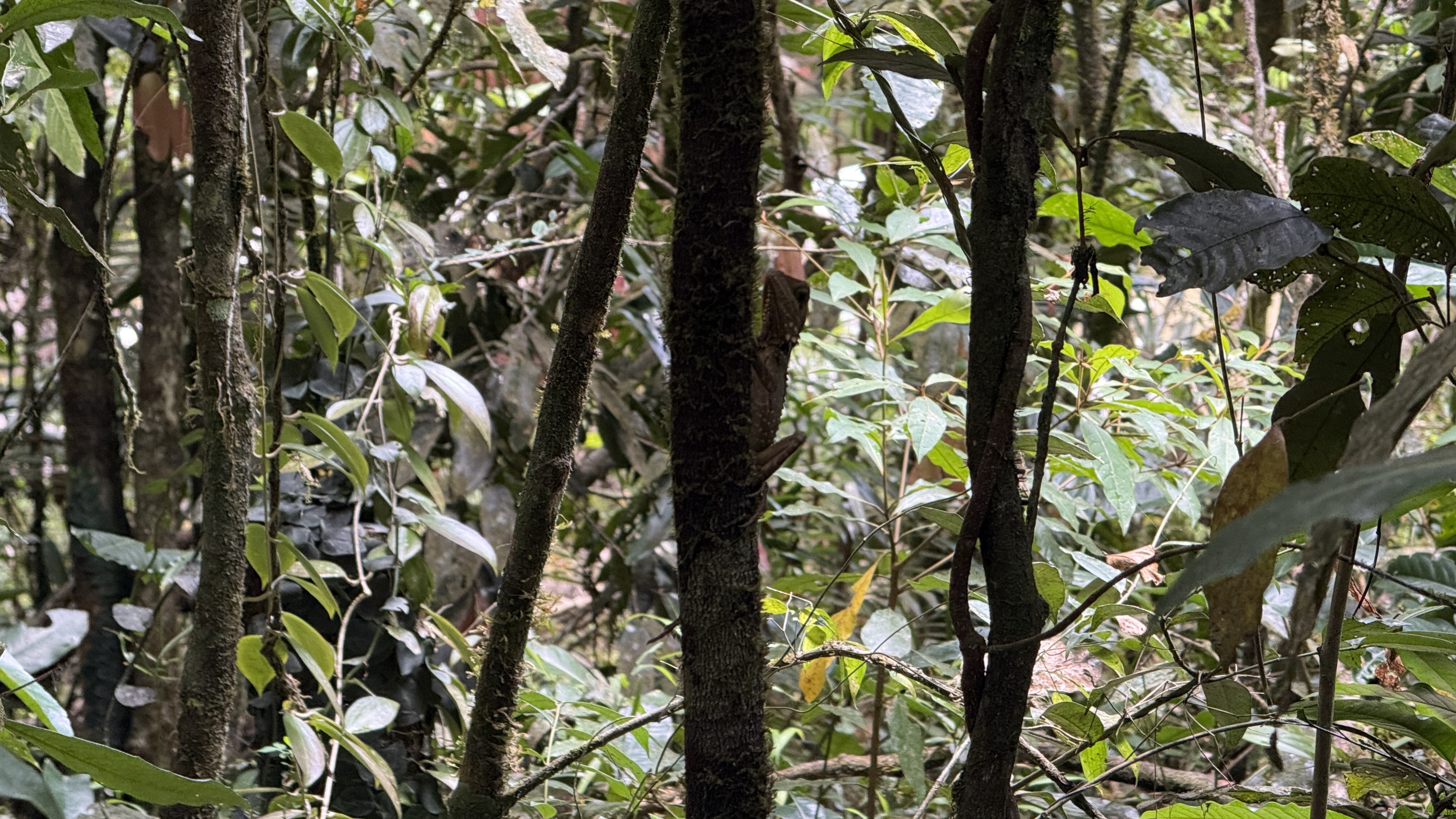
Thinking about that changed the way I looked at the ordinary trees and vines around us. In a museum, we usually see fossils of plants and animals that lived tens or hundreds of millions of years ago. Here, descendants of ancient plants are still growing, flowering, and reproducing. It felt as if a piece of Earth’s history had continued into the present. No wonder people call this a living museum. We were not looking at fossils through glass; we were walking through a forest shaped by an evolutionary history stretching back hundreds of millions of years. The soil beneath our feet, the plants beside us, and the canopy overhead all connected us to that distant past.
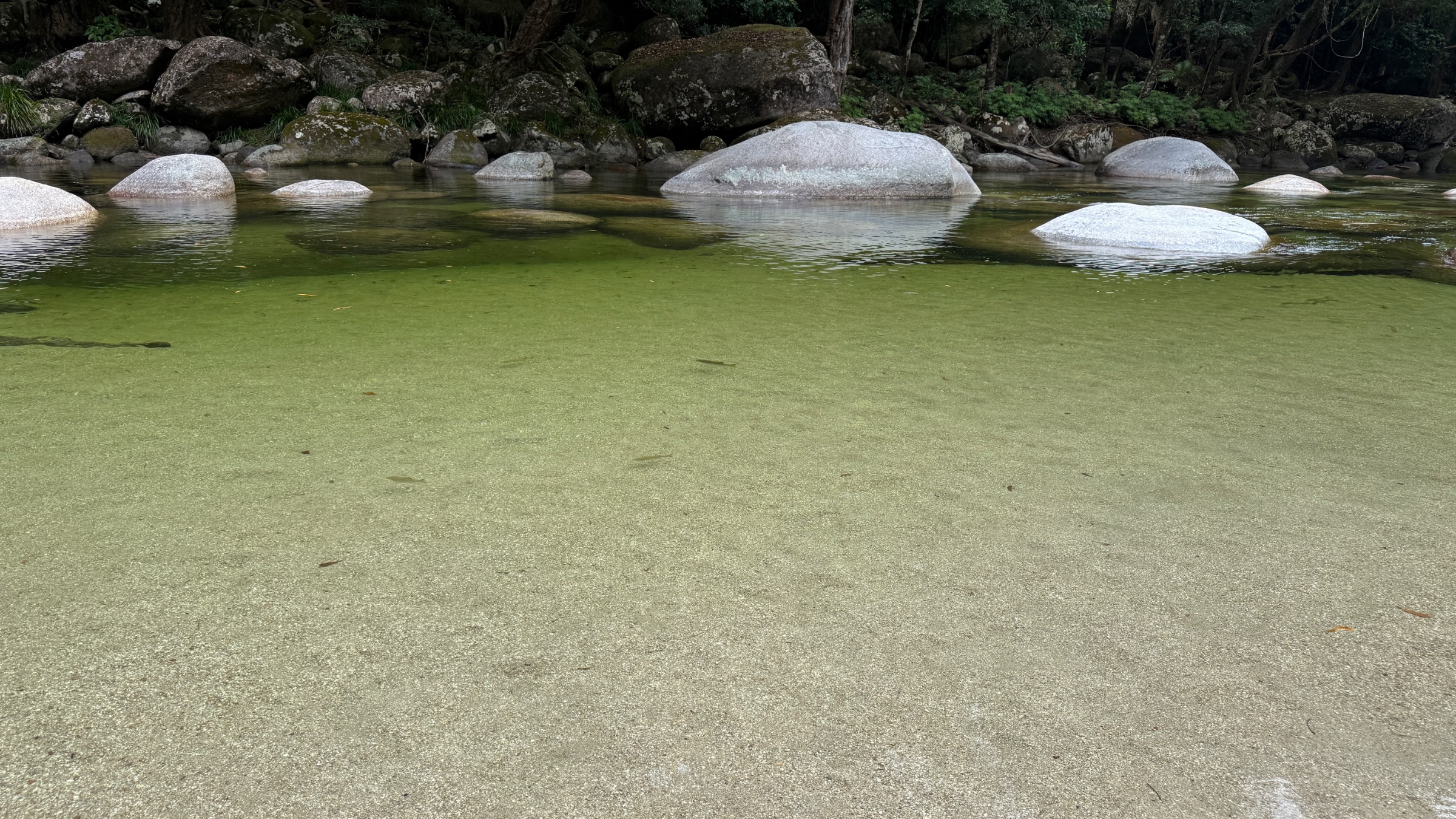
The trail soon brought us to the river. Another highlight of Mossman Gorge is the Mossman River, which flows down from the nearby mountains through the rainforest, forming clear streams and pools of different sizes.
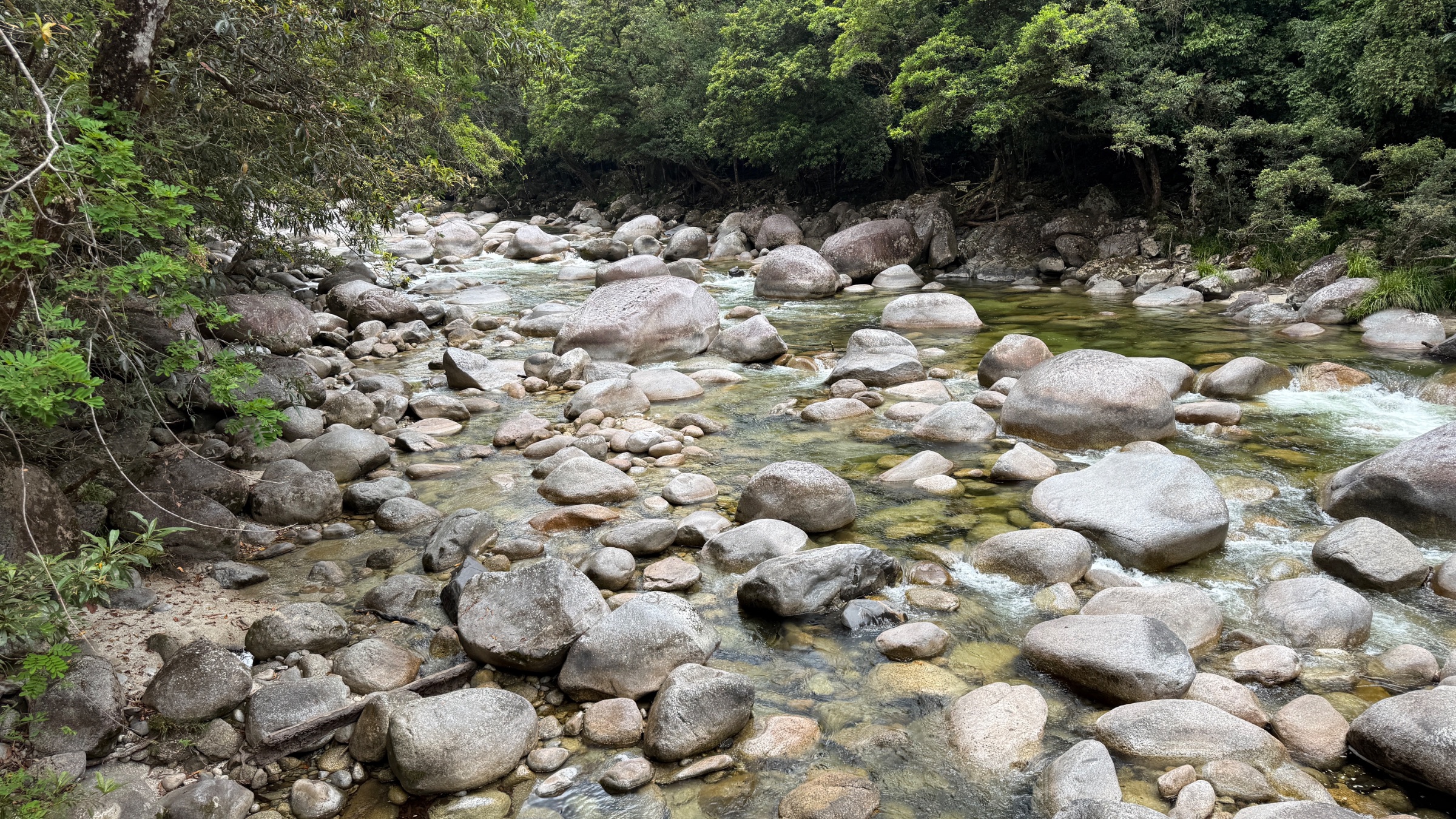
The water was beautiful—so clear we could almost see straight to the riverbed. Huge boulders were scattered through the stream, some taller than a person, their surfaces smoothed by the water. Many are granite boulders shaped by weathering and carried or worn down by the river. Some lay in the water, others piled along the banks, making a striking contrast with the dense rainforest.
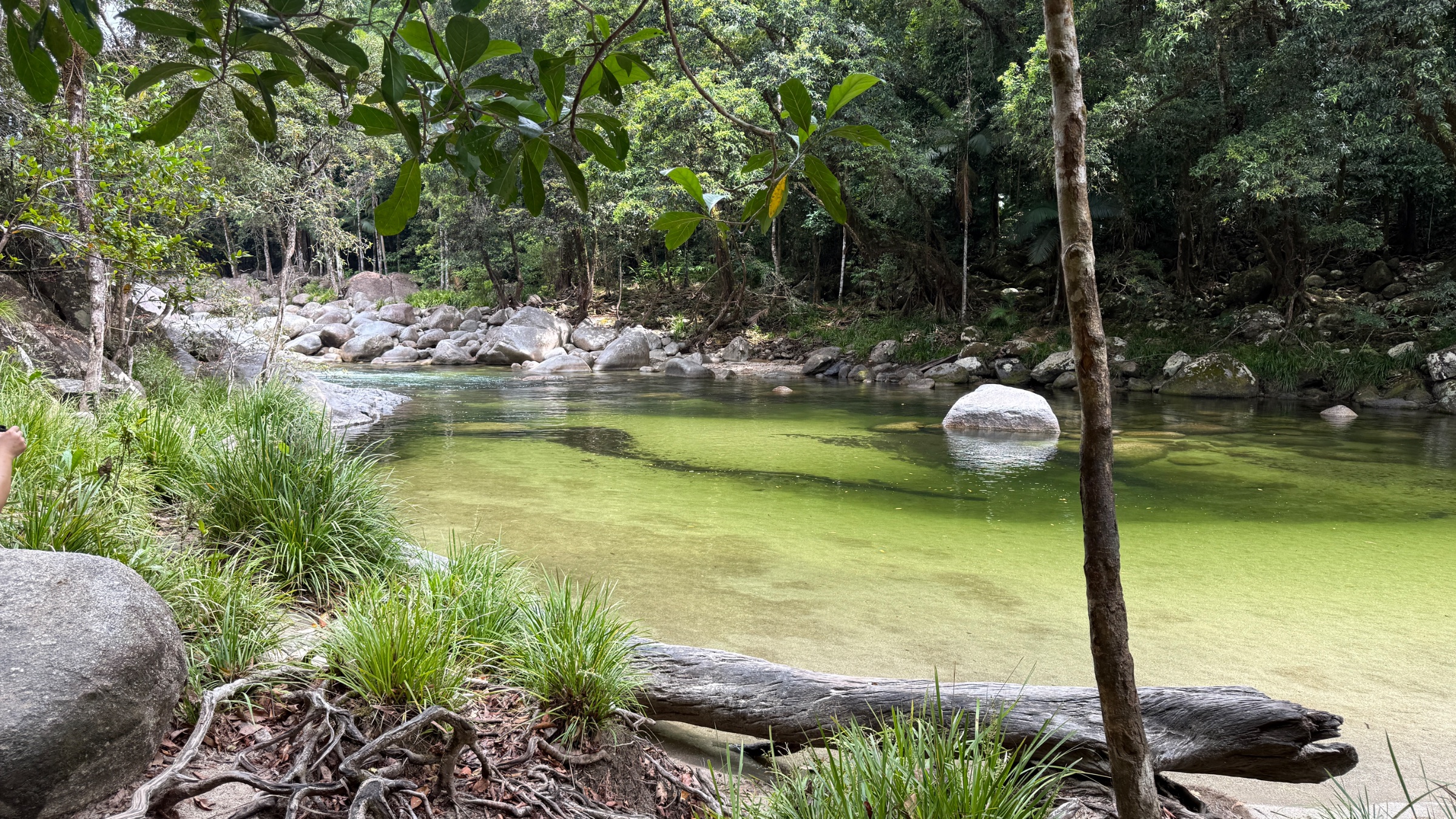
We stood by the water for a while. At first we were focused on how clear it was, then noticed there were plenty of fish, too. Some moved slowly beside the rocks; when visitors walked away, they swam into the open. There is a Chinese saying, “Water so clear it has no fish.” That did not seem to apply here. The water was clear, the fish were plentiful, and we could see them easily. The saying may work as a metaphor for human relationships, but it does not necessarily describe Australia’s natural environment.
Farther along, we came to a suspension bridge over Rex Creek. The sign beside it had an interesting story. The first bridge was built in 1986 with help from Australian Army engineers and park staff. To minimize damage to the rainforest, they could not simply cut a construction road, so most of the building materials had to be carried in by hand. About 20 tons of cement and stone were packed into bags and hauled several hundred meters along the trail. It must have been exhausting in the hot, humid forest. The old bridge was eventually removed for safety reasons, and the current one replaced it in 2010. Its main sections were prefabricated elsewhere, then flown in by helicopter and assembled in the rainforest—a much more advanced approach than carrying everything in by hand.
When we stepped onto the bridge, we found it less stable than an ordinary bridge. It swayed gently with each step. A foreign visitor on the bridge seemed to be having the time of his life, deliberately shaking it back and forth as hard as he could. The whole bridge rocked from side to side, and we swayed along with it as if we were on a small boat. He was clearly enjoying himself. We got an unexpected, free ride on the rainforest’s wobbliest bridge.
Beyond the bridge, the trail normally continues into the rainforest on a longer loop. Some sections were closed for maintenance when we visited, so we had to turn back here.
By the time we left Mossman Gorge, it was nearly lunch. We decided to stop in Port Douglas for a meal featuring local ingredients. Watergate Restaurant & Lounge Bar, on Macrossan Street in the town center, looked like an elegant modern Australian restaurant, with a polished interior and comfortable seating. Oddly, we were the only guests inside. We made the best of it and had the whole restaurant to ourselves.
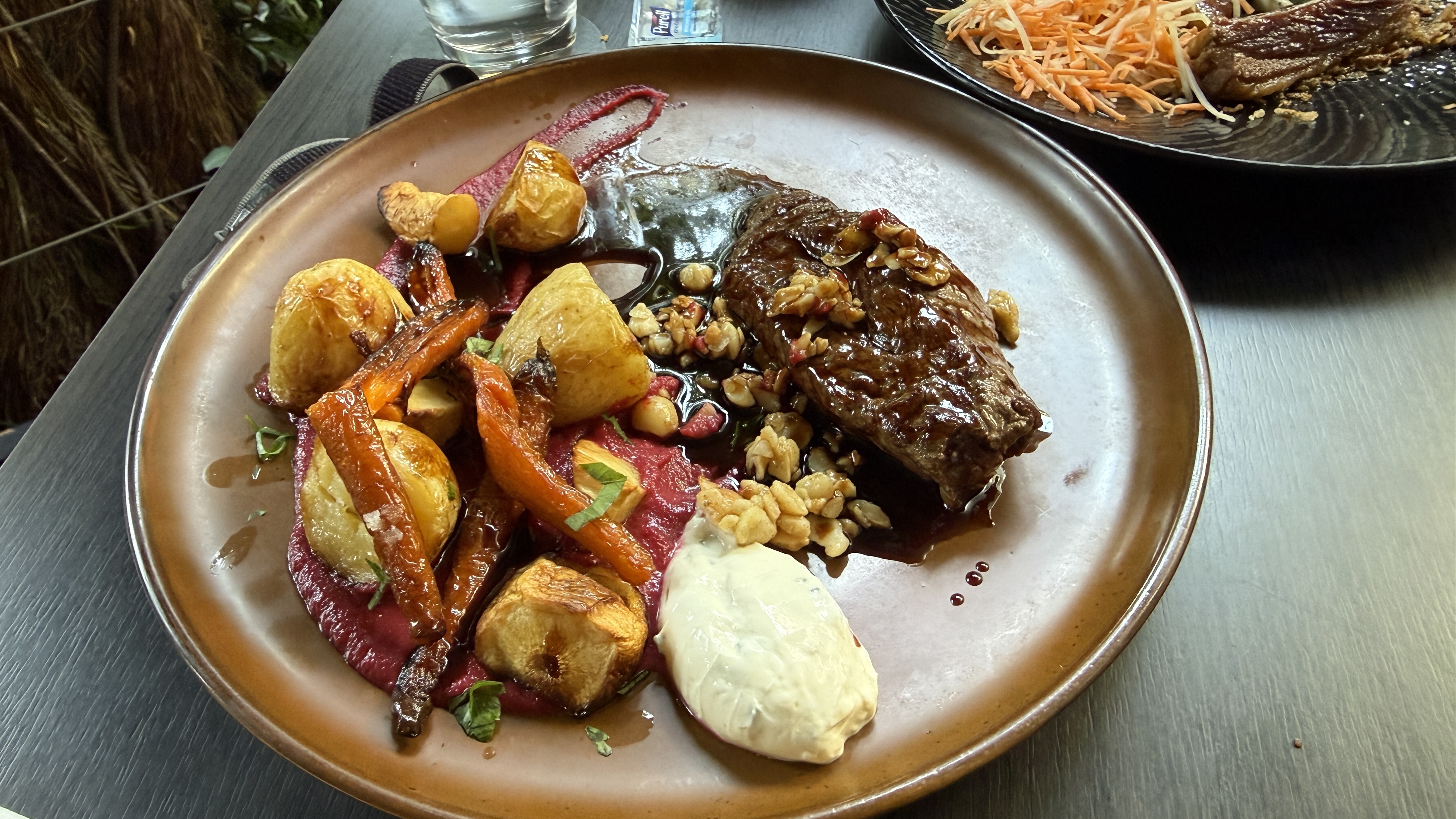
We ordered kangaroo loin and lamb ribs. The kangaroo was beautifully prepared, with a crust of macadamia, pepper, and honey, served with smoked beetroot purée, roasted root vegetables, a thick yogurt sauce with horseradish and chives, and a little red-wine jus. Kangaroo is lean, with less fat than beef and a slightly stronger flavor. The combination brought out the meat’s character without making it dry or one-note.
The lamb ribs were delicious, too. They had been cooked twice and coated in a rich lemongrass and palm-sugar sauce, with green papaya salad and crispy shallots. The meat was tender, and the sweet sauce had Southeast Asian notes that made it very different from a typical Western-style rack of lamb. Both dishes were tasty and beautifully presented. We took our time over lunch in the quiet dining room.
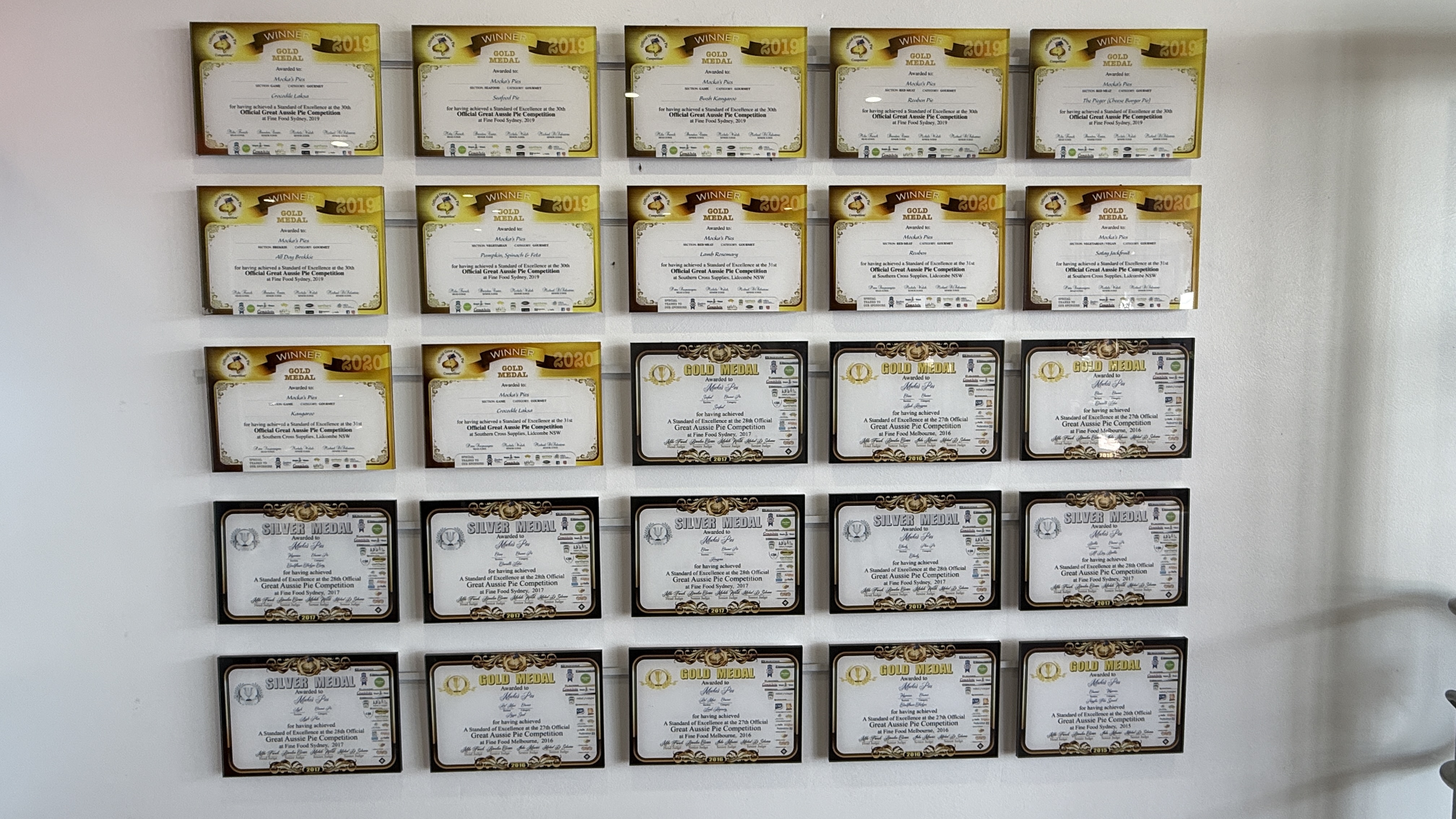
When we stepped outside, though, the street was lively. The more casual restaurants and cafés nearby were full. We walked around town and looked for Mocka’s Pies, a local pie shop that has been open since 1969. Meat pies are a favorite in Australia. They are similar to British savory pies but come in a wide range of local flavors. Mocka’s is known for its unusual game pies and has won several awards in Australia’s national pie competitions. Its kangaroo pie won the national game-pie category in 2019, and its crocodile laksa pie took second place.
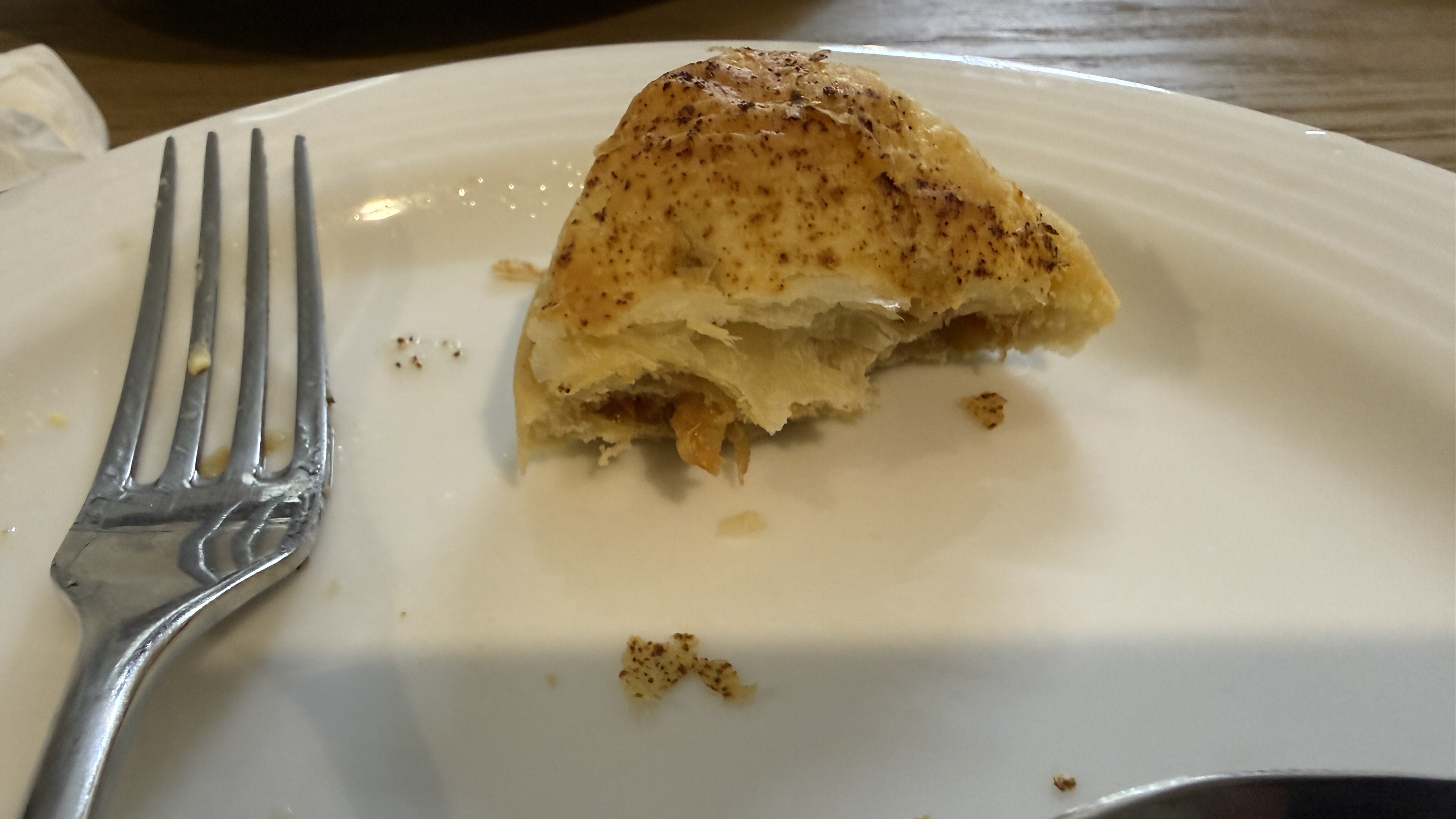
That sounded too interesting to pass up. Kangaroo and crocodile are not meats we often get to try in the United States, and here they were being served as everyday takeaway pies. We bought two to go, including a Crocodile Laksa Pie. Combining crocodile with Southeast Asian laksa curry and wrapping it in a traditional Australian pie was a creative idea.
After leaving Port Douglas, we had one last stop: Shannonvale Tropical Fruit Winery, a family-run winery specializing in tropical fruit wines. It was nothing like the vineyards we had visited in California’s Napa Valley. The climate here is hot and humid, not ideal for traditional wine grapes, so the owners make wine from tropical fruit grown in the area.
The staff told us the founders arrived more than 20 years ago as business partners. At the time, the property was undeveloped land. After years of work, it is now full of trees and hard to recognize as the same place. They started with mango wine and gradually experimented with other tropical fruits, building the range they offer today. Besides mango, passion fruit, and lychee, they use jaboticaba, also known as the Brazilian grape tree. The fruit is native to South America and grows directly on the trunk and larger branches, rather than hanging from small twigs like most fruit.
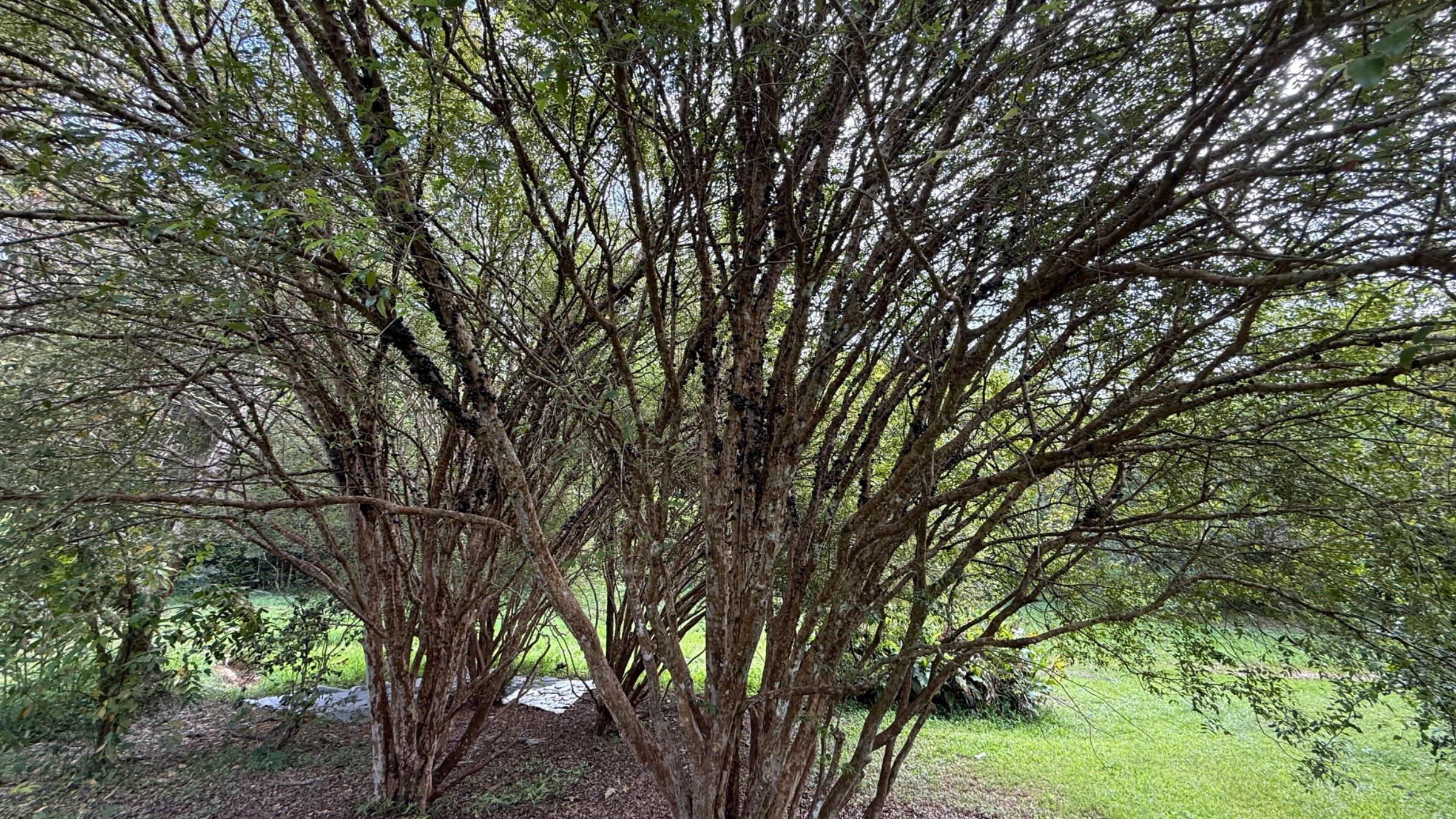
They make several styles of wine from the fruit. Some are light and crisp, some sweeter, and some are fortified wines, with more alcohol and sweetness, meant to sip slowly after a meal.
The staff were welcoming and poured us one sample after another, explaining the ingredients and flavors. Some wines were very fruity, some sweet and tart, and others tasted nothing like traditional grape wine. The most unusual was a chocolate-flavored wine. It had a rich chocolate aroma and tasted like a sweet dessert you could drink. I especially liked that one.
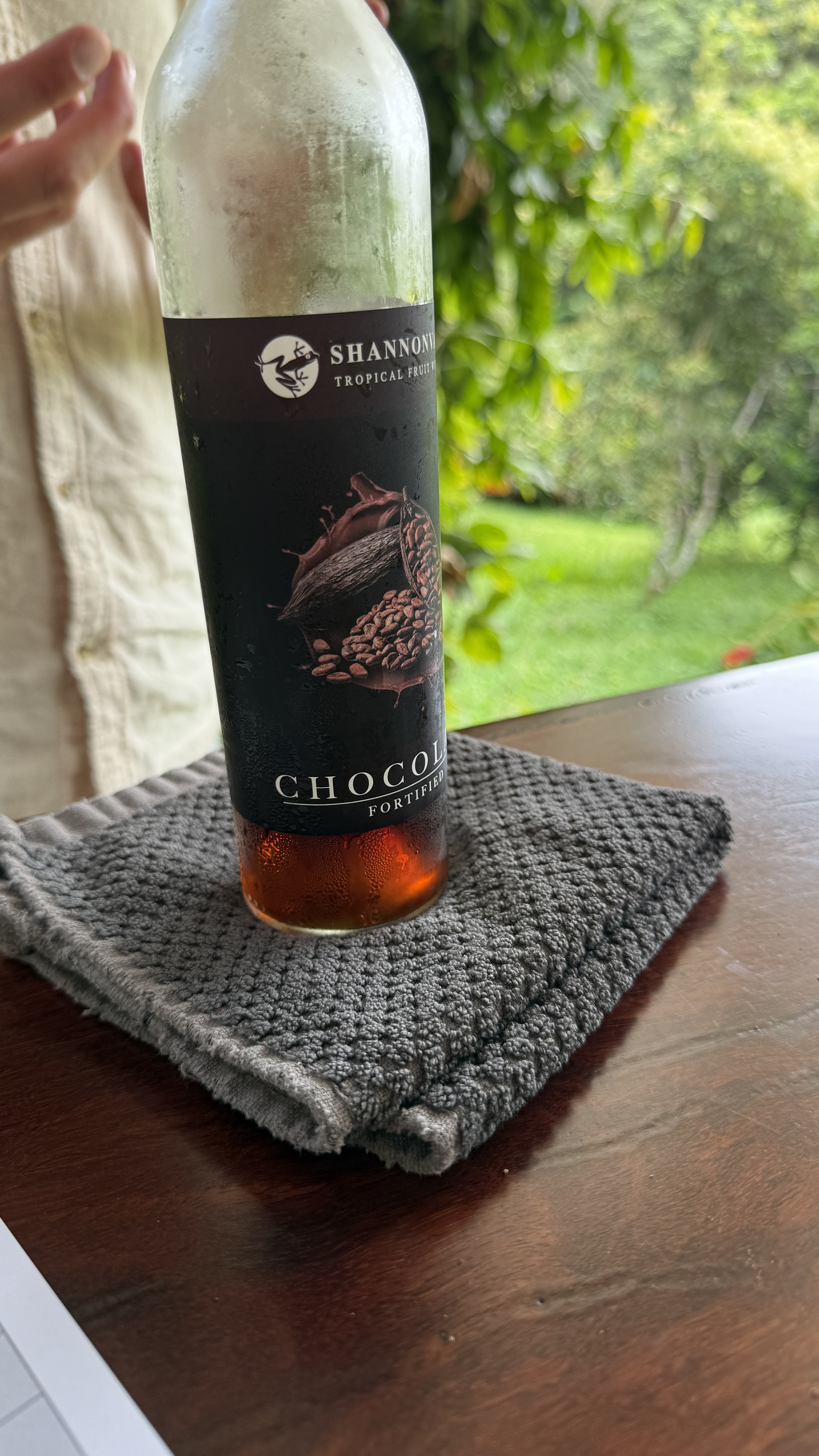
My wife preferred the lychee and mango wines. The lychee had a distinct floral and fruity aroma, while the mango had the sweetness of tropical fruit. Since we liked different flavors, the six-bottle tasting set was perfect: it included mango, passion fruit, lychee, chocolate, kaffir lime, and more. We paid A$70 for the set. After walking around the winery and chatting for a while, it was getting late, so we drove back to Palm Cove.
Reader Discussion · 0
No comments yet. Be the first to share your experience.