We had planned to drive to the Blue Mountains today, but the day began with a small crisis. I woke at 3 a.m. worrying about our cat back in California. A friend had gone to our house to look after the cat and chickens and couldn’t find the cat anywhere. We were on the other side of the world and could do very little, so we even started thinking about changing our flights home. Then, a little after 7 a.m., came the good news: our friend and her son found fresh evidence in the litter box, kept searching, and finally spotted the cat hiding in a crate in the kitchen. The little escape artist had never left the house. We had nearly rearranged an international trip for a cat who was simply very good at hide-and-seek. Next time we travel, we may install a few indoor cameras.
We had reserved a car with Avis. The rental desk was just to the right of the entrance to the Sydney Harbour Marriott, about a nine-minute walk from our hotel, The Fullerton. It was a small, convenient location with almost no queue; the paperwork took about five minutes. I picked up the car, drove back to the Fullerton for my wife, and then we were off toward the Blue Mountains, west of Sydney.
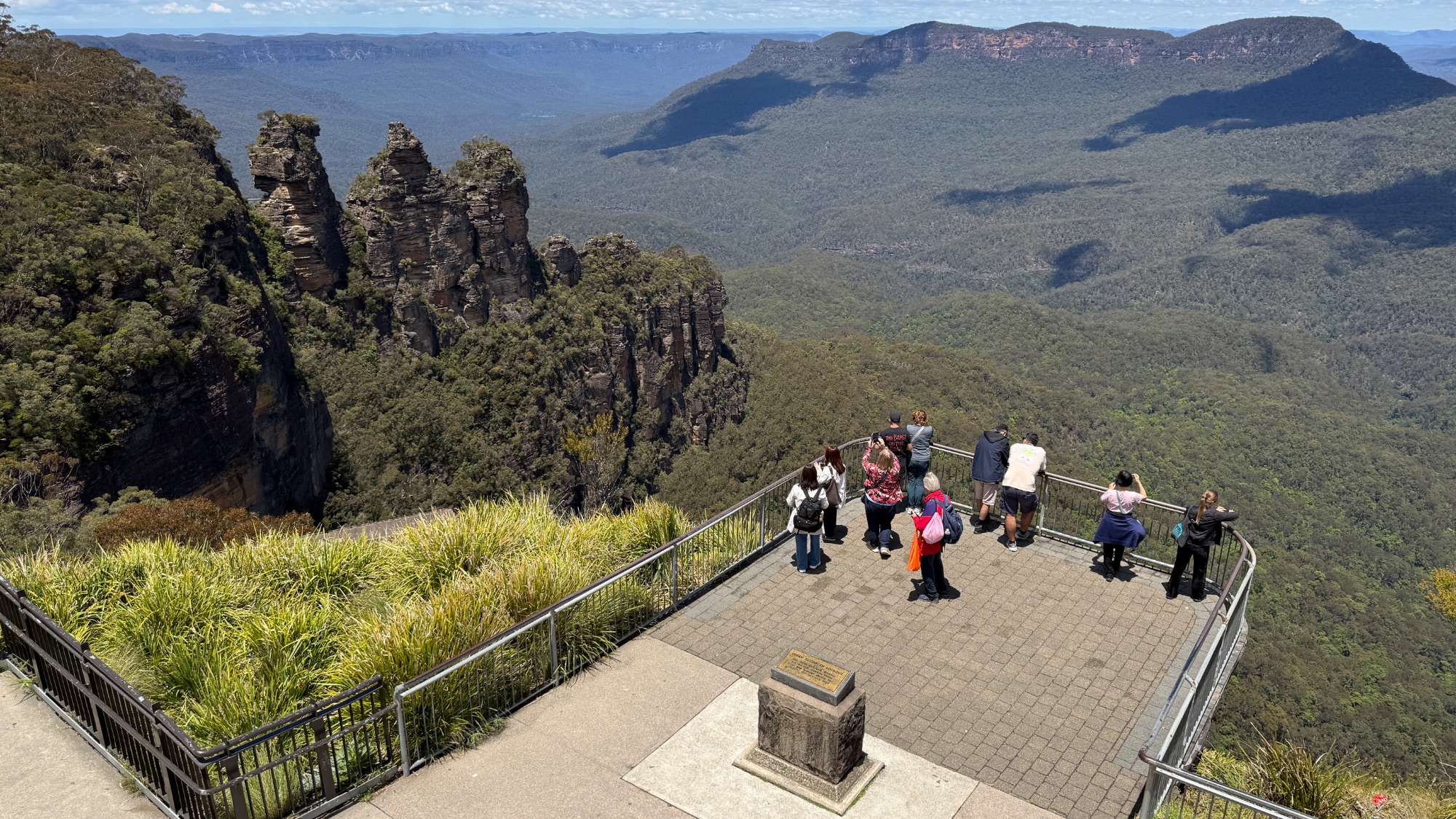
The Three Sisters and a very confident cockatoo
Our first stop was Echo Point Lookout, best known for the Three Sisters. From the lookout, a huge valley suddenly opened in front of us. Three sandstone pillars stand together at the edge of the escarpment, above an immense stretch of green forest and layers of mountains fading into the distance. They are said to resemble three sisters, and local stories tell of the sisters being turned to stone. The Blue Mountains get their name from the blue haze often seen over the valleys. Oil released by the eucalyptus forests contributes tiny particles to the air; in the right light and atmospheric conditions, they scatter blue light and give the distant landscape its soft blue cast.
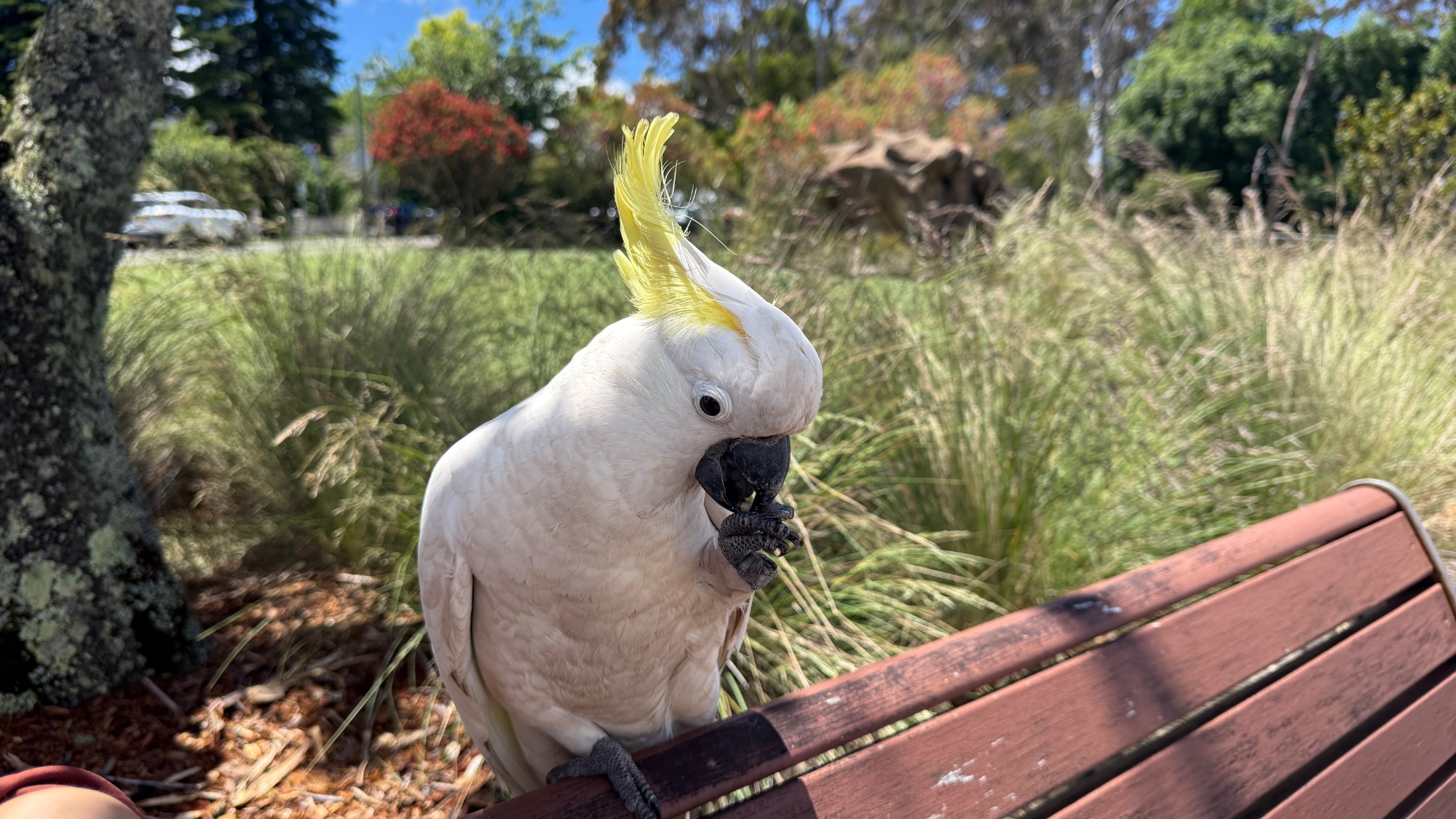
The view was wonderful, but our surprise guest nearby may have stolen the show: a beautiful sulphur-crested cockatoo. It had snow-white feathers, a bright yellow crest and a large black beak, and it looked entirely at home. It also had no fear of people whatsoever. When we took out some food, it marched right over to inspect us and even let us gently touch its feathers. In the U.S., a large, beautiful parrot like this usually lives in a zoo or someone’s home. Here it was wild, free and apparently happy to make new friends.
Govetts Leap: a sandstone escarpment on a grand scale
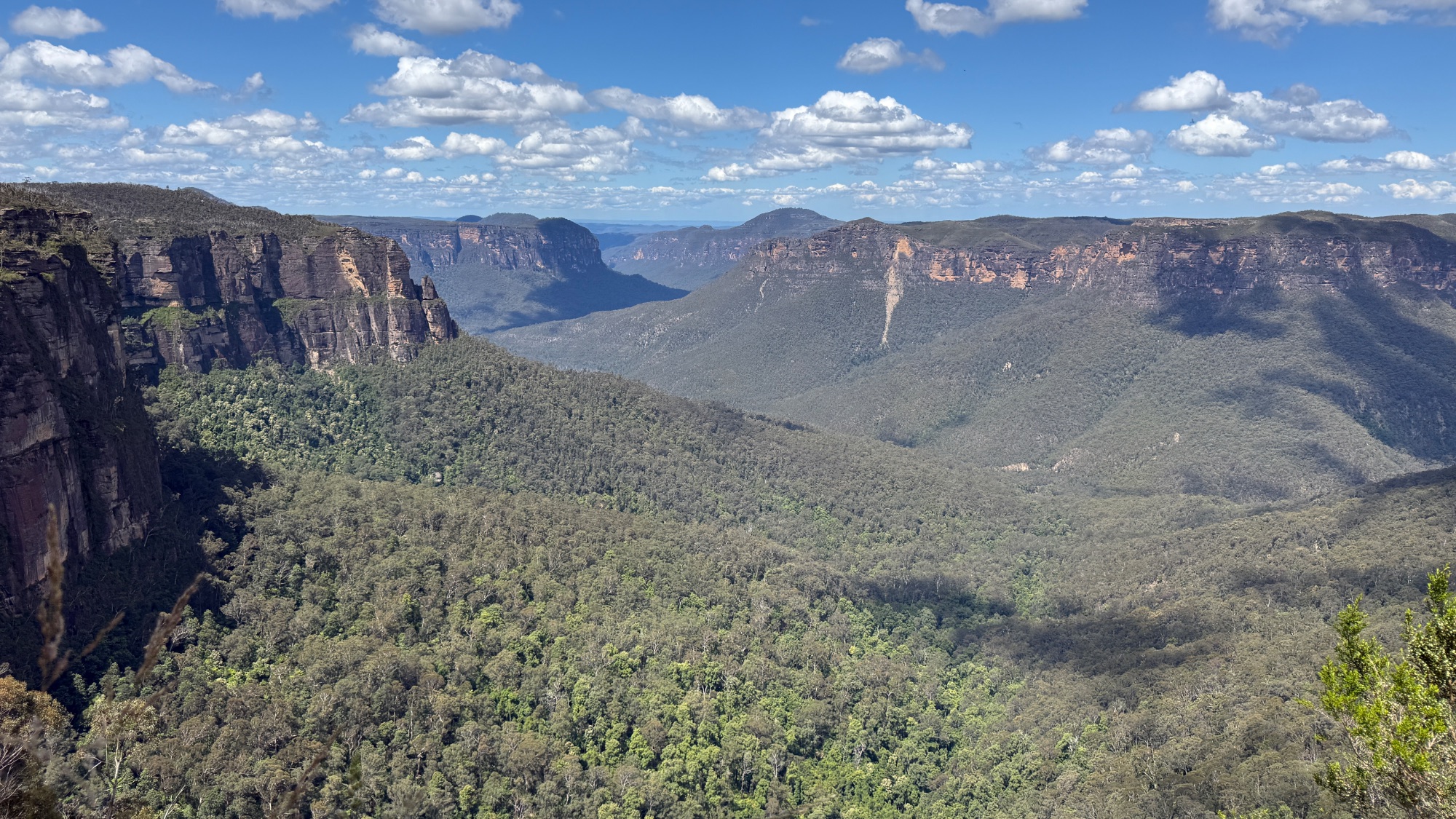
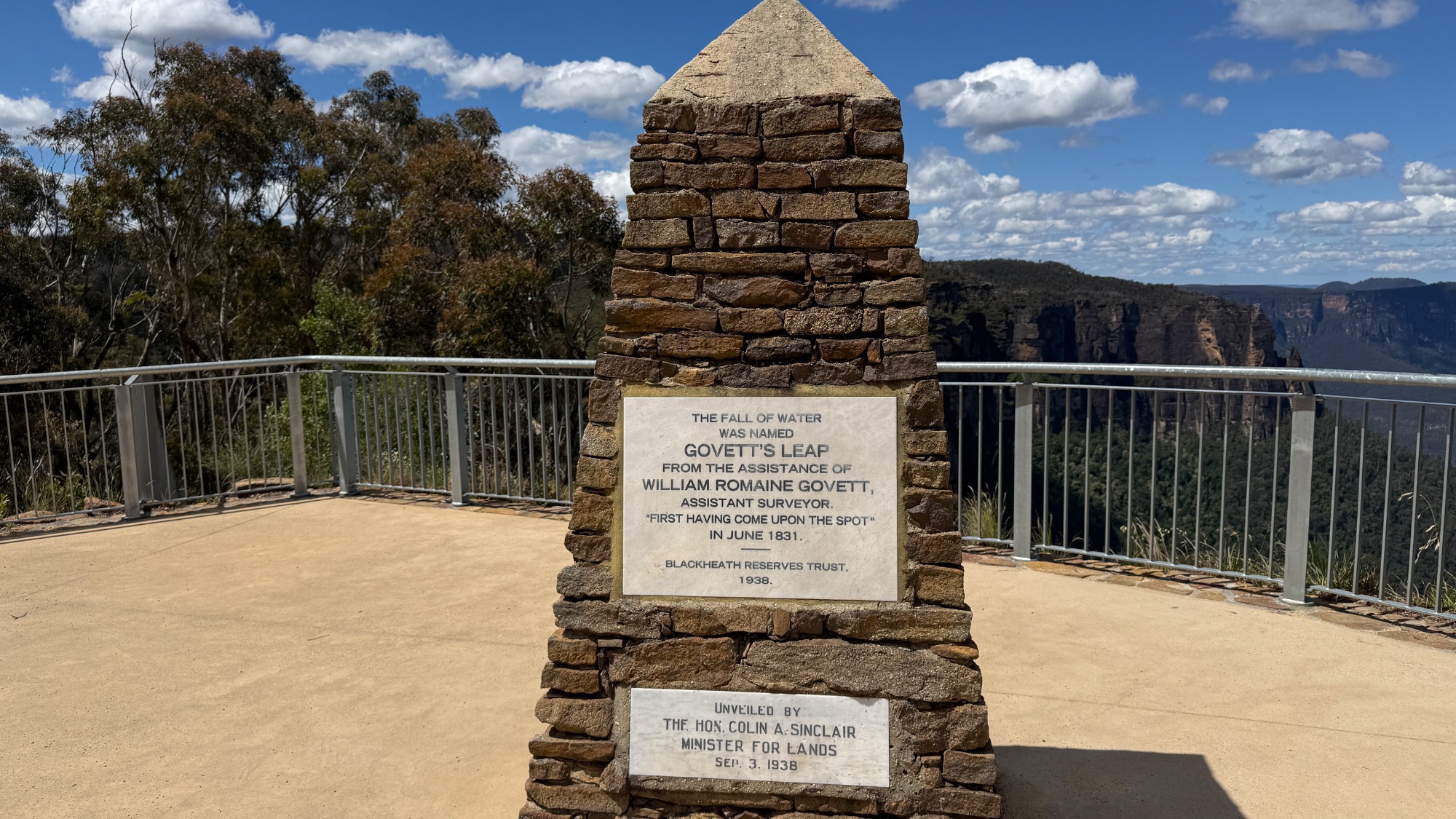
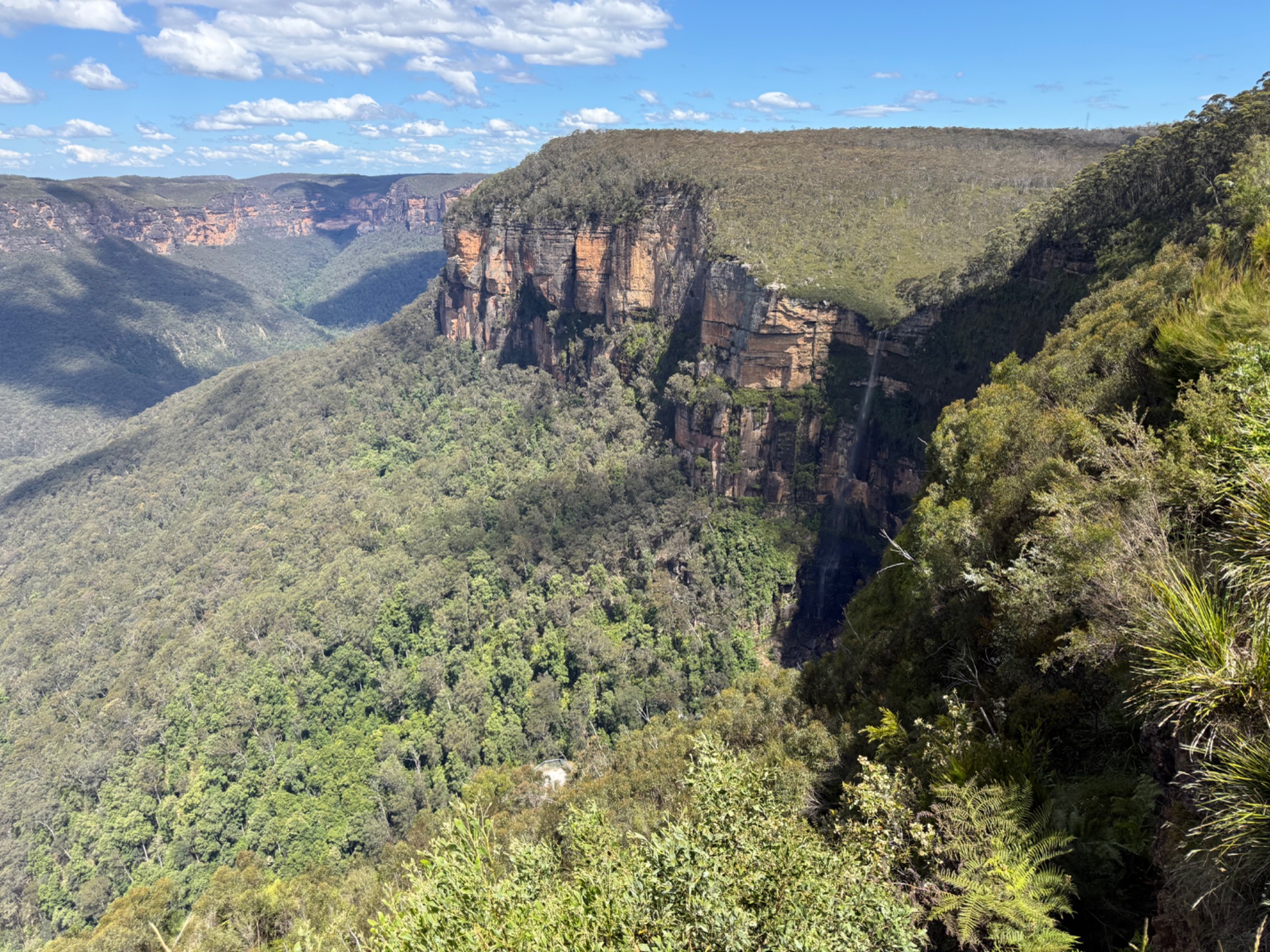
After the Three Sisters, we drove to Govetts Leap Lookout. The view here was just as dramatic, but completely different. A towering sandstone cliff stretched across the valley, its horizontal layers stacked like an enormous cake. Below it, the valley drops into deep forest. A stone memorial at the lookout commemorates surveyor William Romaine Govett, who came here in 1831.
Looking across at the cliff made the Blue Mountains’ landscape easier to understand. These are not sharp, isolated peaks. Over a very long time, rivers carved a high plateau into deep valleys and dramatic escarpments. The layers of sedimentary rock on the cliff face are a visible record of that ancient geological history.
Wentworth Falls: the hike we kept talking about
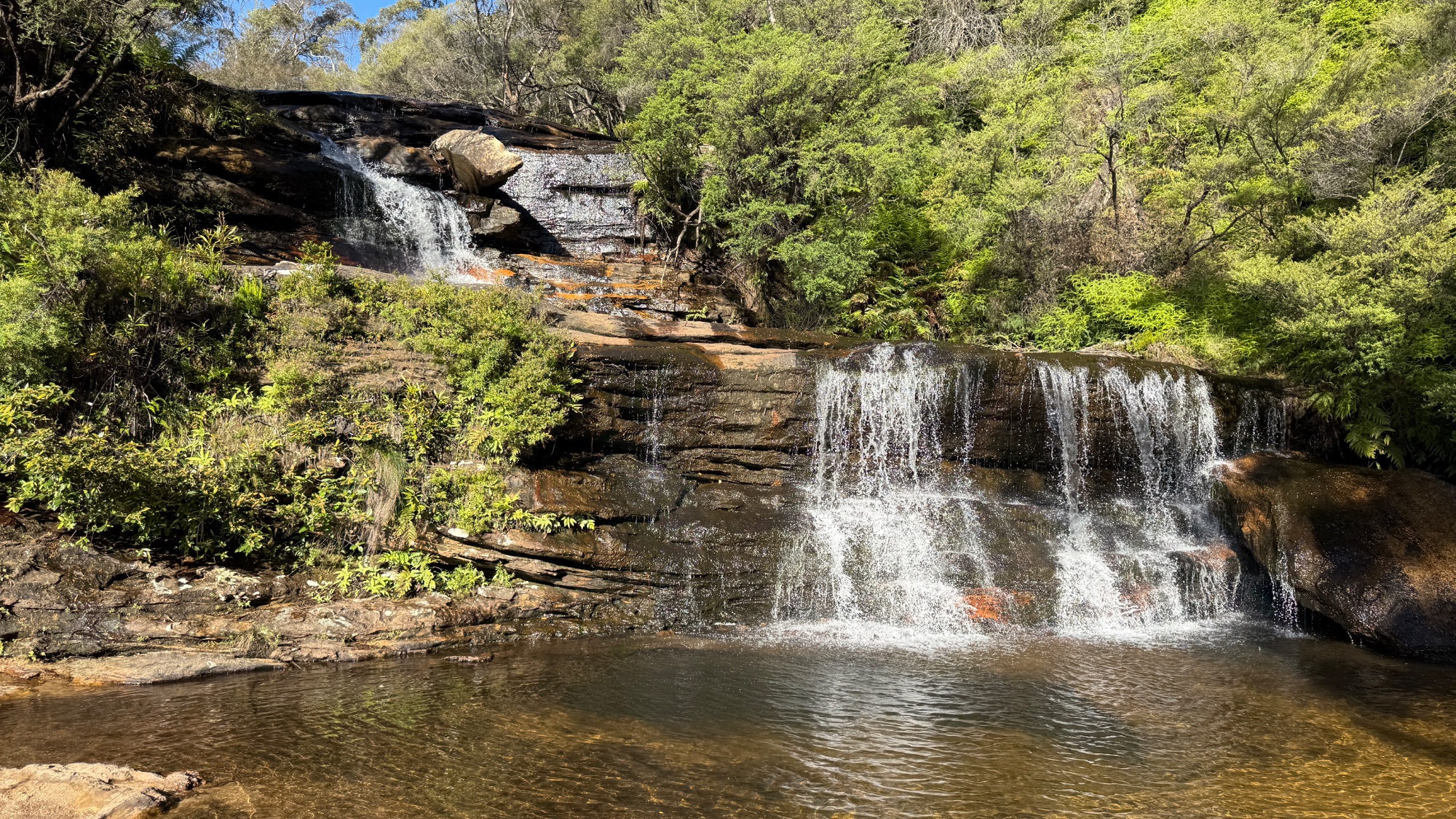
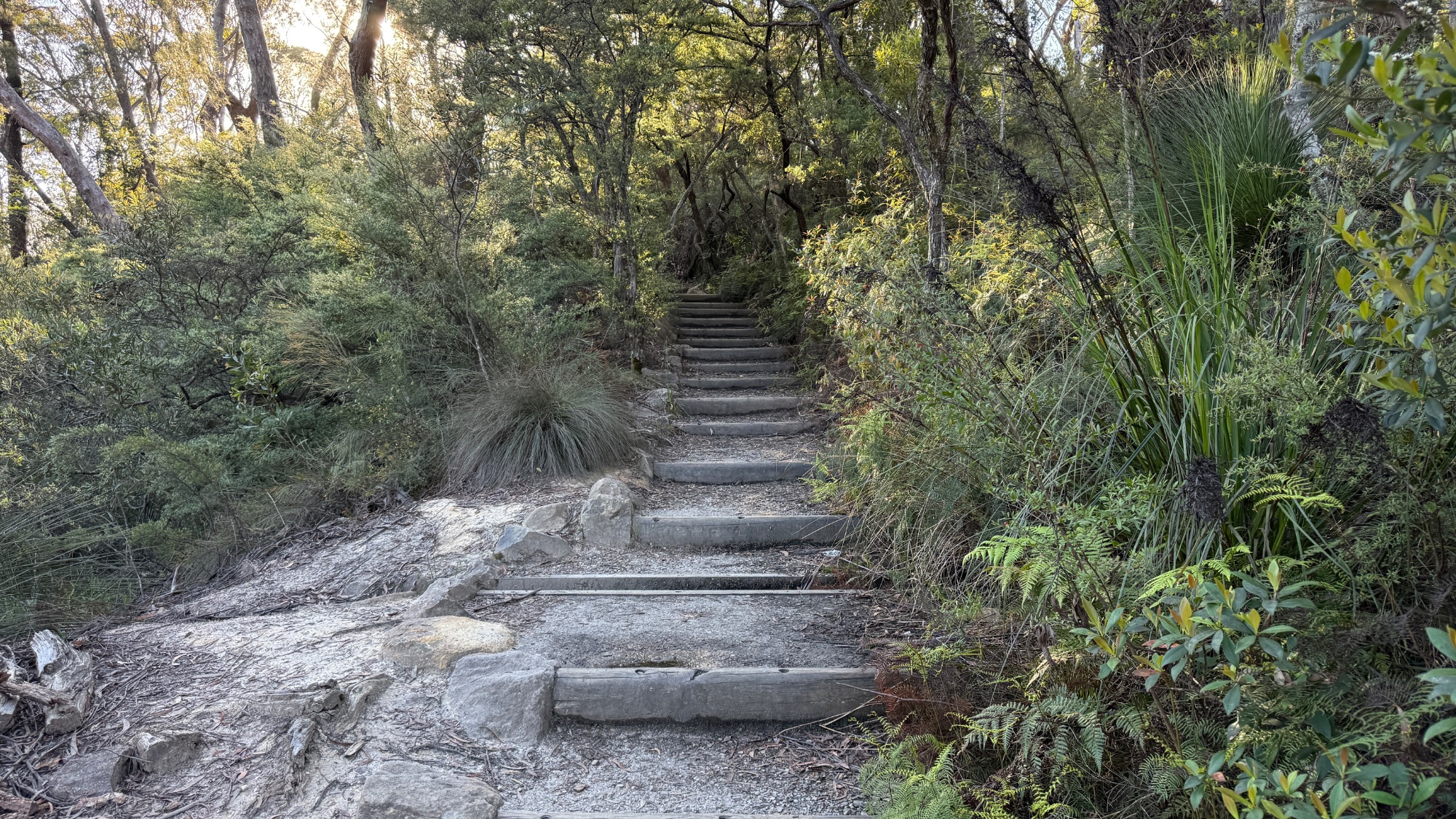
The first two lookouts gave us sweeping views; Wentworth Falls let us step right into the landscape. Several tracks offer different views of the falls. We followed a path through the trees, over rocks and down steps, until we could hear the water. The falls are not enormous, but they come in several tiers, spilling over the rock into small cascades and pools. The trail takes you close enough to see the water tumbling down the cliff rather than just looking at it from far away.
One section of the path also leads above and alongside the water, then around the rock wall to the other side of the curtain of water. The falls look different from every angle.
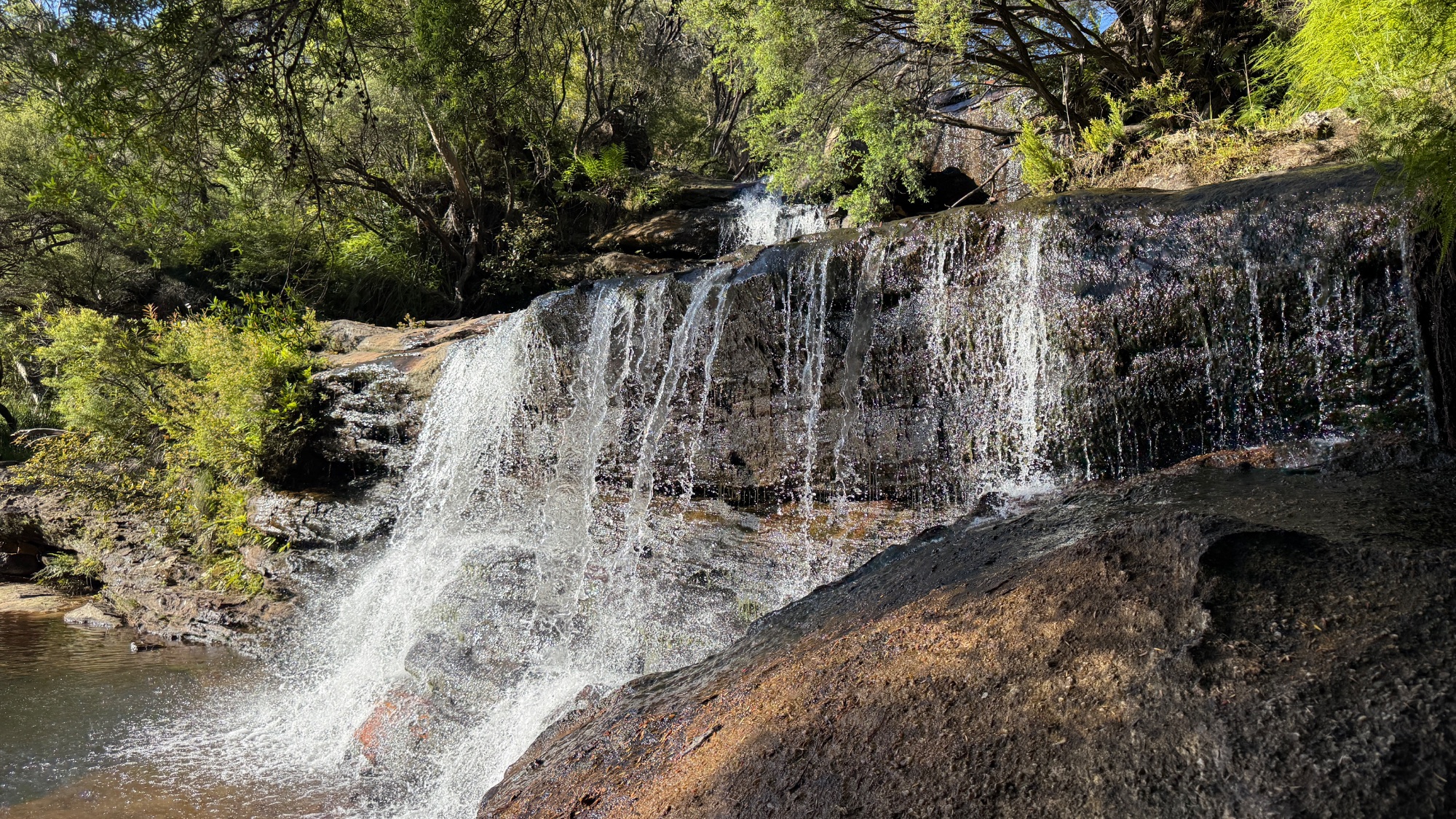
That made the walk much more engaging than a quick stop at a lookout. Water, rock, forest and trail kept changing around us, and every stretch brought another view. The waterfall was modest in size but lovely up close. For me, this was the most memorable part of the day.
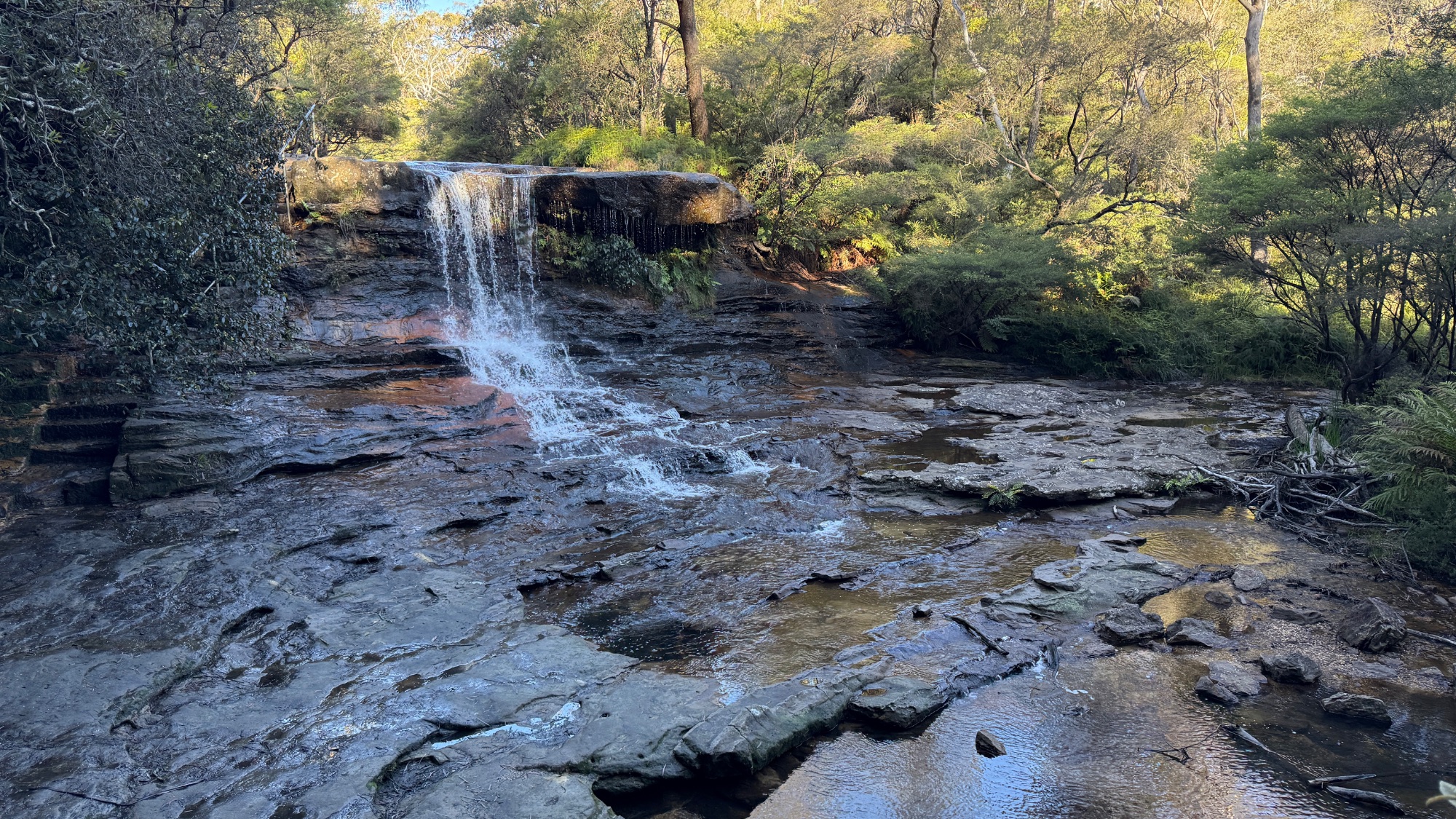
Along the trail, we came across a marker called Charles Darwin View. Darwin really had stood here on January 17, 1836.
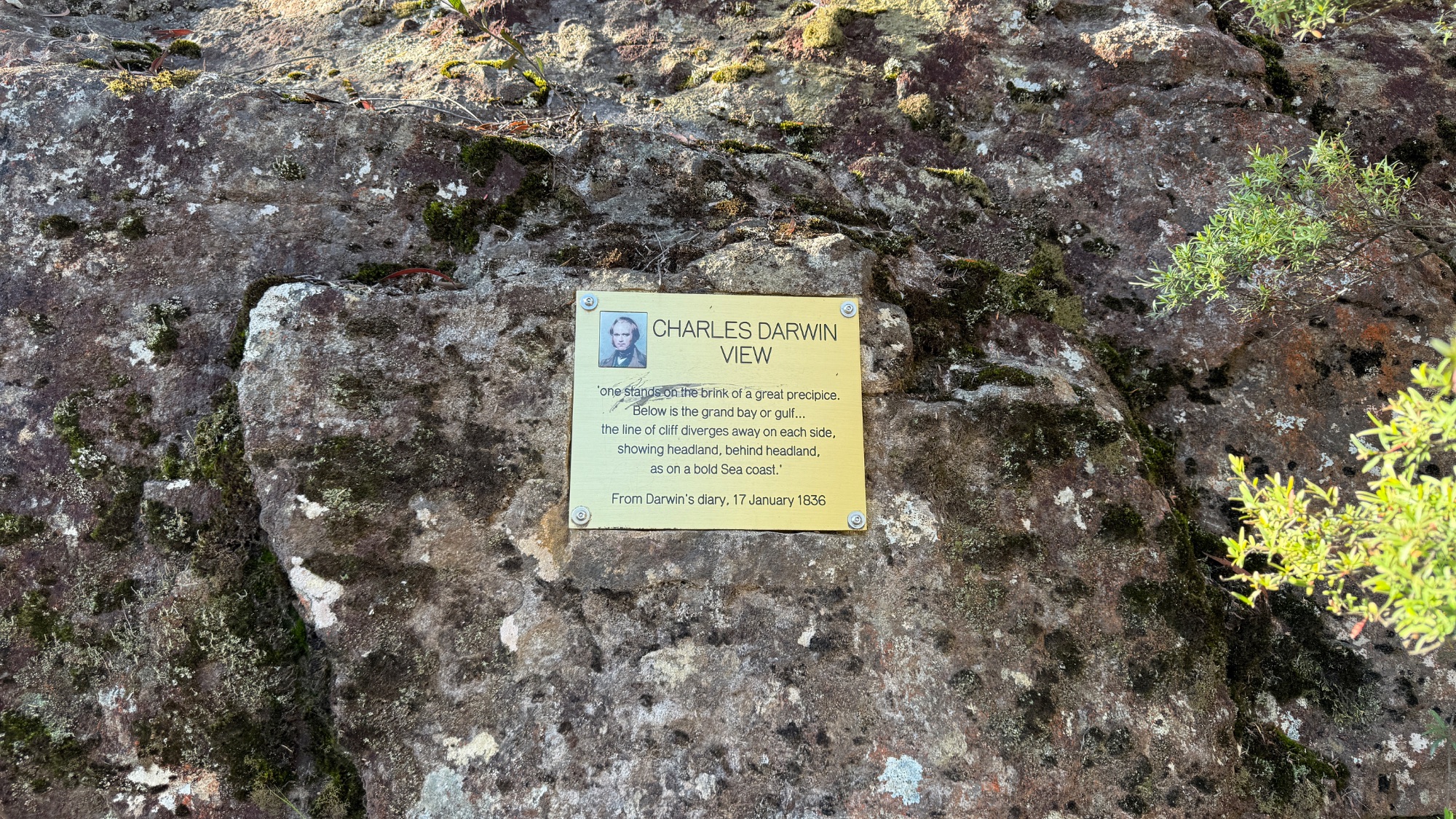
Darwin was 26 and travelling around the world aboard the British ship HMS Beagle. While the ship was in Sydney, he made a special trip to the Blue Mountains to study the landscape and geology. In his journal, he described the sudden view into a vast valley, with cliffs stretching away on both sides. It reminded him of a grand coastline, except that the “sea” below was a forested gorge. Part of the route he walked is now called the Charles Darwin Walk.
Banksia: a plant with a surprising relationship to bushfires
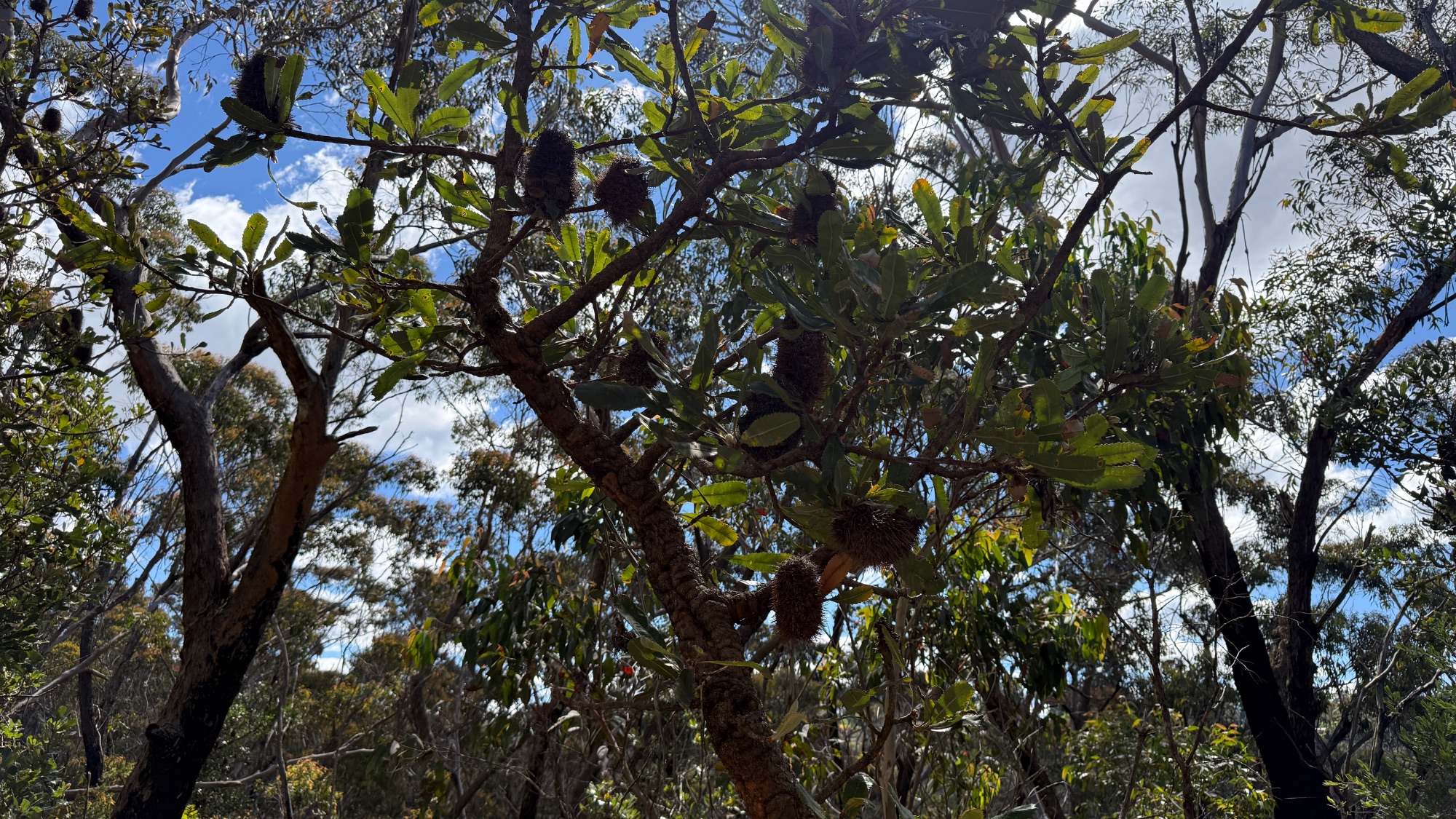
Another plant caught my eye along the way. Its branches held dark brown, oval shapes that looked a little like pine cones, but not quite. I later learned they were likely from a Banksia, a distinctive Australian native plant. Banksia flowers often grow in dense, cylindrical clusters; after flowering, they leave behind hard, woody seed pods that look like wonderfully odd pine cones. In many species, seeds can remain sealed inside those pods until heat from a bushfire causes them to open and release the seeds. For these plants, fire can be more than destruction: sometimes it is part of how new growth begins. Australia’s natural world has some ingenious survival strategies—even the trees have their own plan for fire season.
Dinner: Korean-Chinese food in western Sydney
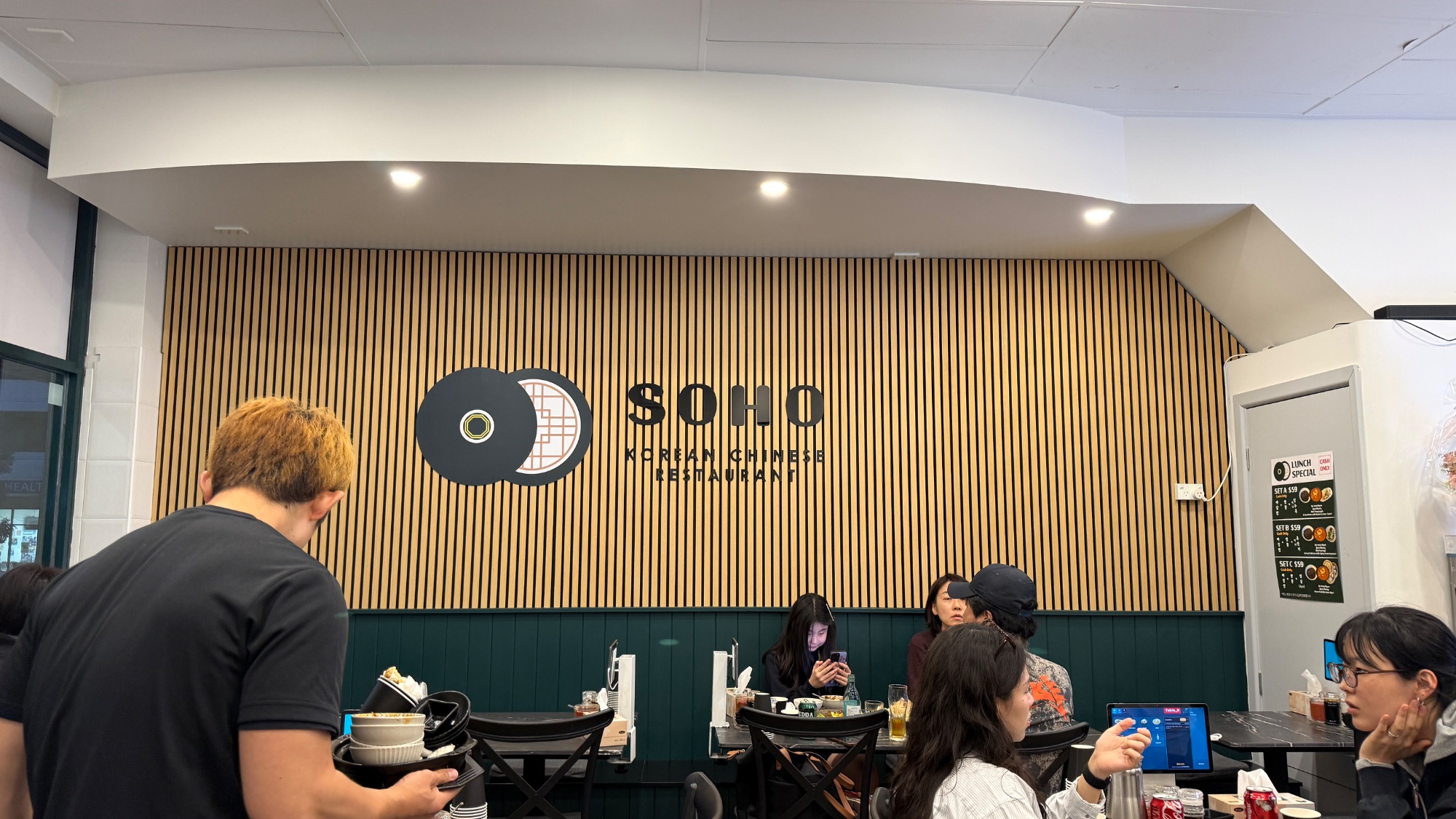
After the Blue Mountains, we drove back toward Sydney and stopped in Lidcombe for dinner at a place called SOHO Korean Chinese Restaurant. The name tells you exactly what to expect: Chinese dishes shaped by Korean tastes.
Chinese migrants, many from Shandong, brought northern Chinese noodles and cooking traditions to Korea in the late 19th century. Over more than a century, those dishes evolved into a distinct Korean-Chinese cuisine. Jajangmyeon, spicy seafood noodles and sweet-and-sour pork are some of its best-known dishes. We ordered a Korean-style dry-fried chicken: crisp golden pieces tossed with chilli, vegetables and sauce, topped with thin slices of lotus root. Crunchy outside, tender inside—and very good.
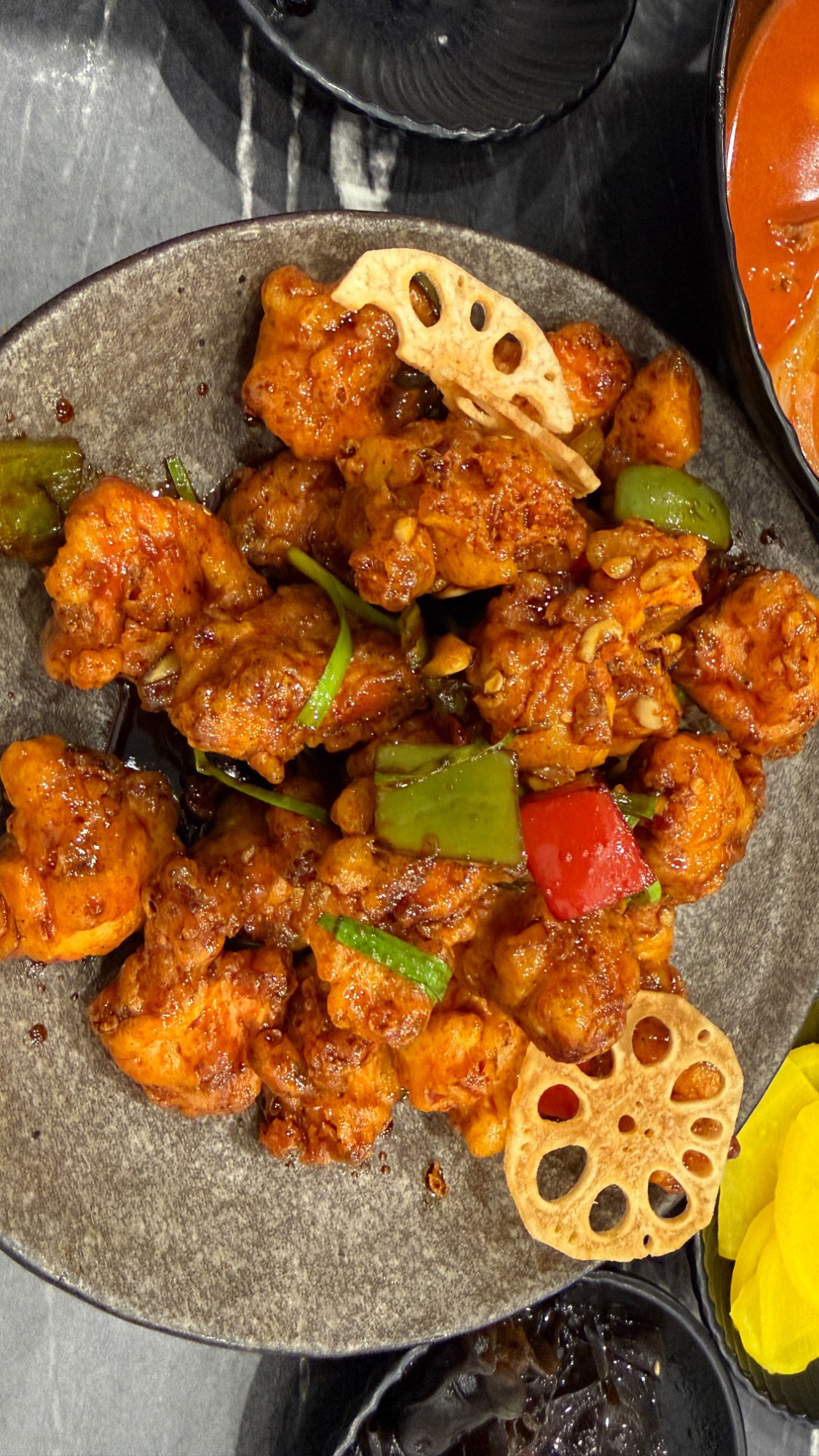
Lidcombe also showed us another side of Sydney life. It is well outside the city centre, but it did not have the spacious restaurant and shopping-centre parking lots we are used to in Cupertino. The busy high street was packed with restaurants and shops, so we had to look for a space along the road. We later learned that Lidcombe is one of Sydney’s Korean neighbourhoods, with Korean signs, restaurants and Asian grocery stores—a very different scene from downtown.
Mrs Macquarie’s Chair: harbour lights and flying foxes
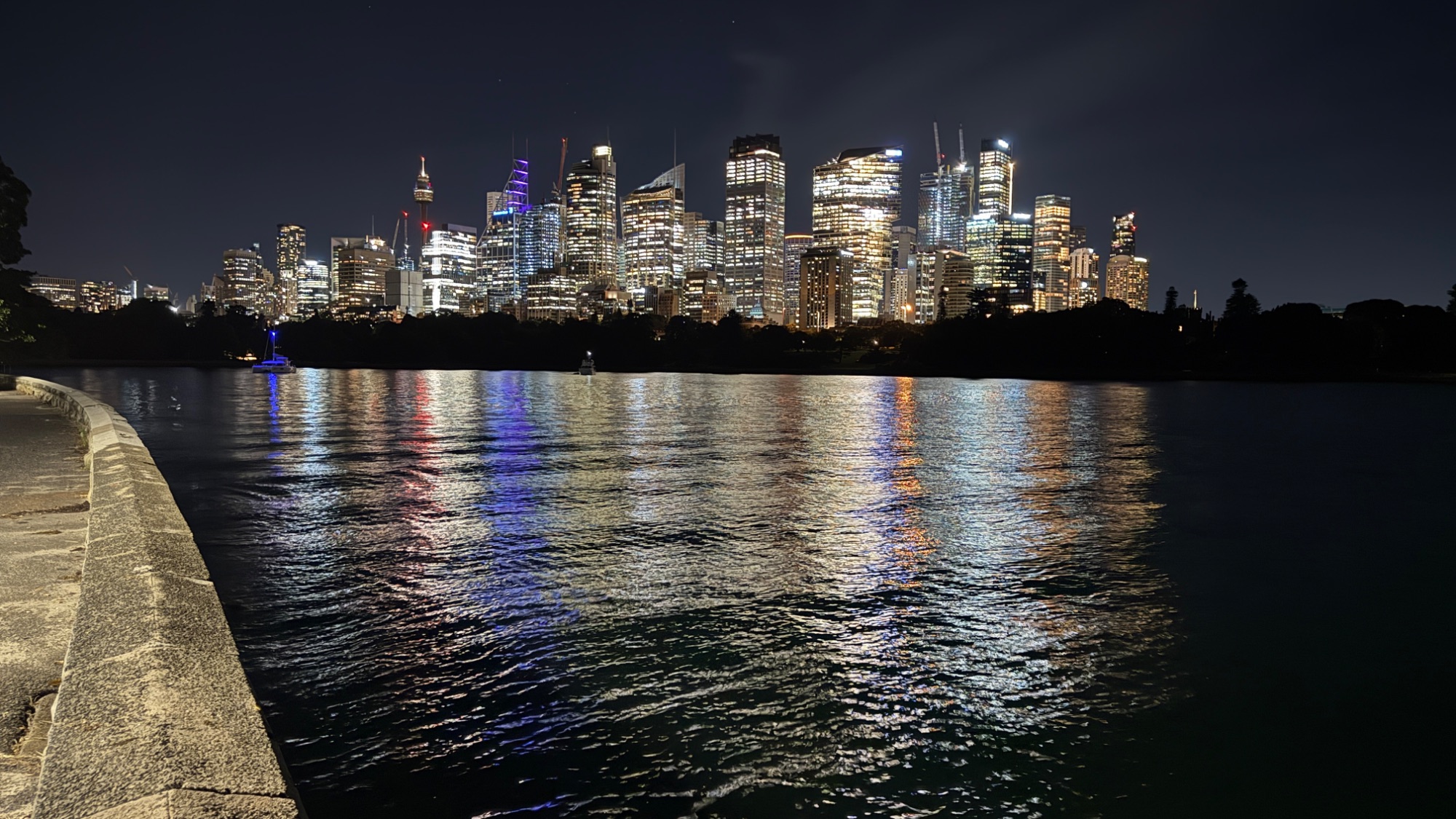
After dinner, we drove to Mrs Macquarie’s Chair, one of Sydney’s best-known spots for seeing both the Opera House and Harbour Bridge. We arrived around 9:30 p.m. The car park was nearly empty, with only a few cars. By the water, there was a person fishing and a couple of pairs out for the evening. We practically had the harbour to ourselves.
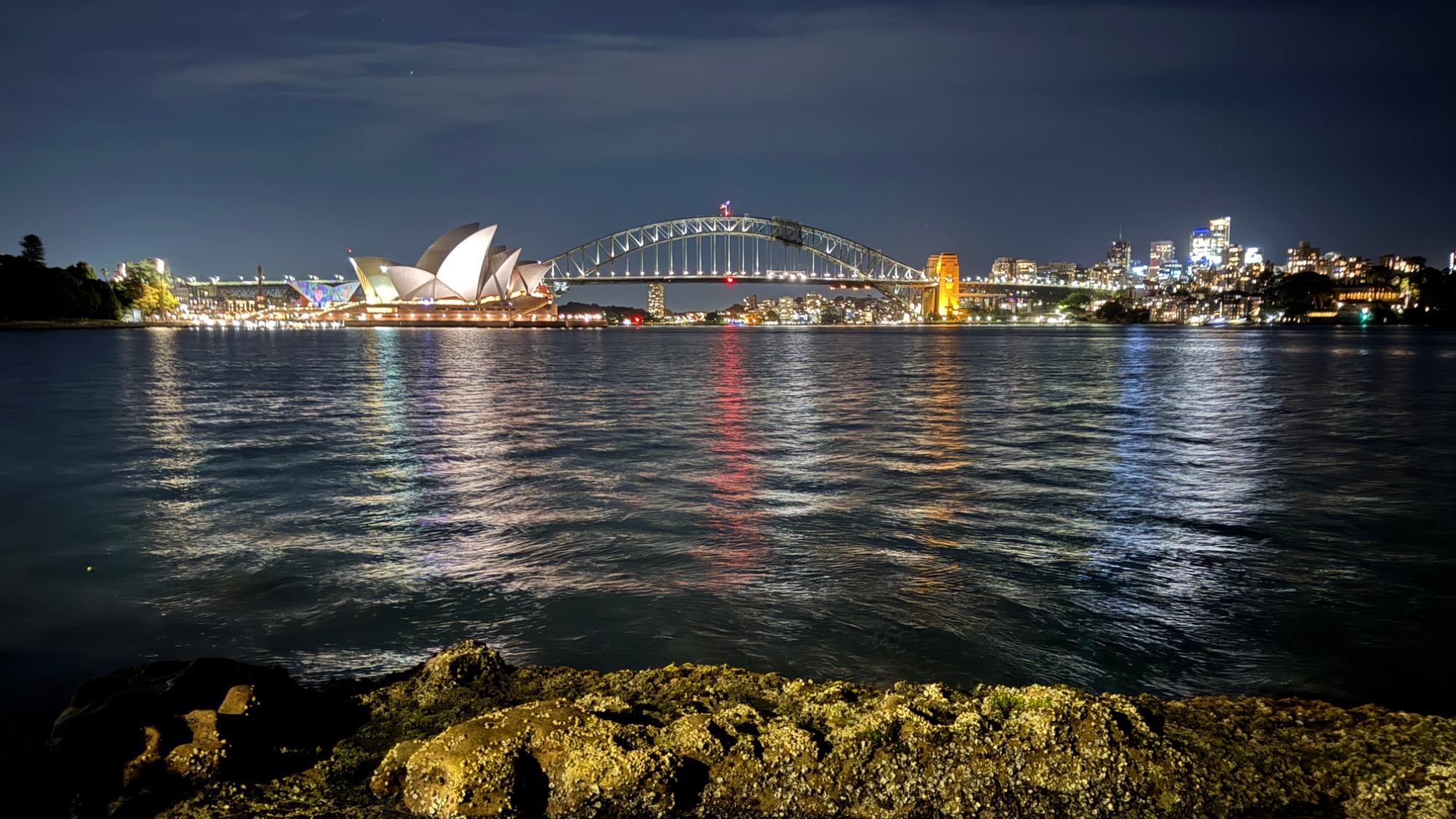
The Opera House’s white sails stood out in the night, and the Harbour Bridge stretched across the water beyond it. We could smell the sea in the air.
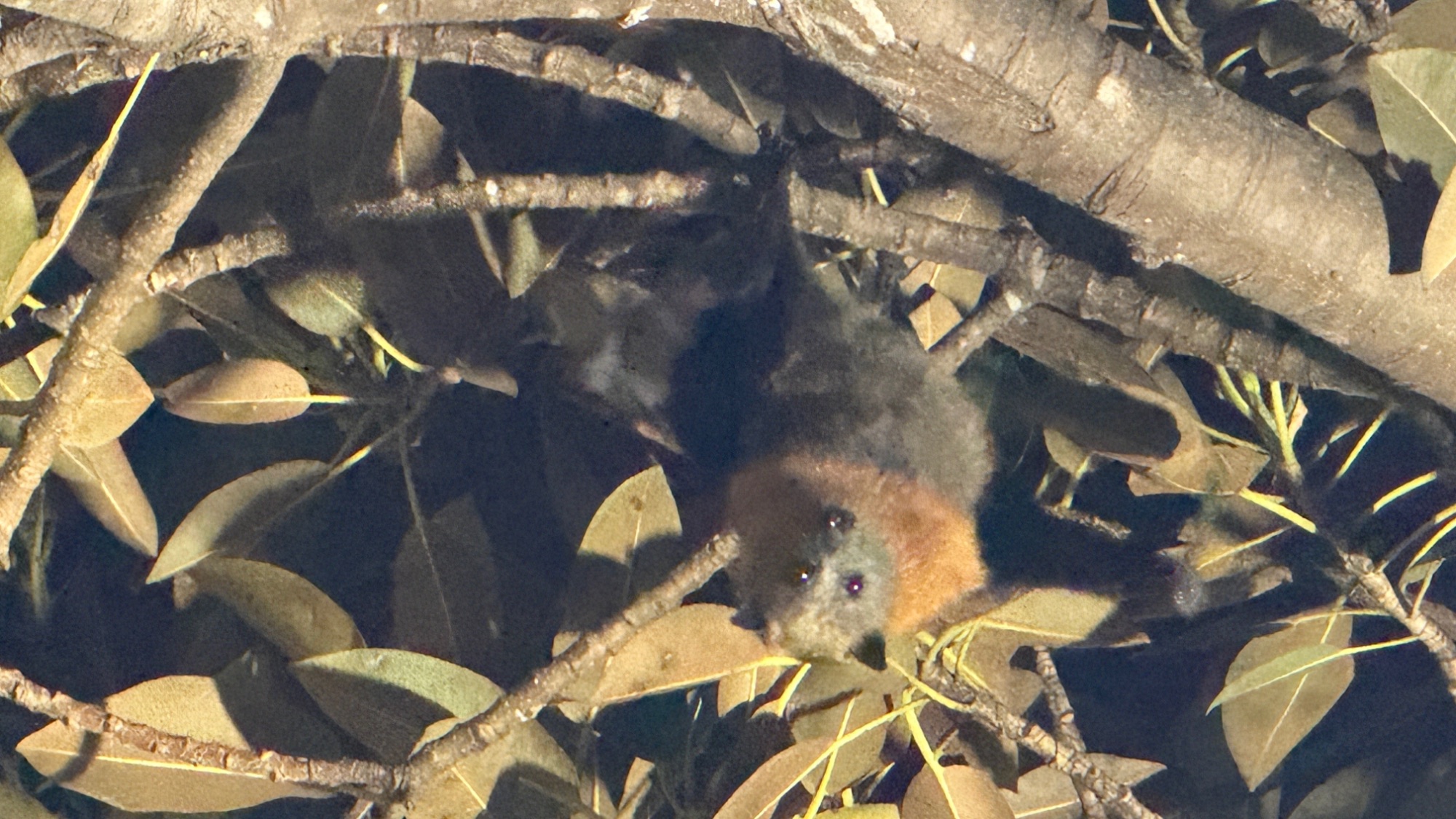
Then we spotted several dark shapes hanging in a nearby tree. Bats! But these were much larger than the little bats we usually picture, with pointed faces and noticeable ears that made them look like foxes. They were flying foxes, among Australia’s largest bats, with a wingspan that can reach about a metre. They are still bats; “flying fox” is simply a wonderfully descriptive name for their fox-like faces. I found myself thinking of Jin Yong’s novel The Fox Volant of the Snowy Mountain. Had the author ever seen these Sydney locals?
The Blue Mountains were well worth the day
Before we left, I wondered whether the Blue Mountains were worth devoting a full day to. We have seen the Swiss Alps, the Grand Canyon and plenty of spectacular landscapes around the world. After visiting, I would say yes. The appeal is not only the view into the valleys; you can walk through the forest, follow trails along the cliffs, see waterfalls from several angles and meet Australia’s distinctive wildlife. Along the way, we also found traces of Darwin’s visit nearly two centuries ago and collected a few unexpected stories. The Blue Mountains did not disappoint.
Reader Discussion · 0
No comments yet. Be the first to share your experience.