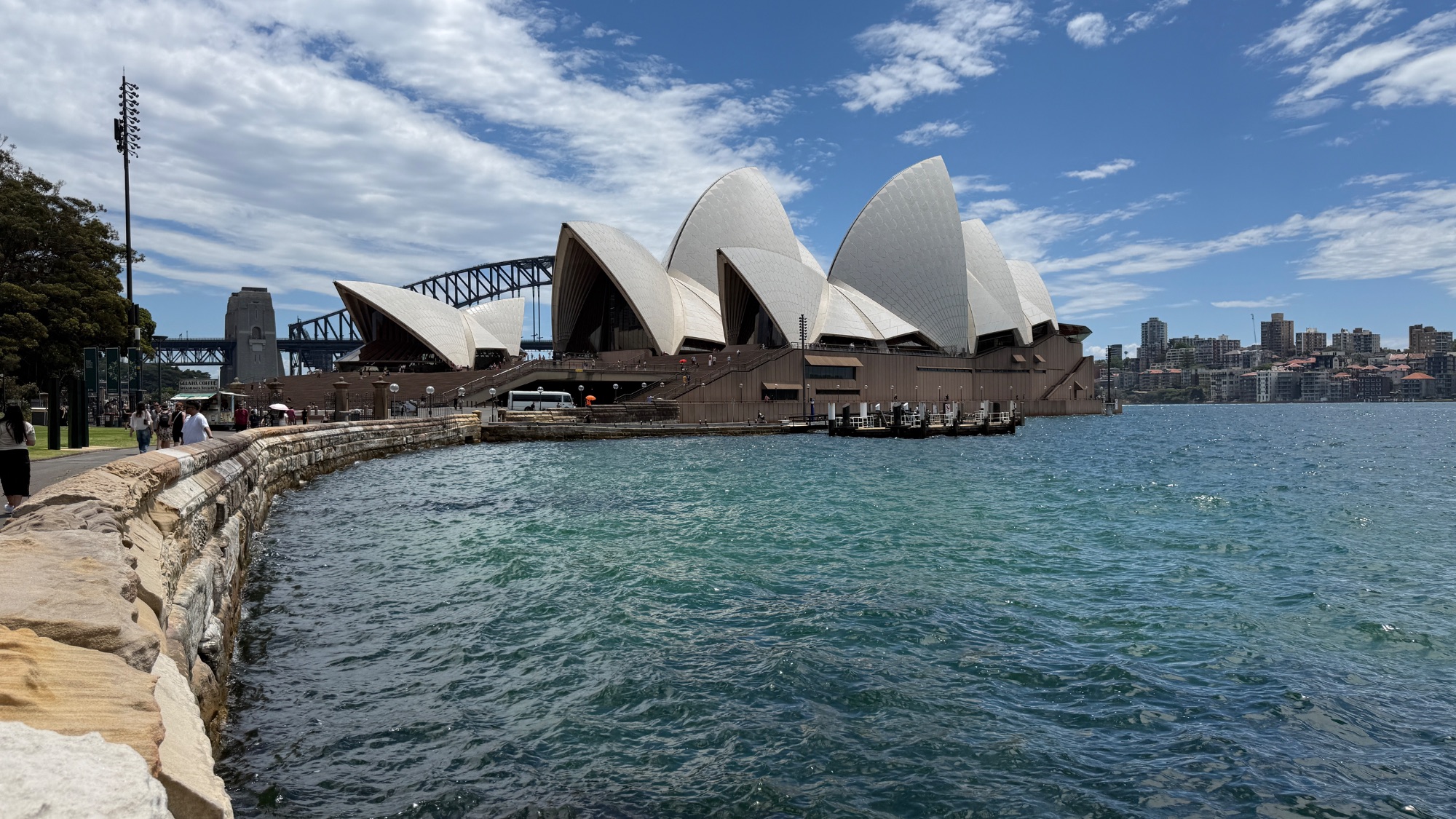
After leaving Cairns and its tropical rainforest, we finally arrived in Sydney. A quick airport tip first: trains, Uber, taxis and pre-booked transfers all connect the airport with the city. The train is fast and avoids traffic, but with two people and large suitcases, even a five-to-ten-minute walk from the station can feel longer than advertised. Uber takes you straight to your hotel, though waits can be long at busy times. Booking a transfer ahead made the arrival much easier.
We stayed at the Fullerton Hotel, which is part of Sydney’s historic General Post Office. Built in the nineteenth century, the GPO was once one of the city’s most important public buildings.
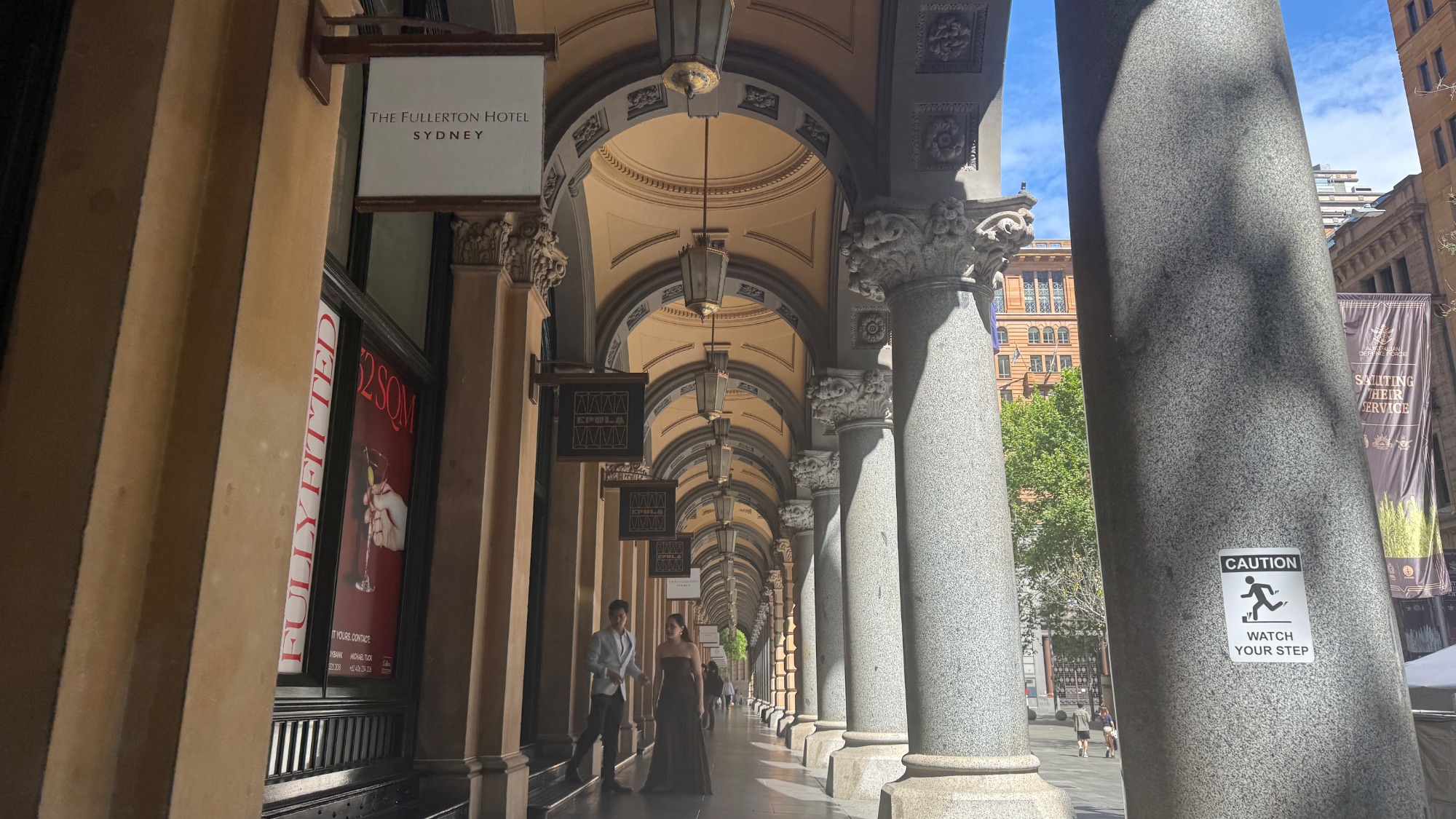
The hotel has kept the sandstone façade, arched windows and many of the original details, while adding modern comforts inside. Its dining area is especially lovely: historic walls rise around a glass-roofed courtyard. Having coffee there felt a little like sitting in a European courtyard that had been given a very impressive renovation.
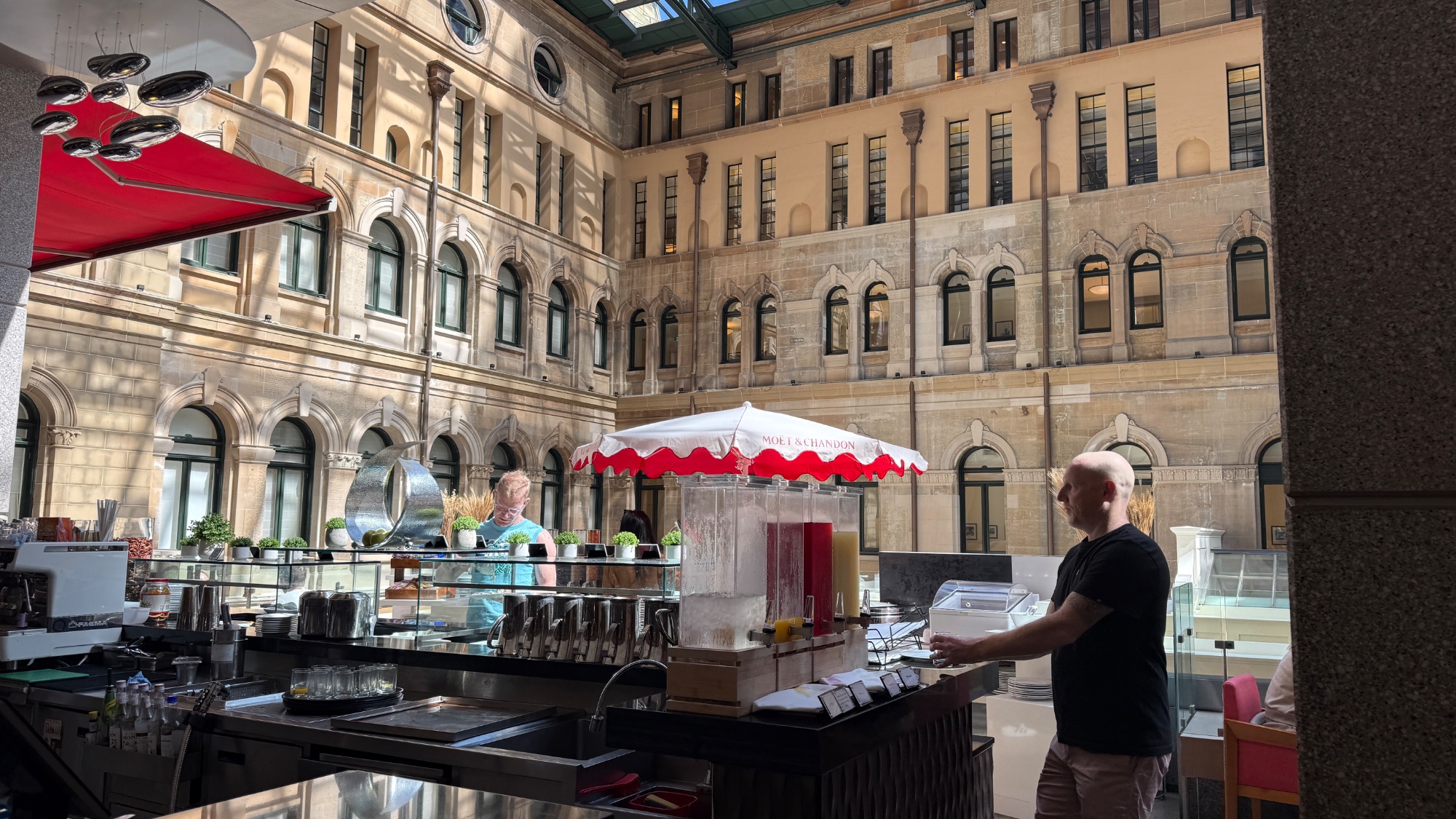
Sydney is remarkably good at giving old buildings a second life. We would see more examples the next day in The Rocks.
Day Two: Inside the Sydney Opera House
We treated ourselves to a rare lie-in and came down for breakfast after nine. The buffet was generous, and the dining room was beautiful. Then we headed to the Sydney Opera House for a one-hour guided tour, meeting at the Welcome Centre. Our guide took us through two of the larger performance spaces and a smaller one, sharing stories about the building’s design and acoustics. We had expected a quick look inside; we came away with much more.
The Opera House was designed by Danish architect Jørn Utzon. In 1957, when he was just 38, he won the international design competition with a daring vision: enormous white shells rising beside the harbour, like sails caught in the wind or seashells opened to the sky. The challenge was turning that vision into something builders could actually build. Engineers initially had no practical way to construct the complicated curves. After years of work, Utzon and the engineering team found an elegant solution: every roof shell could be cut from the surface of the same sphere. The pieces still varied in size and shape, but shared the same basic curvature, making prefabricated construction possible. I studied physics years ago, so this part especially delighted me. A building that looks like pure artistic imagination was made possible by a clever bit of geometry. More than a million tiles cover the shells, in shades of white and cream; they reflect the sunlight without turning the roof into a giant mirror.
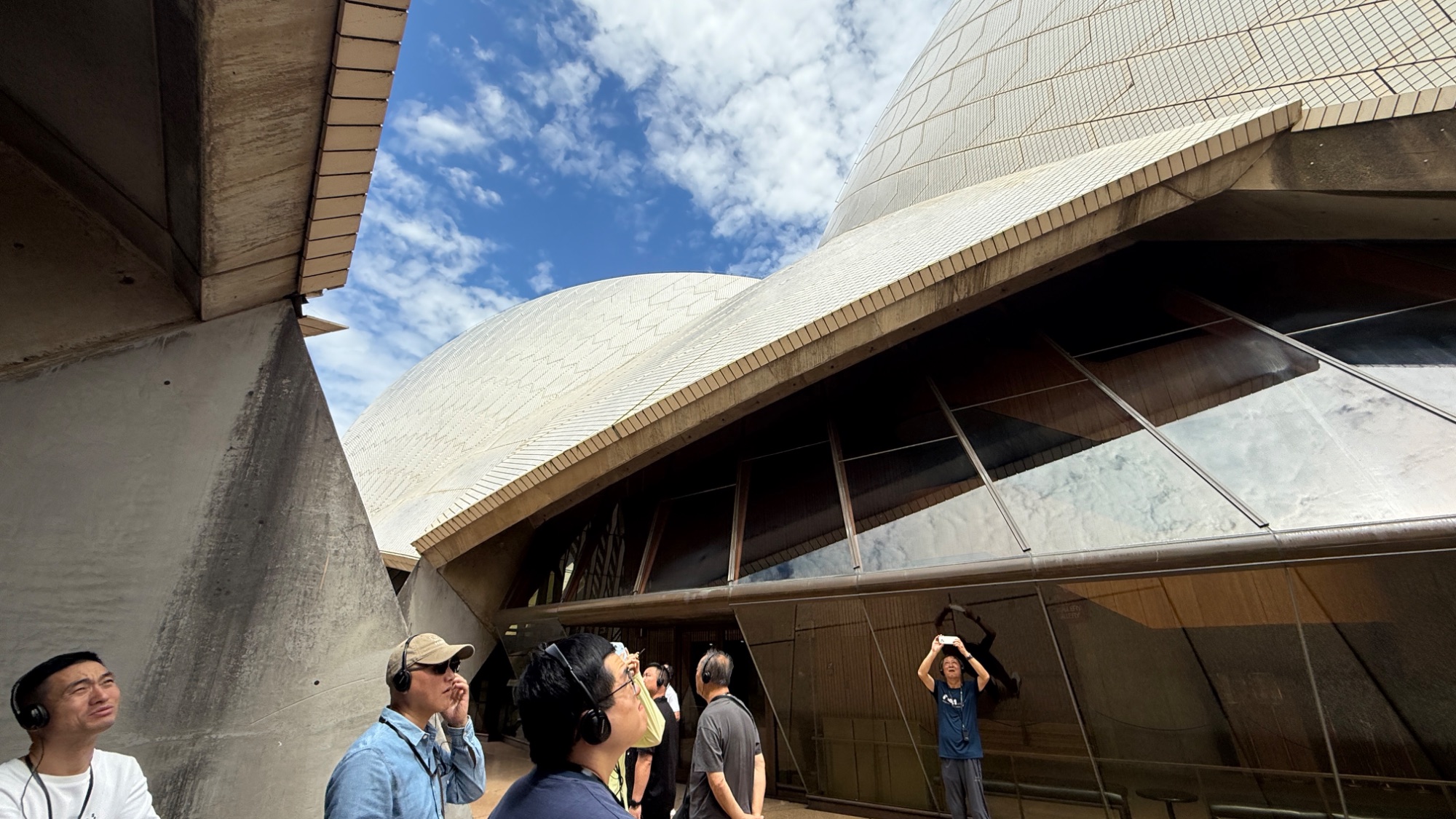
The construction story was much less elegant. Work began in 1959, and the project ran far over budget and schedule. Utzon had a serious falling-out with the government, resigned in 1966 and left Australia. He never returned to see his design completed. The Opera House finally opened in 1973, fourteen years after construction began and at a cost far beyond the original estimate. These days, few Australians would say the money was wasted. In 2007, the building was listed as a UNESCO World Heritage Site.
The concert hall: where the sound matters as much as the view
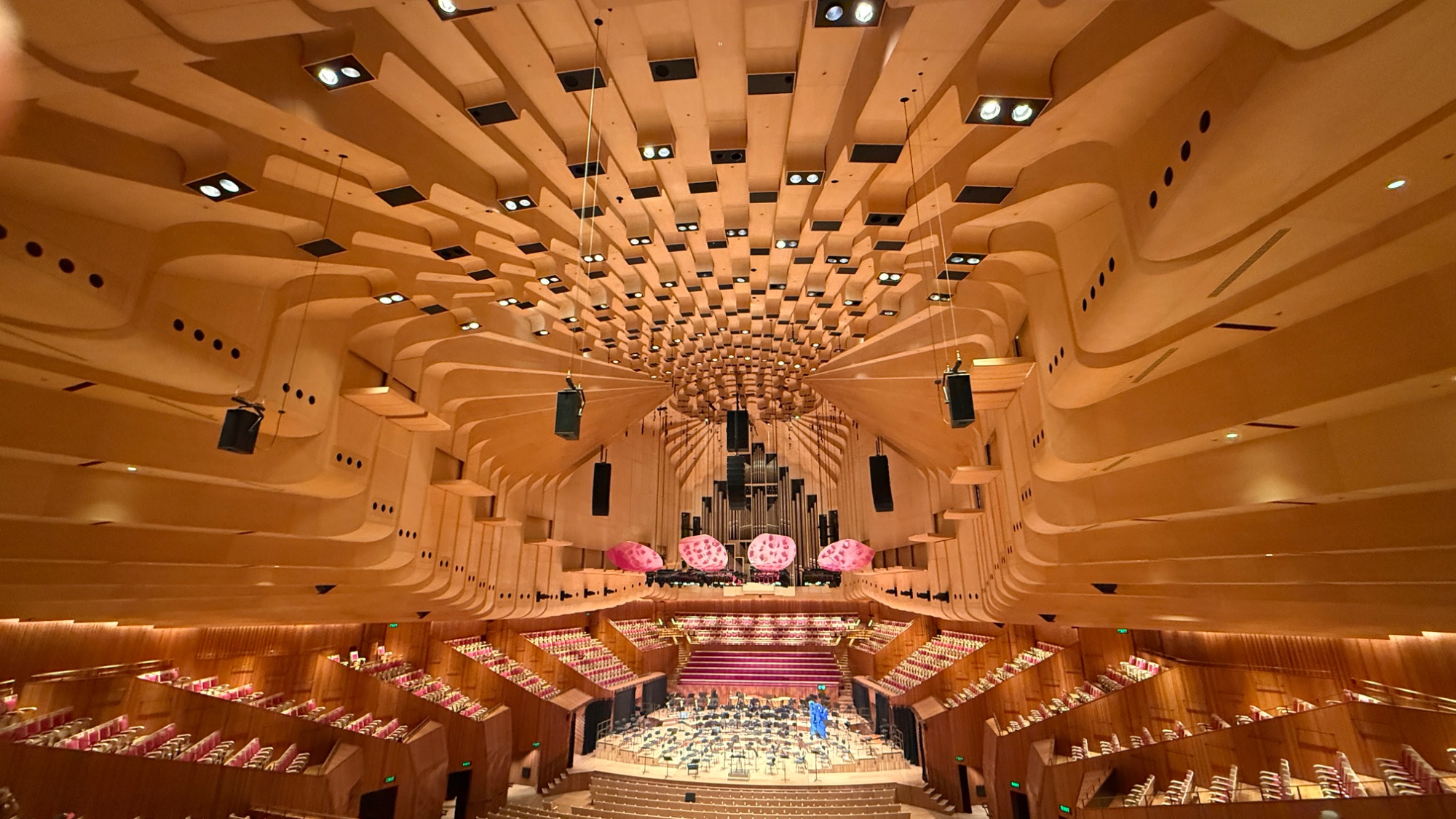
The concert hall made a particular impression on us. From above, its warm timber tones, tiers of seats and enormous pipe organ made it look part concert venue, part spaceship. The geometric structures covering the ceiling and walls are not just there to look dramatic. One of the hall’s biggest challenges is getting clear, balanced sound to thousands of people. Sound travels directly from the instruments, then bounces off ceilings, walls and other surfaces. If those reflections arrive at the wrong time or from the wrong direction, some seats may get muddled sound or an echo. Our guide explained how the performance spaces use different shapes and acoustic treatments. One room even has curves that look remarkably like lips. We learned that a concert hall, an opera theatre and a drama stage may all host performances, but each needs a different approach to sound and layout.
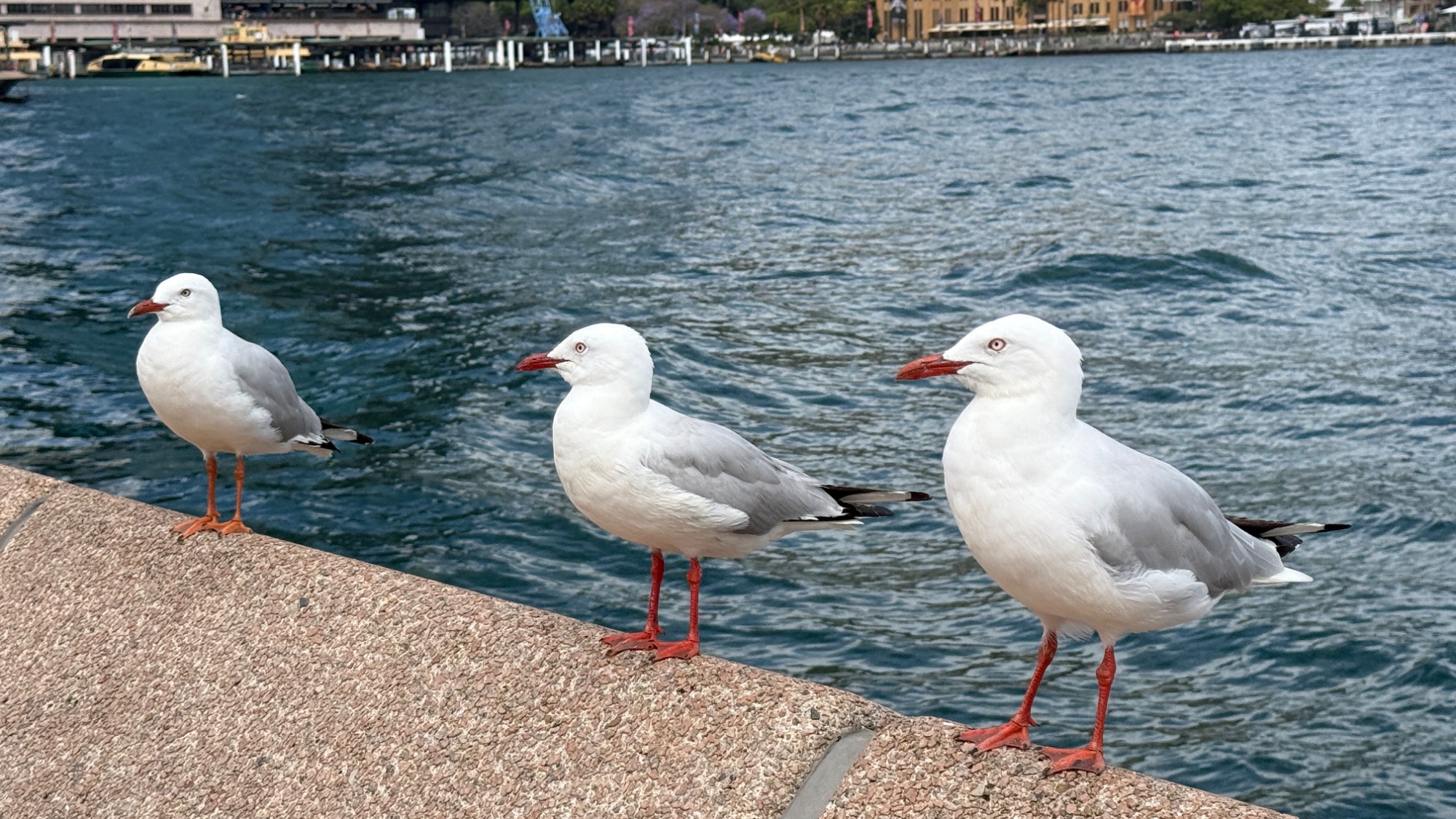
After the tour, we took plenty of photos around the Opera House. A neat row of seagulls was perched along the harbour railing, apparently admiring the world-famous architecture. Judging by their expressions, though, they seemed more interested in whether a visitor might produce a snack.
From the Opera House to the Royal Botanic Garden
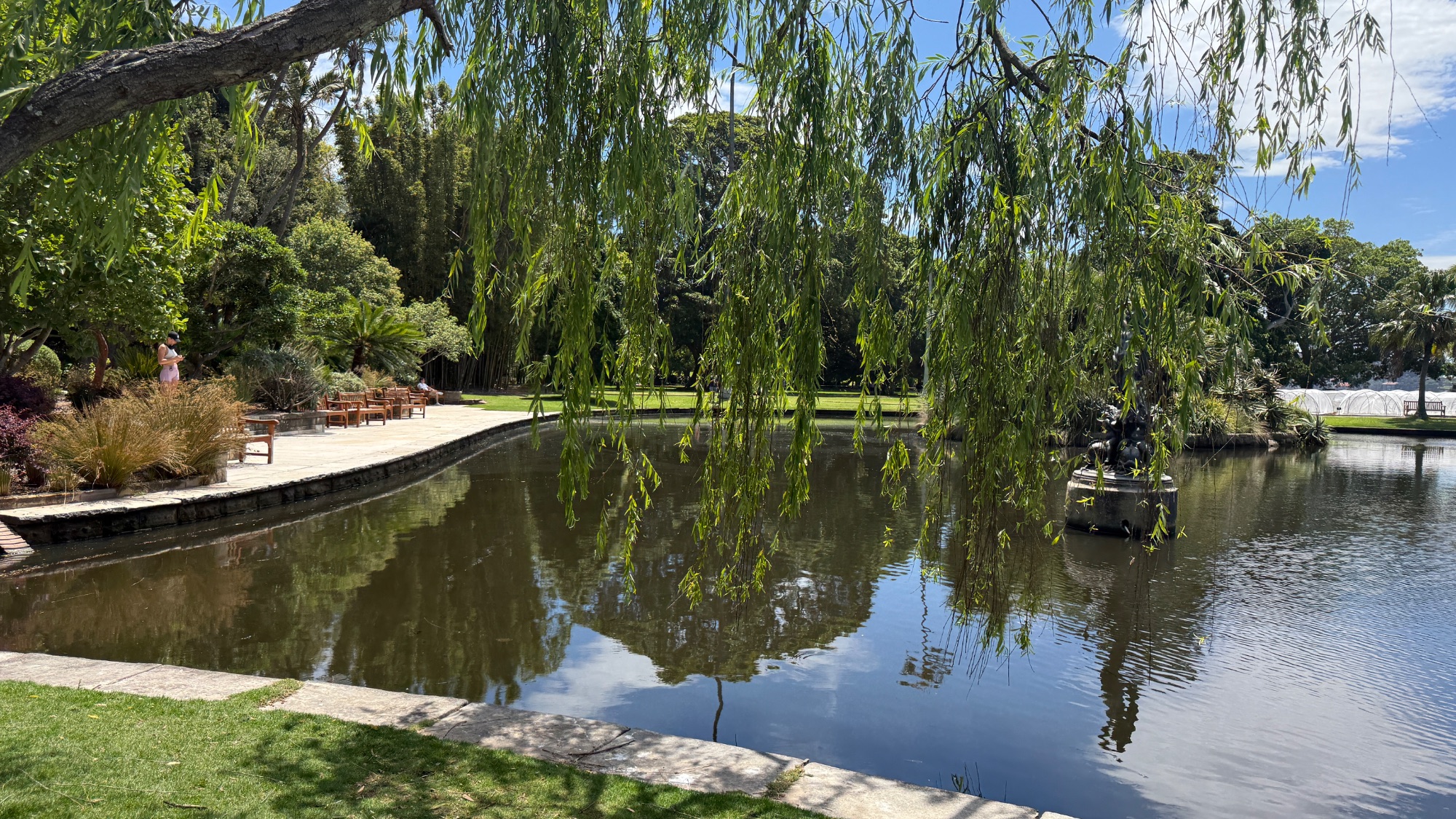
We followed the harbour path into the Royal Botanic Garden. Founded in 1816, it is one of Australia’s oldest scientific botanic gardens. When the British arrived in Sydney in 1788, they tried growing food in this area. Today it is a sprawling city garden, with plants from Australia and around the world. Its best feature may be the way it meets the harbour: broad lawns stretch toward the water, with boats and city buildings in the distance.
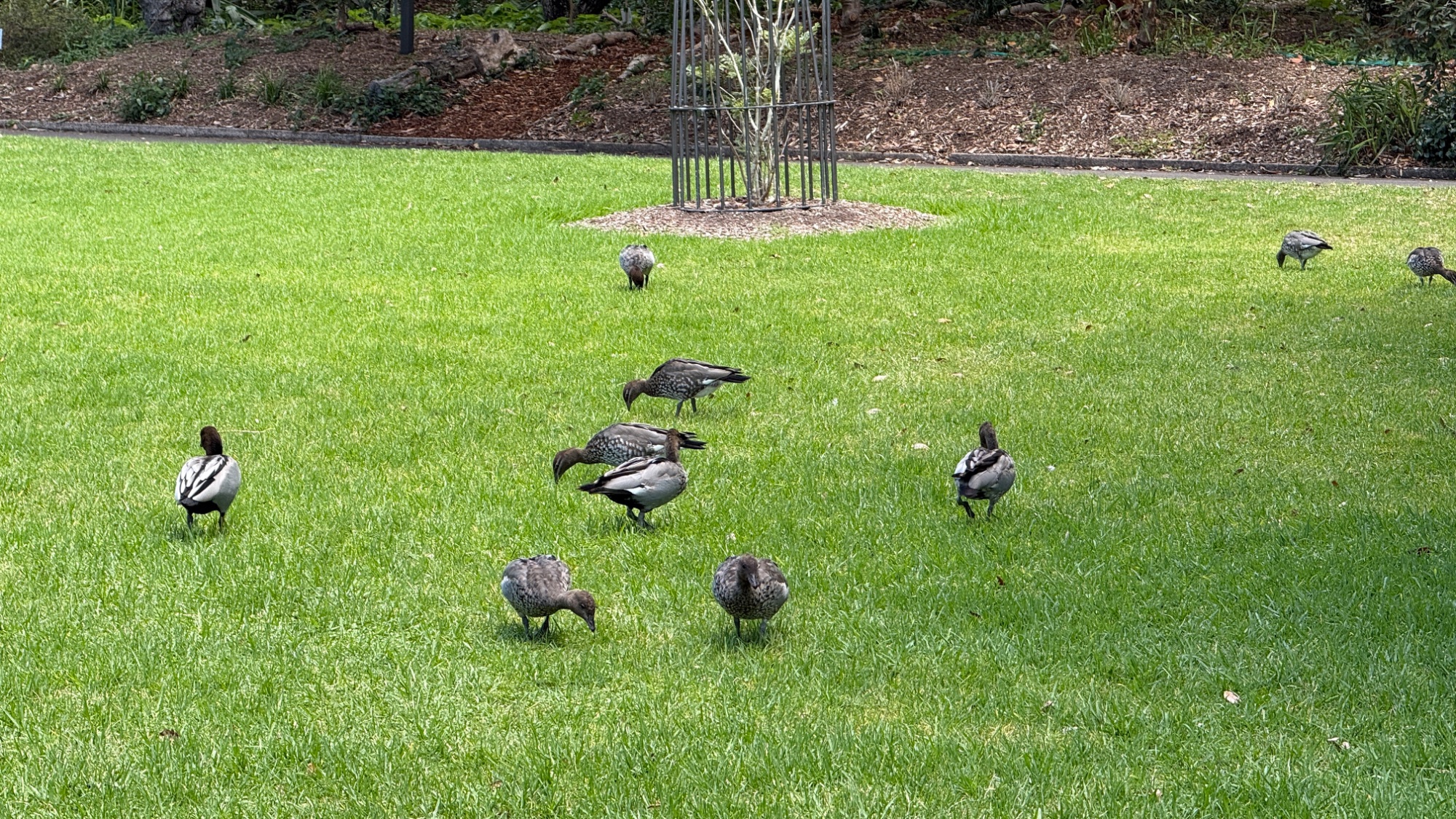
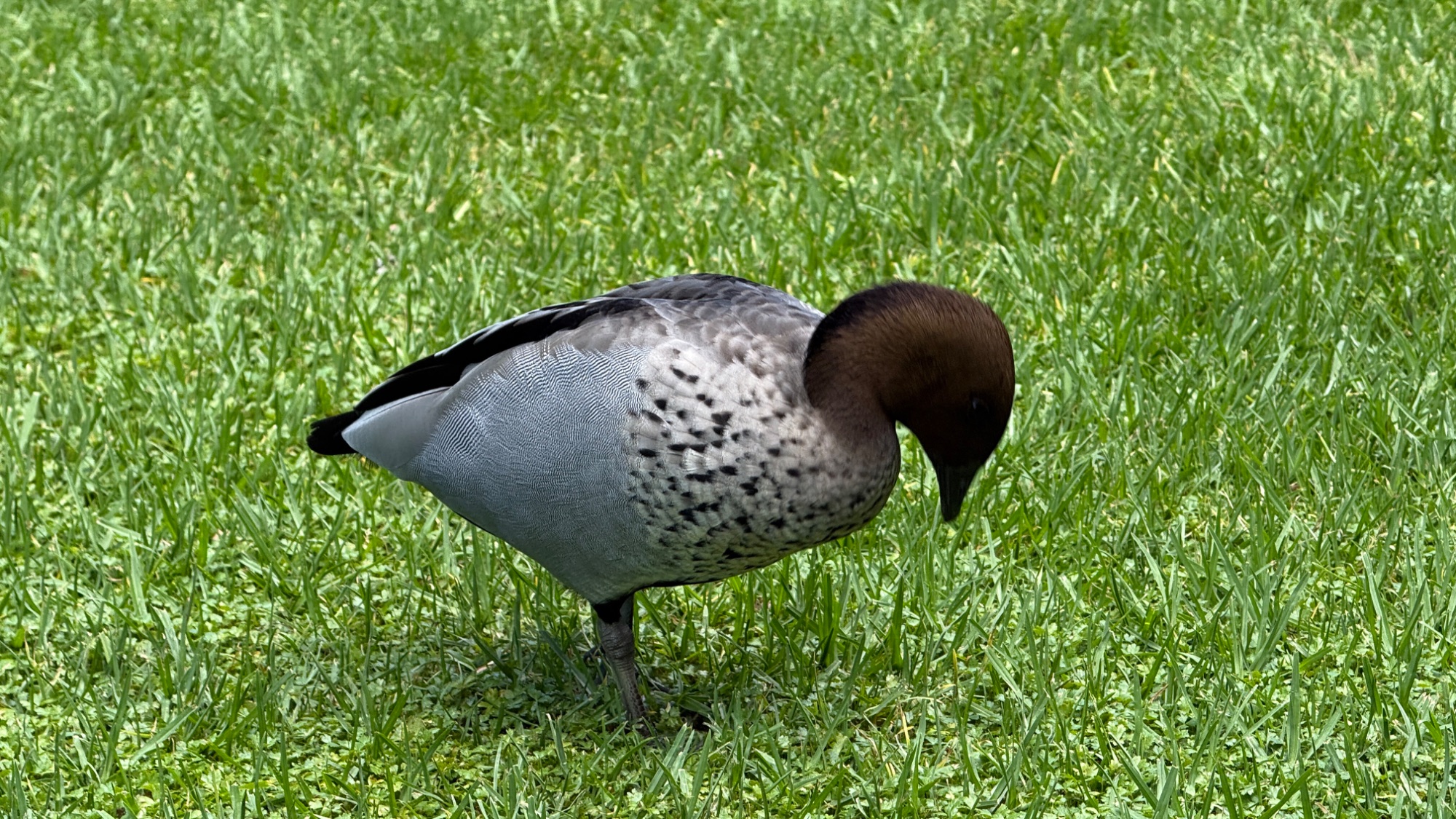
We spotted an unusually handsome bird: brown head, grey body and a chest peppered with tiny black spots. It was an Australian wood duck. Despite the name, it often grazes on the grass like a goose.
We had planned to continue to Mrs Macquarie’s Chair, a seat carved directly into the sandstone by the harbour. It is said to have been made in the early nineteenth century for Elizabeth, wife of Governor Macquarie, who liked to sit there and watch ships approaching. It is also a classic spot for photographing the Opera House and Harbour Bridge together. But the garden was bigger than we expected, the walk was still a long one, and the sun was doing its best to convince us to quit. We called an Uber nearby and headed straight for The Rocks instead.
The Rocks: Sydney’s oldest neighbourhood
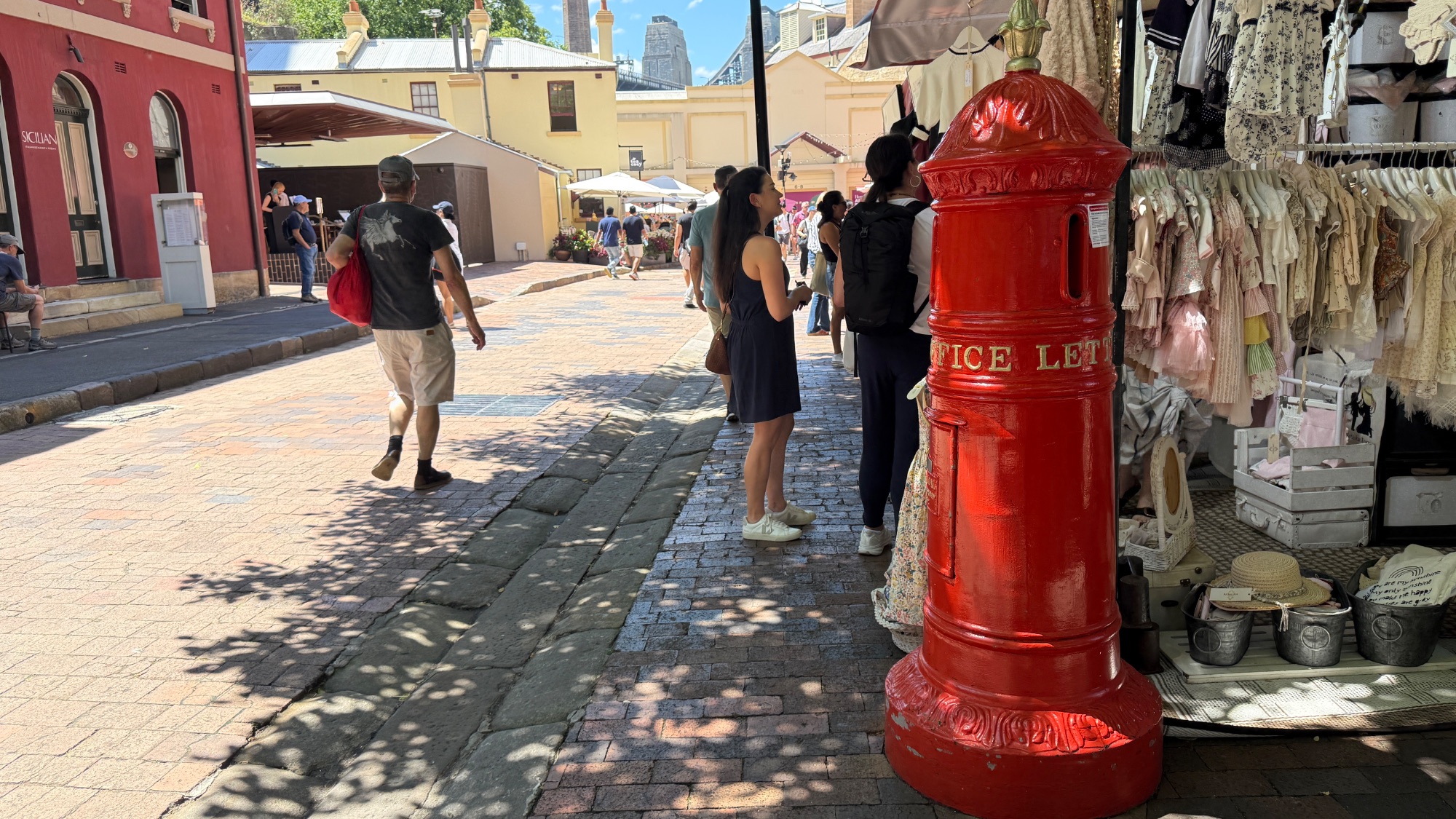
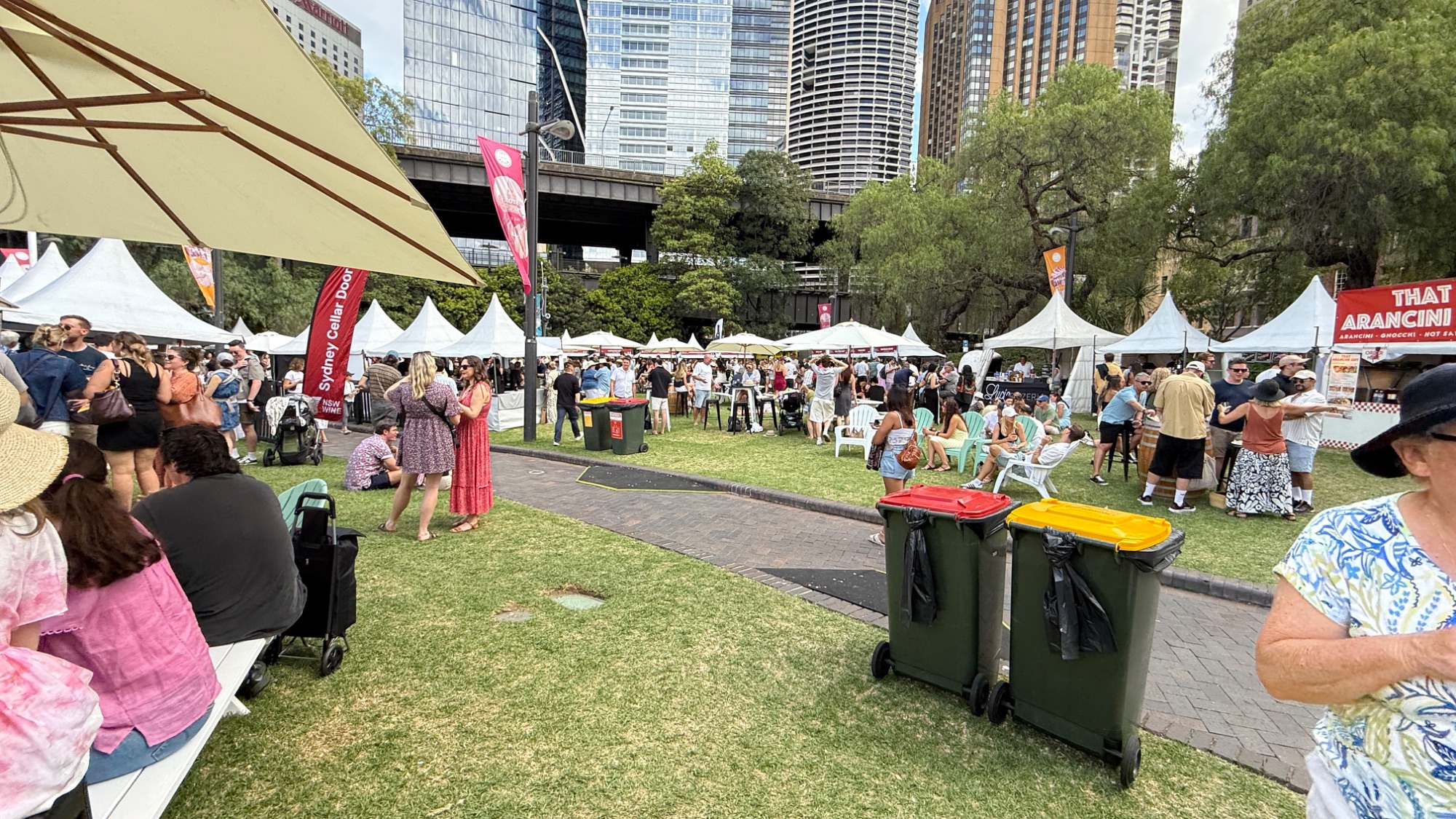
Our Uber dropped us near The Rocks Square. Red market tents lined the streets, and the area was buzzing. We had arrived just in time for The Rocks Markets. Sitting at the southern end of the Harbour Bridge, The Rocks is one of Sydney’s oldest European-settled neighbourhoods. After the First Fleet arrived in 1788, convicts, soldiers and sailors began living here. The sandstone slopes and rocky terrain gave the area its name.
The Rocks has a more complicated history than its cheerful market suggests. Britain sent more than 700 convicts to Sydney with the First Fleet in 1788, establishing a penal colony here. Before the American Revolution, Britain had sent convicts to its North American colonies; once that route closed, it turned to Australia. Convicts built roads and houses and cleared land. Many stayed after serving their sentences, and free settlers followed. It is strange to think that the foundations of today’s lively Sydney were laid by people sent here against their will.
By coincidence, I had recently been reading Dickens’s David Copperfield. Mr Micawber, forever optimistic despite being chronically short of money, eventually emigrates to Australia with his family and finds success. David’s childhood friend Little Em’ly also makes the journey with her uncle, Mr Peggotty, to start a new life. Australia had always felt far away when I read those chapters. Standing among The Rocks’ two-hundred-year-old buildings, the story suddenly felt much closer. In the nineteenth century, Australia was a place of exile for some and a chance to begin again for others. The novel finished serial publication in 1850; the gold rush that began in 1851 drew a wave of British and Chinese migrants. The early Chinese history we had just seen in the museum belonged to the same era as Dickens’s story.
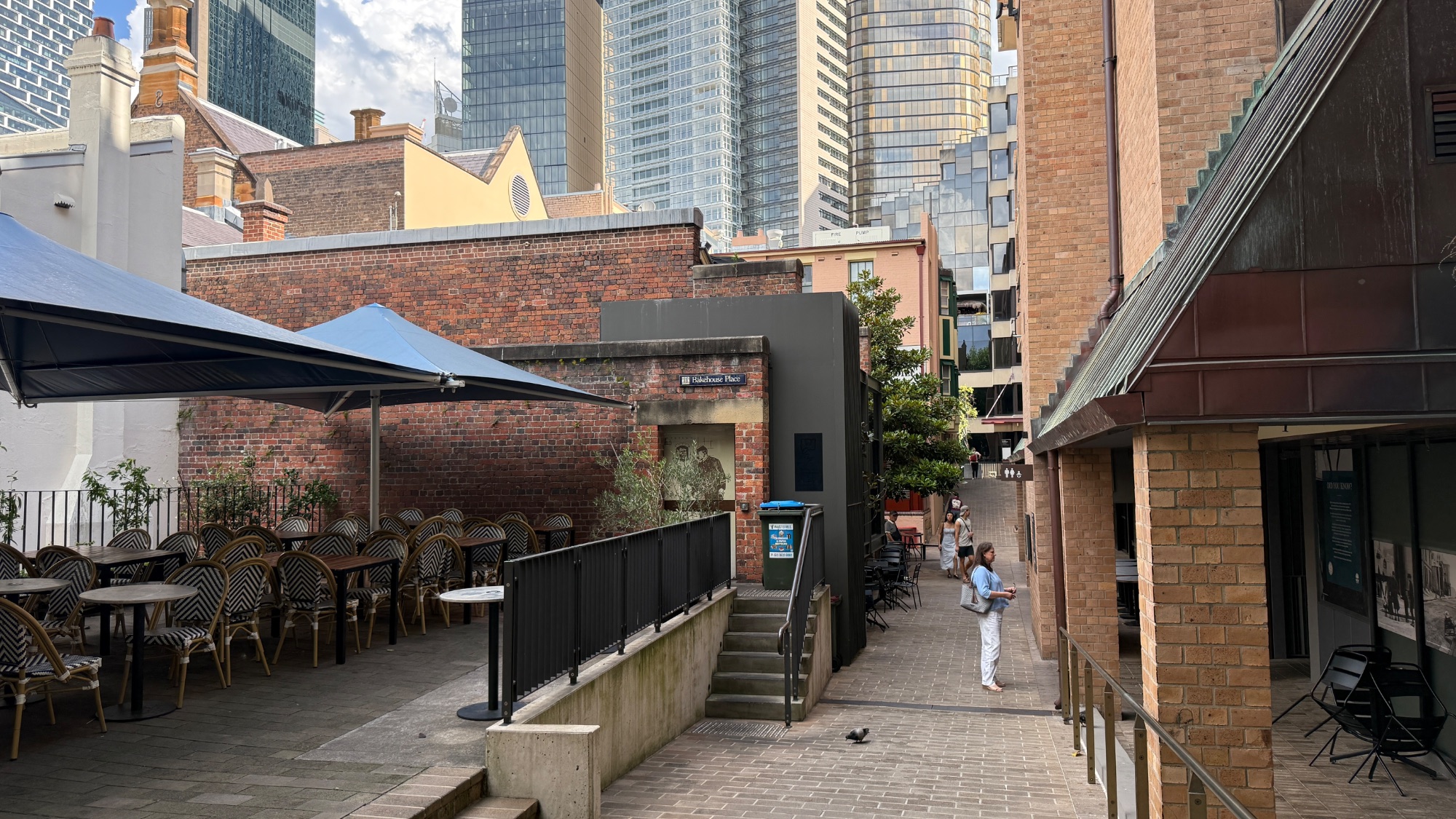
The old Rocks was never an upscale residential district. It was a working neighbourhood near the port, with pubs, warehouses, shops, modest homes, sailors and immigrants from around the world. As Sydney grew, some of its old buildings came close to being demolished. Residents and community groups fought to preserve many of the streets and buildings.
Today you can still find nineteenth-century brick and sandstone buildings and narrow lanes, alongside stalls selling crafts, jewellery, art and food. A working port neighbourhood has become one of Sydney’s busiest places to visit.
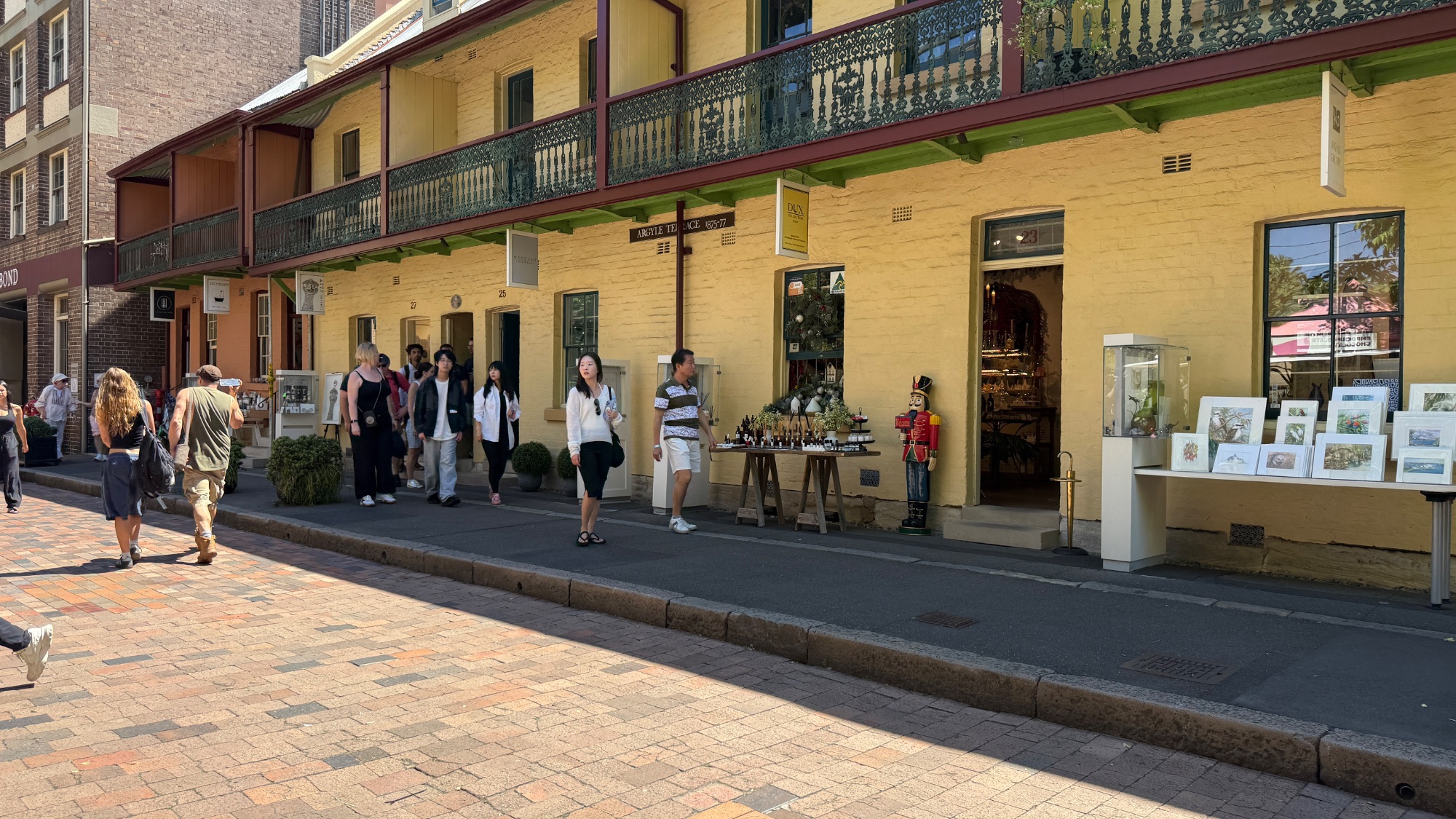
Paella on an old Sydney street
The weekend market had plenty to eat as well as souvenirs. We happened upon a wine event, with tastings and food stalls all around. New South Wales is home to the historic Hunter Valley wine region, especially known for Semillon. We bought a pan of paella, a dish from Valencia in Spain. Its broad, shallow pan lets the rice soak up the stock and all the other ingredients. It was quite different from Chinese fried rice—and very welcome after all that walking.
The Rocks Discovery Museum: Sydney’s early Chinese community
After the market, we visited the nearby Rocks Discovery Museum. It is small and free, but packed with interesting local history, from the lives of Aboriginal people to British settlement, the port and later waves of immigration.
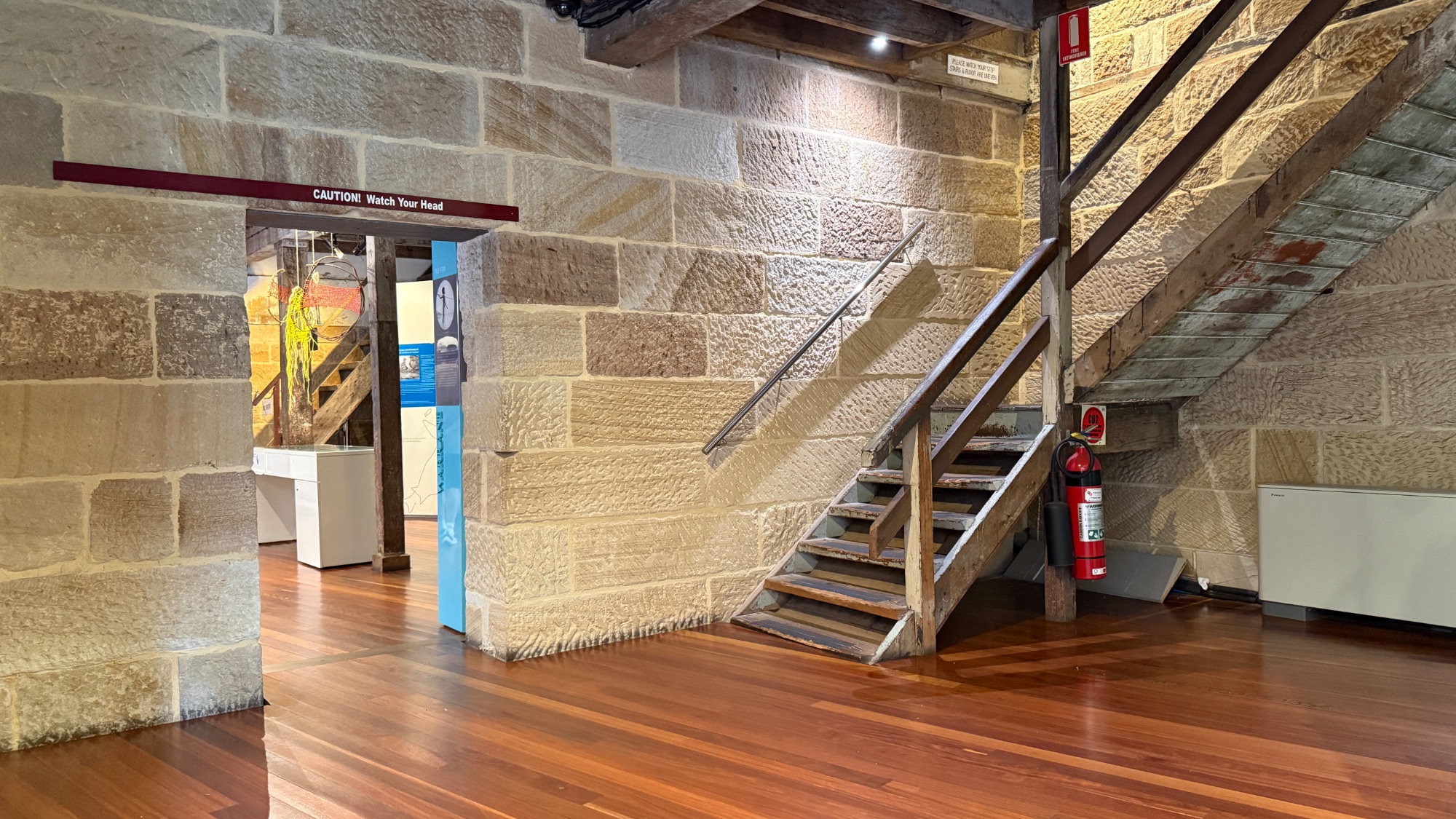
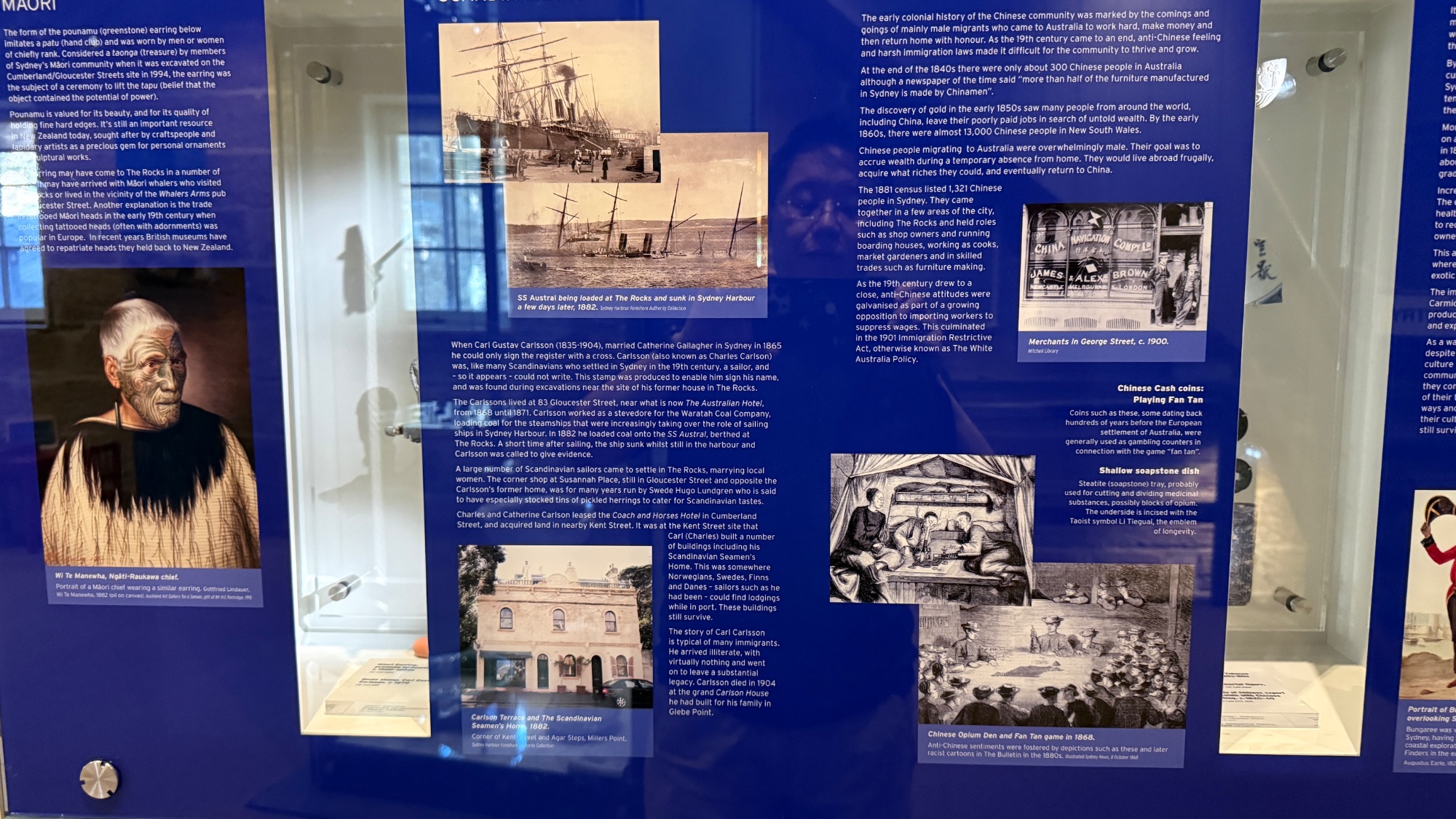
The displays about early Chinese Australians caught my attention most. The gold rushes of the mid-nineteenth century brought many people from China to Australia. The museum noted that the Chinese population was still small in the late 1840s, but had grown to more than ten thousand in New South Wales by the 1860s. Not everyone was a miner. Some stayed in Sydney after the gold rush and went into trade, opened shops or inns, cooked, market-gardened or practised other trades. With its busy port and steady flow of ships and goods, The Rocks was a natural base for early Chinese merchants. As Chinese migration grew, anti-Chinese sentiment also spread, eventually feeding policies that restricted non-European immigration. After Federation in 1901, the so-called White Australia policy became a central part of federal immigration policy.
It struck me that the ties between China and Australia go back much further than we tend to imagine. Chinese signs and restaurants are part of everyday Sydney now, but Chinese people were already building businesses and making lives here more than a century ago, often under difficult conditions.
Nurses Walk: a small lane with a long history
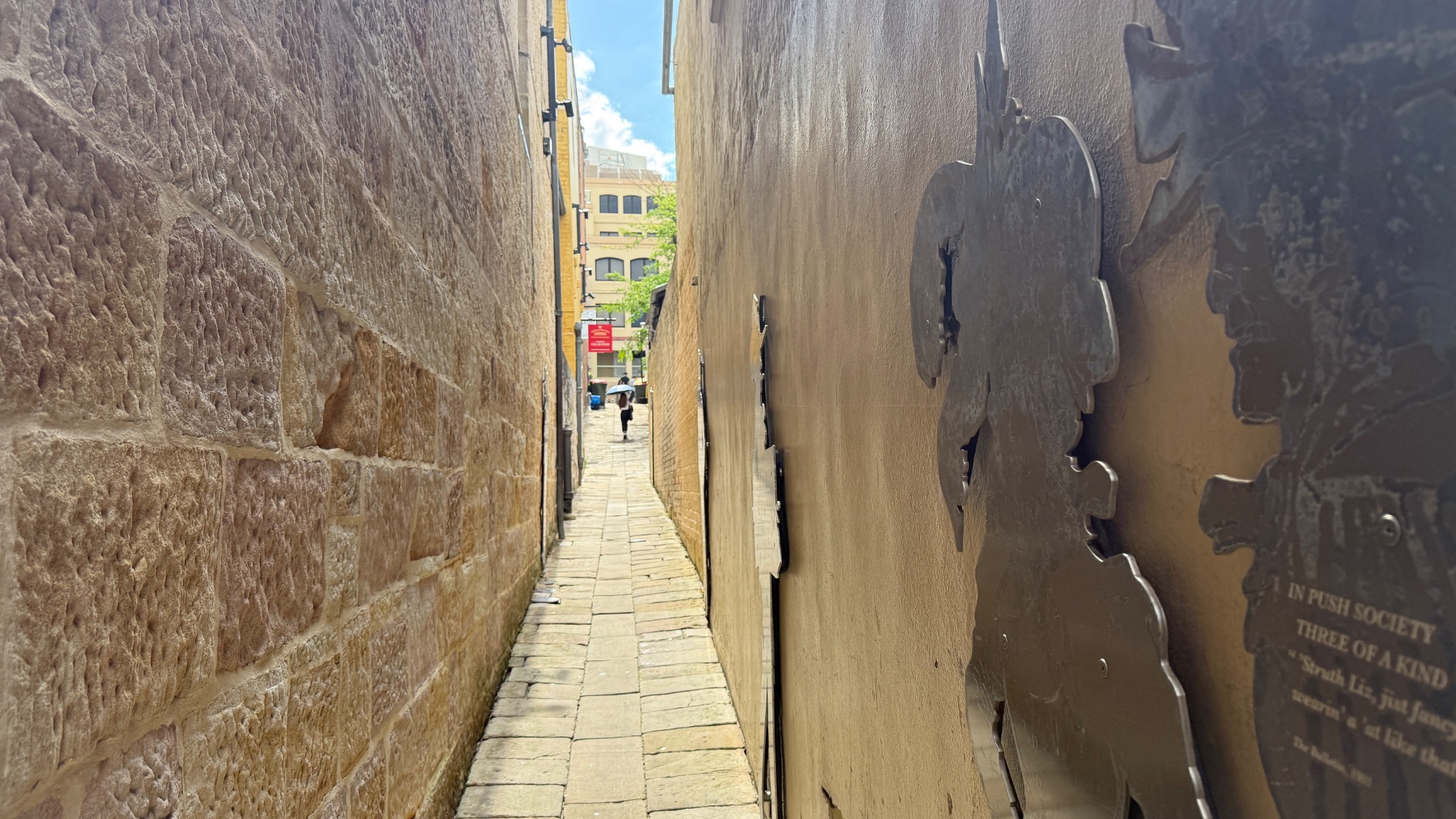
We then walked to nearby Nurses Walk. The lane is short, but the signs tell a striking story. When the First Fleet arrived in 1788, it carried not only soldiers and convicts but many people in need of medical care. The colony’s first hospital was established in this area, with very basic facilities. When the Second Fleet arrived in 1790, many convicts were weakened by the long voyage, disease and harsh conditions. The hospital was overwhelmed. One sign said more than 480 convicts were admitted and 124 died. Early colonial Sydney was not quite the sunlit postcard people come for today.
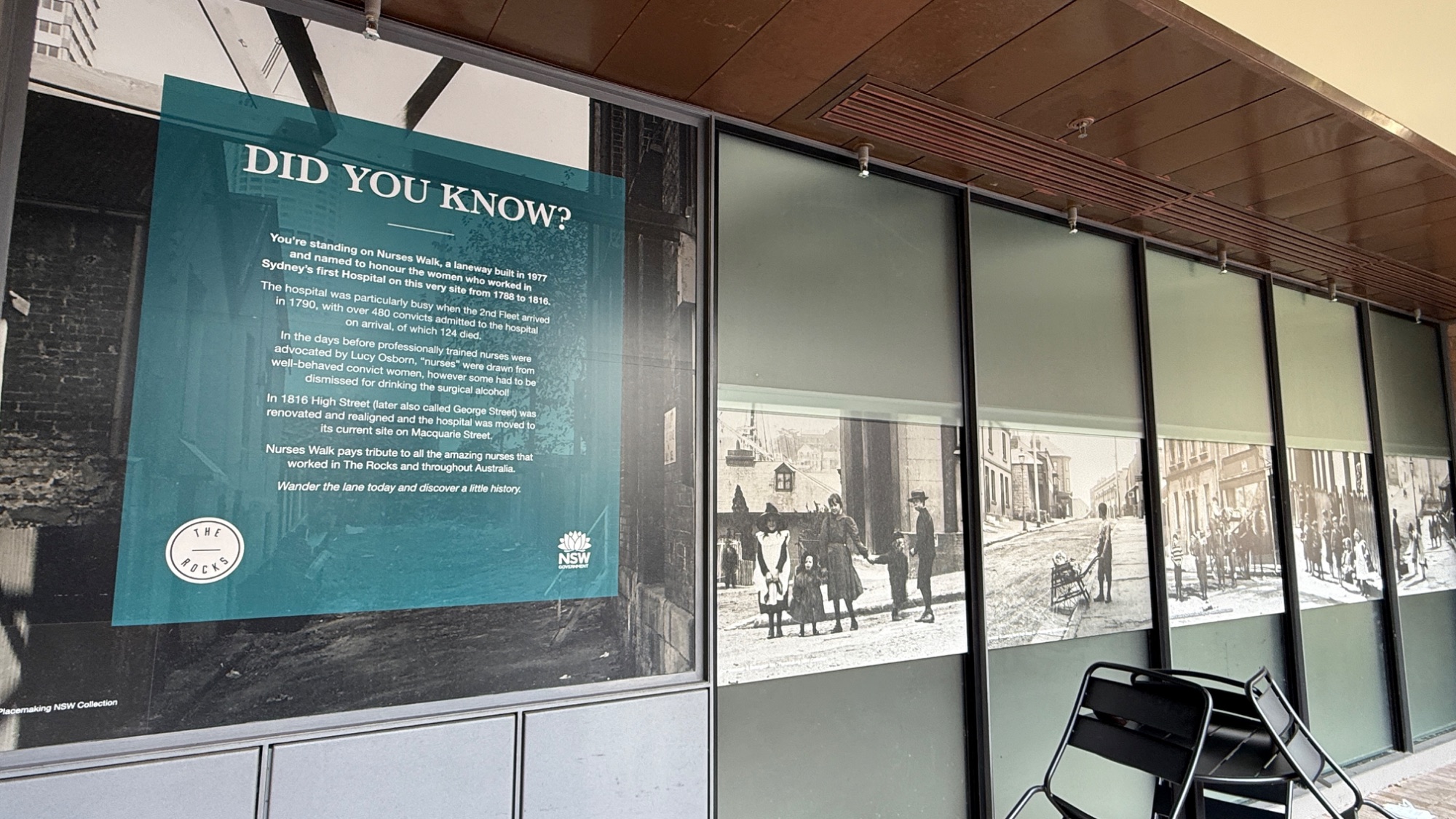
There was no professional nursing system as we know it. Some female convicts who had behaved well were assigned to care for the sick. In 1979, the lane was named Nurses Walk in memory of the women who worked at Sydney’s first hospital from 1788 onward. Without the signs, it might look like just another old alley. Knowing what happened here makes you look at the buildings and the ground beneath your feet a little differently.
UGG in Australia: one name, several brands
The Rocks has plenty of souvenir shops selling everything from papaw ointment and lanolin cream to UGG sheepskin boots. One shop had a pair marked A$150. The tag read “Ozwear Connection UGG,” with “Classic Australian” underneath.
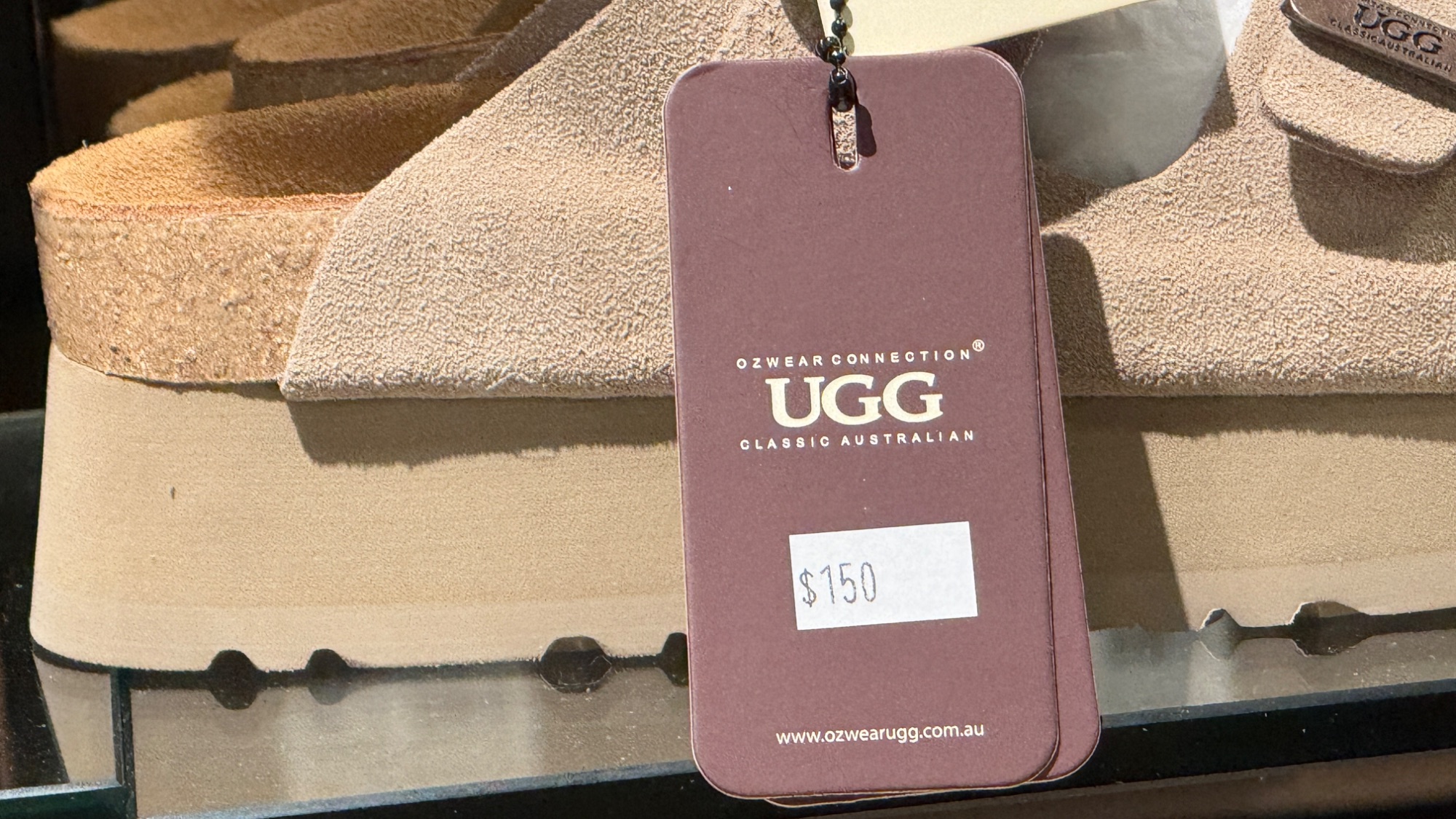
In the US, UGG is a famous brand, so it is easy to assume every UGG boot comes from the same company. Not so. Australians had used “ugg boots” for decades to describe warm boots with a sheepskin lining and suede exterior; they were practical footwear, not a luxury label. Australian Brian Smith later took the style to the US. In 1995, the business he founded was acquired by the American company Deckers and grew into the internationally known UGG brand. In Australia, however, “ugg” has long been used generically for this kind of boot, and several local brands use the name. Ozwear Connection is one of them; it is not the same company as Deckers’ UGG. Buying “UGG” in Australia may mean buying a different brand, and it does not necessarily mean every part of the boot was made in Australia. It reminded us of the Australian Target we had seen in Cairns: a familiar name does not always mean the same company.
Back to the hotel by light rail
After a full afternoon, we took the light rail back to the hotel. Sydney’s modern trams are long, roomy and smooth. They run along George Street, linking Circular Quay with the shopping district and southern parts of the city.
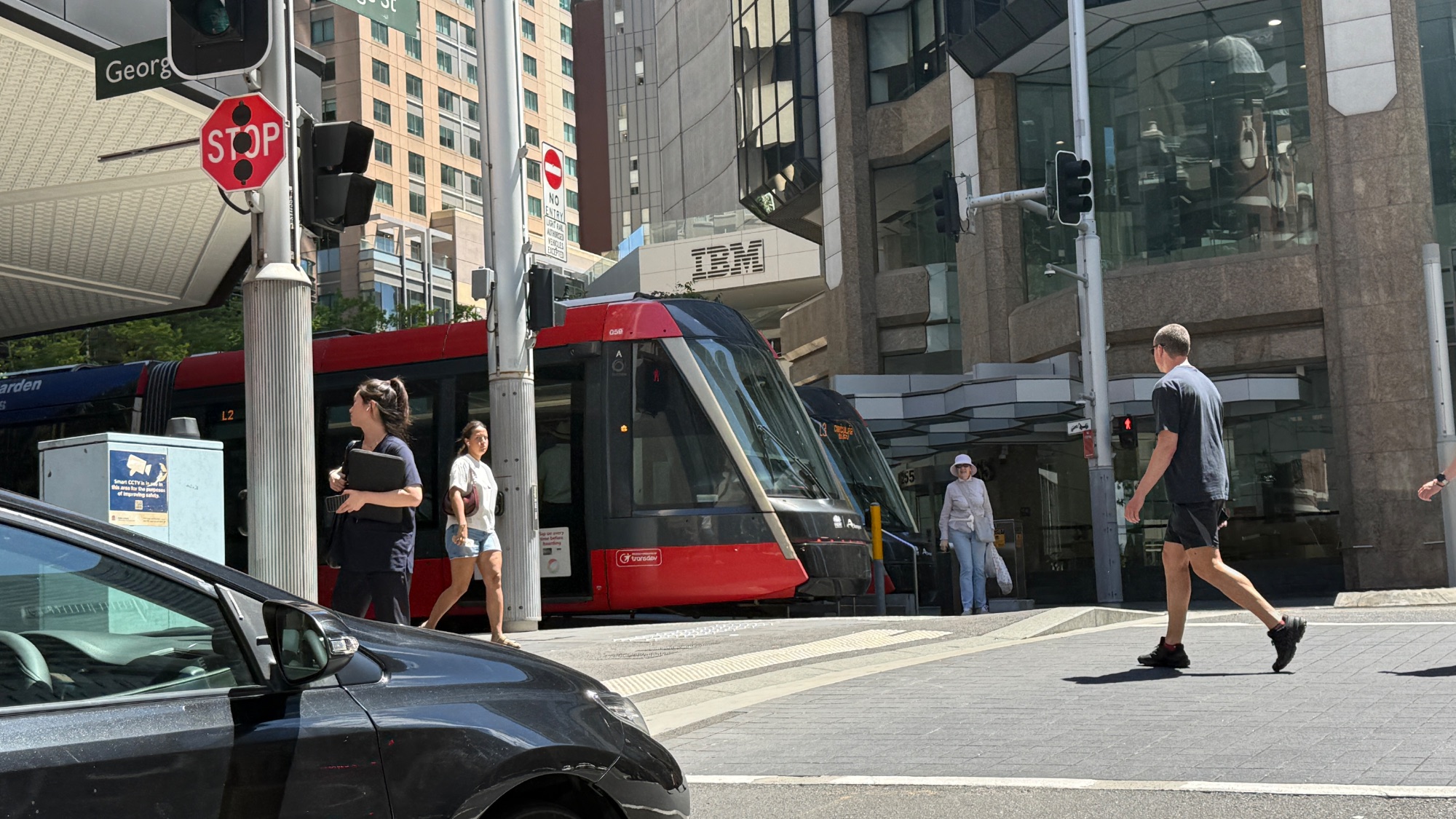
Sydney’s tram story has made a full loop. The city built a large tram network in the nineteenth century, and trams were among its main forms of transport in the first half of the twentieth. As cars and buses became more common, the old system was gradually removed; the main network closed in 1961. Modern light rail returned in 1997. The central L2 and L3 lines we rode opened in 2019 and 2020. Sydney spent decades taking the trams out, then spent plenty more bringing them back. Sometimes urban transport takes the scenic route.
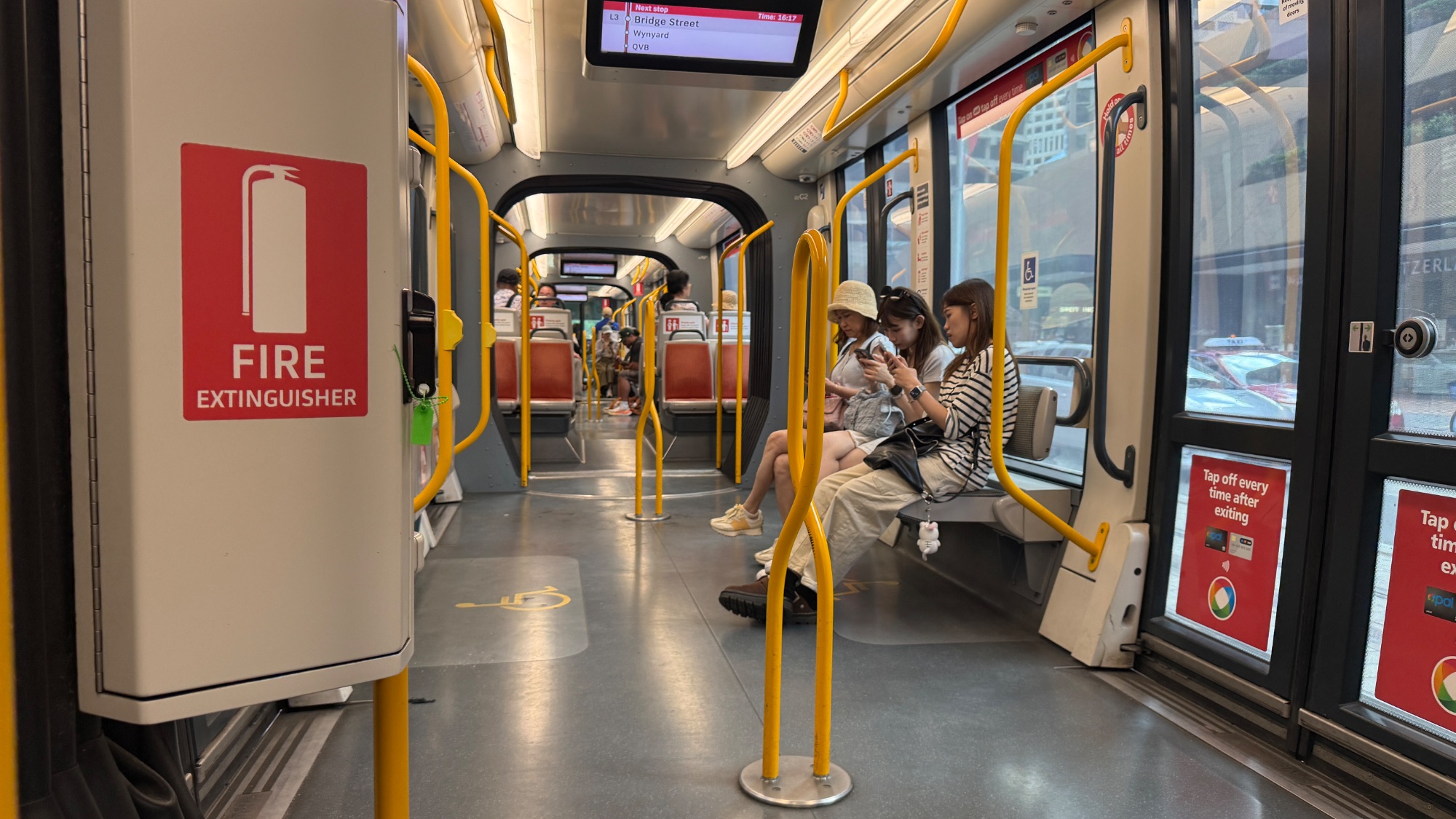
For visitors, public transport is easy to use. You can tap a credit card, Apple Pay or Google Pay on light rail, trains, the metro, buses and most ferries—no special transit card needed. Tap on before boarding and tap off when you leave. Use the same physical card, phone or watch both times: Apple Pay and the physical card linked to the same bank account may count as different devices. Each passenger also needs their own card or device.
An old friend, found again in Sydney
After returning to the hotel by light rail, we rested for a while. Then came the happiest part of the day: dinner with a school friend I had not seen in decades. He had been my desk mate in middle school and a classmate again in high school. After graduation, we went our separate ways and somehow never crossed paths again. Of all places, we met again thousands of miles from home, on a trip to Sydney.
He moved to Sydney many years ago and has made a life here. His two children are grown: one is at university, and the other is already in the second year of high school. Back then we were teenagers sharing a classroom; now our children are around the age we were. Time really does move.
He showed us around the city centre before taking us to Chinatown for dinner. We talked about school and everything that had happened in the years since. Decades had given us plenty to catch up on, but a few old classmates and school stories were enough to make the years fall away.
After dinner, we walked around Darling Harbour. It was once an important port and industrial area, then was redeveloped into a waterfront district of restaurants, attractions, museums and walking paths. At night, the lights shimmered across the water—a very different Sydney from the Opera House and old lanes we had explored in daylight.
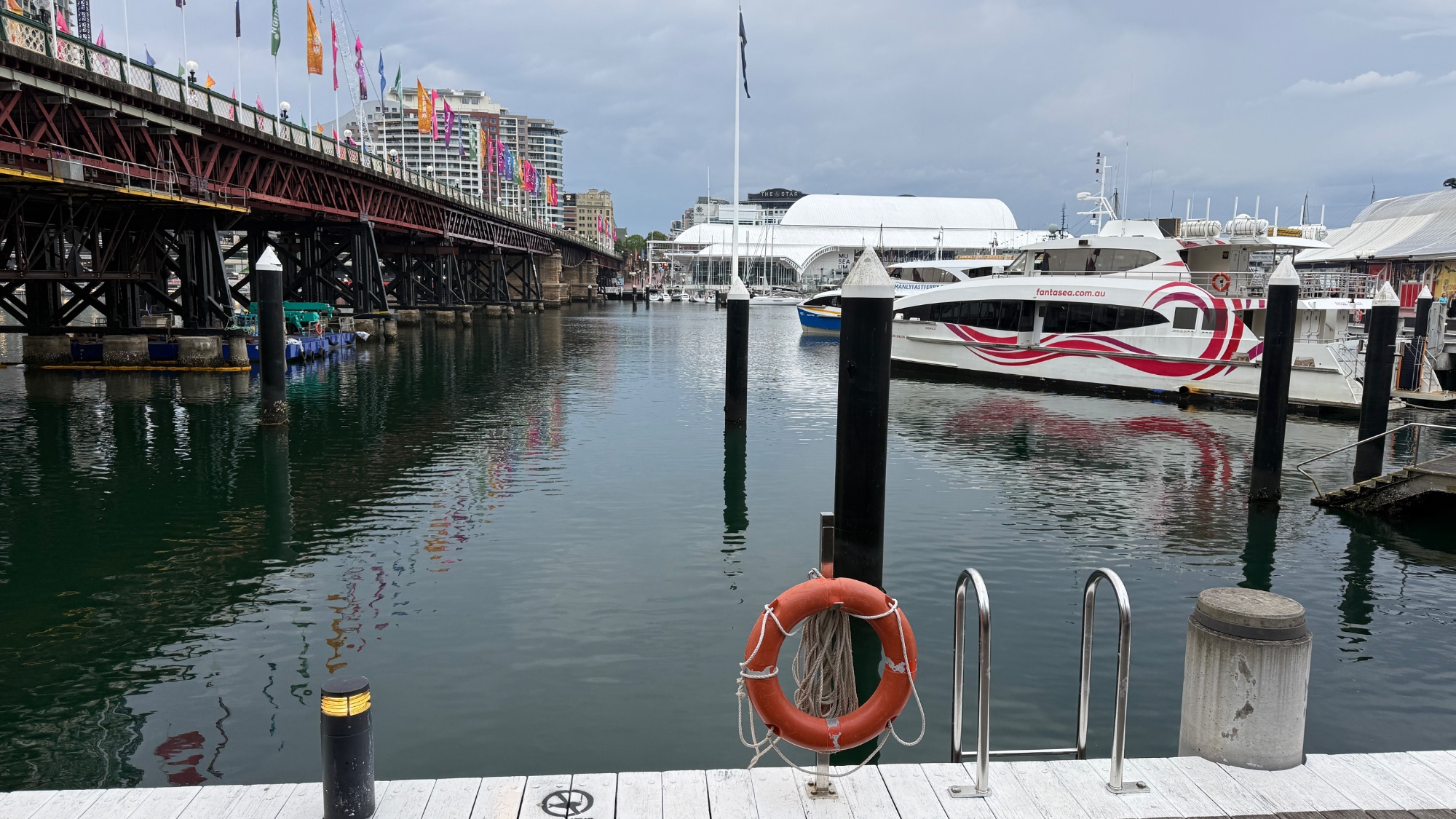
I thought the Opera House and its architectural story would be the day’s highlight. Instead, it was the reunion that stayed with me. A few lines for the occasion:
Old school days still warm the heart, Half a world could not keep us apart. Over dinner, old stories flowed; By Darling Harbour, memories glowed.
Reader Discussion · 0
No comments yet. Be the first to share your experience.