Back to the zoo, this time for a platypus
We got up earlier than we had on previous days, had breakfast at the Fullerton Hotel and took a bus to Taronga Zoo. We had one very specific mission: see a platypus.
A few days earlier, near Cairns, we had gone looking for wild platypuses at Peterson Creek in Yungaburra, in the Atherton Tablelands. It is one of Australia’s best-known places to spot them. Dawn and dusk are meant to be the best times, though apparently you can sometimes get lucky during the day. We were not lucky. Wildlife, unlike most of us, does not keep office hours—and platypuses are particularly good at staying out of sight. Since we were now in Sydney and Taronga Zoo has platypuses, we decided to try again.
Taronga Zoo sits on a hillside on the northern shore of Sydney Harbour, with the city skyline across the water. We took a bus to the top entrance and planned to work our way downhill before catching a ferry from the wharf below. That meant less uphill walking and a much happier set of legs. We arrived after ten. If you are planning a visit, it is worth buying tickets online in advance; the discount we saw was 10%, and it saves a stop at the ticket window. We went on a Sunday, though, and the ticket queue was short.
The platypus: so odd that scientists thought it was a hoax
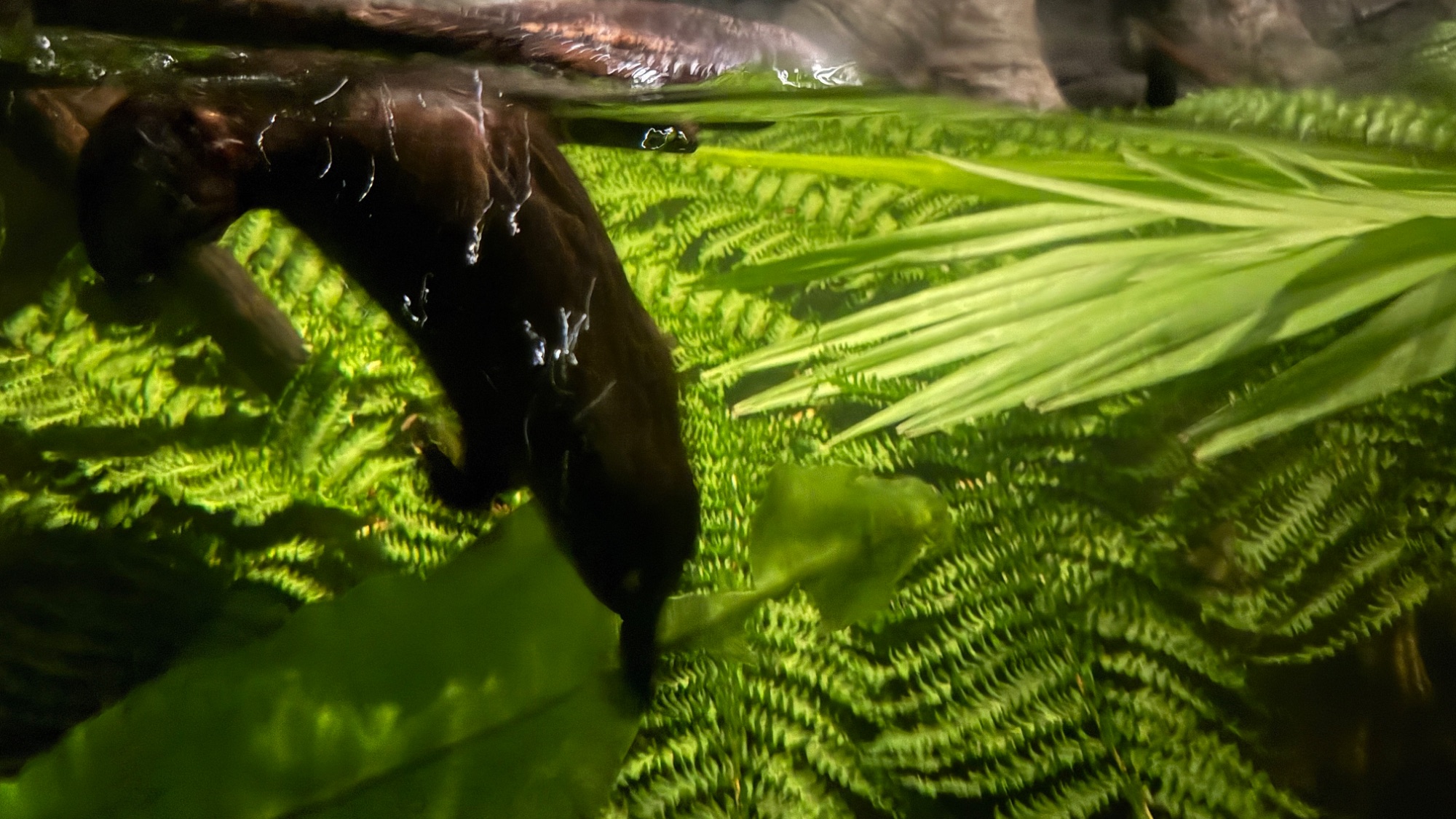
We headed straight for the nocturnal house. It was very dark, and our eyes needed a moment to adjust. Eventually we spotted the platypus: a shadowy shape zipping through the water, diving down and popping back up before we could get a proper look. We tried to make out its famous bill through the glass, but between the dim lighting and its speed, that was easier said than done. Perhaps a little mystery is part of the appeal.
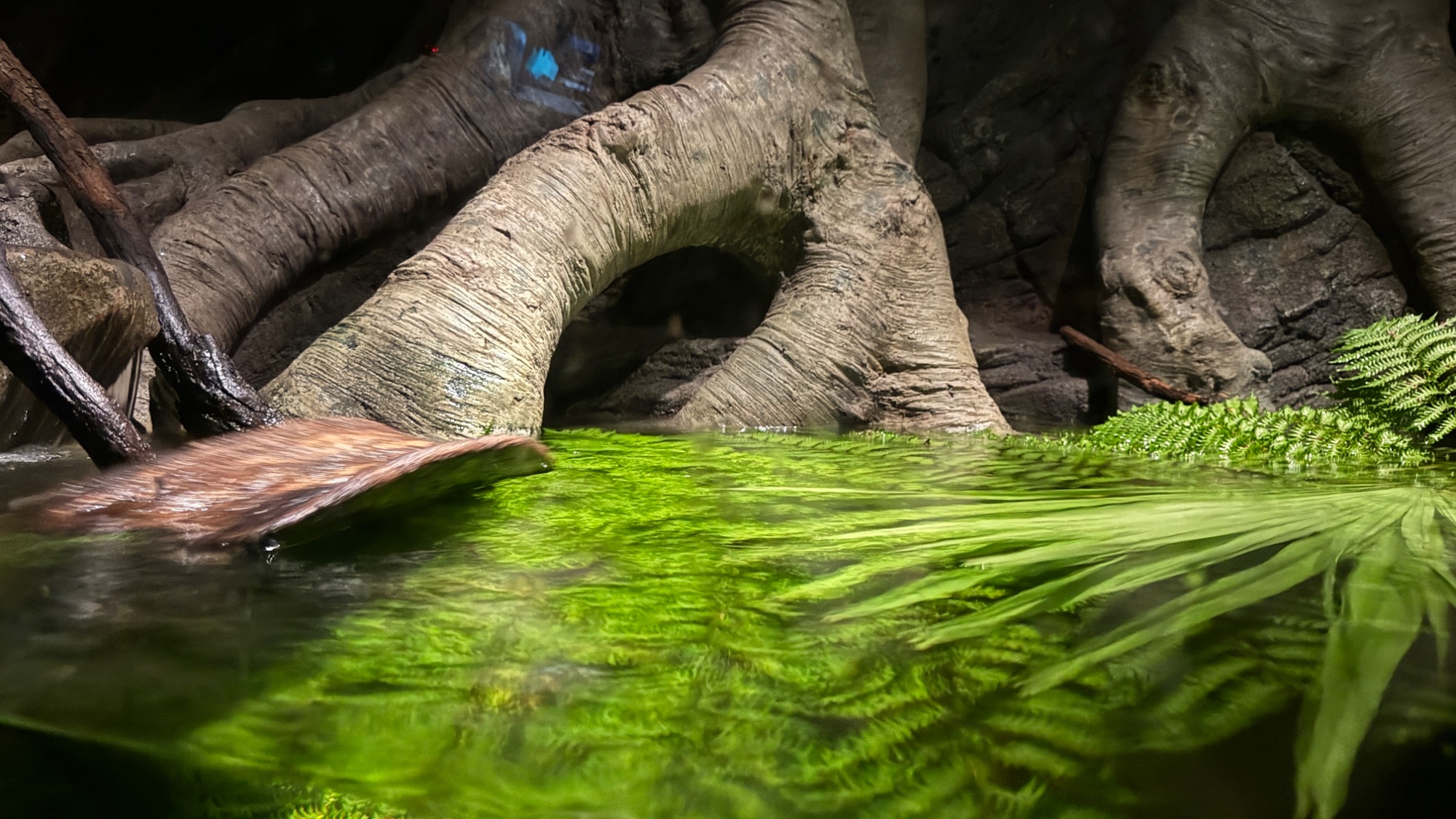
Just how strange is a platypus? It has a duck-like bill and a beaver-like tail. It is furry and feeds its young with milk, yet lays eggs like a bird. It belongs to the monotremes, an ancient branch of the mammal family tree. Male platypuses can even deliver venom through spurs on their hind legs. And that soft-looking bill is packed with sensitive electroreceptors, which detect the tiny electrical signals made by the muscles of prey. Underwater, a platypus shuts its eyes, ears and nostrils and uses this remarkable sense to find food. When European scientists first received a platypus specimen from Australia in the late eighteenth century, some suspected someone had sewn a duck’s bill onto another animal to fool them.
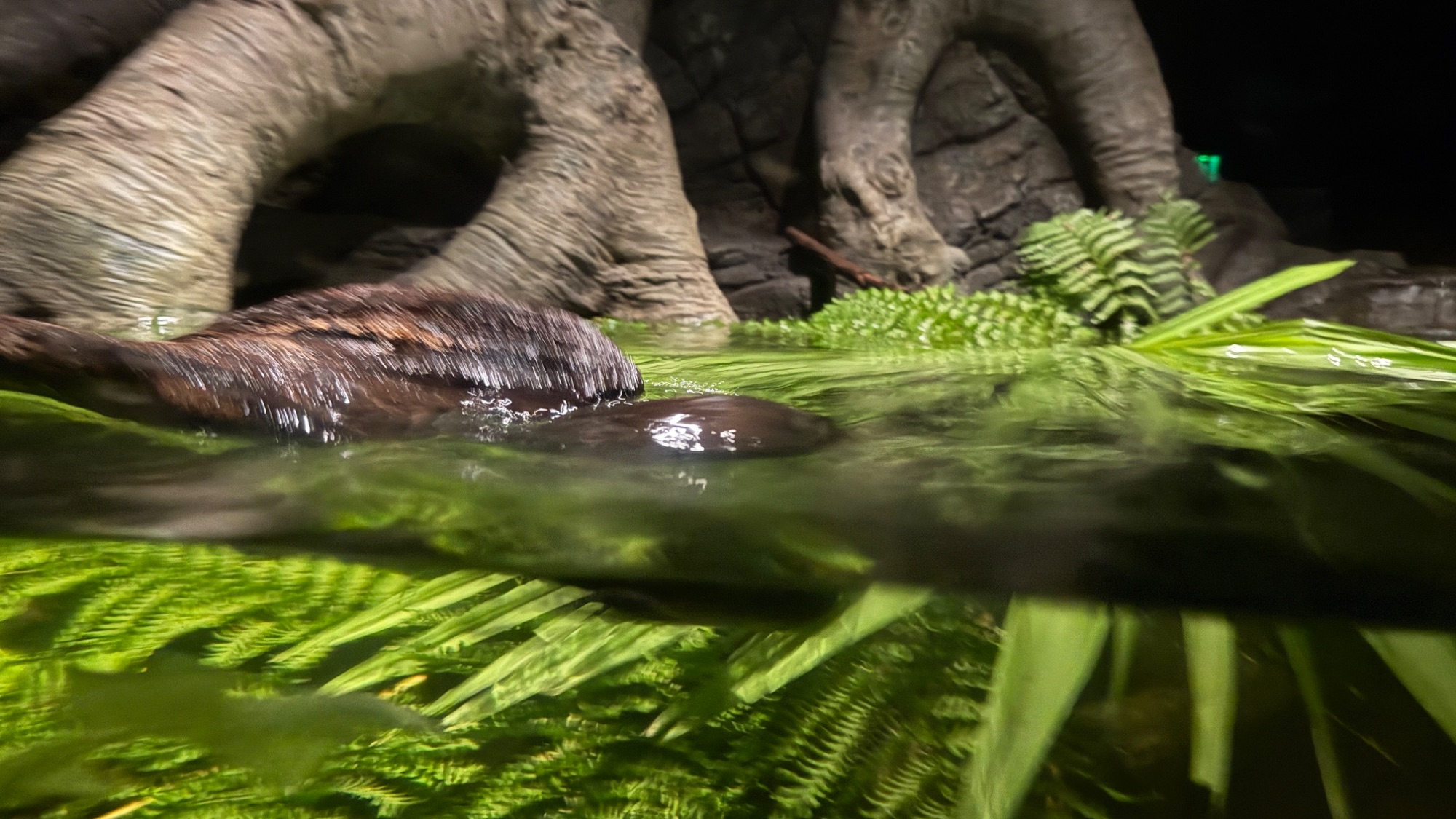
If platypuses are nocturnal, why had we gone looking for them in broad daylight at Peterson Creek? They are most active at night, dawn and dusk, but they do not follow a strict “no daytime appearances” rule. Some will swim and feed during the day; you just have a lower chance of seeing them. At Taronga, the platypuses live in a nocturnal house designed to recreate their dim habitat, so visitors can watch them during opening hours. The lighting is used to simulate a day-and-night cycle; a dark exhibit does not mean the animals live in darkness around the clock. In the wild, you need the right time, a quiet approach and a careful eye for ripples. Even then, you might wait half a day and see nothing but water.
Tasmanian devils: cancer that can spread by biting
Another animal that fascinated me was the Tasmanian devil. The name sounds like a creature from a horror film, but it is a fairly small carnivorous marsupial that lives mainly on the island of Tasmania in southern Australia. Early European settlers gave it the name “devil” because of its piercing night-time calls and the way it bares its sharp teeth when competing for food. It apparently made quite an impression.
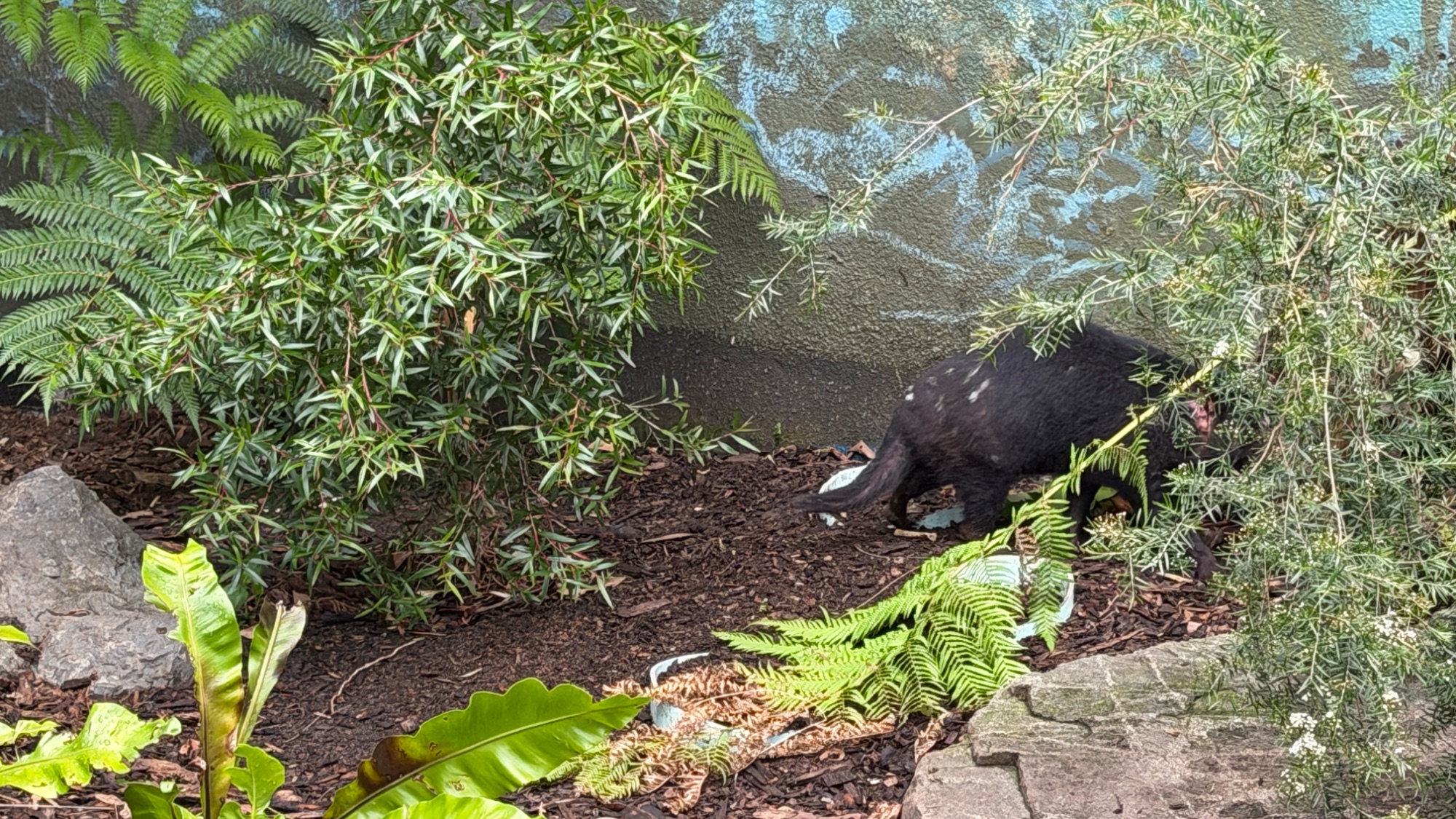
What is truly alarming is a rare disease affecting Tasmanian devils: a contagious cancer. Most cancers develop when an animal’s own cells mutate and grow out of control. They do not normally pass directly from one individual to another. In Tasmanian devils, however, scientists found that the facial tumours were not arising independently in each animal. They came from the same line of cancer cells, which can pass from one devil to another through biting and then grow into new tumours.
By analysing the cancer cells’ genes, researchers traced one widely spreading strain back to a single female devil from decades ago. Many sick devils today carry descendants of those original cells. The cancer cells left their first host and continued reproducing in other animals, almost like a lineage of their own. The devil that first carried them is long gone, but some of her cells’ descendants are still alive.
Why does the immune system not wipe out these foreign cells? Normally, an animal’s immune system can recognise cells from another individual and destroy them. This cancer has evolved ways to evade that response. Tasmanian devils also bite one another while fighting over food and mates, giving the cells a route to spread. The disease was first identified in 1996 and later spread widely across Tasmania, causing a serious decline in wild devil numbers. Contagious cancers are exceptionally rare in nature, and this one has forced scientists to rethink how far cancer can evolve.
Smiling quokkas, cube-shaped poo and other Australian oddities
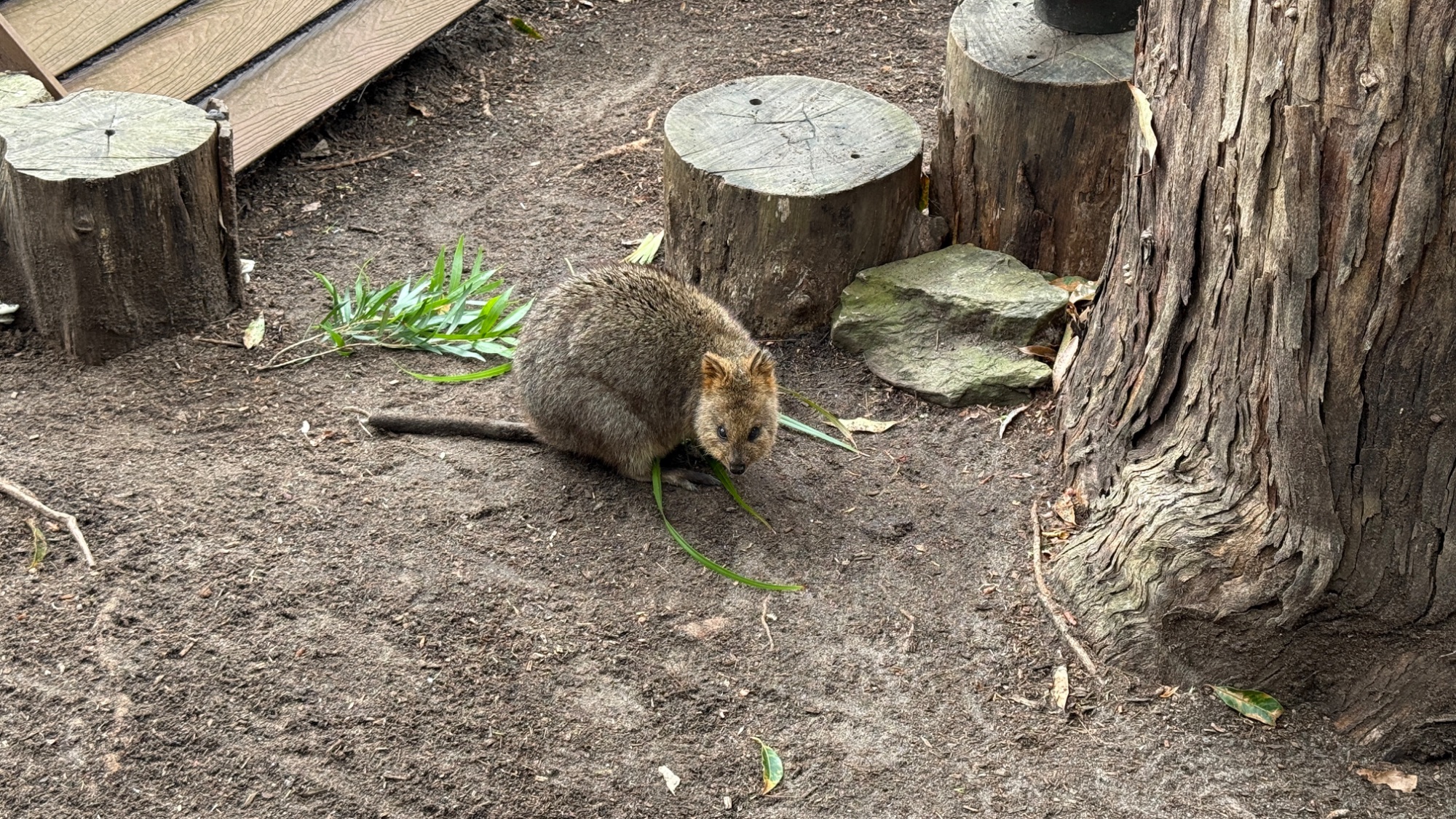
After that unsettling story, the quokka was a welcome change of mood. It is a small, round-bodied marsupial with tiny ears and what looks like a permanent smile, earning it the nickname “the world’s happiest animal.” Online, you see plenty of tourists taking selfies with quokkas, as if they are delighted to pose. The one we saw was not interested in our camera at all. It kept eating and refused to give us even a decent face shot. The smile is mostly down to the shape of its mouth, not proof that it is cheerful every minute of the day. Even the happiest-looking animal has boundaries.
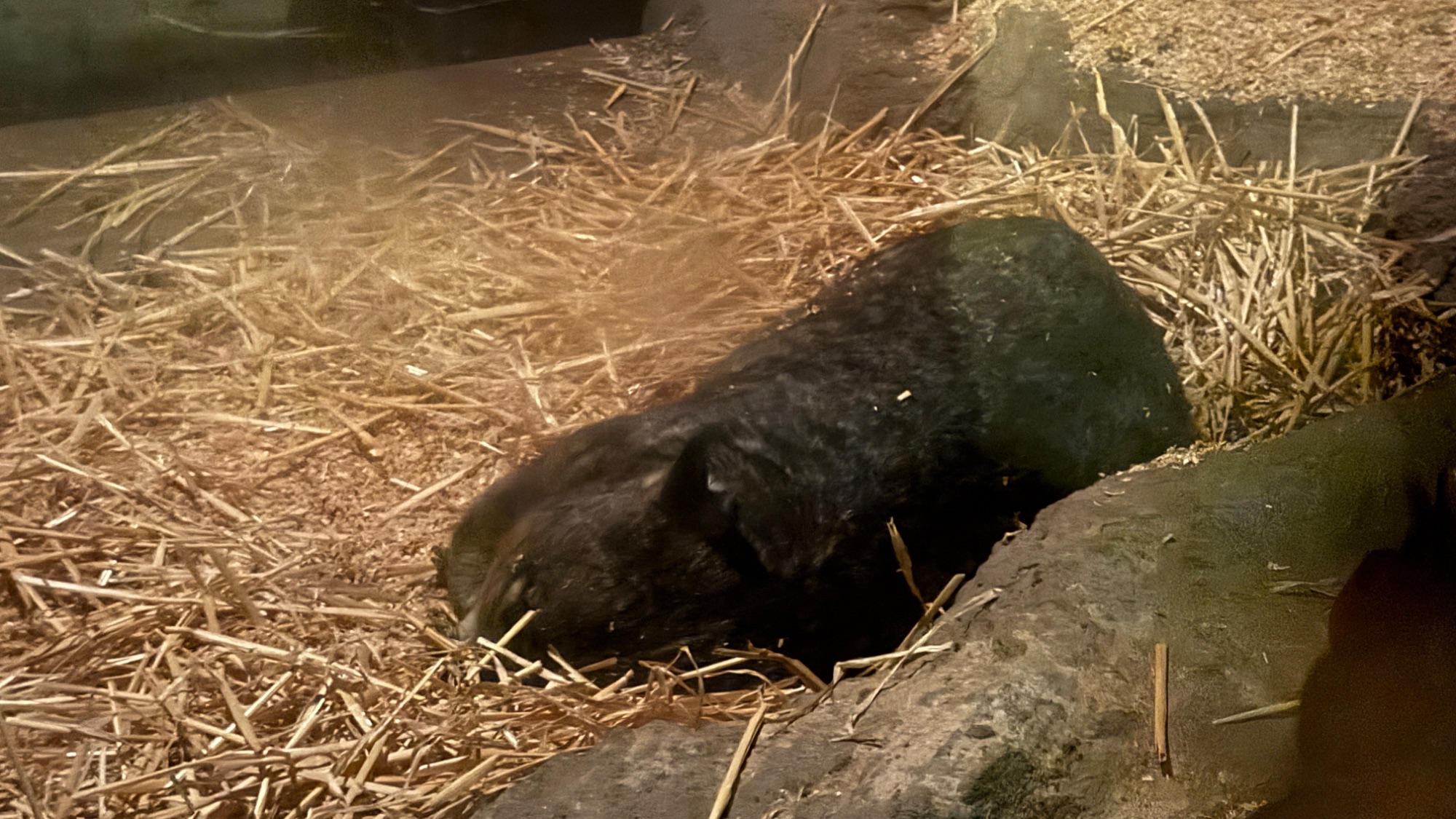
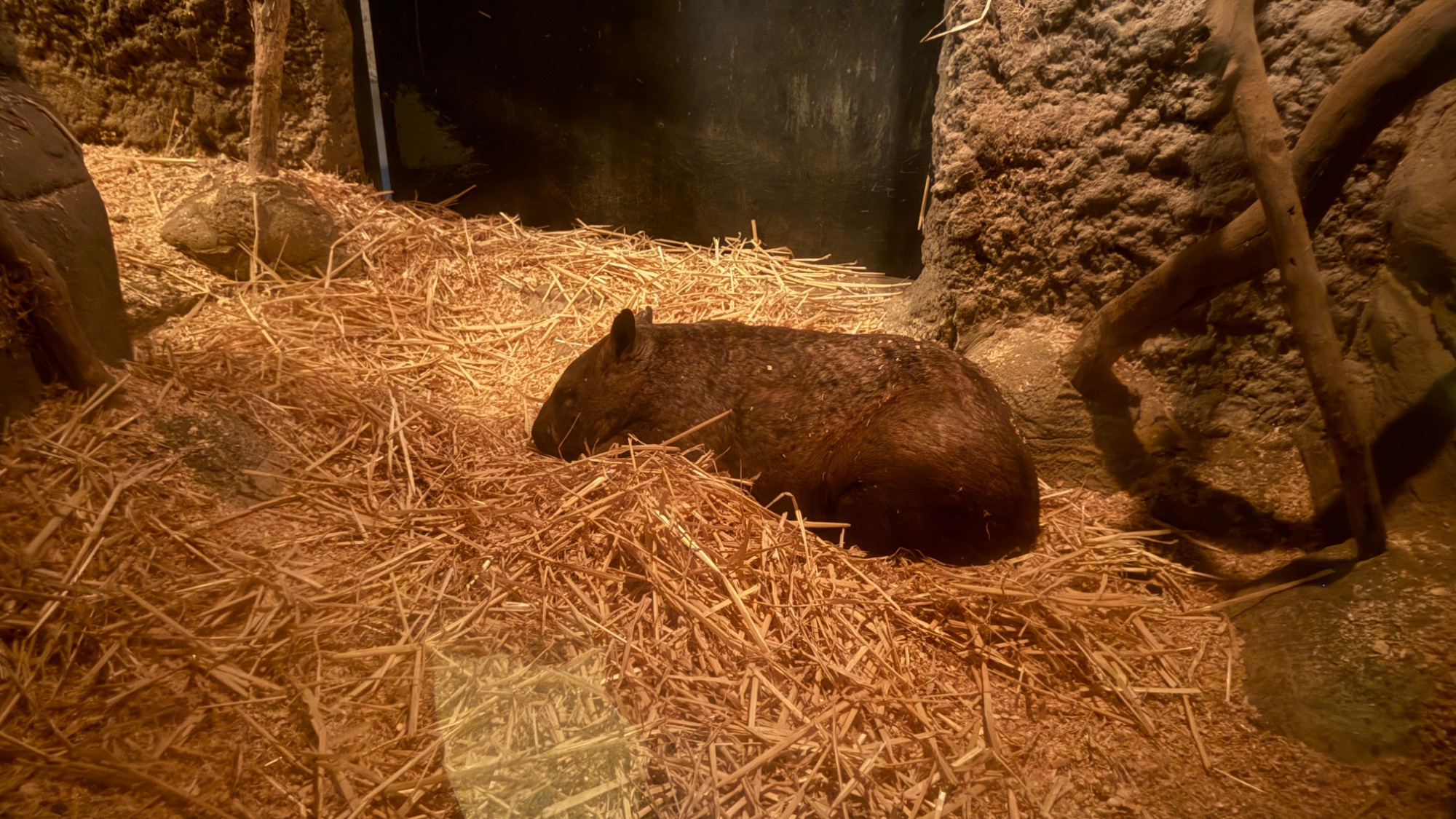
The wombat was another favourite: round and sturdy, with short legs, like a bear cub without a tail. Ours was curled up beside some hay, a dark furry lump with its head tucked out of sight. But wombats have a talent few animals can match: their poo is cube-shaped. Scientists think this happens because different parts of the wombat’s intestine stretch and contract in different ways, gradually shaping the droppings into little blocks. Wombats leave them on visible spots such as rocks and tree roots to mark territory. The cubes do not roll away easily, so it is a rather practical design.
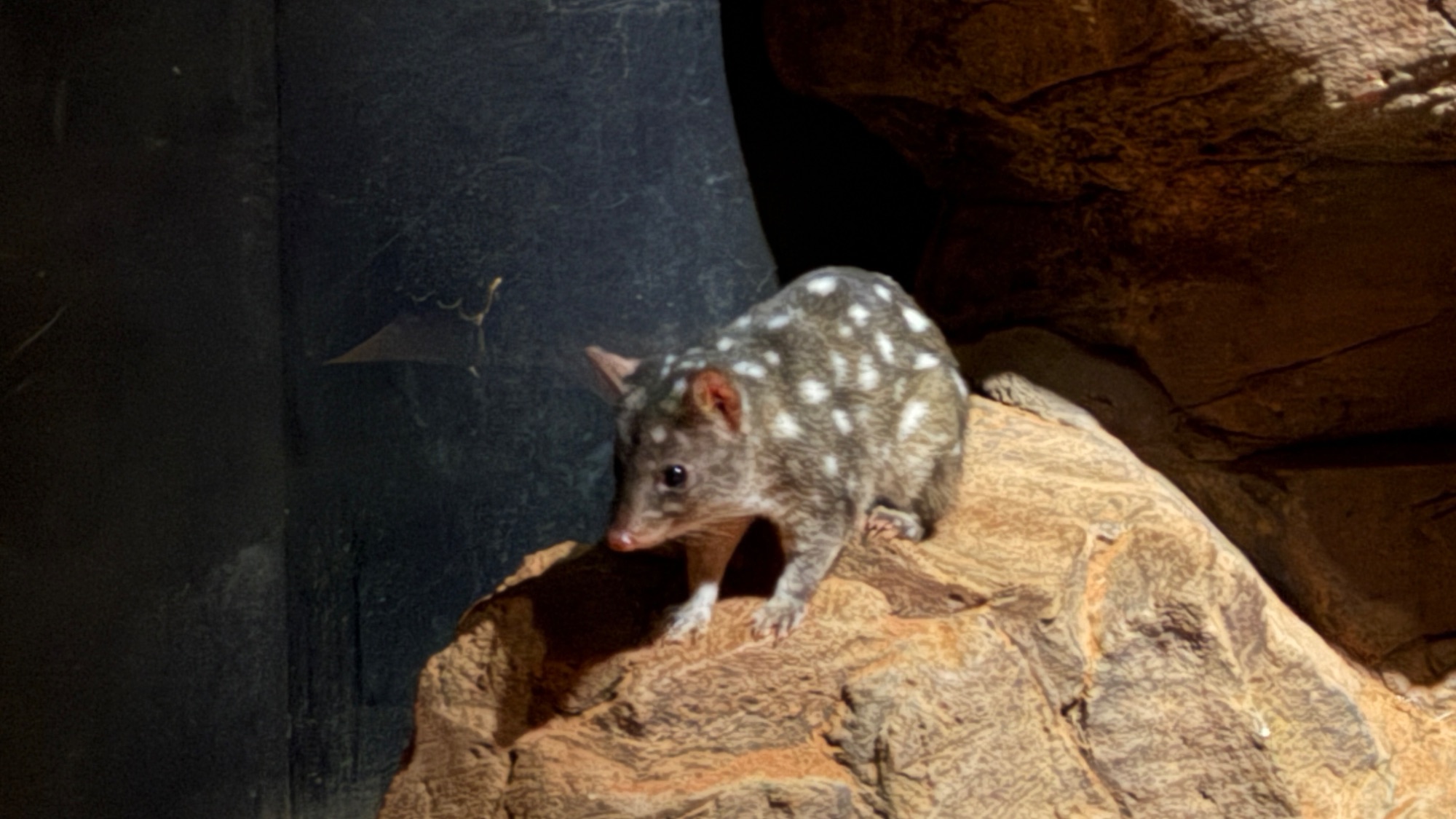
In the nocturnal house, we also photographed a small animal with white spots, a pointed nose and a long tail. It looked a bit like a cat and a bit like a weasel. We believe it was a spotted-tailed quoll, another carnivorous marsupial native to Australia. It may look charming, but it is a capable hunter that can climb trees to catch birds and other small animals. Australia’s marsupials are not all grass-eating kangaroos; some, like devils and quolls, are predators.
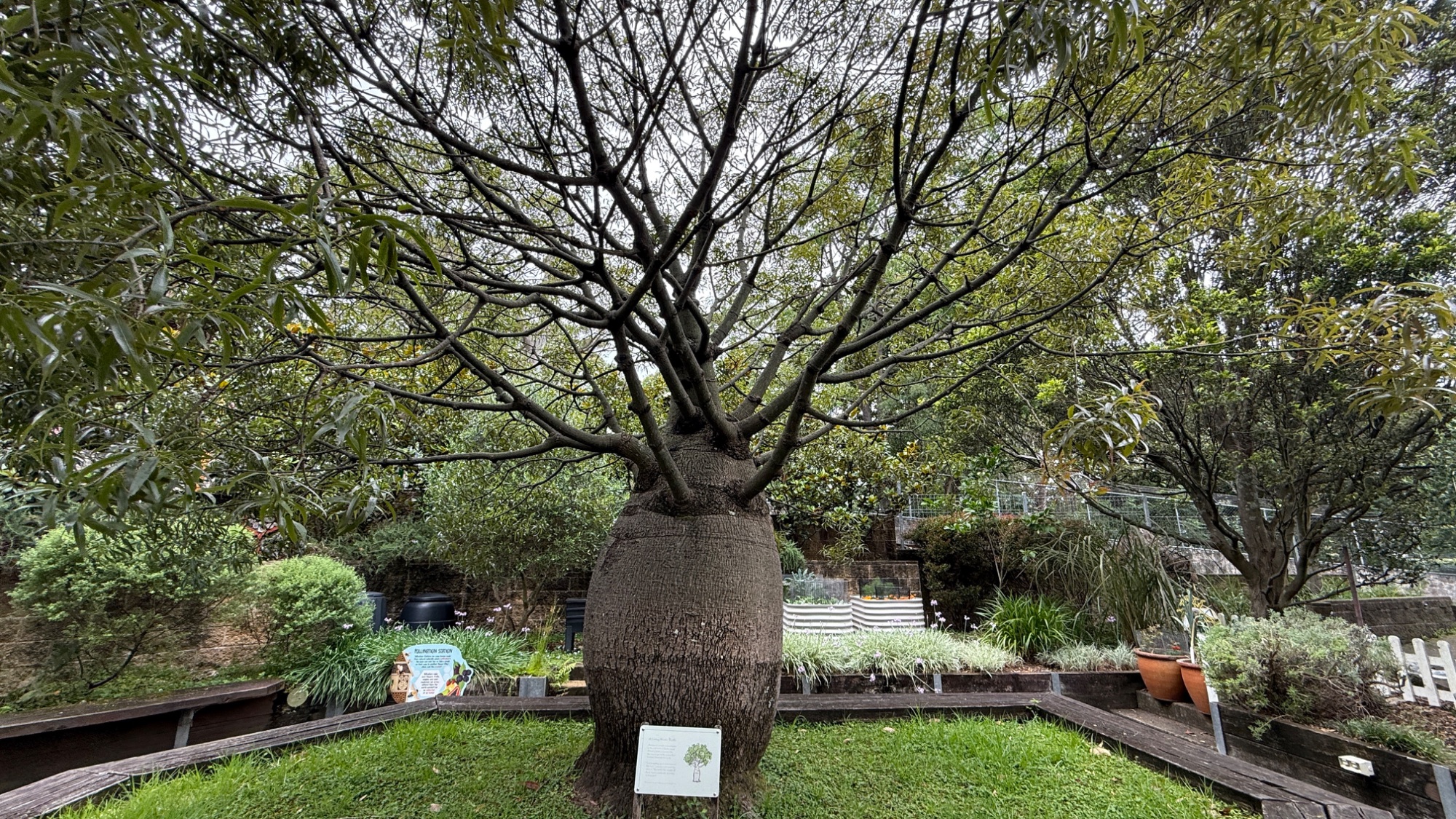
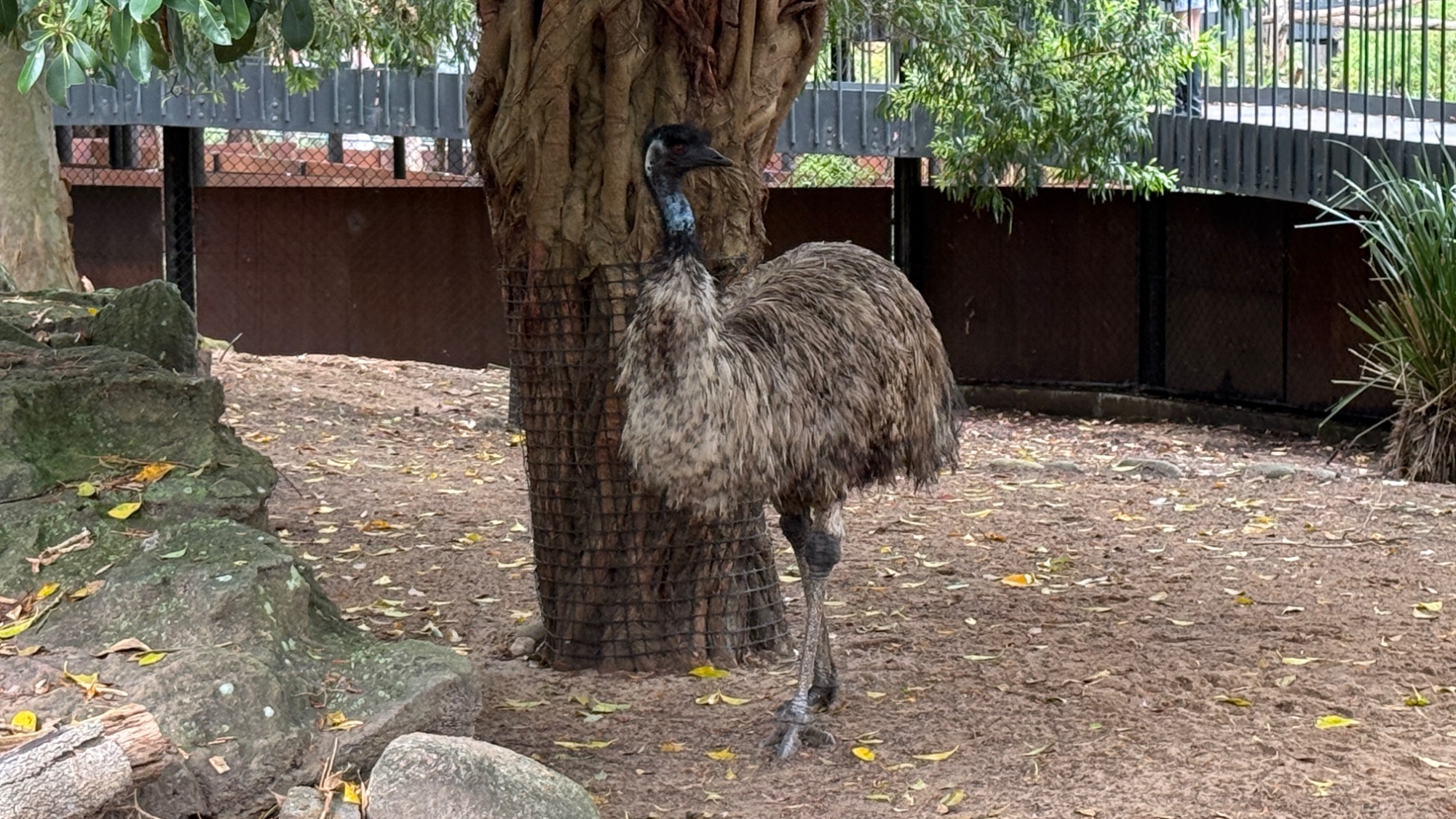
The zoo also had towering emus, large flightless birds native to Australia and second in size only to the ostrich. The one in our photo stood by a tree with shaggy feathers, a long neck and sturdy legs—almost prehistoric in appearance. Emus share the Australian coat of arms with the kangaroo and are among the country’s most recognisable animals. Nearby was a Queensland bottle tree, its swollen trunk shaped like an enormous bottle. The thick trunk stores water, a useful adaptation to dry conditions.
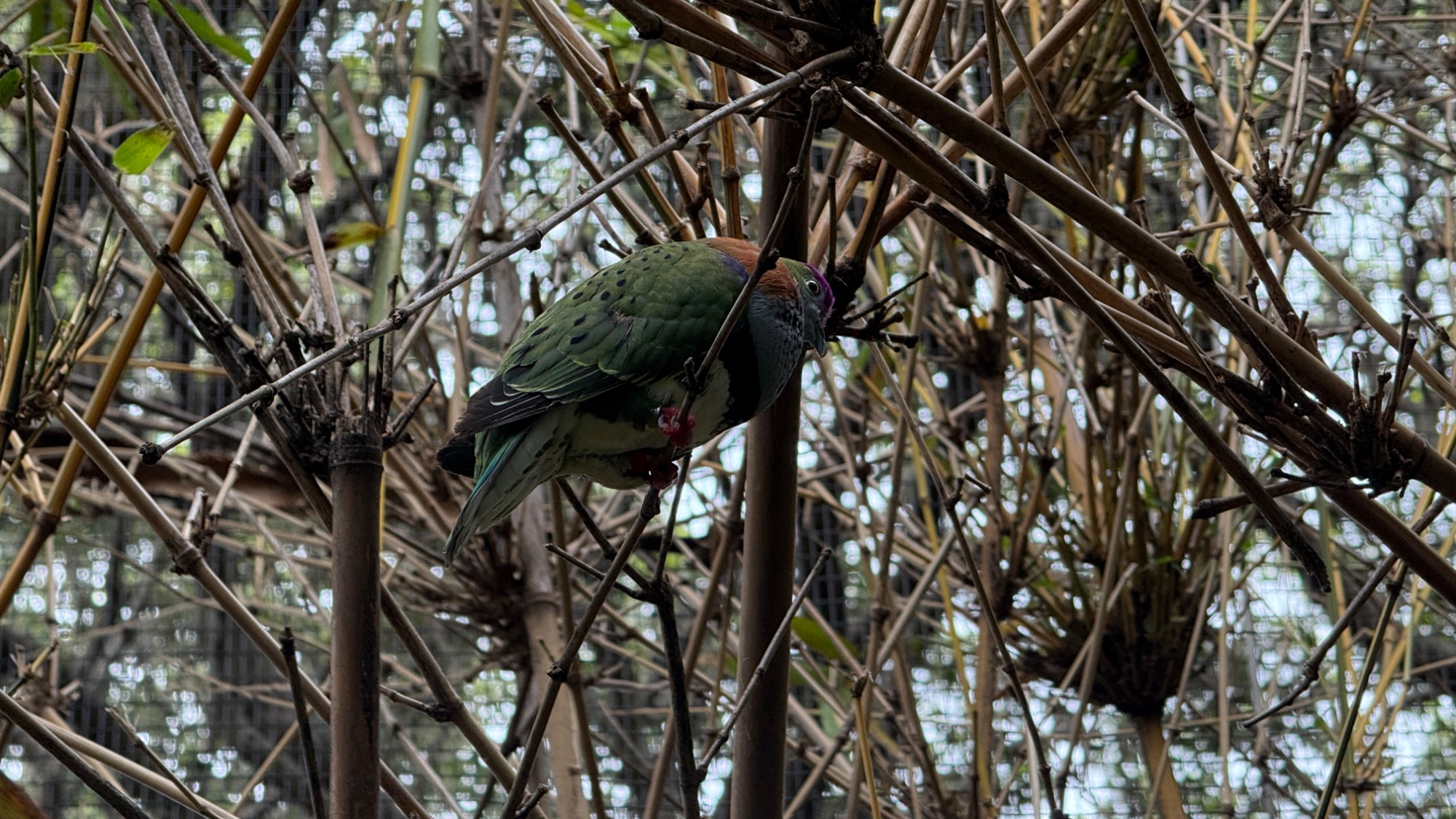
Even the chickens made us stop for a closer look. One rooster had golden neck feathers and a deep green tail, standing beside the bamboo as if it owned the place. Another chicken, black and white with a wildly tousled crest, looked rather comical. We keep chickens at home, so we felt an unexpected fondness for them. They are not uniquely Australian, of course, but after travelling to the other side of the world to see unusual wildlife, we ended up admiring the chickens too. That is part of the fun of travelling.
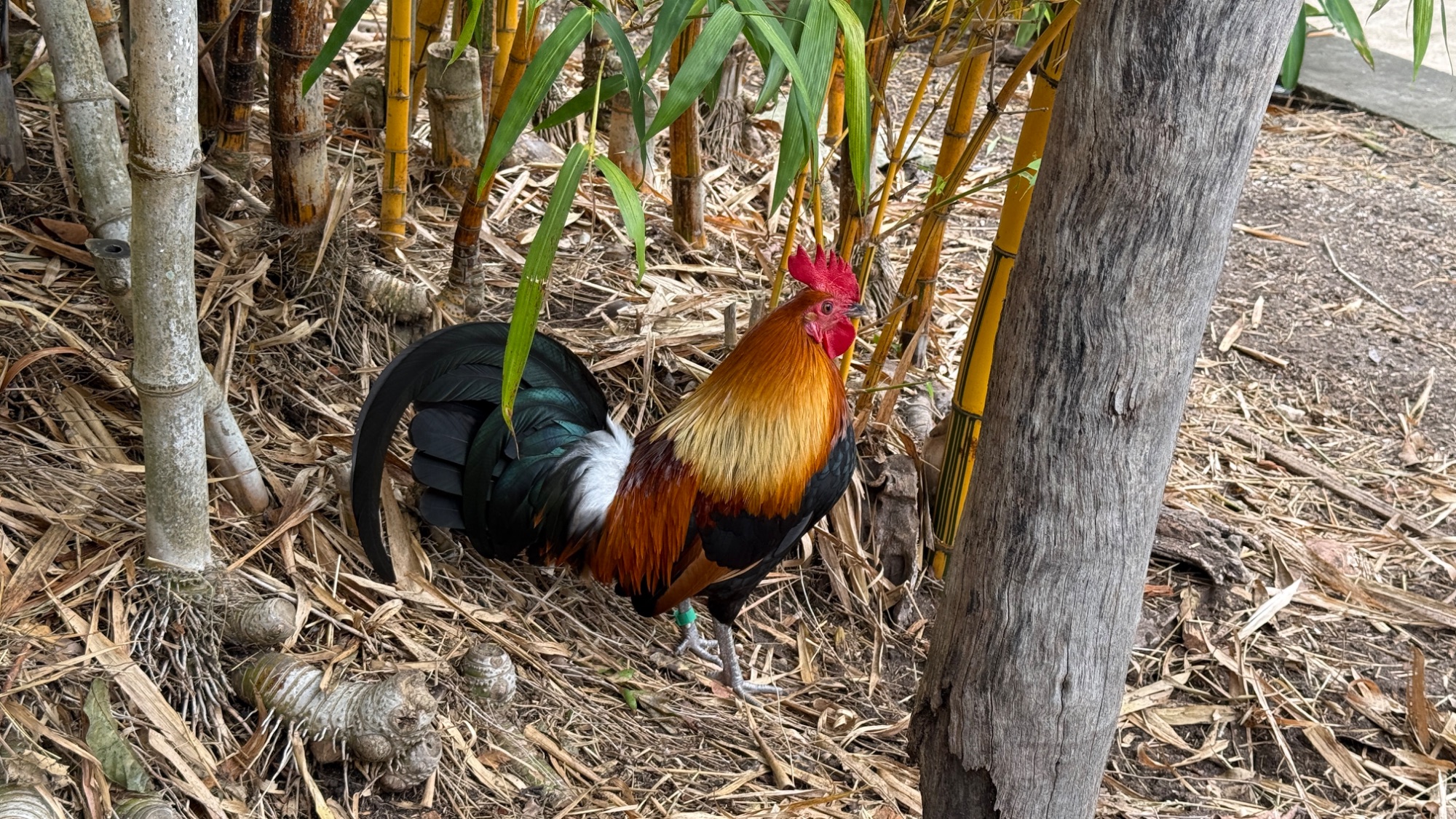
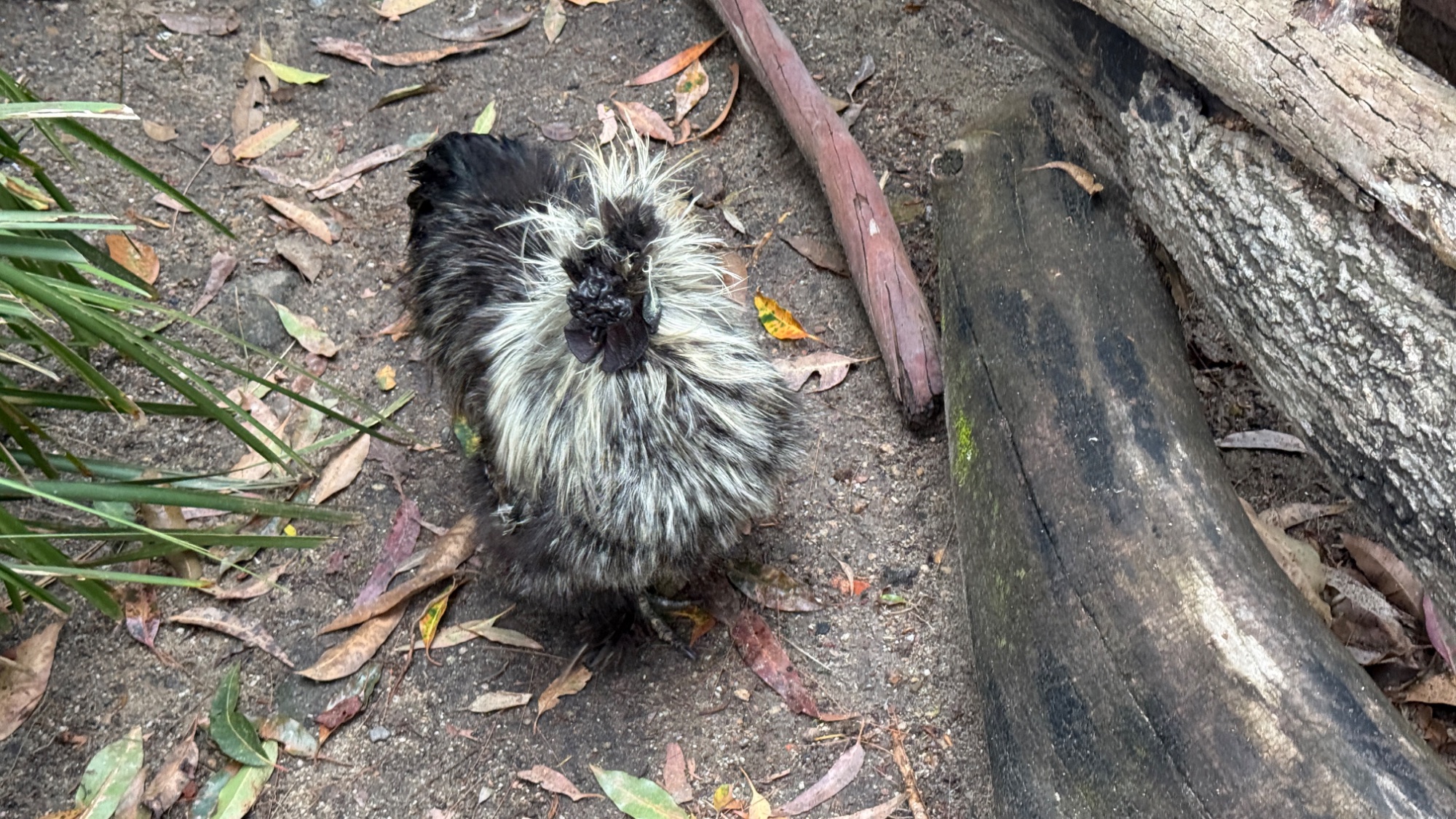
Why does Australia have so many animals found nowhere else? Much of the answer lies in its long geographic isolation. After Australia separated from the ancient supercontinent Gondwana, its wildlife evolved on a distinctive path. Marsupials filled ecological roles occupied elsewhere by placental mammals, while ancient monotremes such as the platypus survived. Australia can feel like a living museum of evolution. It is no wonder that every rainforest walk and zoo visit seems to introduce us to another creature we have never seen before.
Sea lions, then birds over Sydney Harbour
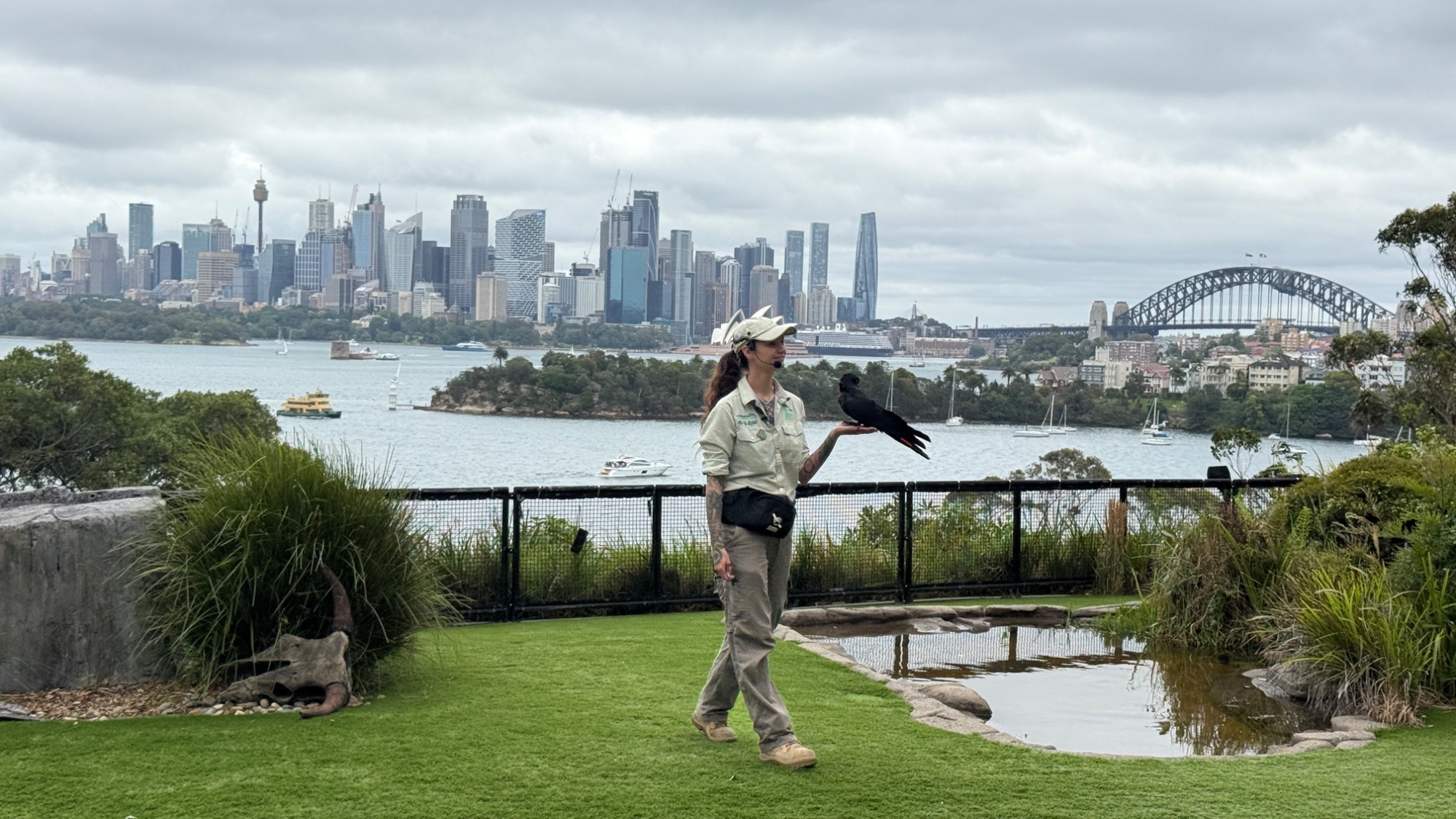
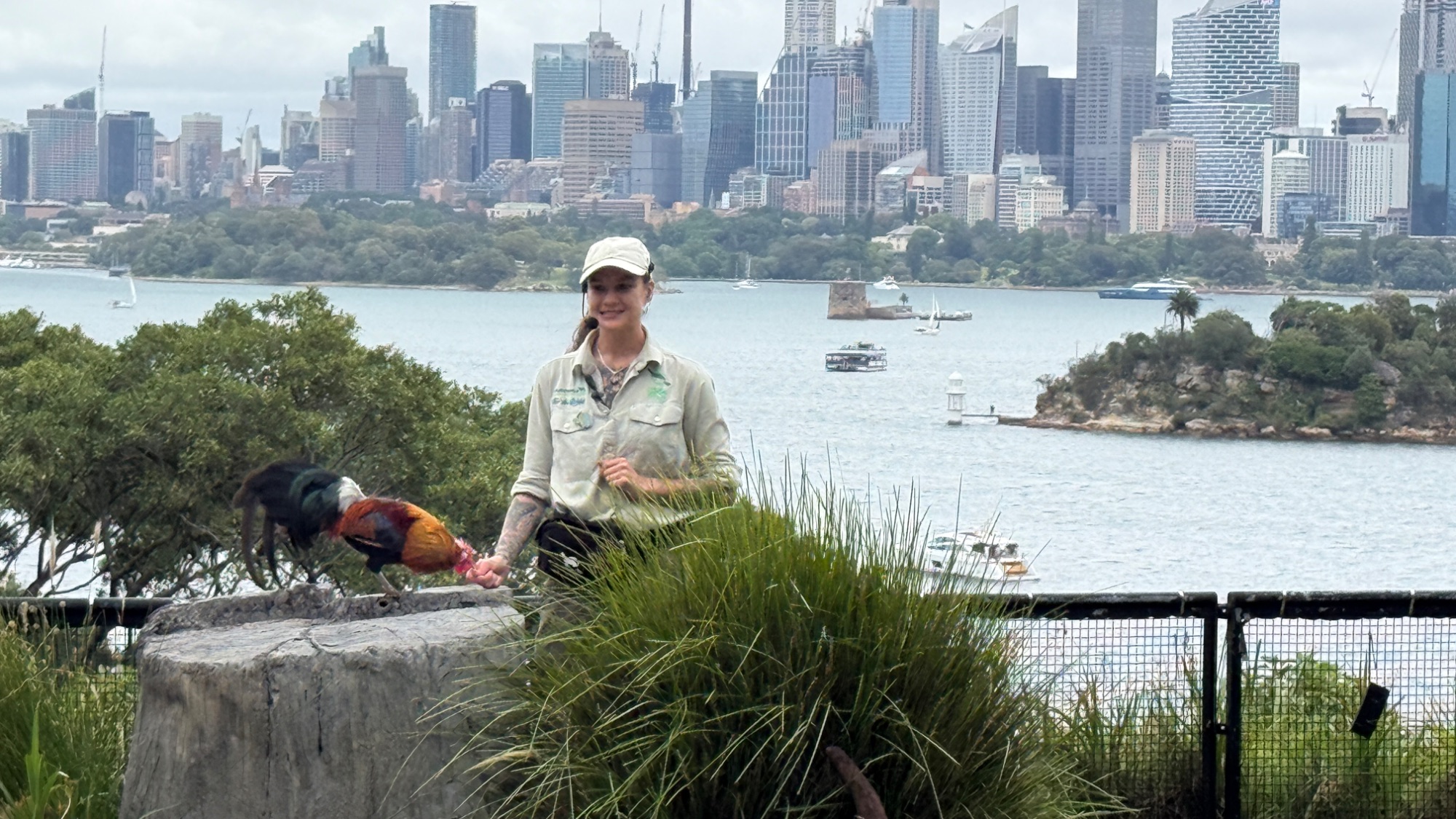
In the afternoon, we watched two free shows. The first was the 2 p.m. “Seals for the Wild” presentation. The highlight for me was the 3 p.m. Free Flight Birds show. The amphitheatre is built into the hillside, with Sydney Harbour spread out below: the Opera House, Harbour Bridge and boats all in view. When the show began, birds flew in from different directions. Some swept across the harbour, others skimmed over the audience, and a few landed neatly on their handlers’ arms. Watching them fly freely with Sydney’s famous skyline behind them is not something every zoo can offer. The sea-lion show was about what the animals could do; the bird show was special because it brought the animals, the open sky and the harbour together. The setting alone is worth seeing.
A sleepy ferry ride and a Chinatown dinner
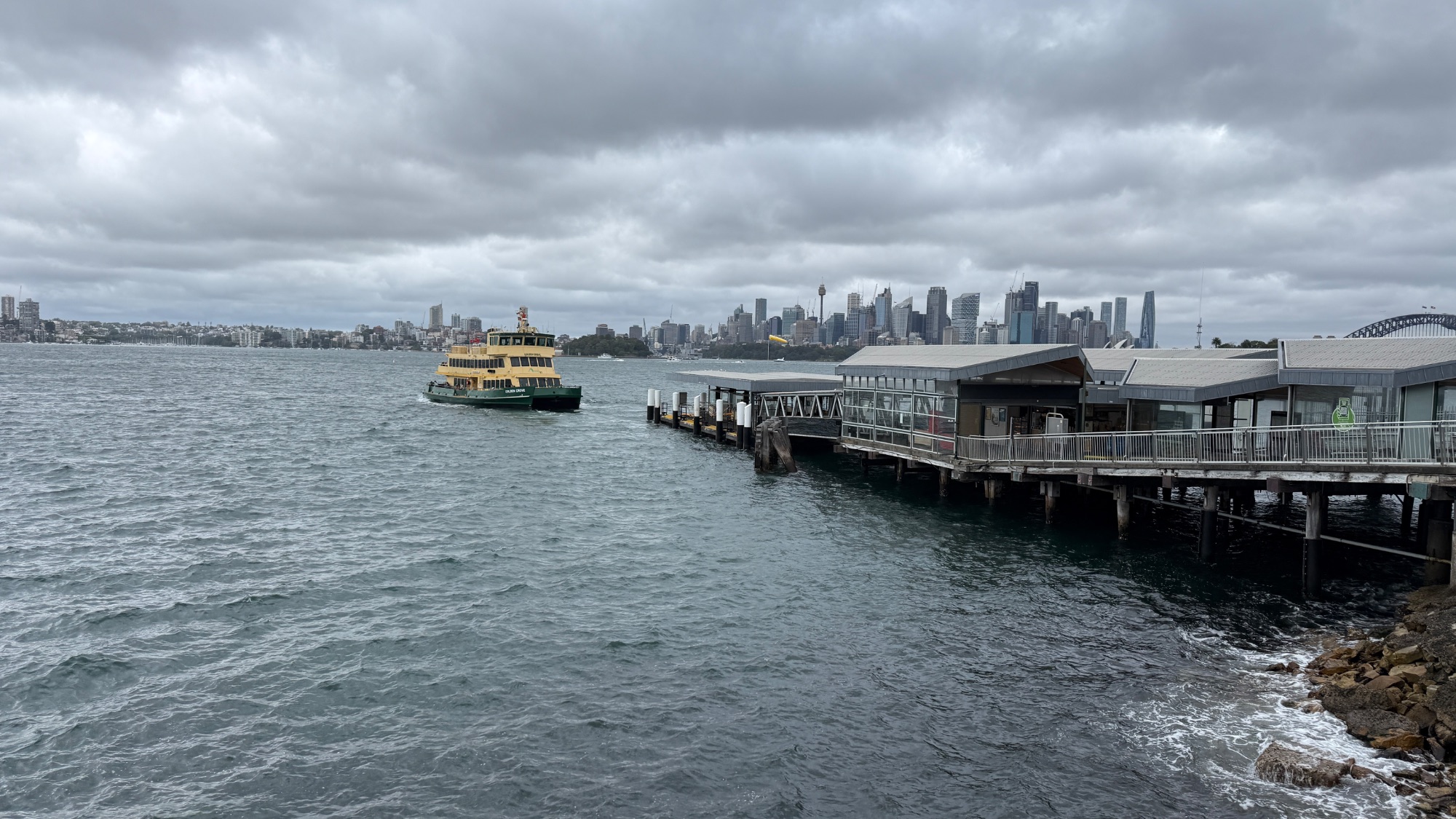
After the zoo, we walked downhill to the ferry wharf and caught a boat back to Circular Quay. We could have enjoyed the harbour views, but by this point we had taken plenty of boats—and our earlier trip to the Great Barrier Reef had given us a memorable bout of seasickness. This ride was short, and although I felt a little queasy, it was nothing like being out at sea. I sat down and promptly fell asleep. When I woke up, we were nearly at the wharf.
Back in the city, we wandered to Chinatown and found a place for malatang, a spicy soup with ingredients cooked in a hot broth. Only after we finished did we notice all the Chinese supermarkets and other restaurants nearby. Everything looked tempting, but we were too full to try anything else. I regretted that decision almost immediately.
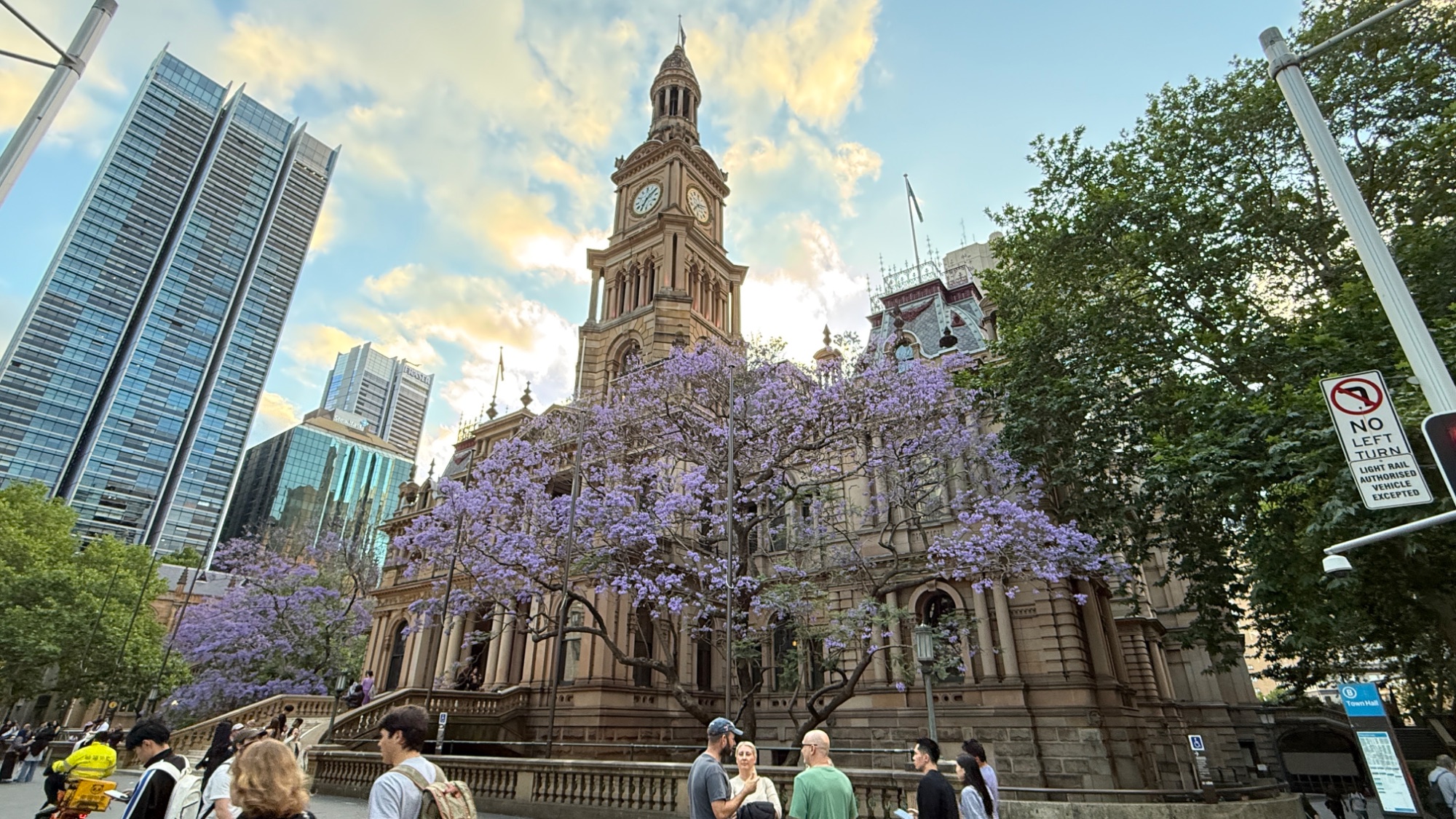
On the walk back to the hotel, we passed the beautiful Victorian-era Queen Victoria Building (QVB) and the lively Town Hall area. Street performers were singing at several corners. After a full day on our feet, we headed back to the hotel early to rest.
Reader Discussion · 0
No comments yet. Be the first to share your experience.