We have been adjusting to the time difference surprisingly well. Most evenings we are ready for bed by six or seven, then sleep straight through until four or five in the morning. At home I often wake up several times during the night, but here I have been sleeping deeply. I was up again a little after four today. After a leisurely breakfast, we left Palm Cove at 7:45 for a full day on the Great Barrier Reef.
The reef was one of the experiences we had been looking forward to most on this trip. It stretches for more than 2,300 kilometers along Queensland’s northeast coast and includes nearly 3,000 individual reefs. Covering about 344,000 square kilometers—roughly the size of Germany—it is the world’s largest coral reef system. Our destination, Moore Reef, lies offshore from Cairns on the outer reef. Far from the sediment carried by mainland rivers, the water is often clear and good for snorkeling. Reef Magic’s pontoon is moored there, about a 90-minute boat ride from Cairns.
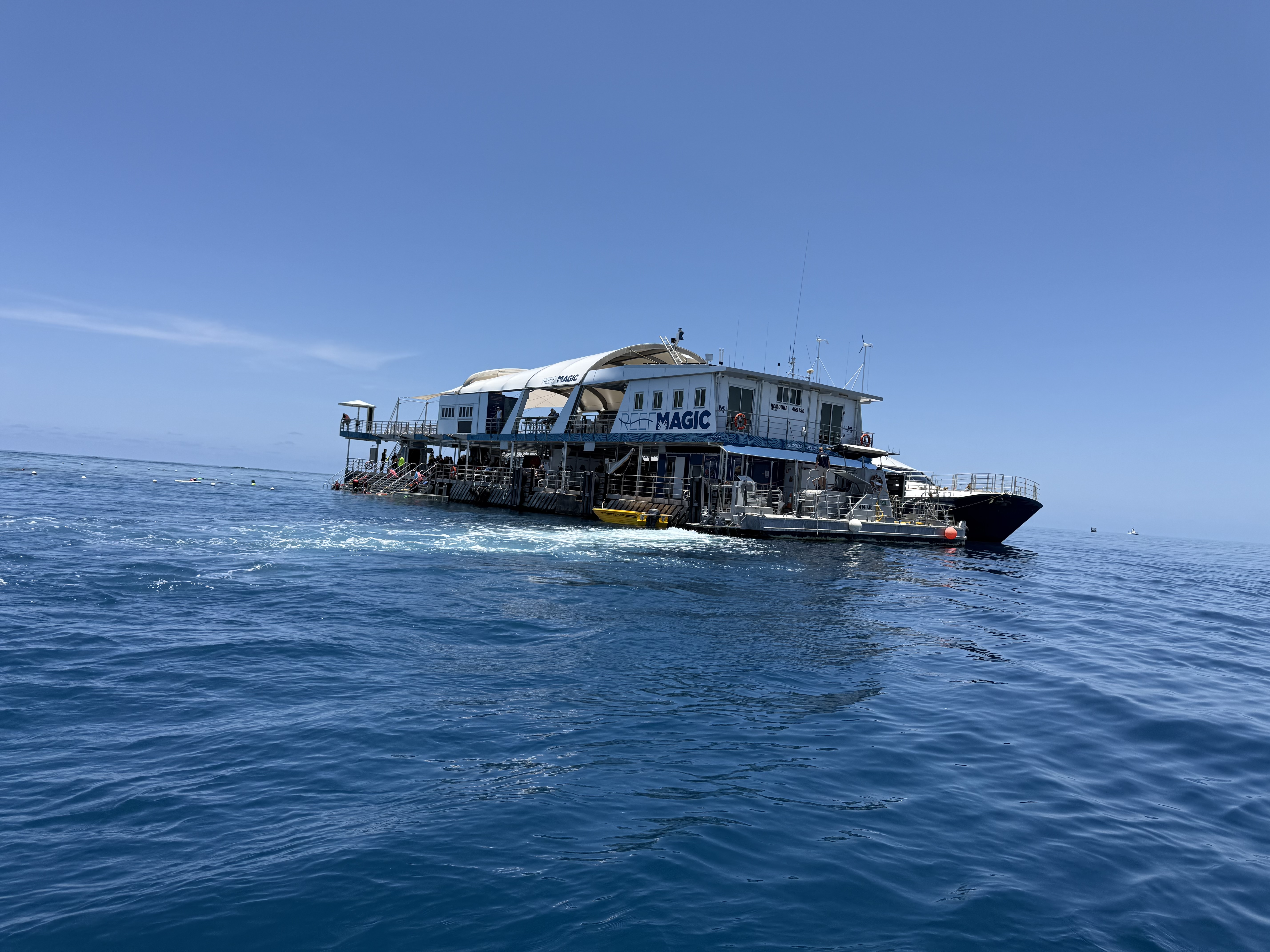
We compared several operators before booking. Quicksilver leaves from Port Douglas for Agincourt Reef farther north, where it also has an offshore pontoon, but guests get about three and a half hours on the reef. Silverswift takes a different approach, visiting three separate reefs in a day without using a fixed pontoon; passengers snorkel straight from the boat. That could be a better choice if seeing coral and fish is the main goal, since you get to try several sites. We have snorkeled many times in the Maldives, Bora Bora, and Komodo, though, and had just returned from Komodo. Snorkeling itself was familiar. We had never spent a day on a pontoon anchored far out at sea, and we wanted to try both the Snorkeling Experience and Helmet Dive while still leaving time to explore on our own. Reef Magic offered a full five hours at the pontoon, so we chose that trip.
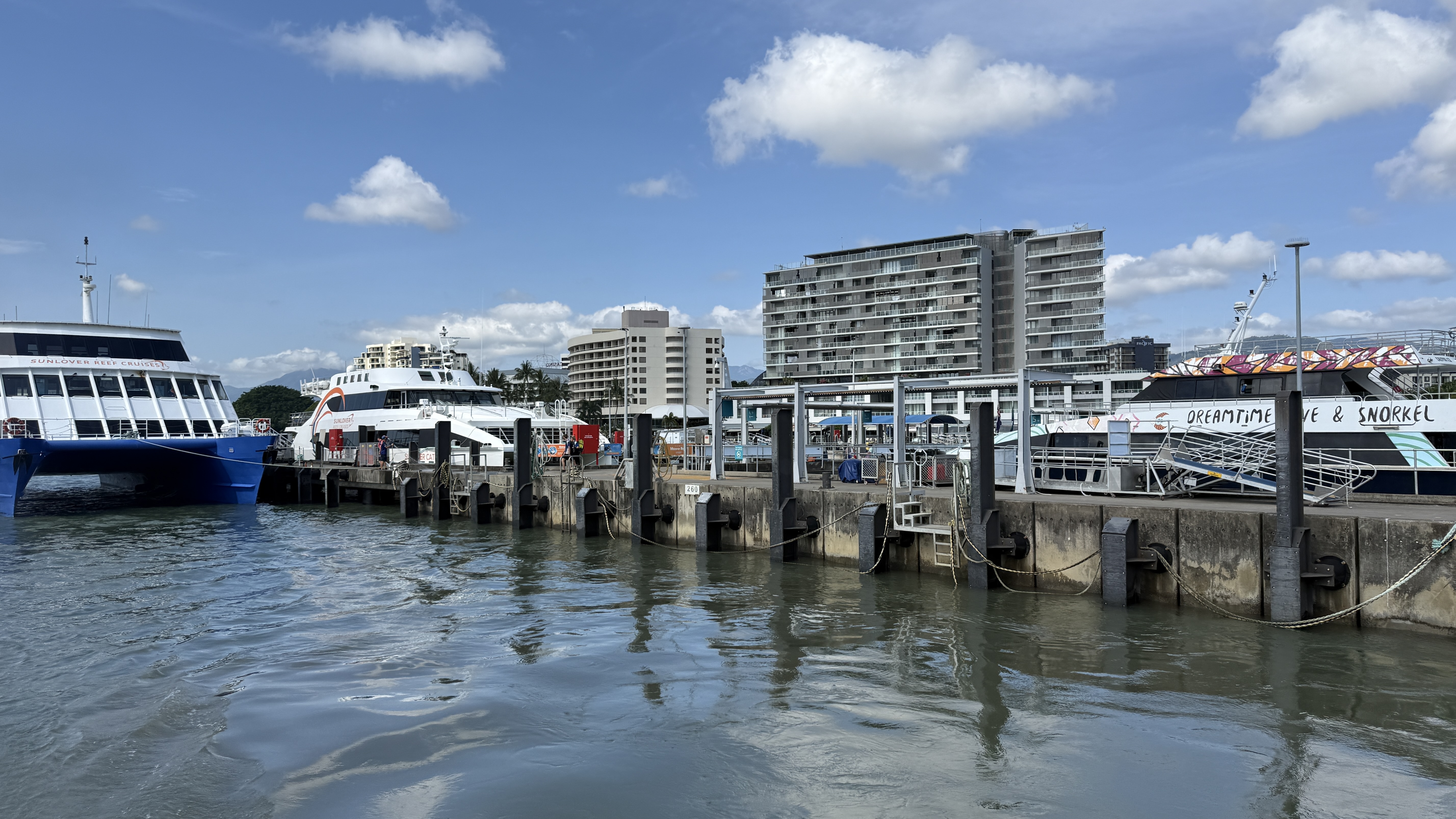
We reached the Cairns marina around 8:30 and found a paid parking lot nearby. Parking from morning until after five cost a little over A$20, payable by card. It was only a five-minute walk to the wharf. Reef Magic’s boat was easy to spot, and most passengers were already aboard, so there was hardly a line. The crew took a photo of us in front of the boat before we boarded. We waited another 20 or 30 minutes, then left right on time at nine.
We had taken motion-sickness tablets before departure, but they did not do much good. The ride started out fine, then the boat began pitching with the waves and I felt worse and worse. It was a sunny, calm-looking day, but a tour boat is nothing like a large cruise ship. We have been on several cruises without getting seasick; this boat had us both struggling. I felt all right compared with my wife, who was already too queasy to do much by the time we arrived.
On the way, the crew explained the day’s activities and gave the Helmet Dive participants a safety briefing, including how to equalize their ears and communicate with hand signals. We reached the Moore Reef pontoon around 10:30. A pontoon is a large floating platform moored offshore. This one had seating, food, changing rooms, showers, stairs into the water, and an underwater observatory below deck. From there, guests could snorkel, take a glass-bottom boat or semi-submersible, or sign up for diving and the helmet walk. It felt like a small activity center built in the middle of the ocean, with everything you needed for the day.
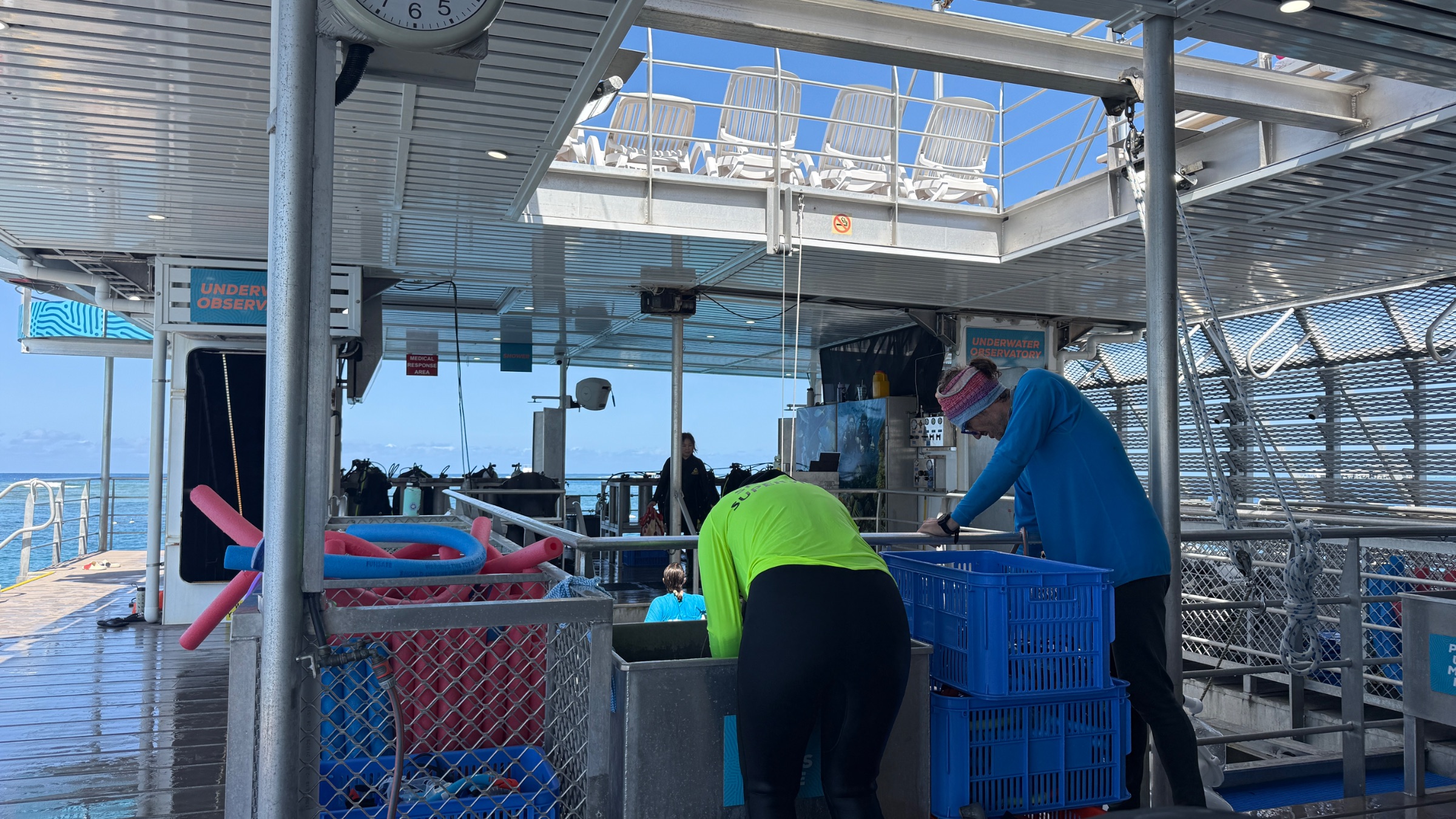
There was also an underwater viewing chamber where you could walk downstairs and watch fish swim past. It was an easy way to see the reef without getting wet.
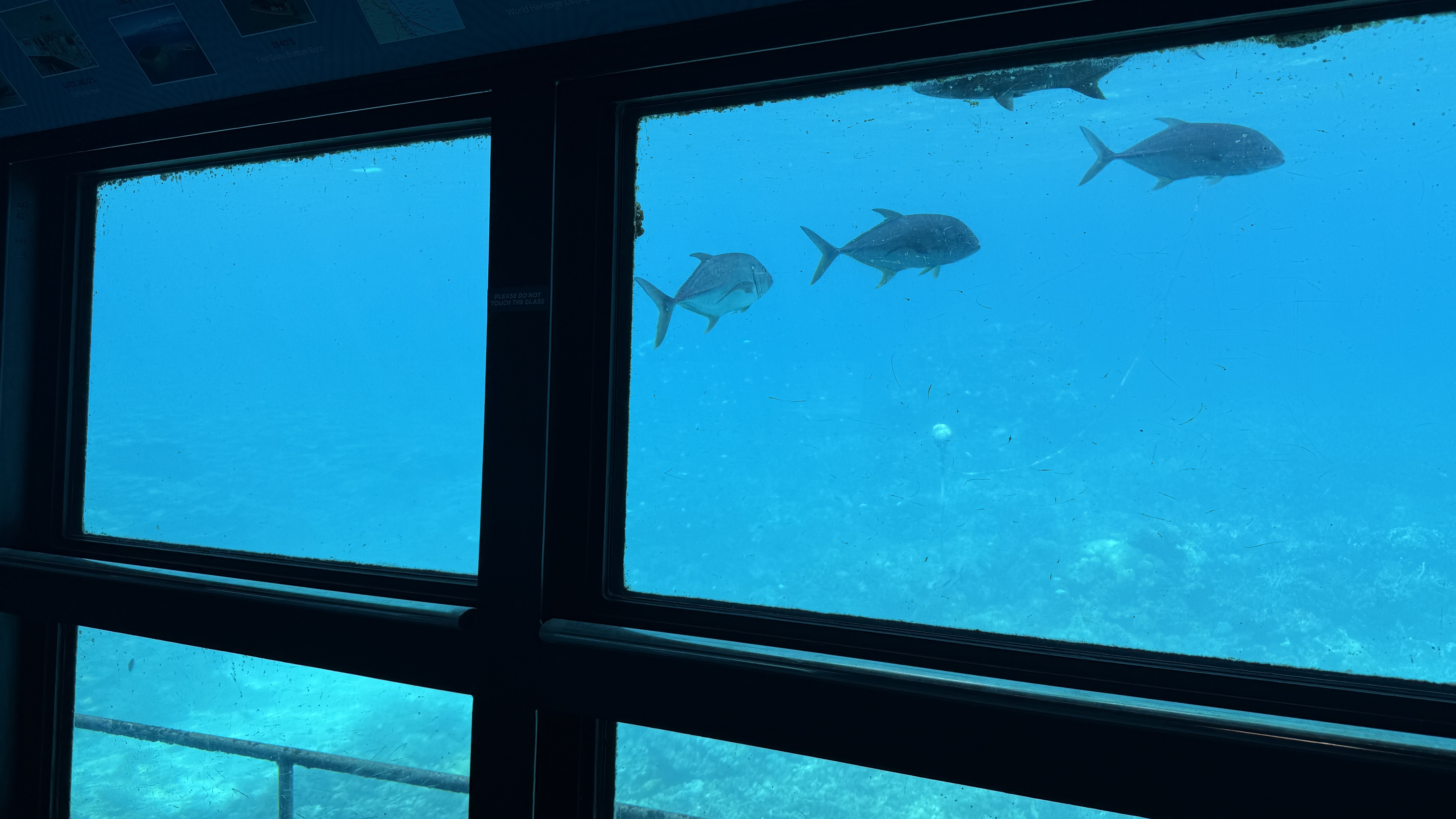
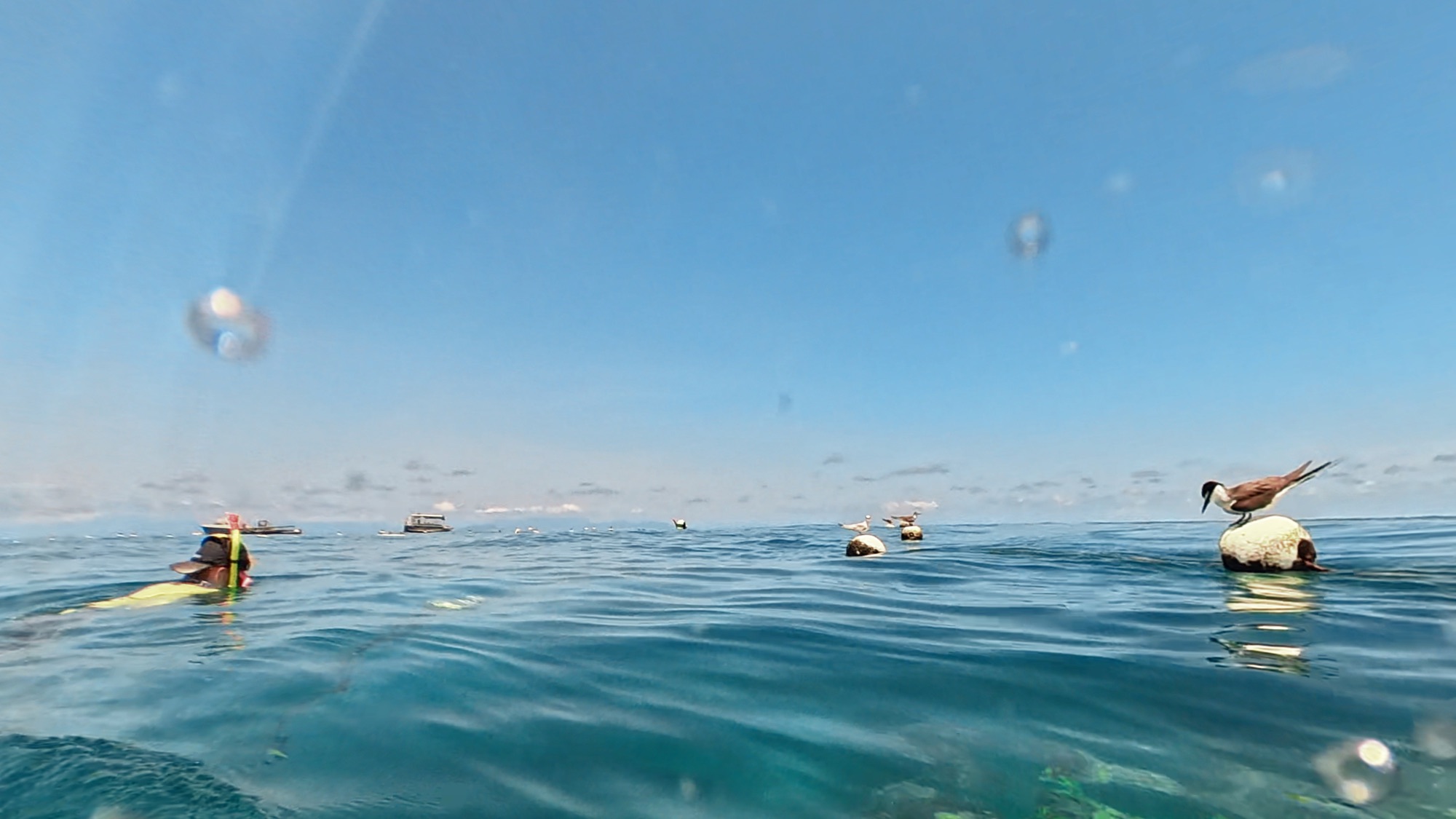
We had originally booked the Snorkel Safari, which started at eleven. It takes a small boat to a reef farther from the pontoon, then follows a marine biologist back through the water. Currents are possible, so you need to be a confident swimmer. My wife had been a little unsure even before the boat ride, and the seasickness settled it for her. She decided to skip it. I switched to the Snorkeling Experience near the pontoon, which did not require swimming as far.
I got lucky. I had signed up for a group tour, but I was the only guest, so it turned into a private guided snorkel at no extra cost. The marine biologist stayed with me the whole time, stopping to point out anything interesting and even diving down to take photos for me. It was much more relaxed than trying to keep up with a big group.
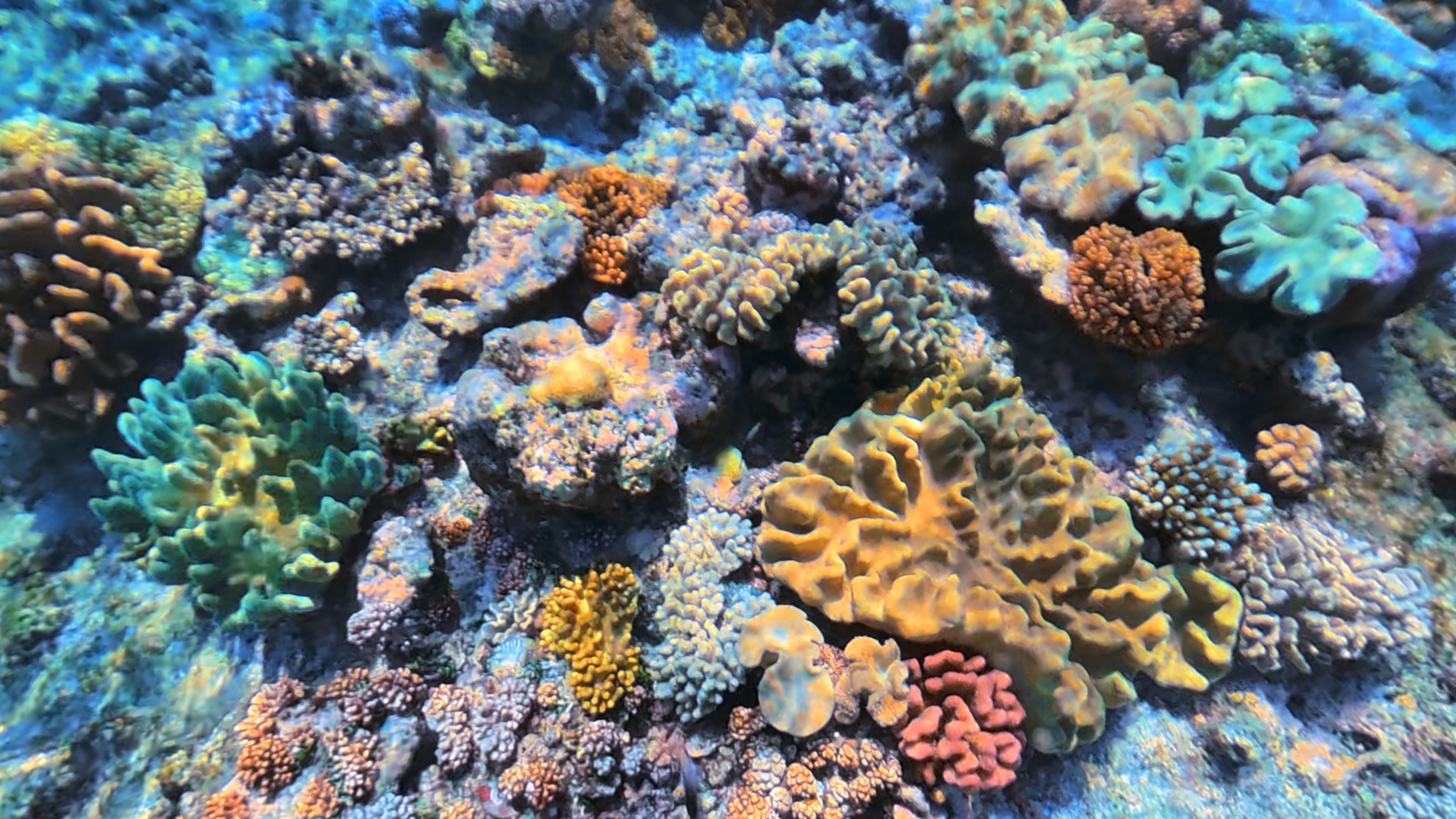
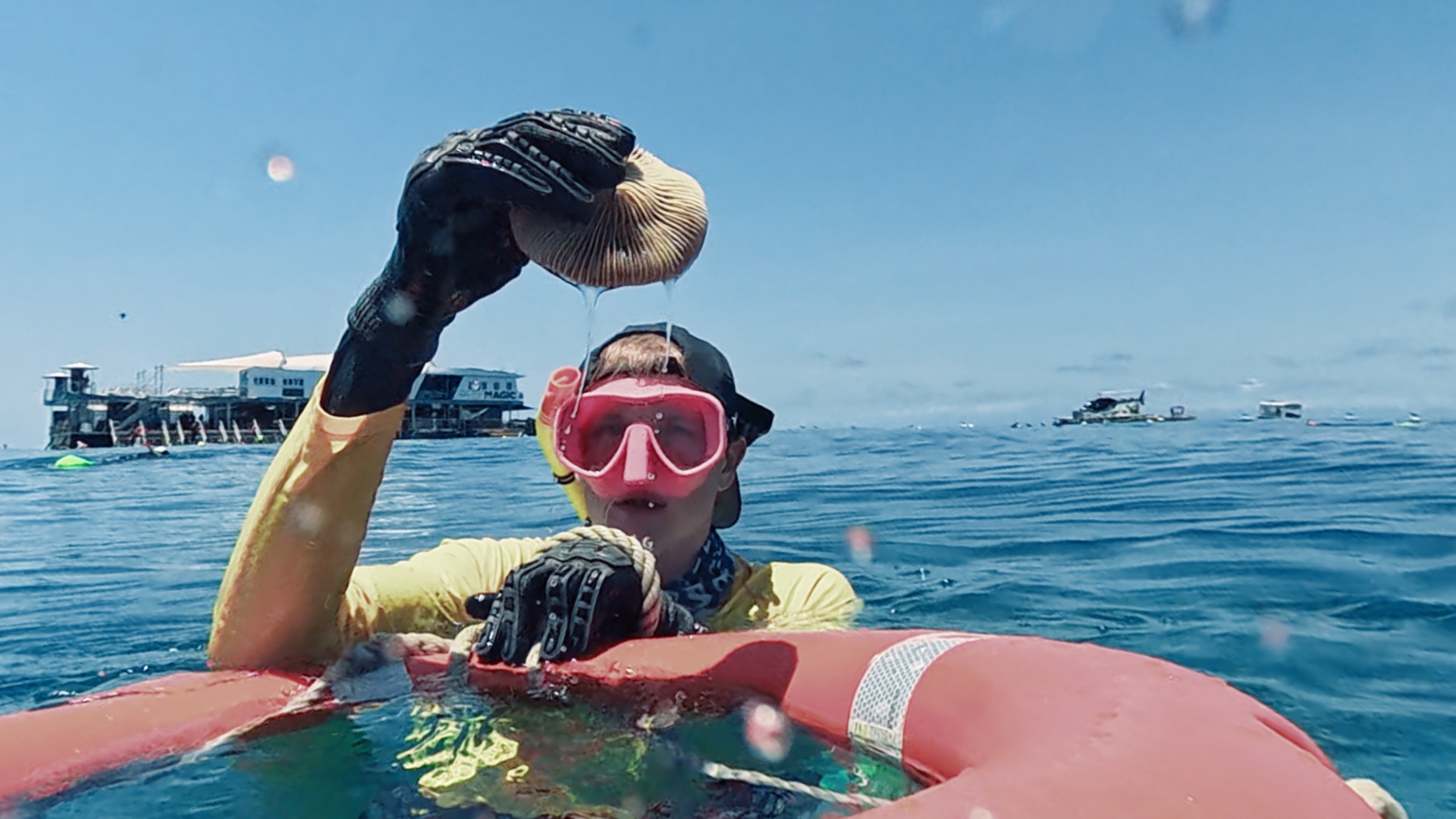
As we swam, he showed me different kinds of coral. At one point he brought up a mushroom coral. It can produce a mucus-like coating that helps protect it, including from the sun’s ultraviolet rays.
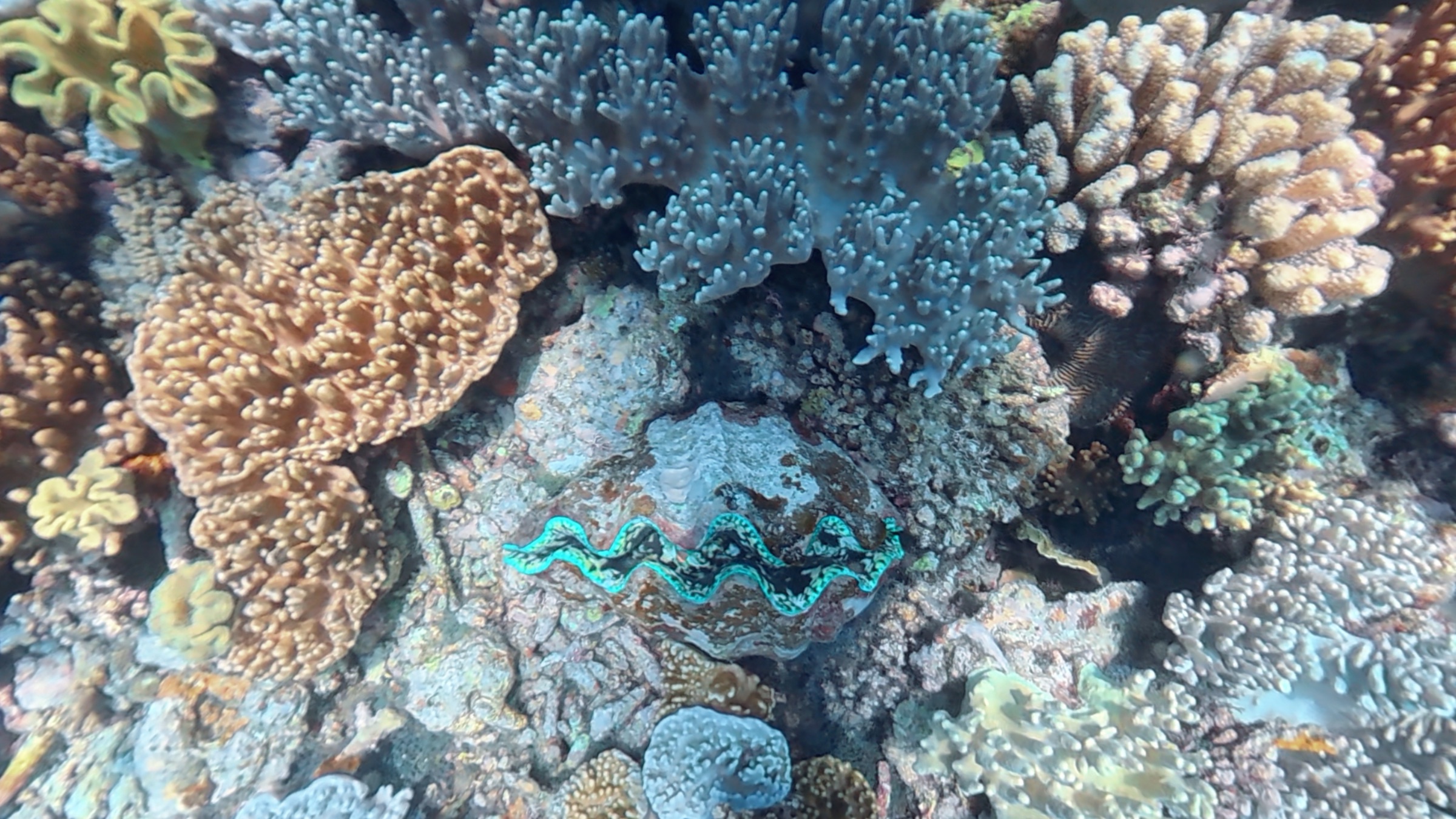
He also pointed out a giant clam, its open shell patterned with beautiful colors.
Then he helped me look for the clownfish from Finding Nemo. They were tucked into an anemone, and I could not spot them from the surface. He finally ducked underwater with my camera and took a few pictures. At least I have proof they were there, even if I did not see them clearly myself.
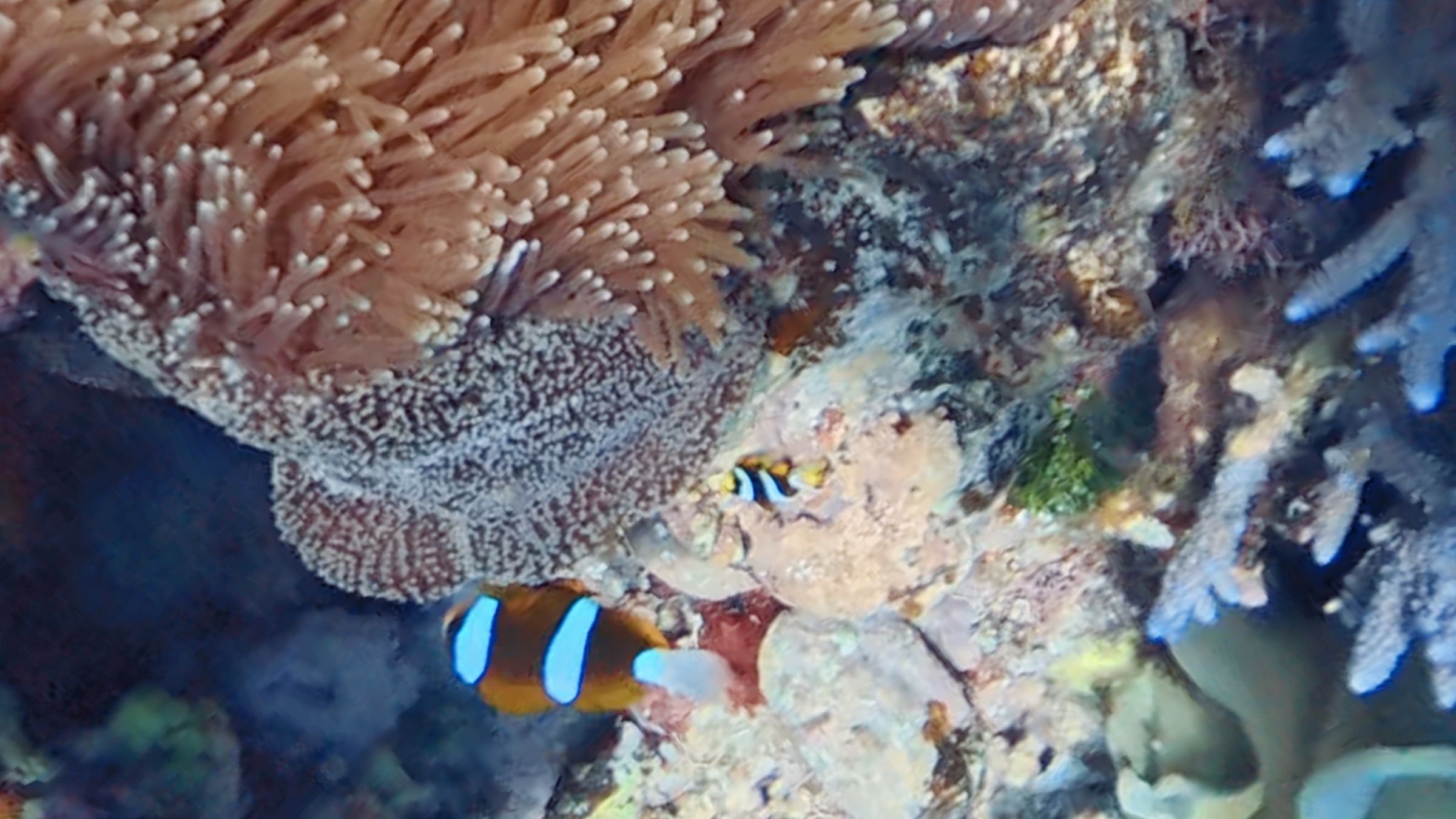
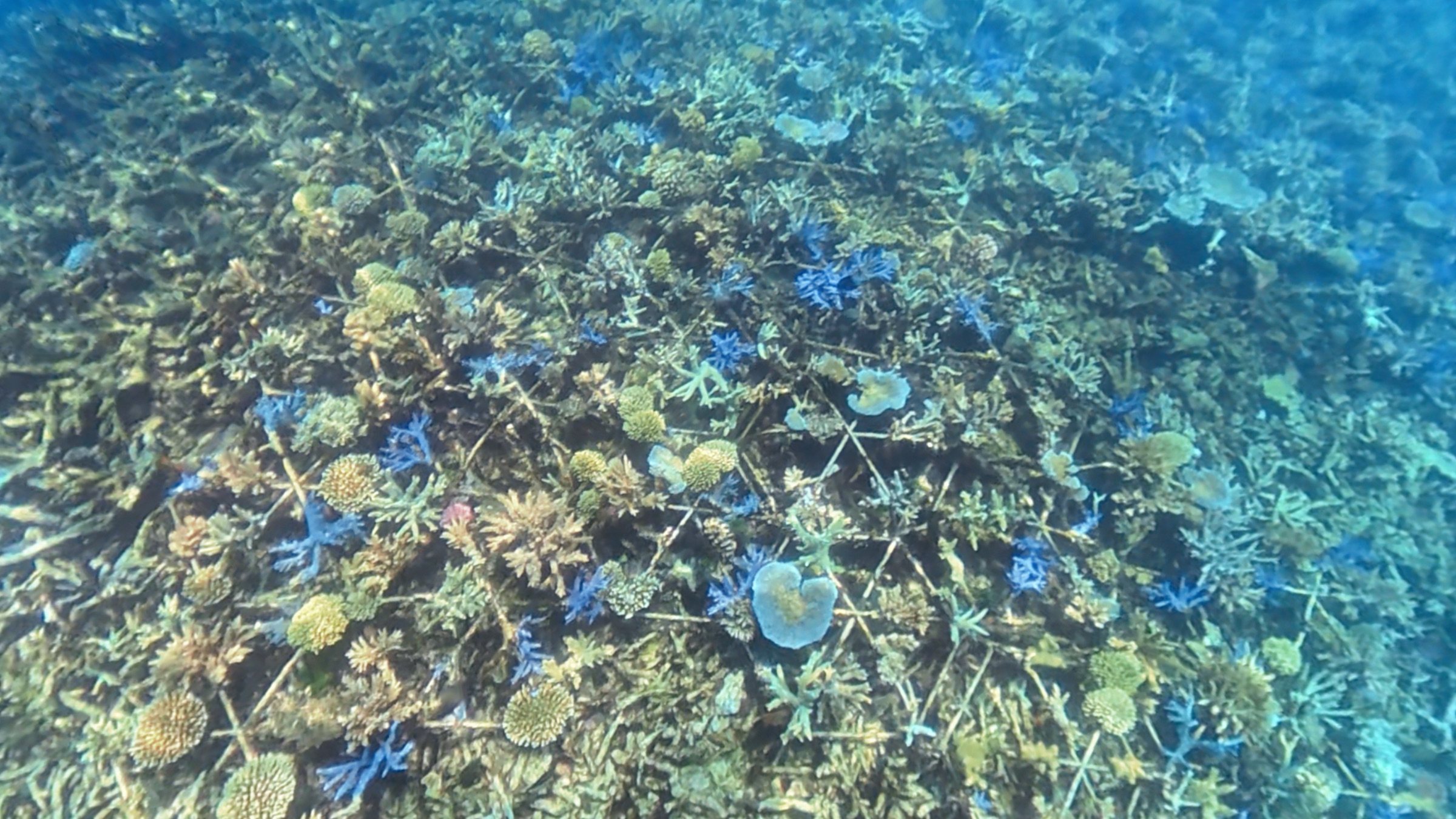
He also explained some of the reef restoration work. In one damaged area, steel frames and supports had been installed to stabilize and protect coral that was recovering, giving it a chance to grow without being broken up by the waves. I had assumed coral protection mostly meant keeping people away from a reef. In some places it takes more hands-on care, almost like tending a garden.
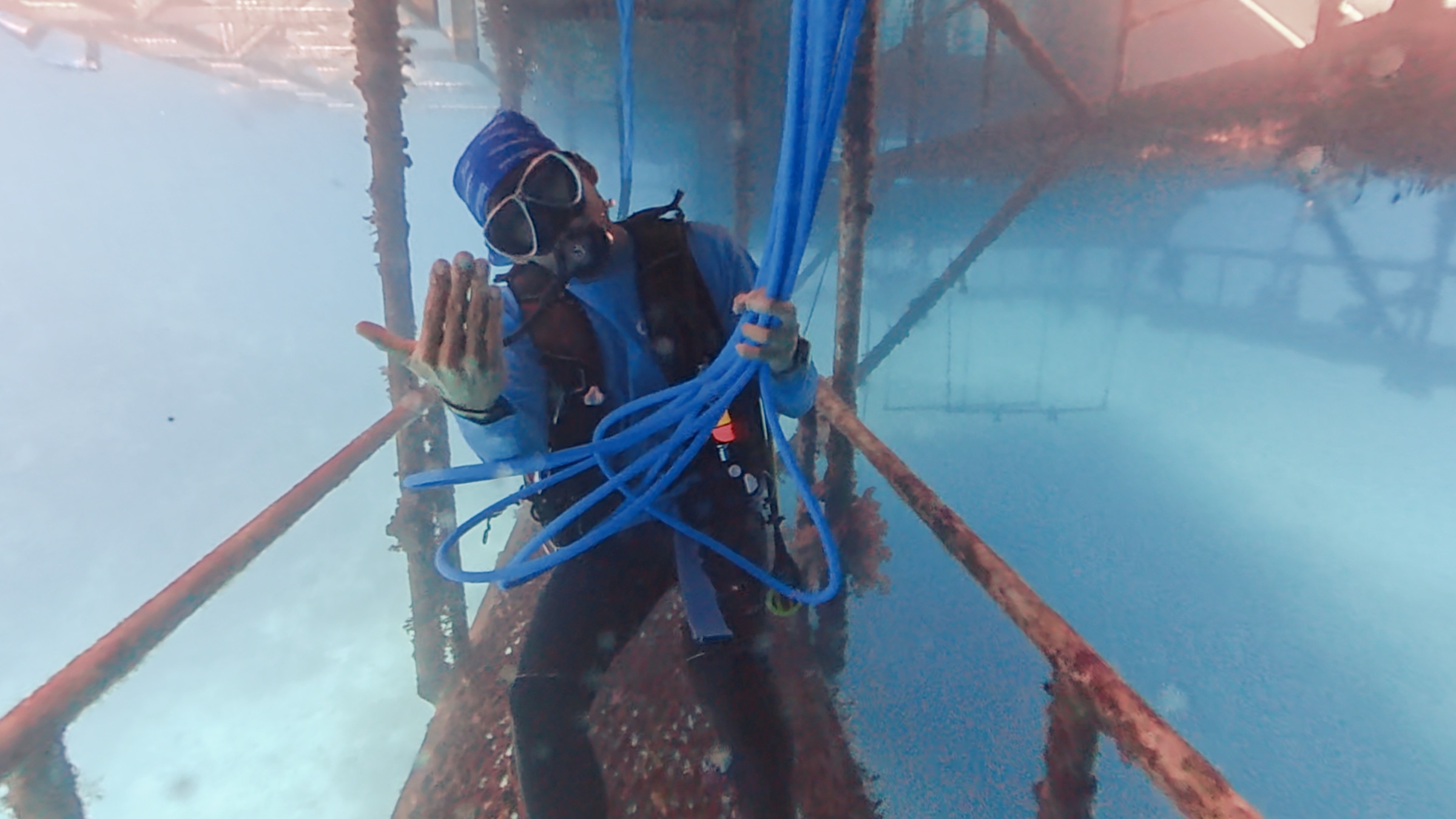
He also talked about crown-of-thorns starfish. Their venomous spines are part of the reef ecosystem, but when their numbers get too high, they can eat huge amounts of live coral and cause serious damage. Part of the team’s work is to find and control them. He pointed out two divers carrying out reef-protection work while we were snorkeling. It was striking to think that while we were admiring the coral from above, people were down below trying to save it.
After snorkeling, we had the buffet lunch on the pontoon. Lunch, snorkeling gear, the glass-bottom boat, the semi-submersible, and the underwater observatory were included in the ticket; only a few special activities cost extra. My wife was feeling a little better but still did not want to get back in the water, so at 12:30 I went to my Helmet Dive. Once again, I was the only guest. Somehow I had ended up with two private experiences in a row, despite booking group tours. The crew could focus entirely on me, with no line or waiting, and even stopped when I wanted a photo.
Helmet diving means walking along the seabed in a large air-fed helmet. A staff member placed the heavy helmet on my shoulders, with a long air hose attached behind me. Air keeps flowing into it, so there is no tank to carry or mouthpiece to breathe through. I could even keep my glasses on and breathe normally, as if I were on land.
Still, the first steps into the water made me nervous. A staff member supported me as I walked down a sloping ramp. After only a few steps, I could feel the pressure in my ears, like the plugged-up feeling you get when a plane descends. I knew the water was not very deep, but it was my first time walking into the sea wearing such a big helmet. The staff member kept reminding me to equalize my ears and take it slowly.
The helmet walk looks simple because you do not need to swim or operate scuba gear, but it is still an underwater activity with real risks. Pressure rises quickly with depth; if you cannot equalize, your ears can hurt or suffer barotrauma. The helmet also needs a continuous air supply, and your movement is limited by the equipment and the route. Reef Magic requires participants to complete a medical questionnaire, and the crew took safety seriously. They repeatedly told us to keep at least one hand on the rail at all times. Both hands had to stay on it. A few times I tried to use my underwater camera with both hands, and a staff member immediately pointed me back to the rail. They guided every step, telling me where to put my foot and when to stop. At first it felt strict, but it made sense: the helmet was heavy, the ramp was underwater, and losing your balance could be a problem. Another crew member managed the air hose, feeding out the coiled line as we moved. The helmet was buoyant in the water but still put pressure on my shoulders. Once I reached a flatter area and my ears had adjusted, I finally relaxed enough to enjoy the fish.
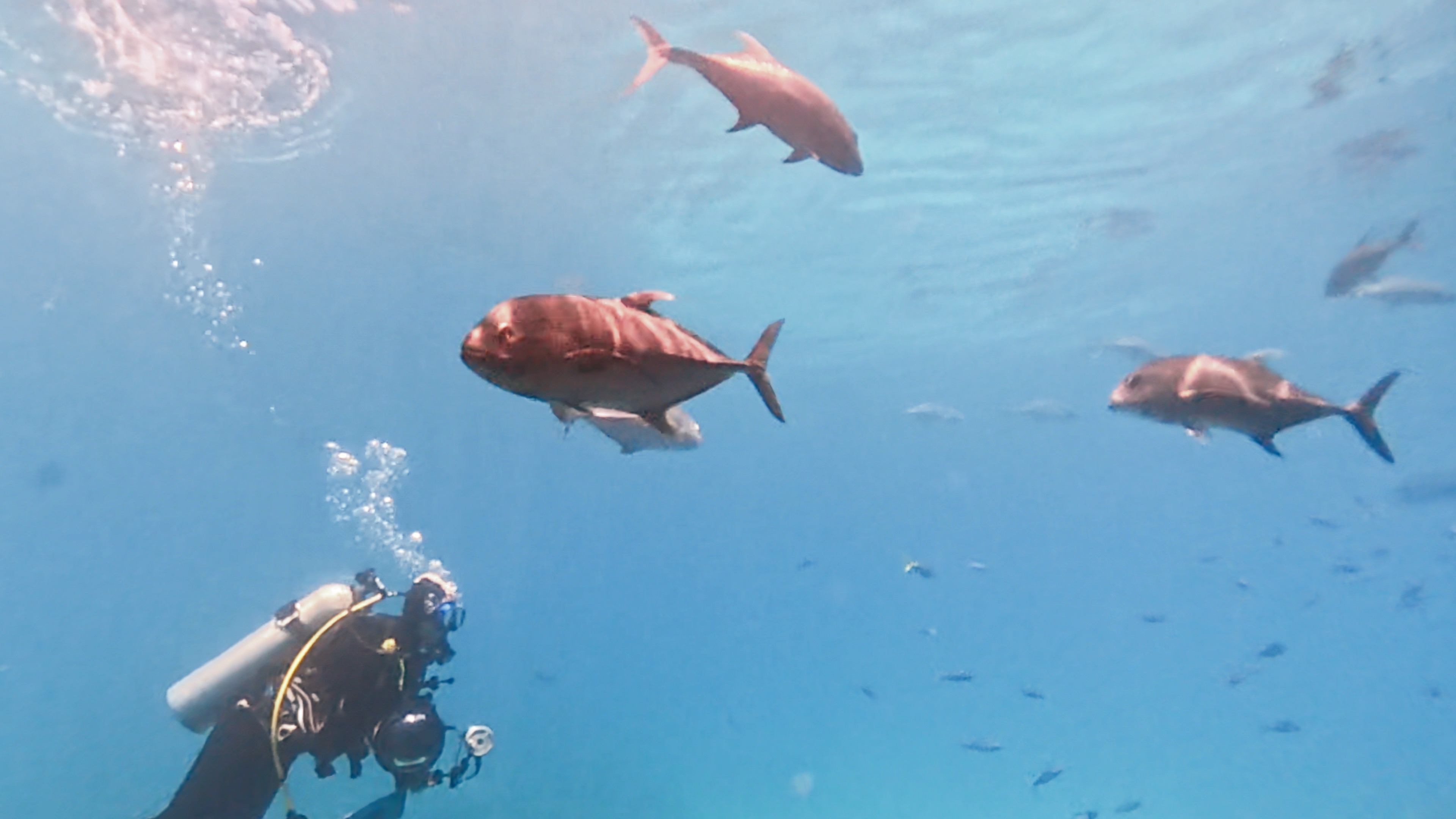
I realized the walkway was right outside the pontoon’s underwater viewing chamber. We could see the fish outside, while the visitors in the chamber watched us through the glass. Tropical fish swam around us, sometimes close enough to reach out to, and others passed overhead. The staff member stopped me in a few spots for photos, then we walked a short loop and returned. The route itself was not very long.
It was quite different from snorkeling. When you snorkel, you float on the surface and look down at the fish and coral. With the helmet, you can stand on the seafloor and look straight ahead—or even up. But you have to hold the rail and follow a set path, so there is far less freedom than scuba diving. I think it is worth trying once if you have never done it: breathing normally underwater with fish passing by is a special experience. Once was probably enough for me, though. Next time, I would rather snorkel freely.
In the afternoon we also took the Glass Bottom Boat. A large clear panel in the floor let us look straight down at the coral and fish, and the boat went farther from the pontoon, so the scenery was different from the snorkeling area. We were lucky enough to see a sea turtle moving slowly near the reef, then spotted it surfacing for air in the distance. We have seen turtles in Komodo before, along with large rays, but we did not see any rays today.
By the afternoon my wife had recovered enough to snorkel with me. We went in several times, returning to the pontoon to rest whenever we wanted. That was one of the advantages of staying in one place instead of rushing between reef sites. Masks, snorkels, fins, and full-body stinger suits were provided at no extra charge. The crew asked everyone to wear a suit that covered the whole body, both for protection from jellyfish and to avoid getting badly sunburned in the tropical sun.
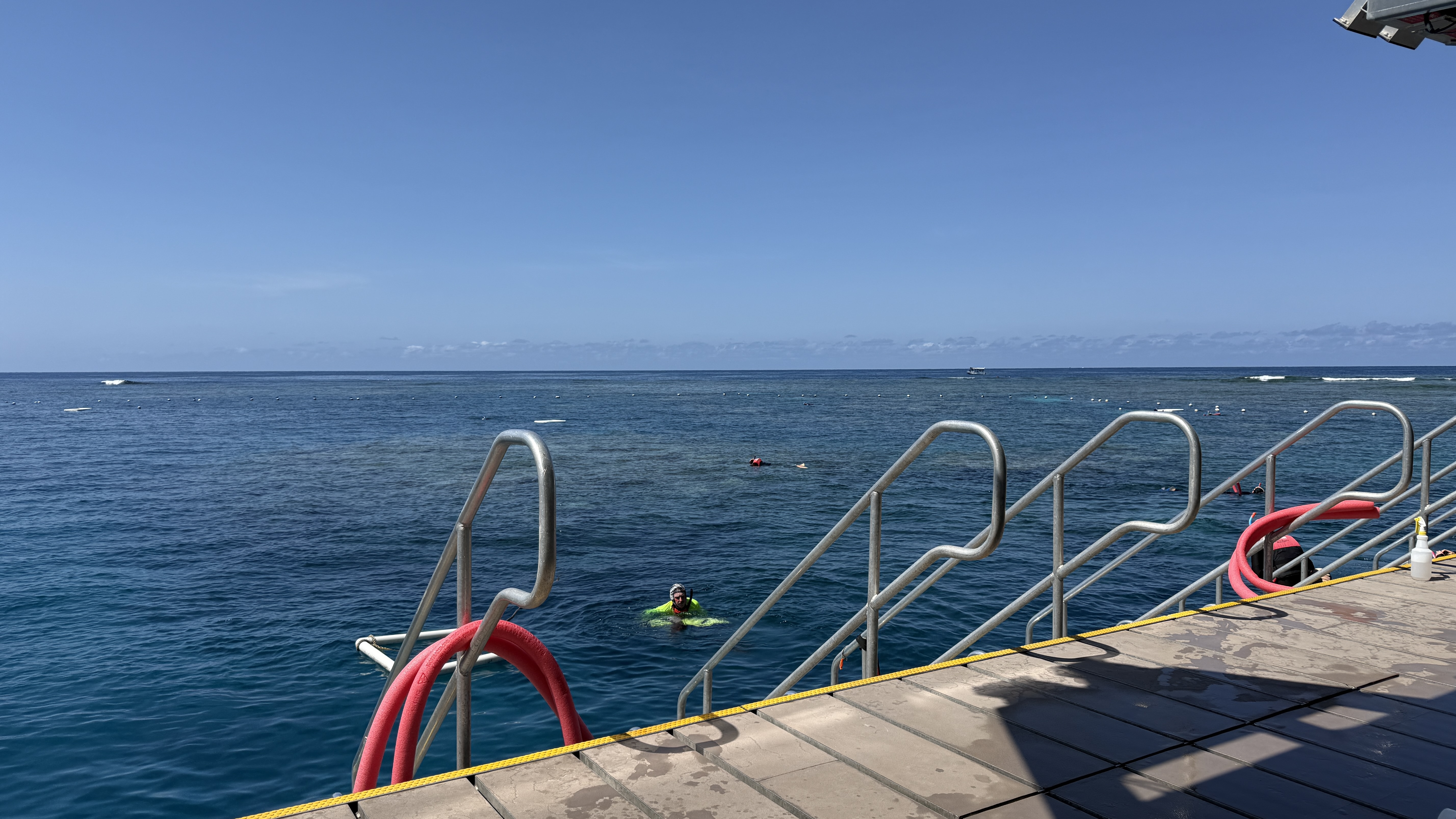
As for the underwater scenery, I would not say the Great Barrier Reef was more spectacular than the places we have snorkeled before. We have been in the water in the Maldives, Bora Bora, and Komodo. Komodo is still my favorite: the coral colors seemed brighter, there were more kinds of fish, and the whole underwater world felt richer. The Maldives and Bora Bora were similar to Moore Reef in that respect. Of course, the Great Barrier Reef is enormous, and we saw only one tiny section of it. Another site might look completely different. But this particular spot did not top our experience in Komodo.
Around three, people began rinsing off and changing before heading back to the boat. Reef Magic left the pontoon right on time at 3:30. Oddly, I was not seasick at all on the way back. The sea looked just as calm as it had that morning. Maybe I had adjusted to the boat, or maybe the medication had finally kicked in. The ride was comfortable, and I fell asleep before long. When I woke up, we were back in Cairns. The crew from the boat and pontoon lined up to welcome us as we disembarked. Most of them were young, and two spoke Chinese and Korean.
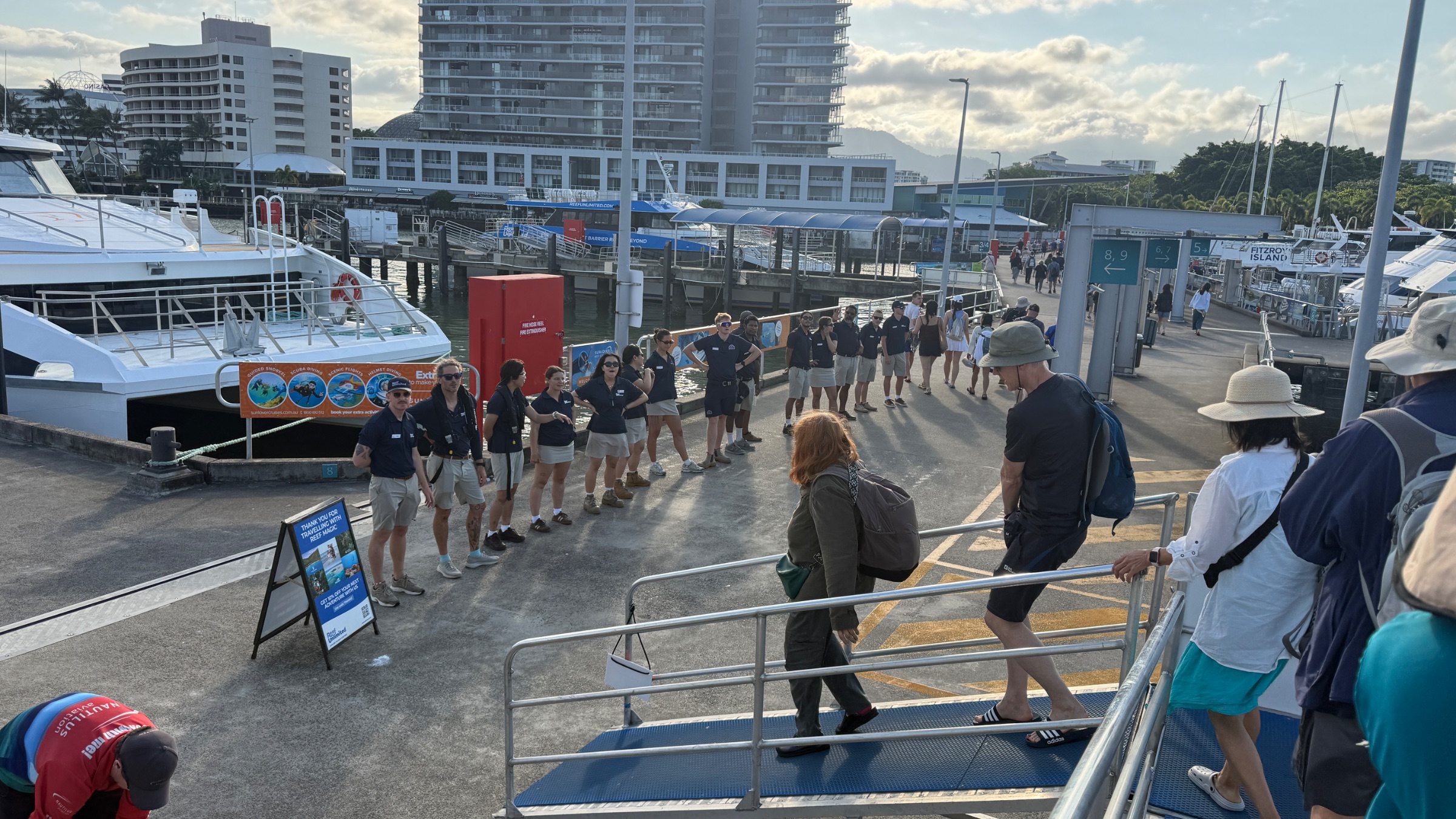
We came ashore around five and found the marina area suddenly full of energy. People were waving Samoan flags; some cars had flags attached, and a small convoy drove past. We thought it might be a holiday, but later learned there was a Rugby League World Cup semifinal that day between Australia and Samoa. Samoan fans were cheering on their team.
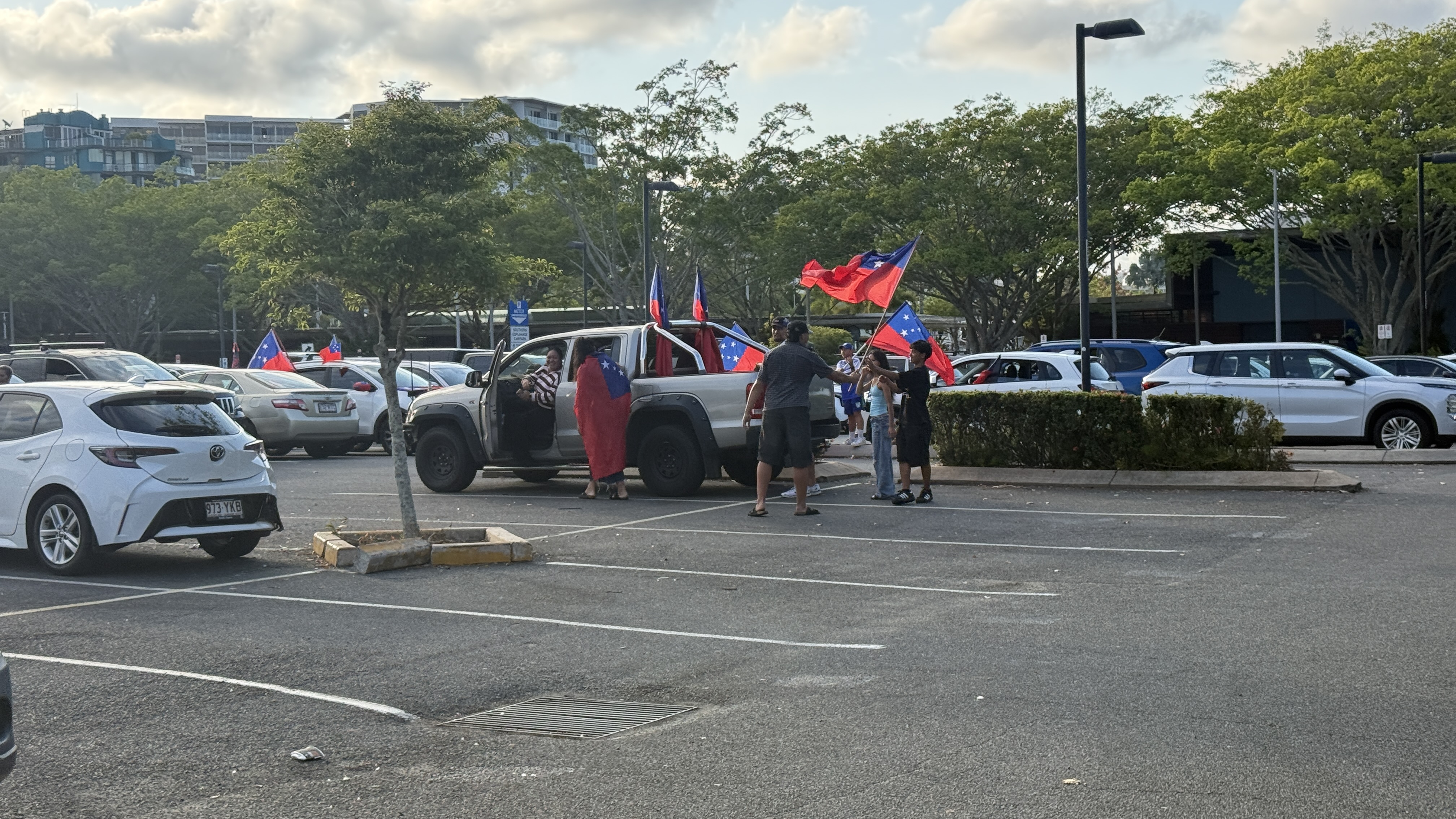
I knew Samoa, of course, but I had not expected to see such a lively group of Samoan supporters in Australia, especially in Cairns. Samoa is a small South Pacific nation with a population of a little over 200,000, but it has large communities in both Australia and New Zealand, and rugby is hugely popular. No wonder one match brought everyone out to celebrate.
Samoa’s history is interesting, too. In the late 19th century, Germany, the United States, and Britain competed for control of the islands. An agreement in 1899 split the Samoan archipelago in two: Germany took the western islands, and the United States took the eastern ones. After World War I began, New Zealand occupied German Samoa in 1914 and administered it until Western Samoa became independent in 1962. It later adopted the name Samoa. American Samoa in the east remains a U.S. territory.
Seeing all those flags made me tell my wife that, after living in the United States for so many years and visiting quite a few countries, we still have not seen many of the U.S. territories overseas. American Samoa, with its capital in Pago Pago, looks beautiful. Maybe one day we will plan a trip there. It was funny that watching a rugby convoy in Cairns had just added another destination to our list.
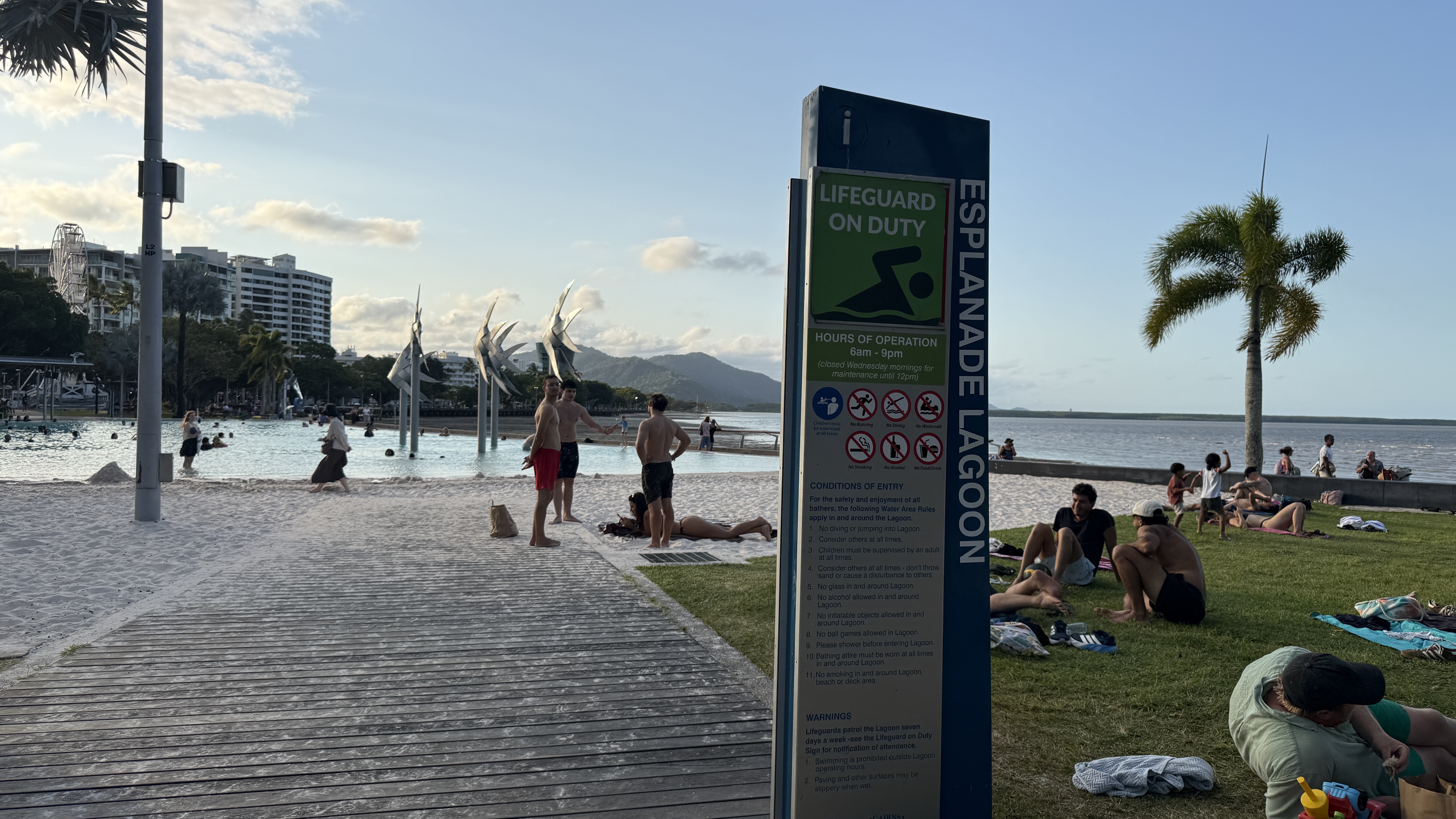
We also stopped at the nearby Cairns Esplanade Lagoon. It is a large, free public swimming pool right on the waterfront, with lawns, walking paths, and places to sit. Cairns is a tropical coastal city, but much of the shoreline near town is mudflat and not ideal for swimming. Jellyfish and crocodiles are another concern, so this artificial lagoon gives locals and visitors a safe place to swim and sunbathe. After spending most of the day in the sea, we had no desire to get back in the water. We just took a few photos nearby.
Then we drove a few minutes to the Cairns Night Markets. It was not very large, but it had souvenir shops, handicrafts, tourist goods, and plenty of Asian restaurants. We found a Chinese restaurant for dinner and enjoyed the meal. Afterward we walked through the market, passing plenty of kangaroo- and koala-shaped souvenirs along with some Aboriginal-inspired crafts. Most of it looked made for tourists, though, and nothing really tempted us to buy it.
Reader Discussion · 0
No comments yet. Be the first to share your experience.